César — The Miracle on Hudson
This review took longer than usual. Nearly three months have passed since I last dined at César. Until now, I remained silent.
Not because I lacked impressions. Quite the opposite. Rather, I found myself wondering what there was still left to say about Ramirez — or how to say it. It is well known that I consider César Ramirez one of the most extraordinary chefs of our time. My reviews on his menus regularly culminate in highest scores, and every dish that leaves Ramirez’s kitchen is described by me ravingly.
Adding to the challenge is the fact that, at first glance, very little seems to change. The produce Ramirez works with are often similar. And while modern fine dining likes to tell its stories through new menus, new seasons, new concepts, and new collaborations, all of that appears to matter surprisingly little here.
That, however, is precisely the point.
One does not visit Ramirez to try his new menu. You do not come here to experience a new season. Ramirez does not continually reinvent his cuisine. He deepens it, working on details that others would — quite reasonably — consider already complete.
A sauce becomes more precise, a cooking time more exact, a combination of ingredients more harmonious. Proportions become more coherent, temperatures more accurate. The changes are often so subtle that they are nearly impossible to describe — especially when months or even years separate one visit from the next. And that is precisely what makes them so remarkable.
The point is not even to notice such changes in the first place. On the contrary: every visit to César Ramirez already feels culinarily complete on its own terms. One does not need to dine here repeatedly to recognize the extraordinary quality. A single meal is enough. Often, a single bite will do.
Perhaps César Ramirez should be viewed much like a great sushi master. No one would leave a meal at Saito or Sugita expecting their menus to have changed. The appeal lies precisely in the fact that they have not. One returns to experience how a master has perfected familiar products, familiar techniques, and familiar combinations — while continuing to refine them ever further.
Take the first snack of the $368 menu. A long, slender roll made from physically impossibly thin brick pastry — yet one that somehow does not break when lifted — is filled with a rich salmon rillette carrying a gentle mustard note. Mustard in the best possible sense: the way a sharply focused vinaigrette complements a crisp, chilled salad somewhere in the south of France. From the very beginning, one finds oneself wondering how such an unassuming bite can be so magnificent.
Shima Aji (striped jack), sourced directly from Japan like so many of the exceptional ingredients used here, is arranged atop a kind of sushi roll with crisply fried Koshihikari rice, nori, shiso, and various other delights. Within seconds, a feeling of absolute indulgence settles across the palate, one that almost inevitably makes you close your eyes.
What initially feels like a demonstration of maximum flavor intensity unfolds with such ease and elegance that all sense of opulence disappears. Long after the bite is gone, I continue searching my palate for whatever traces may remain.
Next comes a monaka filled with Carabinero shrimp, Hokkaido sea urchin, trout roe, wasabi, and shiso blossoms — among other ingredients. Sweetness, smokiness, coolness, creaminess, and heat leave me shaking my head in a mixture of disbelief and relief. Even here, subtle differences emerge compared to the version I enjoyed here last year.
Kisu (Japanese whiting) likewise appears in a slightly revised form. The gently cooked fish remains woven into a paper-thin, gloriously greasy potato chip, though the chip is now somewhat narrower than during my previous visit. Even the plate has been changed to accommodate the new format. These are precisely the kinds of adjustments one could easily overlook. And yet I have the impression that the proportions now feel even more convincing. Had both versions been served side by side, I guess I would have preferred this one — on a level where preference hardly exists at all.
And so it continues.
Uni toast: an obsessively optimized creation of warm, airy, butter-rich brioche toast topped with cool Hokkaido sea urchin, brushed with house-aged soy sauce and glowing a brilliant orange, with truffle purée in between — perhaps the most heavenly bite one can find anywhere. I order another.
Bluefin tuna: two richly marbled slices from the belly, served as sashimi in an extraordinarily elegant, floral yuzu dressing and accompanied by a quenelle of caviar by Kaviari. Acidity, salinity, and luxurious richness in perfect balance. The caviar is one of the available upgrades ($90). However, it fills no gap and corrects no weakness. Rather, it adds yet another nuance to a dish that is already complete.
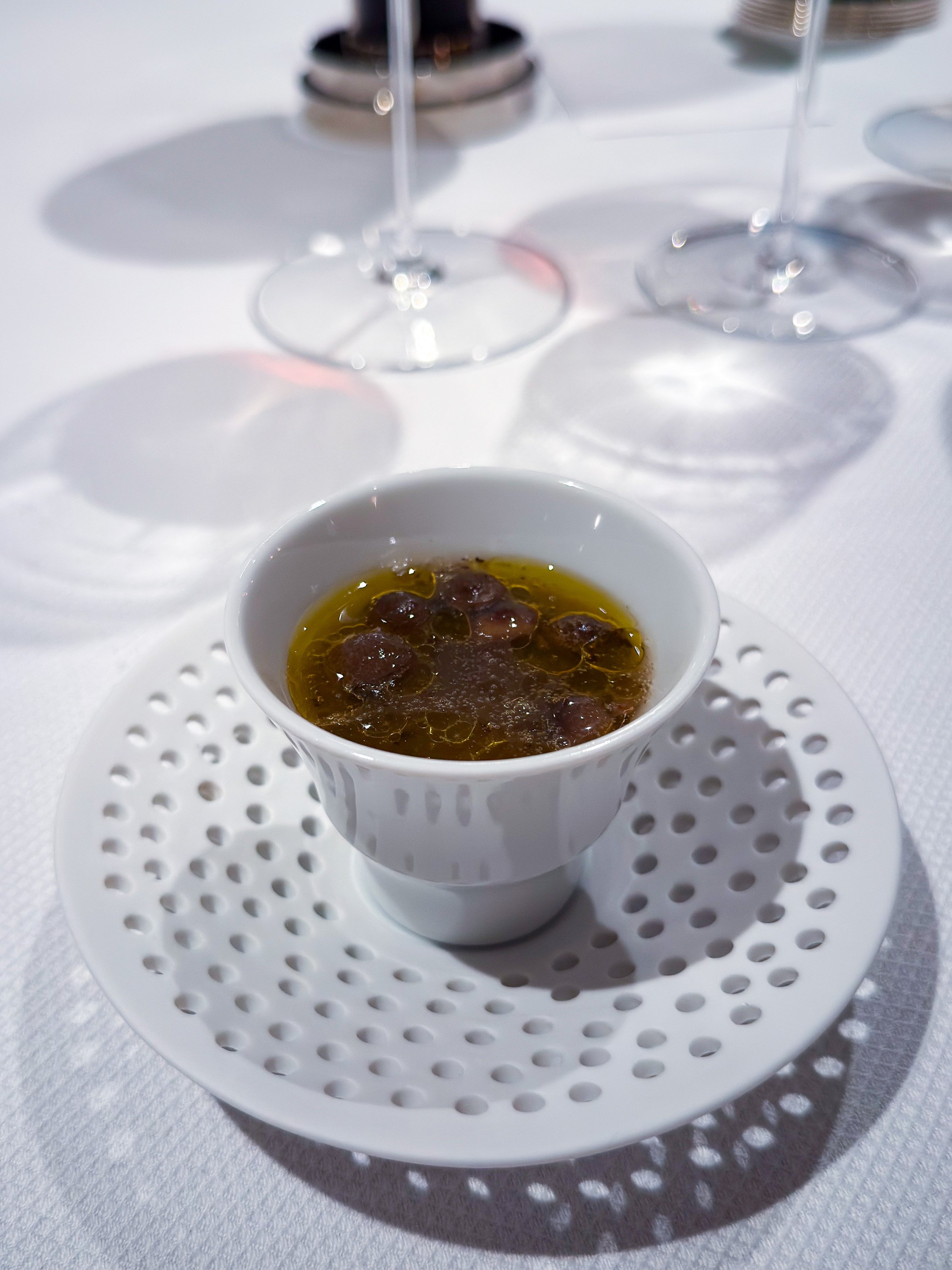
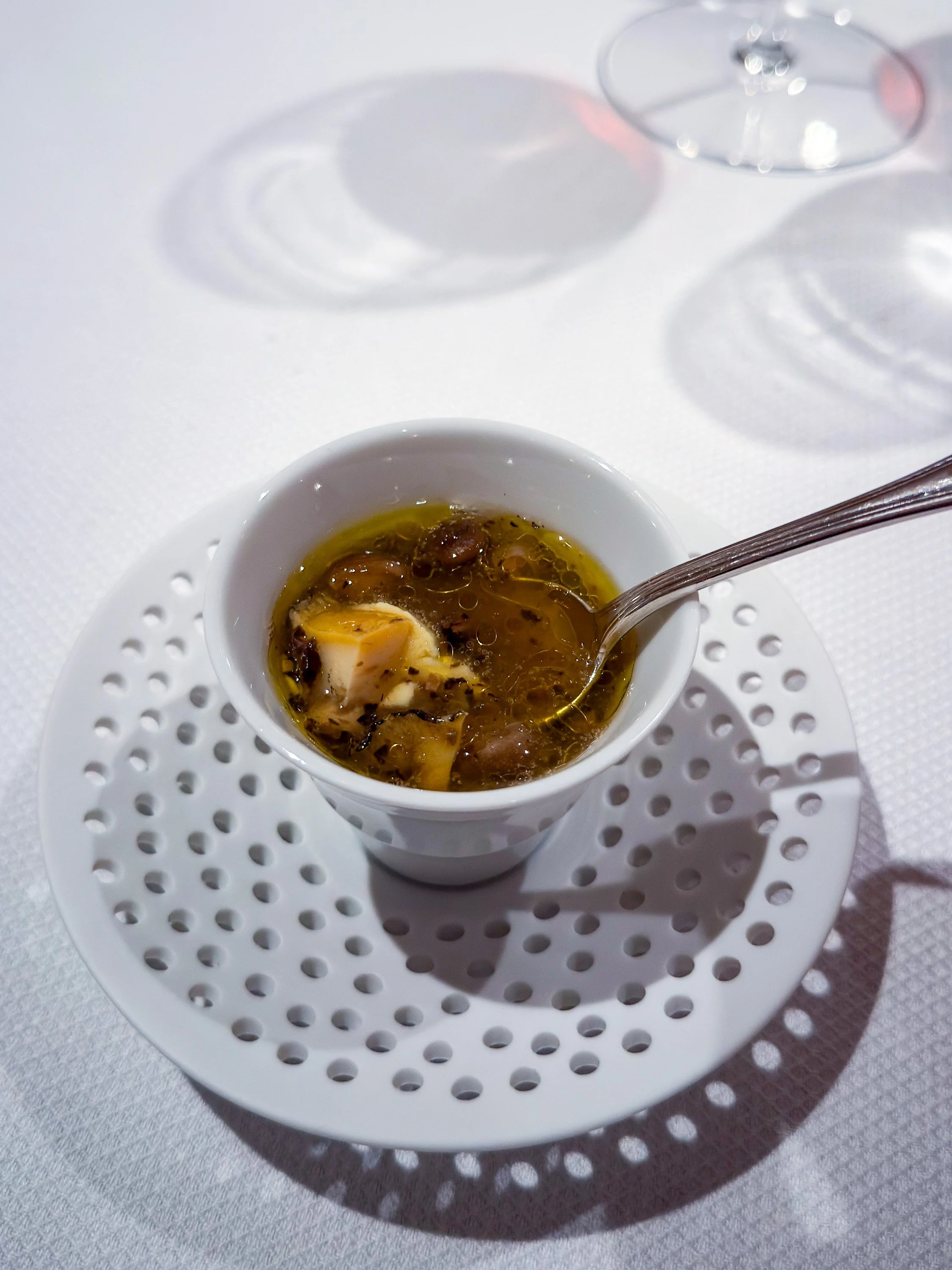
Chawanmushi with abalone, Périgord truffle, and matsutake mushroom follows: piping hot, oily, deeply umami-driven, and earthy. The exceptionally high serving temperature gives the dish an almost moving intensity. Another goosebump moment.
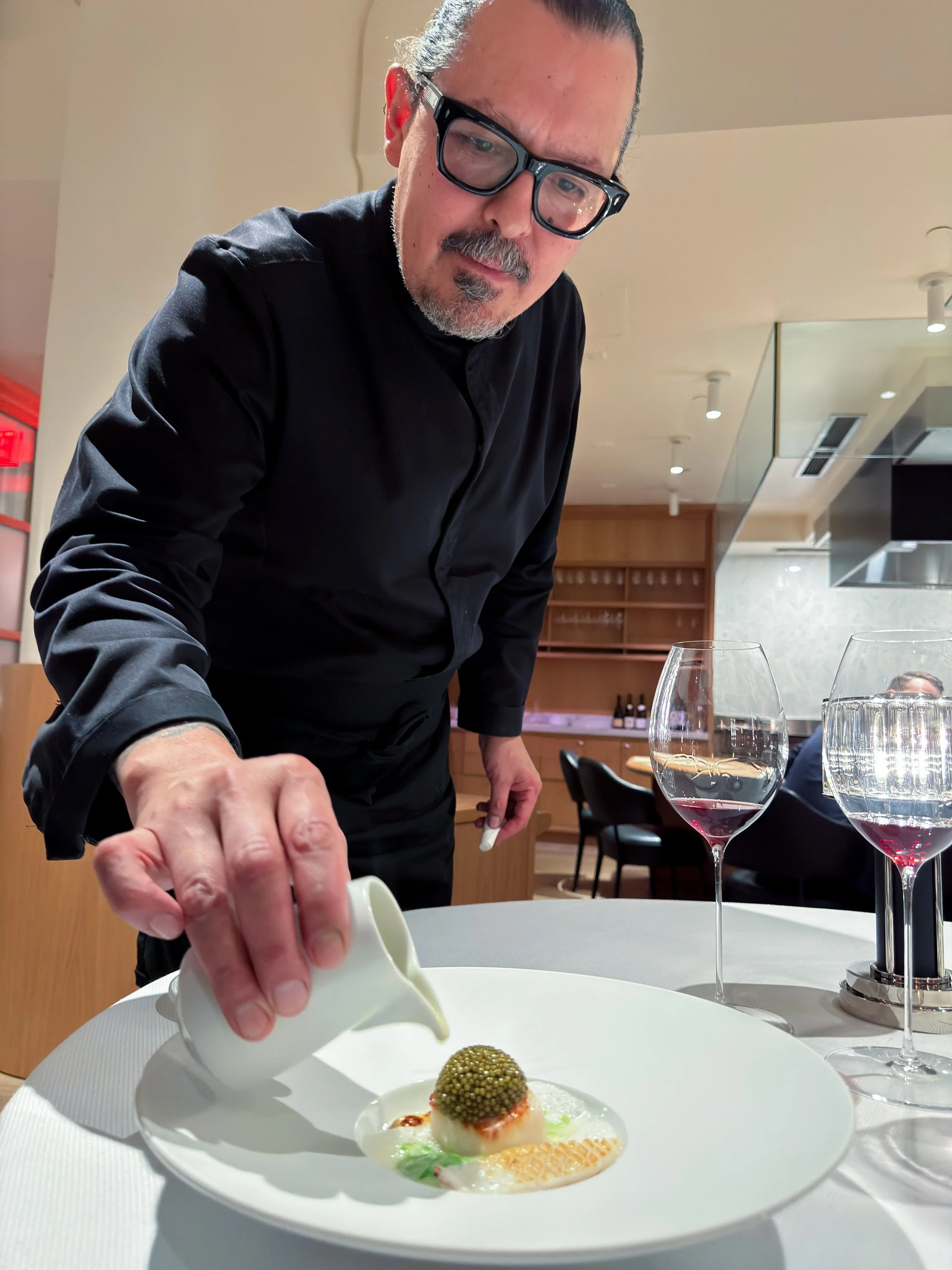
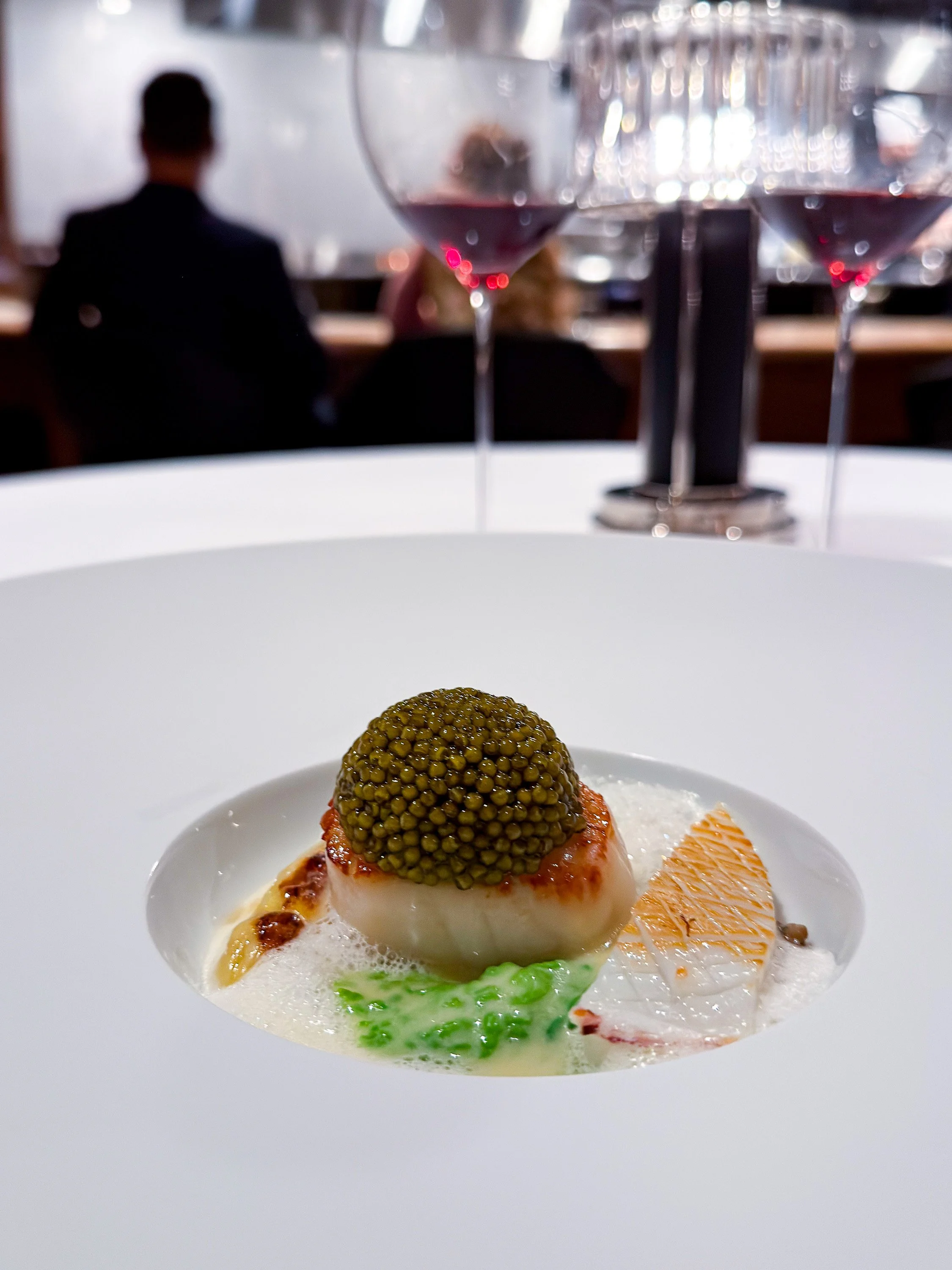
Then comes a medley of vegetables and seafood that probably only Ramirez would assemble. Almost provocatively, a precisely seared Maine scallop and a piece of grilled squid sit side by side — seemingly unrelated — accompanied by Peruvian white asparagus and young peas.
Another caviar upgrade adds a cool contrast and a touch of salinity to the otherwise hot dish, but here, too, it serves merely as a luxurious finishing touch.
The greatness of the dish lies instead in the sheer perfection of the cooking and the quality of the produce. The asparagus is vibrant with acidity and almost floral in character, the peas sweet and crisp. The scallop carries a nutty, golden-brown crust while its center has just crossed the threshold from translucent to fully cooked — perfect. Even the texture of the squid, precisely cross-hatched with careful knife work, delivers the kind of pleasure one normally associates only with great Japanese masters.
A light sauce ties everything together without ever demanding attention. And as if all that were not enough, somewhere on the plate also hides a piece of handmade pasta filled with something particularly delicious. Ridiculously good.
By now, I am swept away all over again. I am devoted to Ramirez’s cuisine, yearn for it 364 days a year, and in my worst nightmares I am not sitting in this restaurant. And yet I am already full. Not only from the food, but from the sheer abundance of impressions. Sometimes I have the feeling that half a menu at César consists not of ingredients, but of indulgence.
But Ramirez simply carries on as if nothing had happened. With a rack of Australian milk-fed lamb, a seared slice of foie gras from the Hudson Valley — also an upgrade — a morel, a slice of remarkably aromatic zucchini, two heavenly sauces, and a piece of crispy lamb belly. All on a single plate.
There is something almost irrational about the abundance of this dish. Ramirez cooks as if neither budget constraints nor reason existed. And the most unsettling thing about it is that every single component, as well as the dish as a whole, is not merely executed to the point — it recalibrates one’s own understanding of culinary pleasure.
This course is all the more astonishing because it seems to contradict one of Ramirez’s fundamental principles. While many of his creations are built around one or two main ingredients, here almost everything suddenly seems permissible. Lamb, foie gras (optionally), morel, zucchini, lamb belly, two sauces: on paper, this reads almost like leftovers of a three-Michelin-star meal. And yet none of it feels arbitrary, none of it superfluous. Ramirez has mastered not only the art of reduction, but also the art of opulence. Never had that been clearer to me than it is tonight. And for that insight alone, a trip to New York is already worth it.
Ramirez then treats me to one final upgrade: the already almost iconic Miyazaki Wagyu, A4 grade, with mole sauce and huitlacoche mushroom. The two generously cut pieces of meat are perfectly cooked, juicy, and buttery in their melting texture. Together with the almost sticky, dense, spicy-smoky sauce, the result is a dish that embodies reduction and opulence at once — and thus brings into focus much of what this evening’s menu has been about.
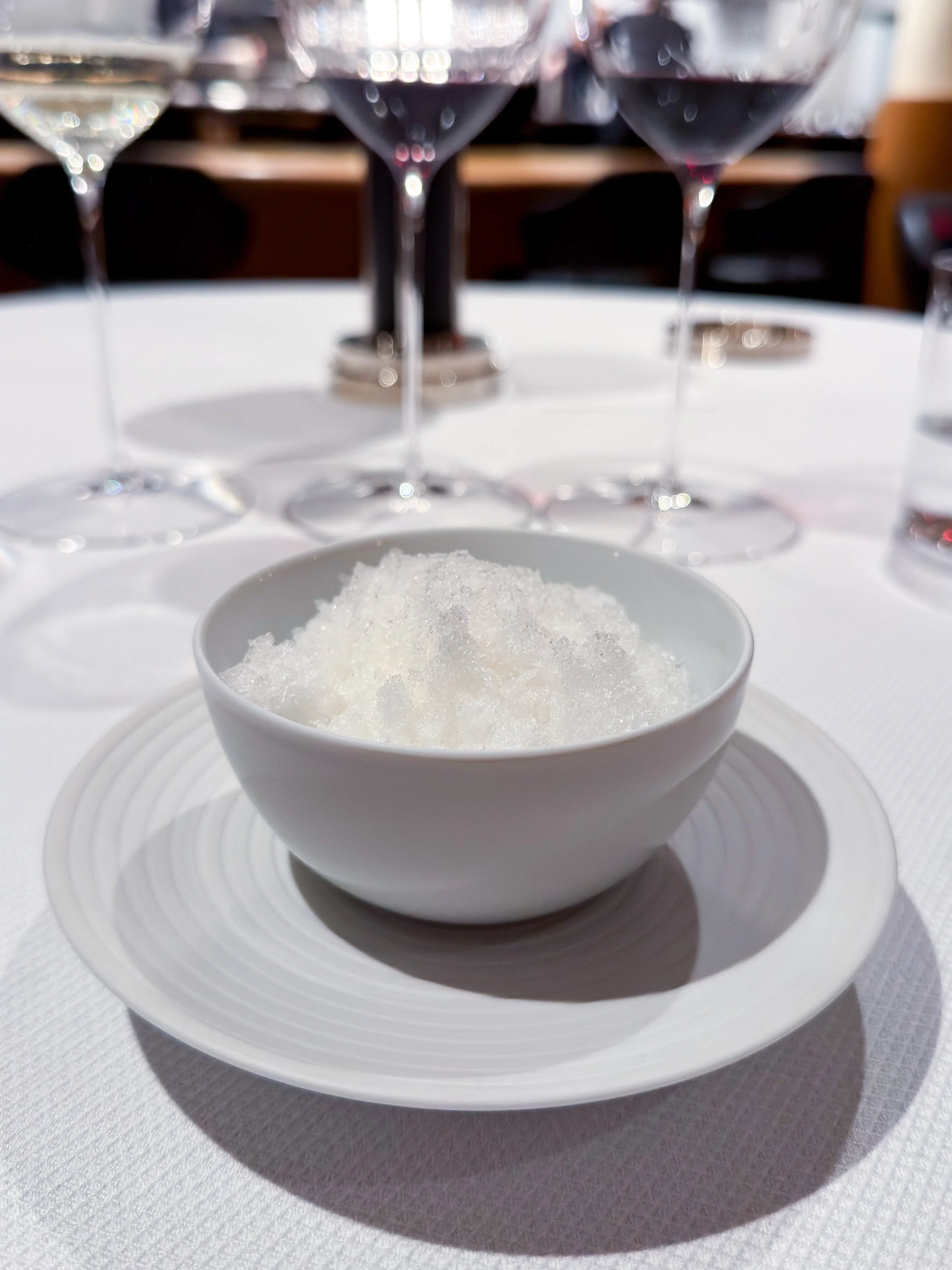
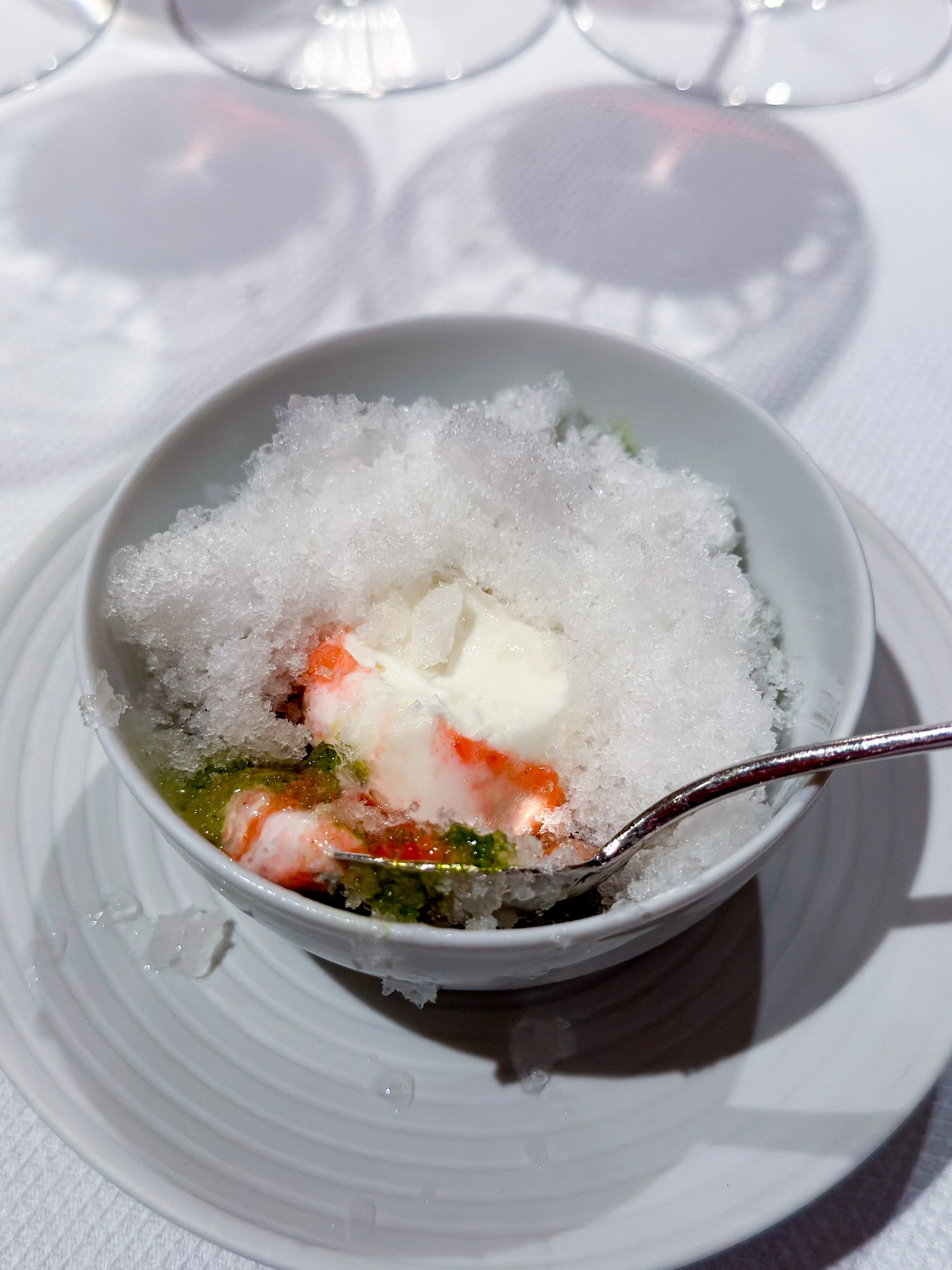
A dessert with strawberry, yogurt, and coconut then offers exactly the right kind of cooling relief. The strawberry tastes otherworldly, almost artificially heightened, the yogurt ice cream contributes a lean acidity, while the coconut brings a touch of Caribbean warmth to the dish. Heavenly.
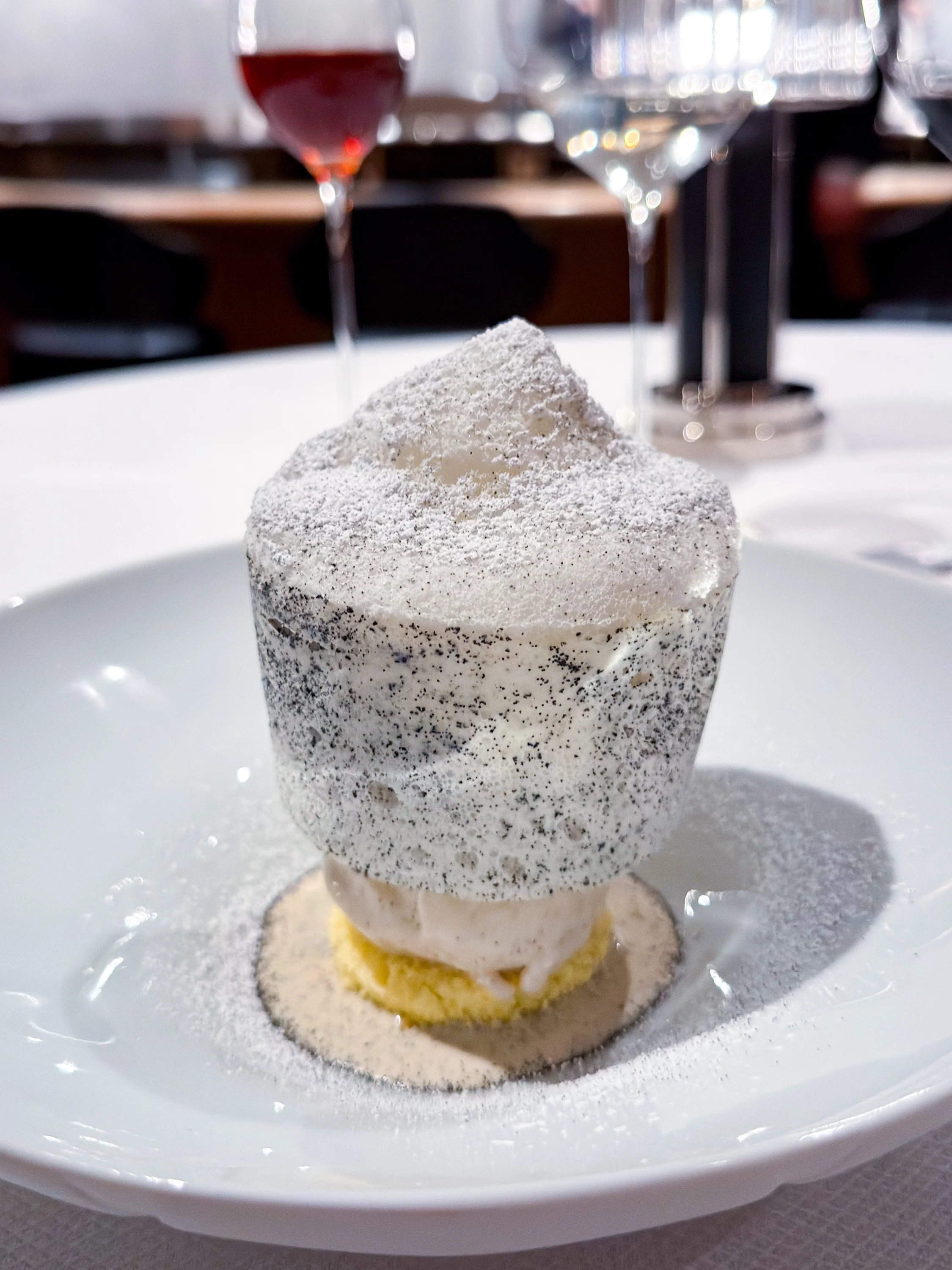
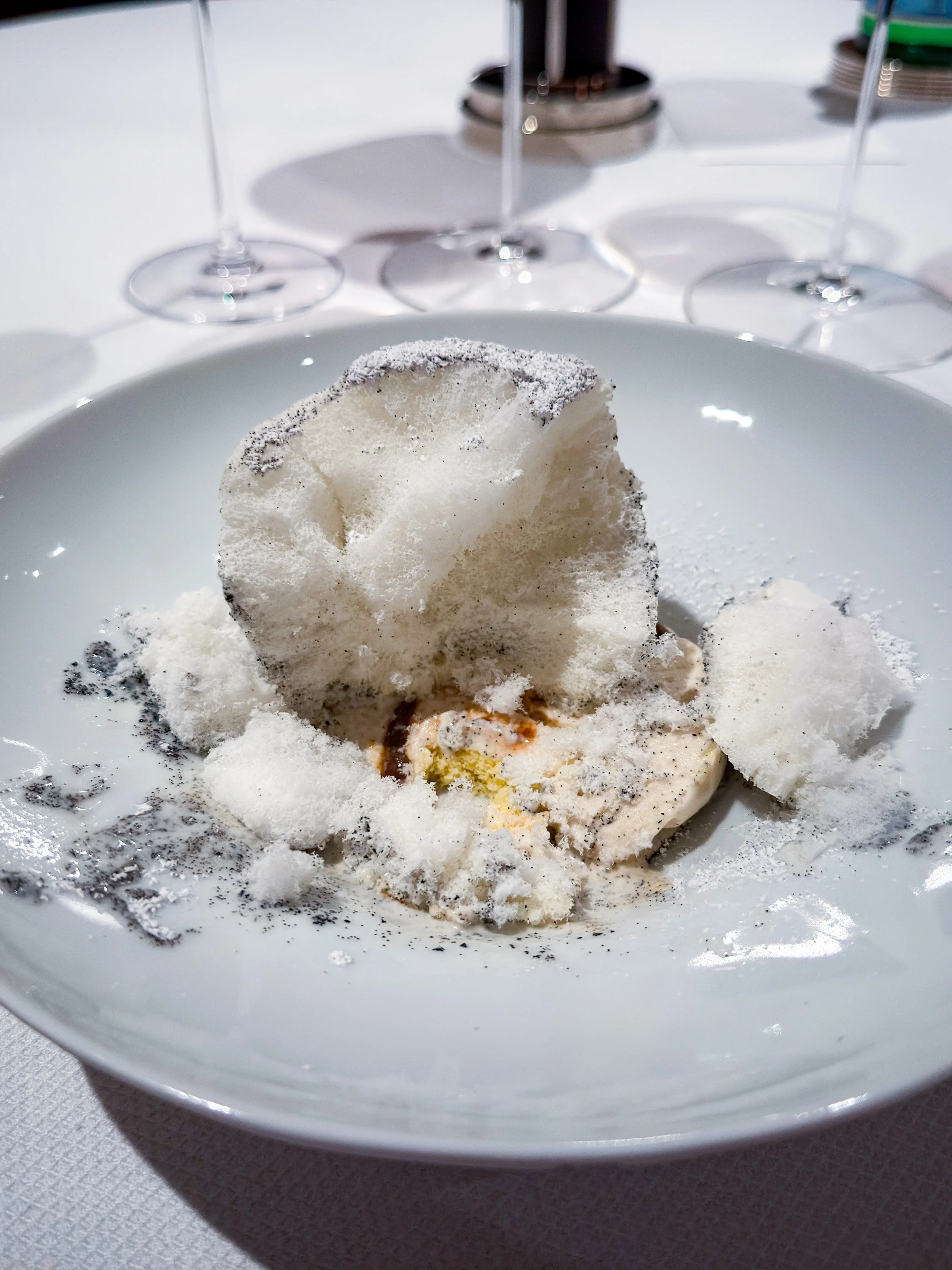
The following vanilla soufflé with plum and Armagnac sauce does not make the return to earth any easier.
And yet the address of this restaurant remains entirely earthly: 333 Hudson Street. Where miracles happen.