Odo East Village — Dance of the Bonito Flakes
Kagoshima is known not only for its famous beef, but also as the birthplace of chef Hiroki Odo, who moved from Japan to New York in 2012. After several successful stops, he quietly opened Odo in the Flatiron District, which has held two Michelin stars since 2023. There, Odo serves a classical, hyper-seasonal kaiseki menu.
This February, he introduced a counterpoint: Odo East Village. The concept — kaiseki cuisine in an izakaya format — is, at first glance, almost a contradiction. Traditionally, kaiseki follows a strict choreography dictated entirely by the chef, leaving no room for guest choice. But this is New York. If experimentation isn’t possible here, where would it be?
The restaurant sits inconspicuously on the ground floor of a residential building. My reservation is at 7:15 p.m., but I arrive well ahead of time — my earlier dinner at Penny having been kept in check, leaving me, despite a slow stroll, unusually punctual.
No problem: my seat at the small counter is just becoming available. Fourteen seats form a U-shape around a narrow workspace — the pulsating heart of the restaurant, from which drinks and dishes are served, and where a chef tends the charcoal grill with focused precision.
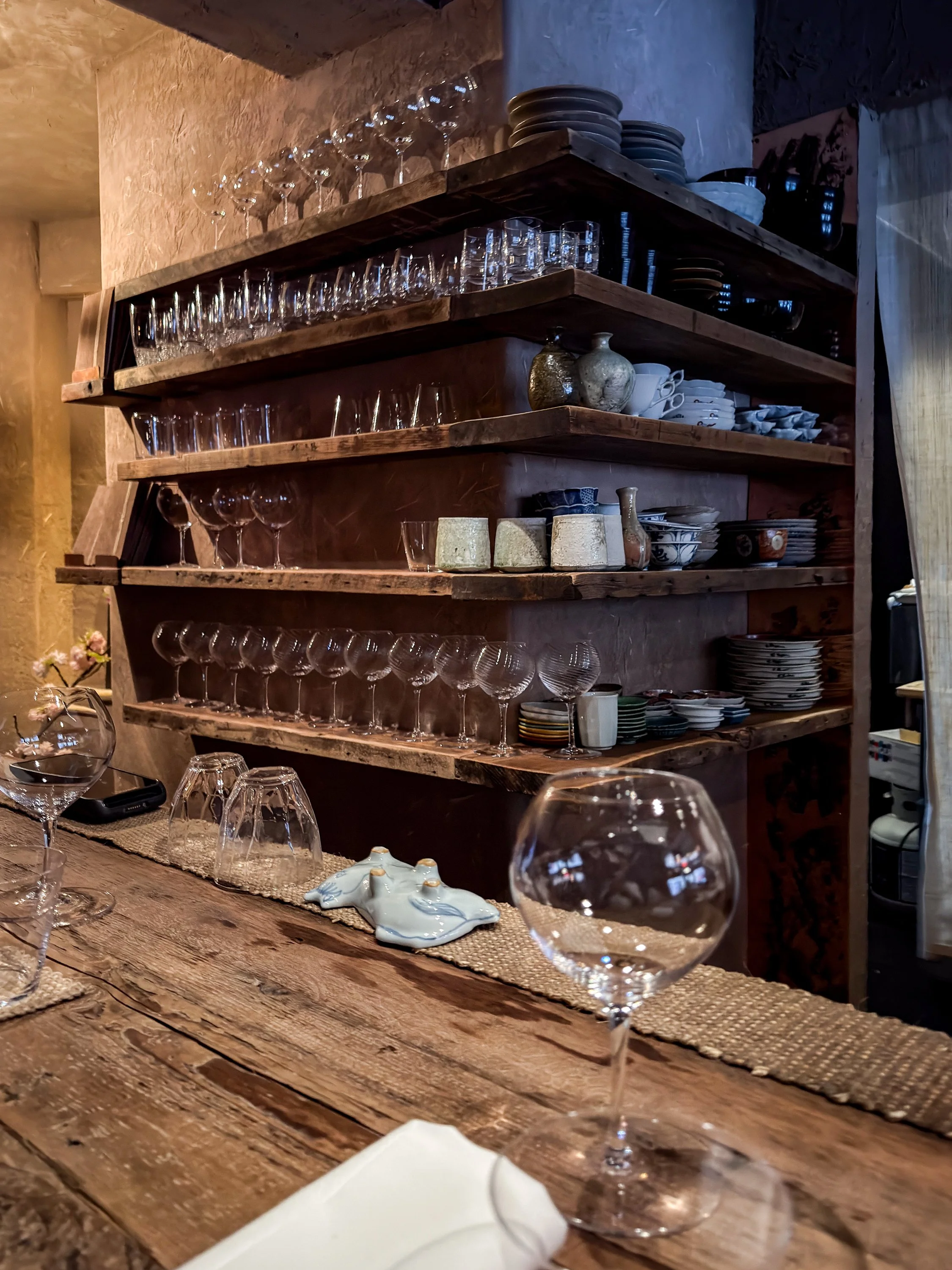
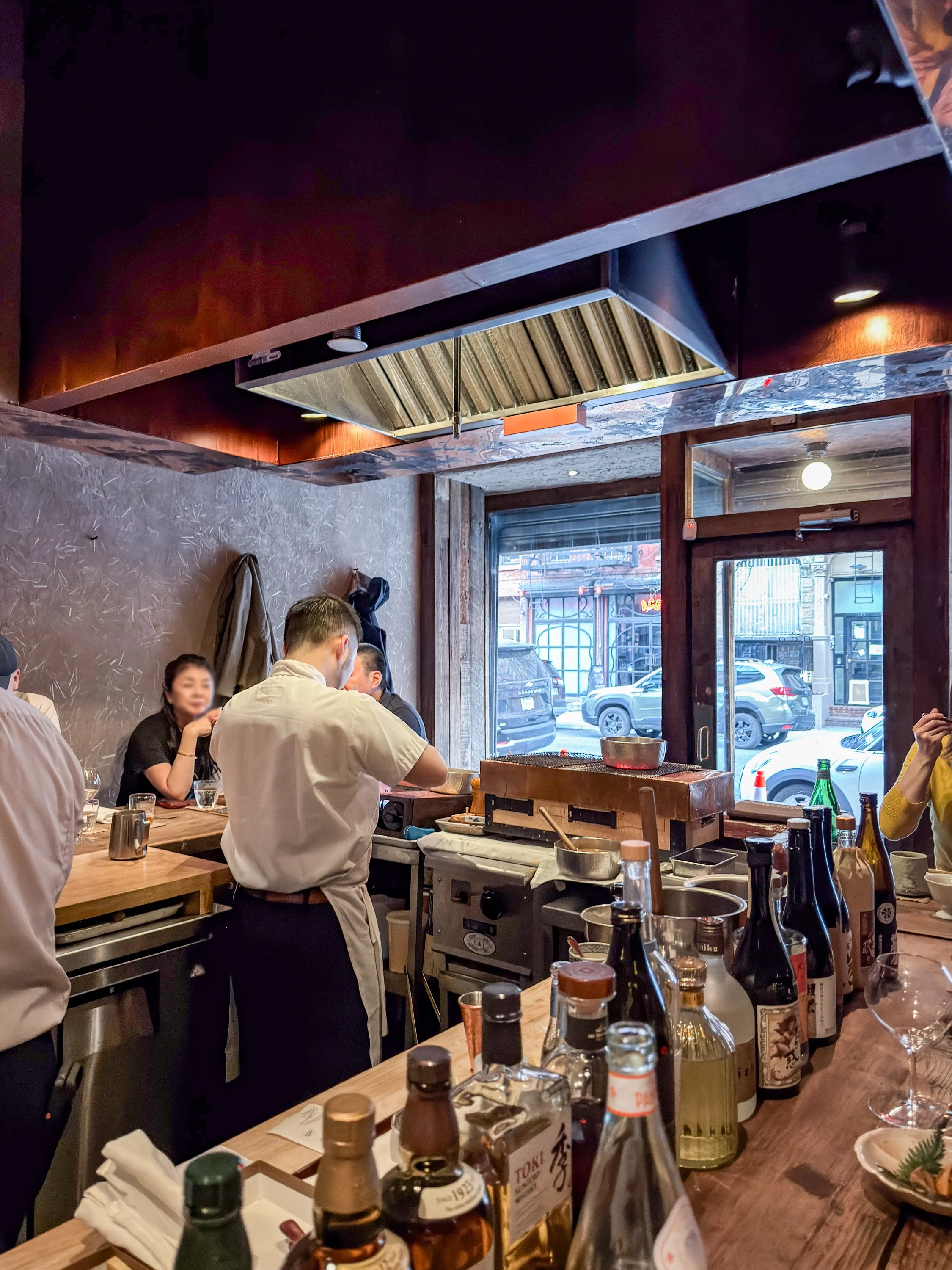
The atmosphere is lively and cosmopolitan. Guests from near and far engage effortlessly with one another and with the staff. There is no hesitation, no sense of careful observation — rather, an ease that suggests long-time regulars. And yet, the restaurant has been open for barely two months.
I order a glass of 2023 Pouilly-Fuissé 1er Cru “Les Perrières” from Domaine Daniel Pollier ($25 net) — nothing extraordinary, but perfectly suited to keep my focus on the menu. And that menu demands attention.
Eight categories, each with multiple dishes, offer not only variety but also initial disorientation. How much should one order? Multiple selections from the Sakizuke (appetizers)? (Yes.) The Yakimono (charcoal-grilled dishes) all sound tempting — how to choose? (Somehow.) One dish from each category? (That seems to be the idea.)
With the help of the service team, who briskly walk me through all nineteen dishes, I begin to shape an order. Eventually it comes together, and a mix of anticipation and curiosity sharpens my appetite.
A first amuse — a very hot dashi-based soup with plenty of chives and rice porridge (okayu) — transports me instantly to Japan. Clear in its elegant umami, precise in temperature, reduced to its essentials. (8/10)
As the comforting warmth fades, two appetizers arrive.
Ohitashi ($9) appears as a peeled tomato marinated in dashi and coated in a savory tosazu gelée, accompanied by finely cut shiso and daikon. Served cool, the dish offers freshness, juiciness, a faint smokiness, subtle seasoning, and almost transparent umami. A moment to breathe. (7.5/10)
Also served cool is a small bowl of squid, scallions, and tofu skin, dressed in a miso-vinegar sauce — a preparation known as nuta ($10). Crumbled peanuts add a gentle crunch and a nutty counterpoint to the sweet-sour seasoning. Excellent. (7.9/10)
Mukozuke ($14) follows — the sashimi course, which in formal kaiseki showcases precision in cut, temperature, and texture. Here, too, the level is pushed to the extreme. Akami, the lean cut, and otoro, the fattiest portion of bluefin tuna, are served with iwanori, a deeply savory preparation of dark seaweed, and fresh wasabi. The quality of the fish, the exacting cuts, the perfect proportions — all of this contributes to that distinct sense of umami so characteristic of Japanese cuisine. The dark, almost mysterious seaweed and the fleeting heat of the wasabi elevate the dish to world-class. (9/10)
Meanwhile, the atmosphere remains relaxed. The lively noise level, the engaging spectacle of the grill, the bar-like setting — this small restaurant is already becoming a favorite in a city full of culinary standouts.
I switch to sake by the glass (no notes).
Skipping the Wanmono — the soup course — I move on to Yakimono, the charcoal-grilled dishes.
My first choice is the fish of the day ($28), in this case amadai (tilefish). Two pieces arrive, perfectly cooked and succulent. Golden-brown, occasionally charred accents on the carefully scored skin testify to the intensity of the grill. The fish is accompanied simply by two pieces of sweet potato, unexpectedly floral in character, and a limequat for optional brightness. The precision of the cooking, the surprising aromatics of the sweet potato, the well-judged citrus — all speak to meticulous craftsmanship. (8/10)
The second grilled dish features shiitake mushrooms, chives, ginger, and spices ($12), topped with katsuobushi — bonito flakes. The delicate strands seem almost alive, moving across the plate, dancing in the rising heat.
The mushrooms are remarkably juicy, with a clean bite instead of the chewiness they often display. The accompanying elements add freshness and savory depth; a ponzu sauce contributes a citrusy, lightly saline accent, while a noticeable heat adds tension. Once again, excellent. (8/10)
From the Takiawase section (roughly: simmered in dashi), I choose kuzu tofu — a gelatinous preparation made from kudzu starch — served with Hokkaido sea urchin, fresh wasabi, and shiso blossoms in a very hot, lightly thickened bonito dashi.
Everything about this dish is remarkable: the beautiful presentation with its vivid colors, the rising heat carrying maritime, fresh, and floral aromas, and finally the experience on the palate. The tofu’s texture — lightly crisp and slightly sticky on the outside, yet extraordinarily delicate within — combines with the sweet, iodine-rich sea urchin, the subtle background umami of the dashi, and the fresh accents of wasabi and shiso to create a moment of complete immersion. Moving. (10/10)
After such an unexpectedly emotional high point, it feels fitting that the next dish appears more grounded. But appearances deceive: braised US Wagyu beef tongue with miso, red wine reduction, and mashed potatoes ($18) may resemble a hearty French bistro dish. Yet the miso shifts the profile, introducing a different kind of depth — less weight, more precision — accompanied by a gentle, understated sweetness. The overall level remains high, even if the dish carries a slightly more “comforting” tone, in the best sense. (7.5/10)
The final dish follows the kaiseki tradition of Shokuji — the concluding “meal,” typically consisting of rice, soup, and pickles. Here, tradition serves more as a guideline than a rule, so only the rice component is presented. It comes topped with softly set egg, aosa seaweed, and another portion of Hokkaido sea urchin ($20). Beyond the always impressive uni, it is the finely aromatic seaweed, with its grassy, almost green character, that stands out. A soothing, harmonious dish, executed with care. (7.5/10)
I skip dessert (kanmi), an ice-based preparation, and finish the evening with the remainder of a simple Pinot Noir from Joseph Faiveley ($23). Then again, “finish” may not be quite accurate — the renowned bar Superbueno is just around the corner. I will need a proper drink to process what I have just experienced. What a night!