Frederikshøj – Between Baltic Sea and Middle East
In the south of Aarhus, Denmark’s second-largest city, lies Frederikshøj, a restaurant awarded two Michelin stars. It is housed in a former service building of the nearby royal summer residence.
Instead of aristocratic grandeur, which one would hardly expect in a service building anyway, guests are welcomed by a modern, inviting interior in dark tones, with generously sized tables, plenty of space, and a fully glazed front offering views across the gardens and down to Aarhus Bay.
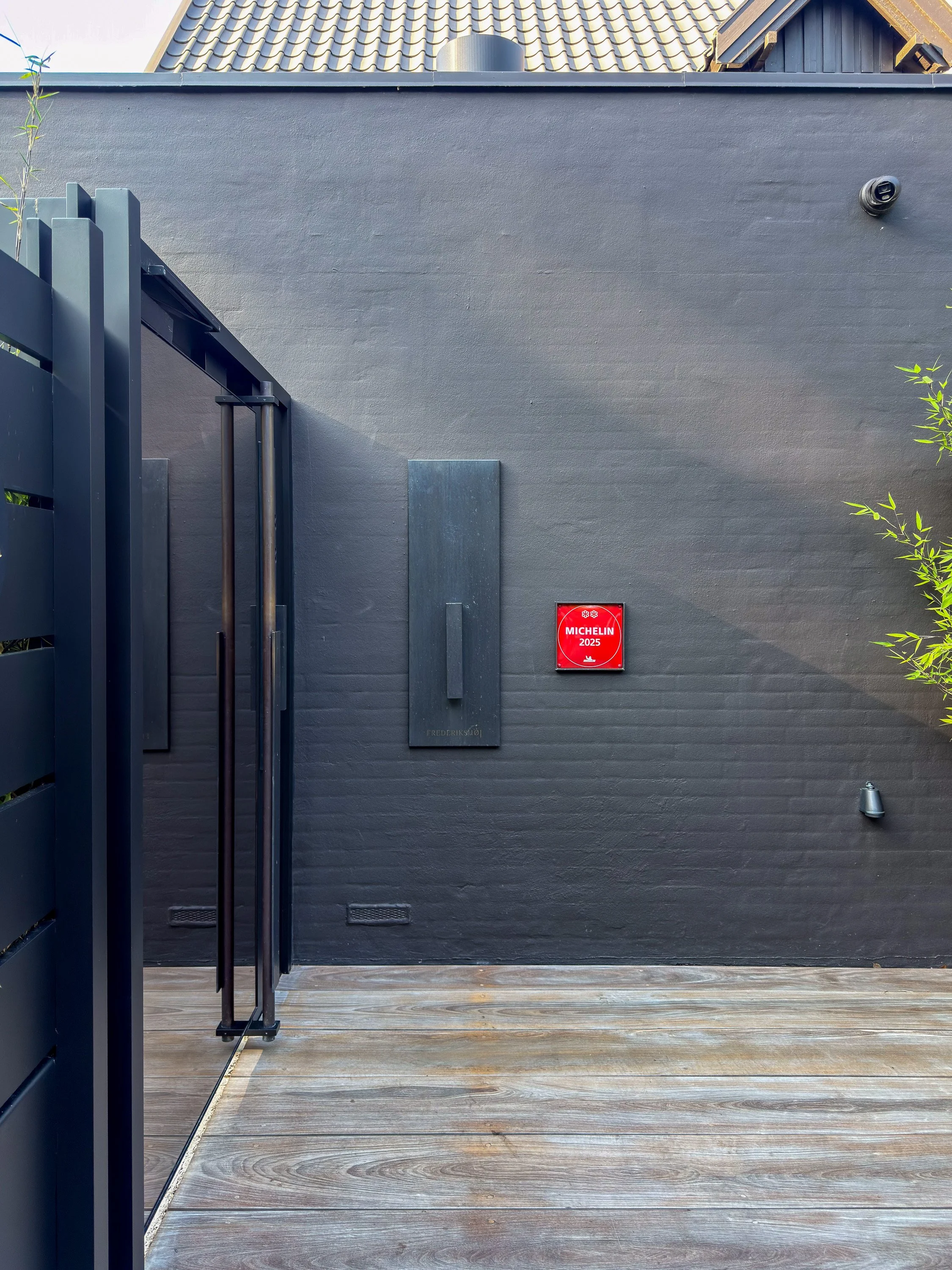
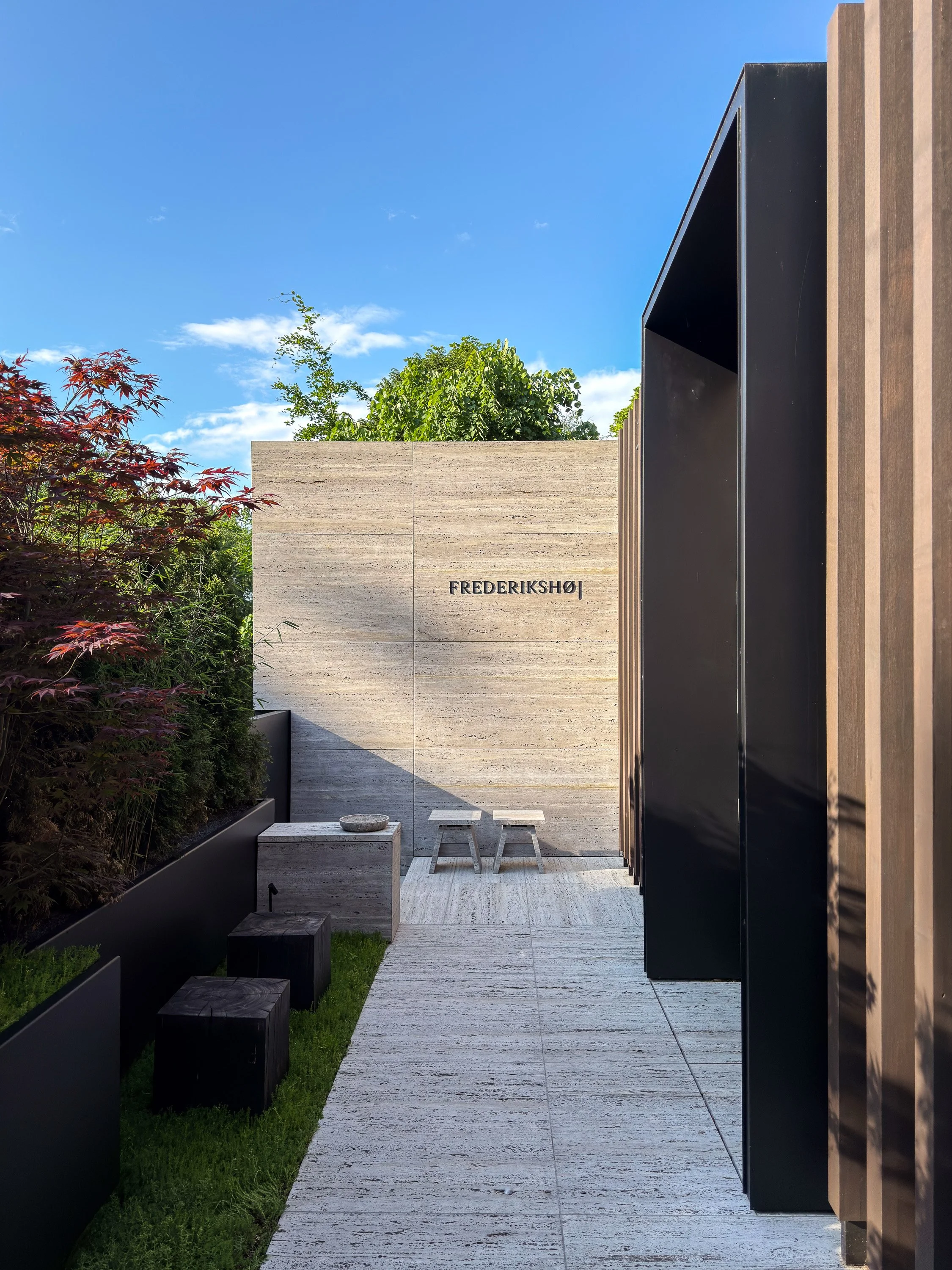
The service team also stands out from the very beginning with remarkable warmth. Chef and owner Wassim Hallal, one of Denmark’s best-known top chefs, has created a place where any sense of tension disappears as soon as one arrives.
After my gaze has wandered through the room for a while and the first arrival formalities are taken care of, I turn my attention to the wine list. It comes, somewhat inconveniently, in digital form, though a bookmark function helps with selecting favorites. My choice ultimately falls on a 2015 Vosne-Romanée 1er Cru “Les Suchots” from Lucien Le Moine (3,800 DKK, about €500). First, however, there is still Champagne in the glass: a 2020 “Campania Remensis” Extra Brut Rosé from Bérêche & Fils (about €50), a single-vineyard wine made predominantly from Pinot Noir with a little Chardonnay.
The fixed surprise menu costs the equivalent of just under €350 and begins with a visually appealing “cracker.” Löjrom (vendace roe), fresh cheese, and wood sorrel are held together by crisp elements reminiscent of birch bark. The creation is cool, fresh, and acidity-driven, with blossoms adding further accents. An excellent start. (8/10)
Snack number two looks just as appetizing: raw scallop, lightly salted and decorated with chive blossoms, sits atop a pastry pillow filled with smoked scallop roe. The contrast between the warm casing and the cool scallop is as compelling here as the intense interplay of salt and smoke. (8/10)
The third bite is a tartlet with an outer, jelly-like layer of malt and an inner, crisp layer. Inside are hamachi tartare, fresh cheese, radishes, and celery. The malt jelly adds a surprising but highly convincing, almost licorice-like aroma to the cool, creamy filling. Together with the excellent-quality hamachi, this is not only intriguing but deeply pleasurable. (8.5/10)
In the particularly pleasant atmosphere, the menu continues with a creation centered on snow crab and green asparagus. A crisp yeast mixture sits at the very bottom and adds some texture to the otherwise creamy dish. As good as the quality of the shellfish may be, the dish lacks a little acidity — and, above all, coolness, which would have given it more freshness and contrast. As a result, the composition remains somewhat too homogeneous. (7/10)
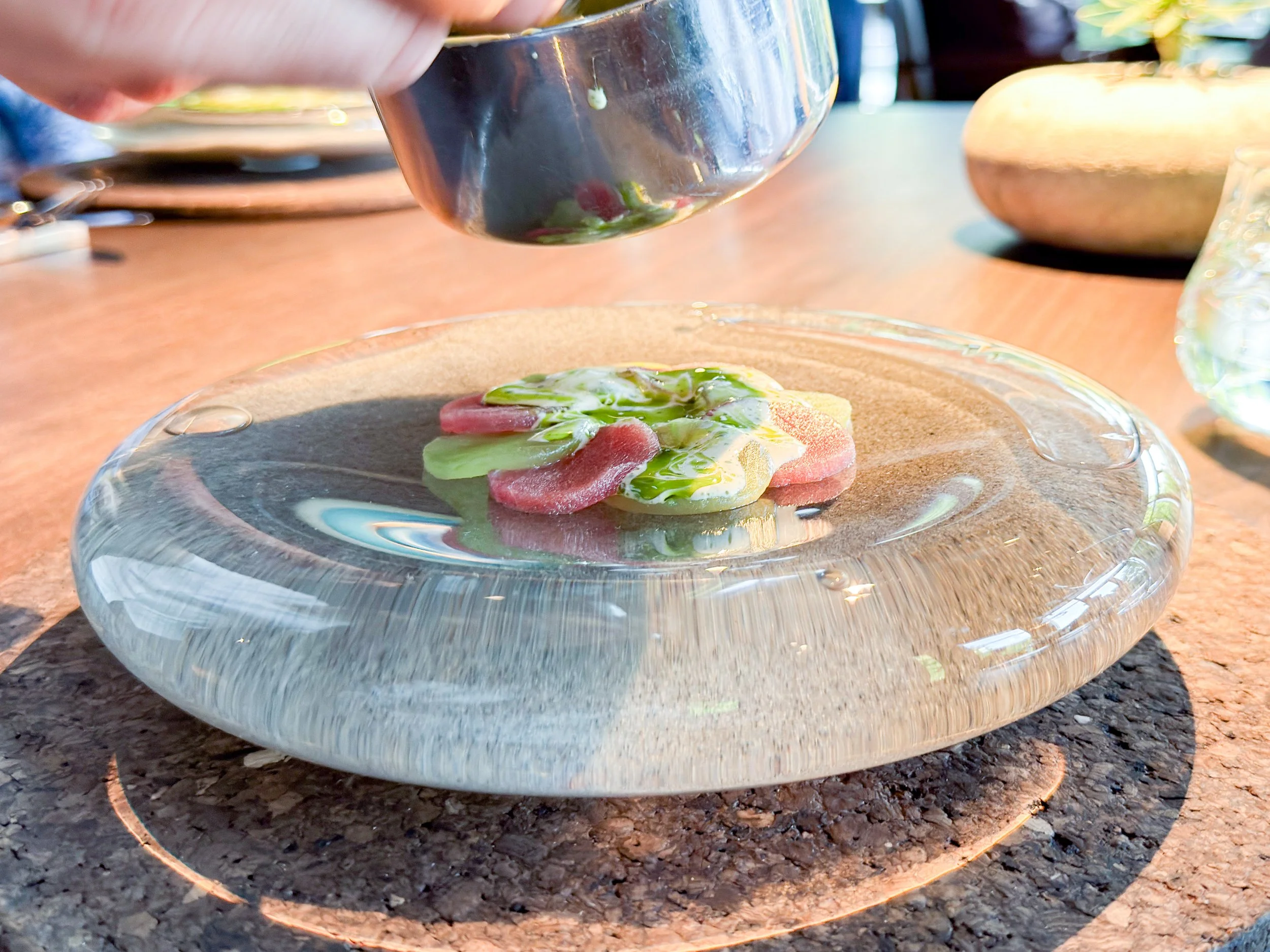
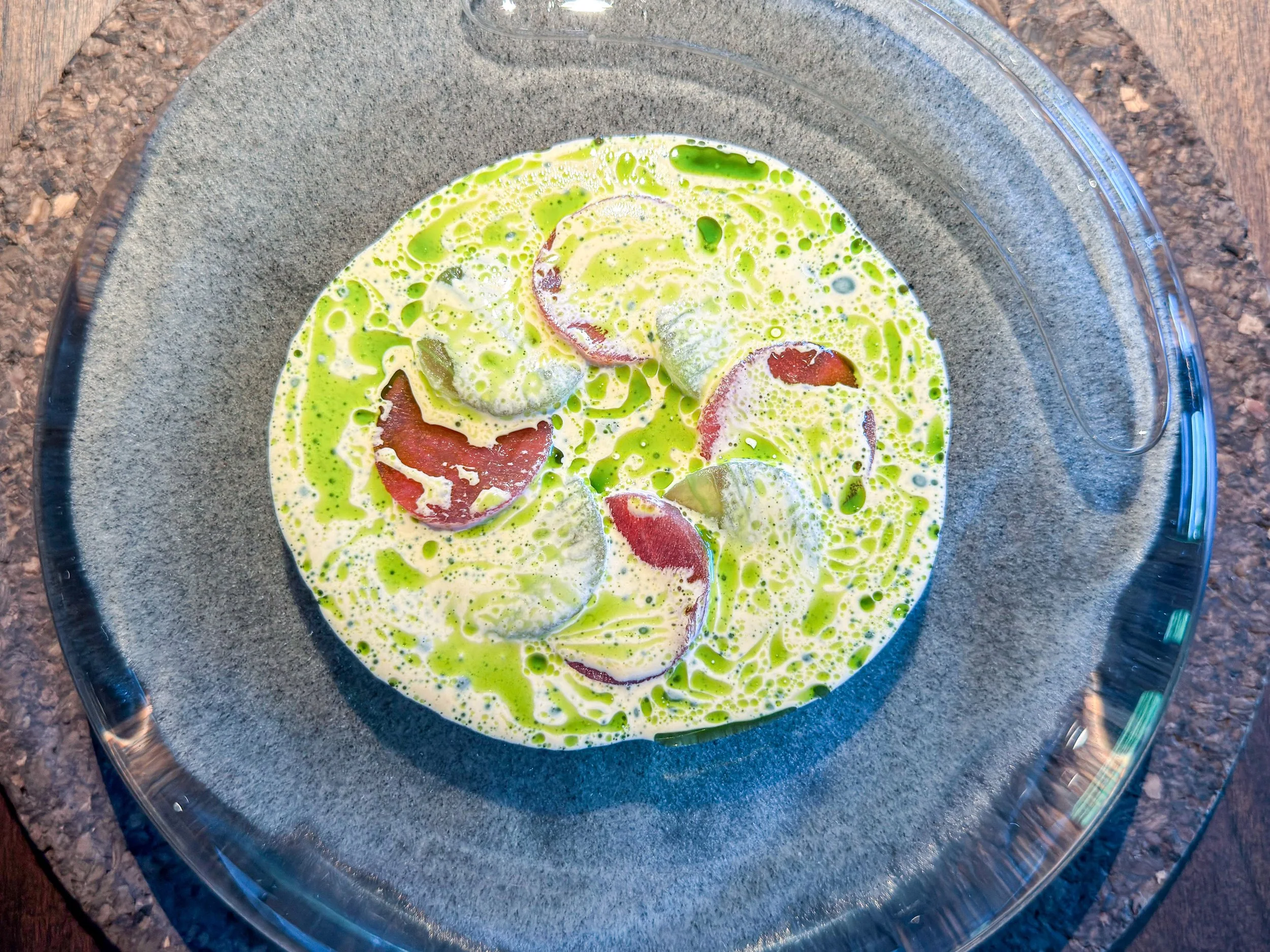
For the next course, cured tuna and salted cucumber have been cut into circles and arranged in the shape of a flower. At the table, a yuzu sauce with lovage oil is poured on, bringing a typically Nordic aromatic contrast between freshness, acidity, and savory depth. Although the tuna can barely assert itself in terms of flavor — and does not really have to — one would not want to do without its ample melt. Once again, this is rather excellent. (7.9/10)
Next comes a combination of razor clams and Australian winter truffle on a Jerusalem artichoke biscuit with further Jerusalem artichoke elements. A small bowl alongside picks up the same theme: here, a warm, salty-aromatic razor clam cream is combined with fine truffle batons. Overall, the earthy aromas of Jerusalem artichoke and truffle dominate the flavor profile, while the delicate maritime character of the clams recedes somewhat into the background. In addition, the truffle is surprisingly restrained aromatically and also not as “juicy” as one can experience with the very best qualities. Very good nonetheless. (7/10)
With the next course, Chef Hallal processes a childhood memory of manakish, a flatbread common in the Middle East. For this, a cube-shaped pastry made from salted croissant dough with sumac and black sesame is prepared. It is warm and buttery and is dipped into an herb cream with fresh herbs and more sumac. The tart spice brings freshness to an otherwise somewhat rich course.
Perhaps it would not be a bad idea to recommend that guests save the bread for later. Taken on its own, however, the course is notably successful, above all because of its precise handling of the tart-aromatic spice. (7.5/10)
While the Vosne-Romanée, despite decanting recommended by the sommelier, still does not quite want to relax, I take another look at the wine list. Another bottle is needed. My choice falls on a 2019 Nuits-Saint-Georges from Domaine Henri Gouges, which, at the equivalent of about €100, is not only astonishingly fairly priced but also provides more immediate drinking pleasure than the much more expensive Le Moine.
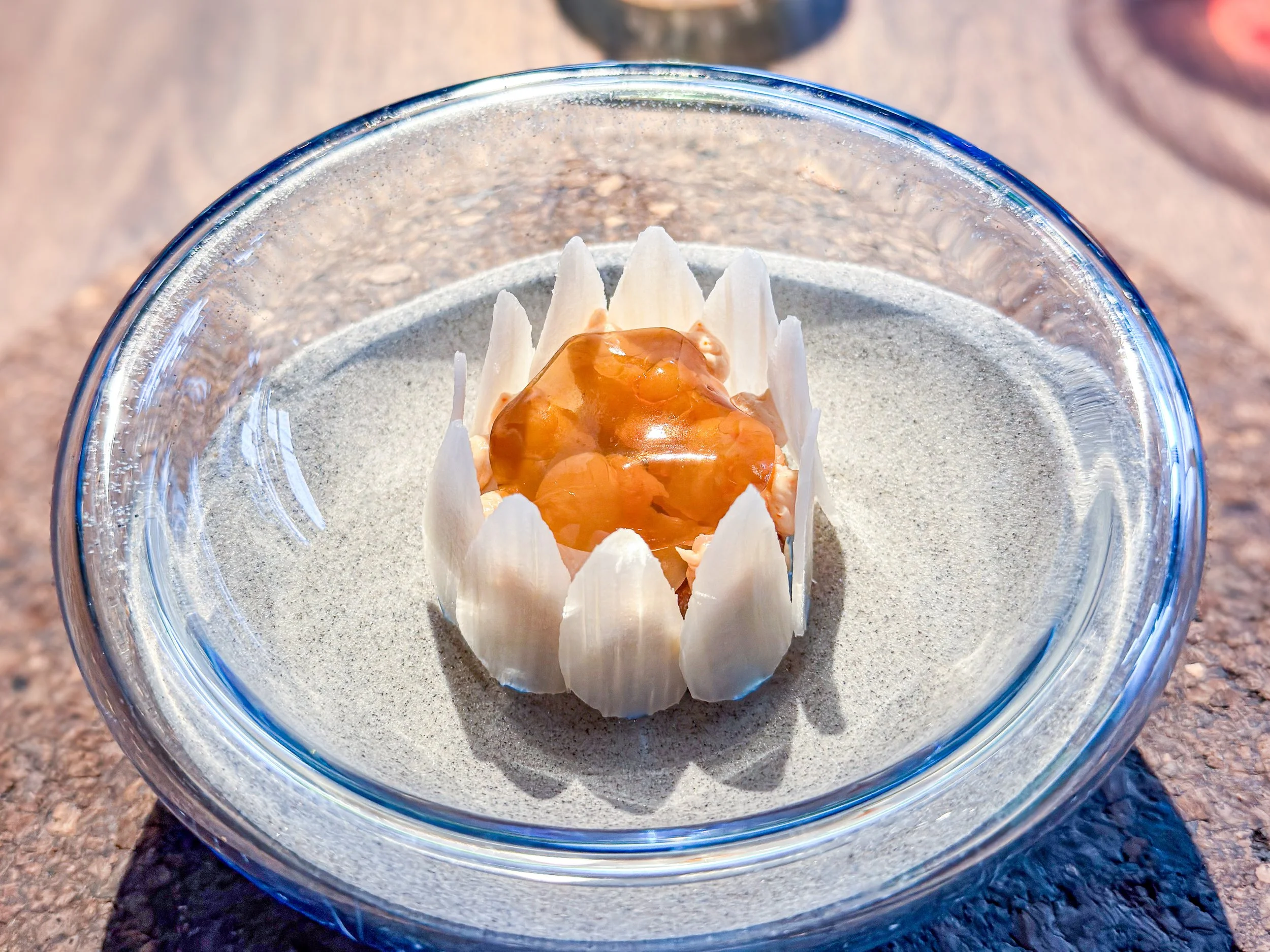
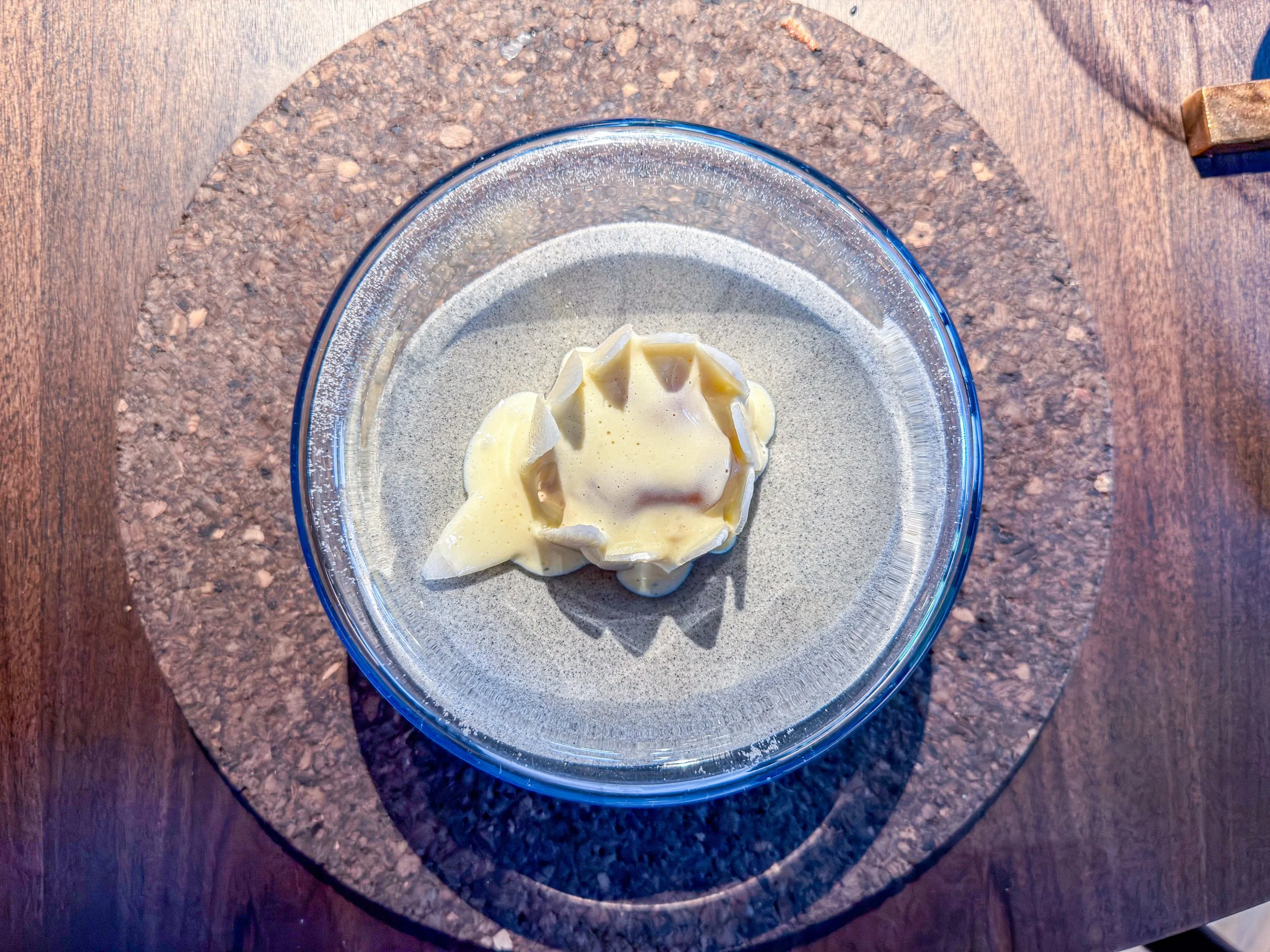
Now armed with two Burgundies, things also continue on the culinary side. The combination sounds adventurous: Danish lobster meets veal sweetbread, white asparagus, and a white asparagus mousseline poured at the table. There are also lobster salad, fried lobster, and a gel made from the shells of the crustacean.
That all of this finds its place in a compact creation resembling a crown is at least as surprising as the veal sweetbread, which appears here merely in the form of crisp crumbs. And yet the surf and turf convinces: crustacean umami meets nutty roasted aromas and the fine bitterness of white asparagus. The differing temperatures of the components add further tension. Very original and, despite the variety of preparations, surprisingly precise. (8/10)
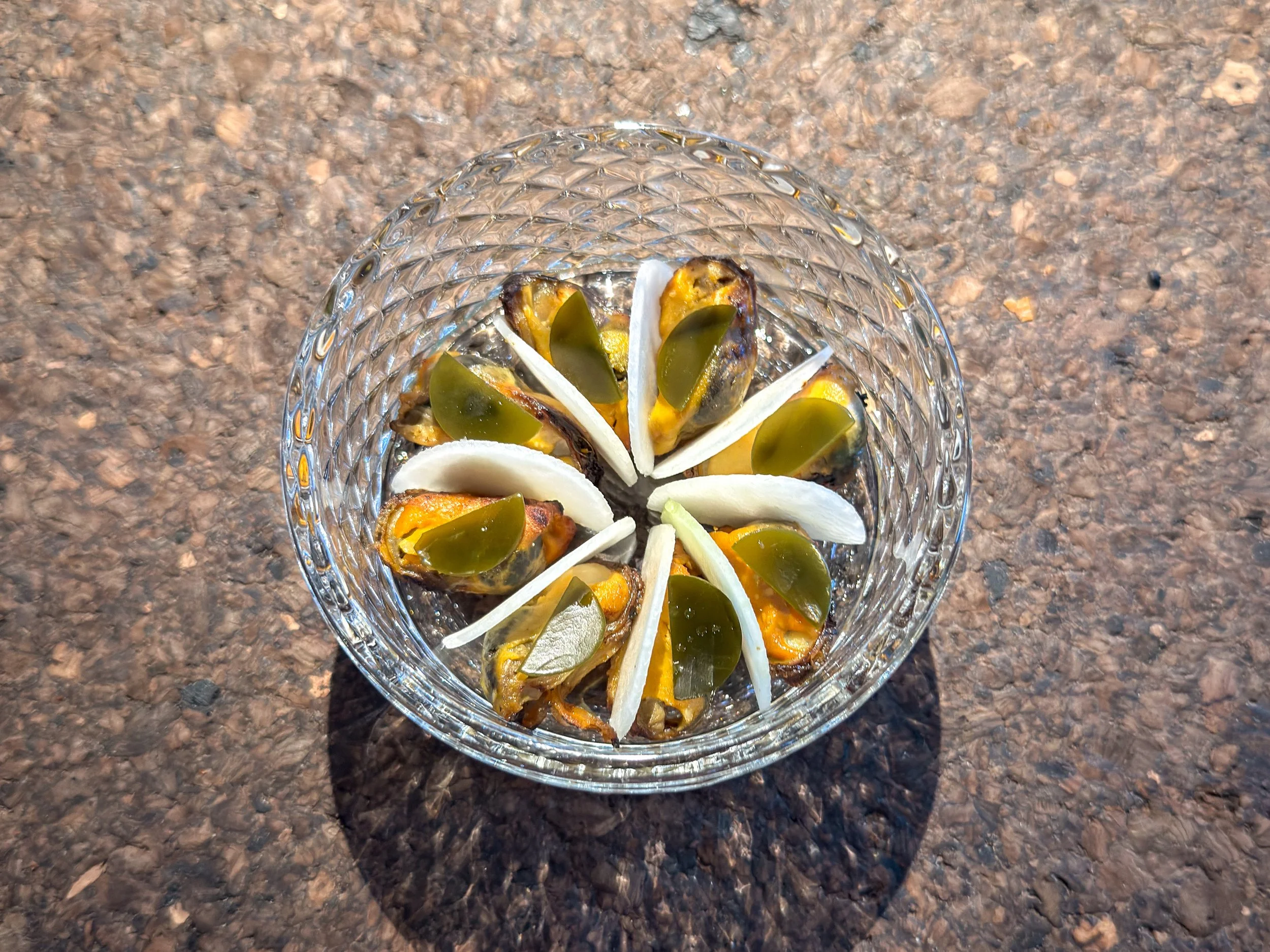
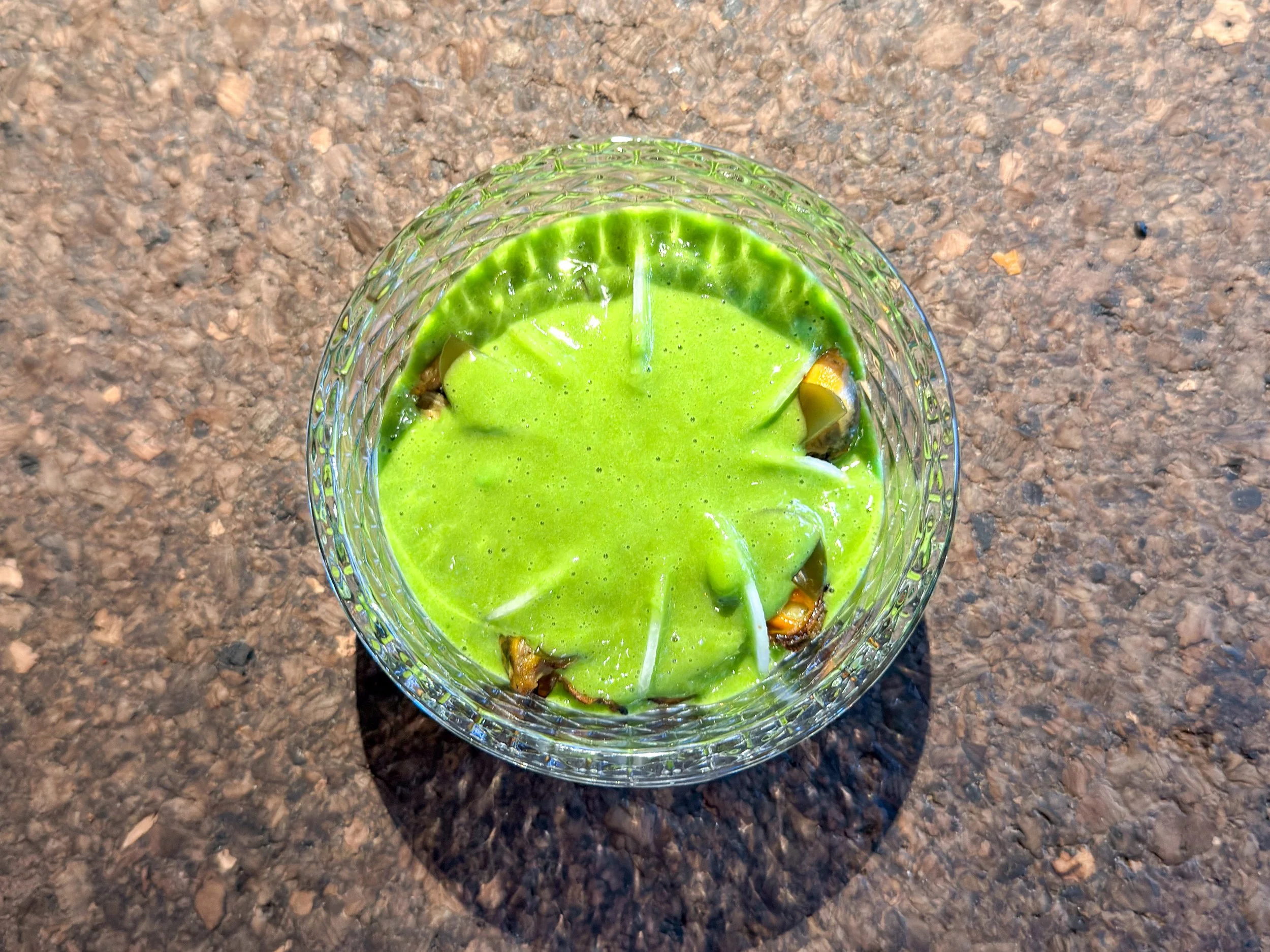
Another compactly plated dish follows, centered on mussels from the Limfjord with kohlrabi, seaweed, and young Danish peas. At the table, a pale green sauce made from grilled butter and peas is poured on.
What is particularly convincing here: for the first time in the menu, real heat comes into play, an ingredient so often neglected. But everything else convinces as well: the slightly firmer texture of the mussels, intense smoky notes, and the fresh, almost chlorophyll-like aroma of the peas. A slight heat on the finish adds extra intensity. Excellent. (8/10)
After an impressive tour with the owner through the excellently stocked and meticulously maintained wine cellar — each bottle bears a handwritten label — which is hidden beneath a hatch in the restaurant floor, the next course follows.
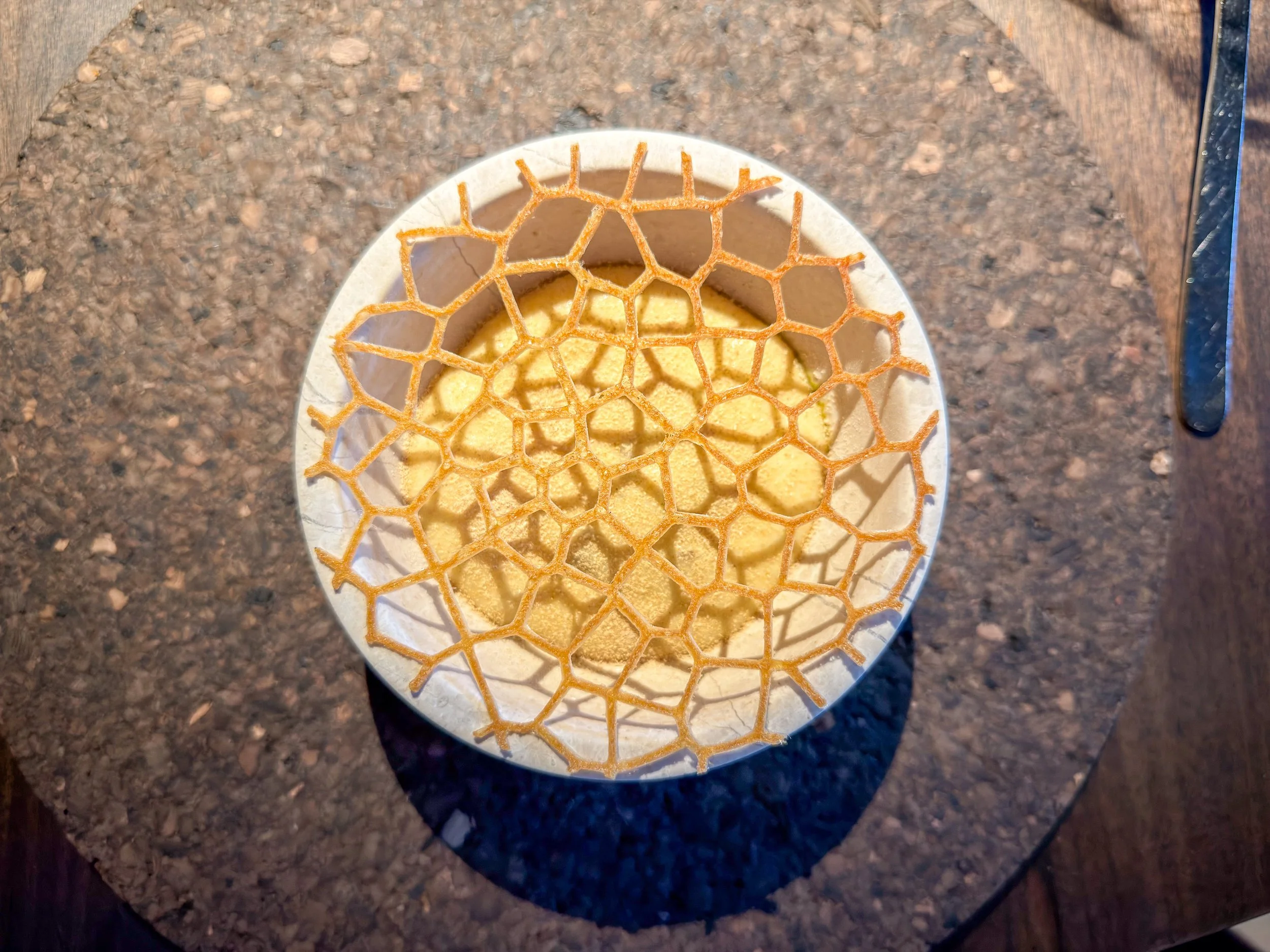
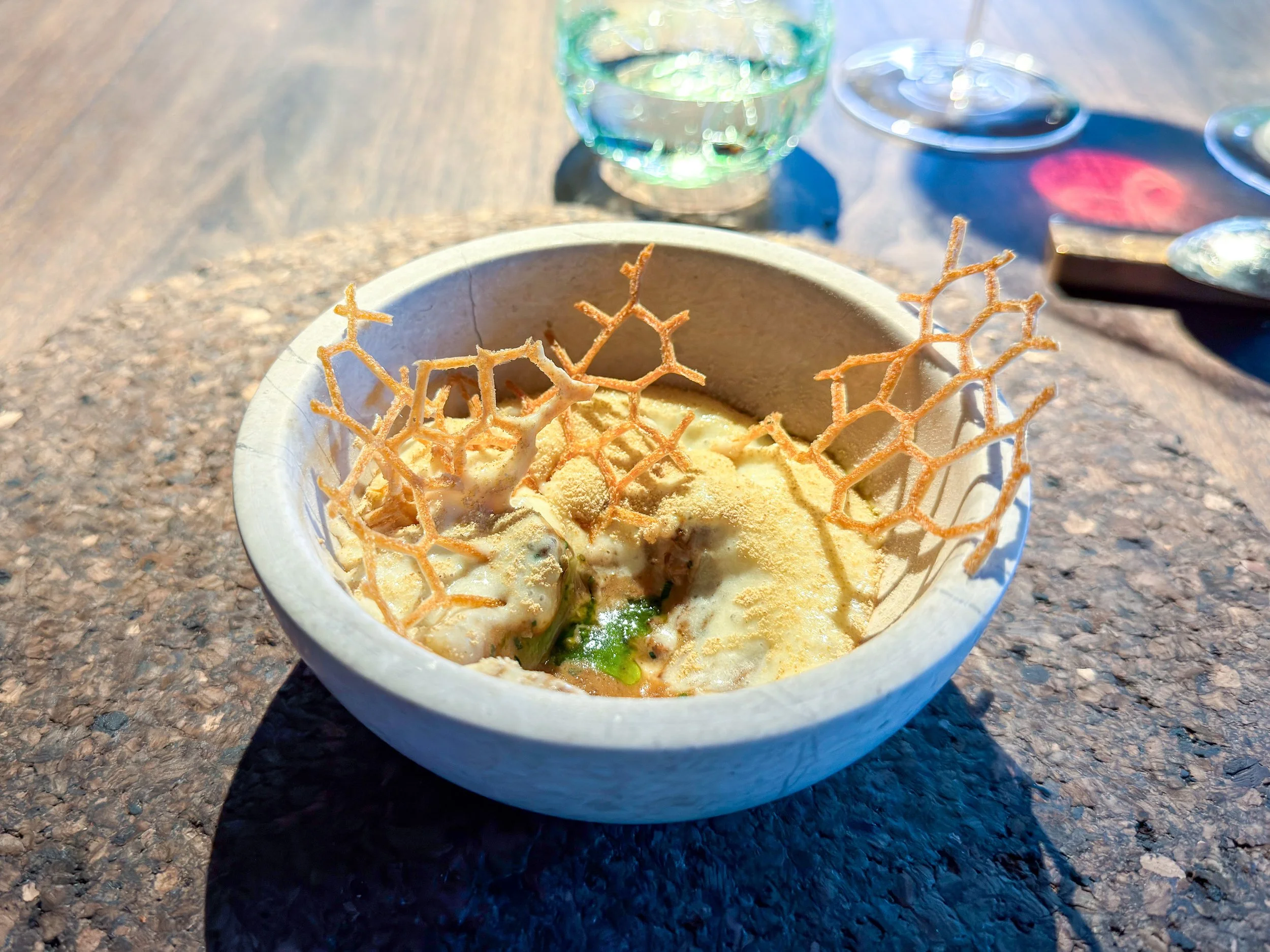
This is a creamy, foamy preparation centered on Danish potatoes, morels, and parsley, covered by a crisp potato net with which I prove somewhat clumsy. The actual combination initially convinces with plenty of umami, warmth, and a highly drinkable saltiness. Yet it soon feels somewhat one-dimensional, as the flavor of potato ultimately takes over. Very good, nevertheless. (7/10)
For the main course, for which pigeon is actually intended — the only restriction I mention when making reservations — the kitchen substitutes Danish Wagyu for me. Three thin slices of rump steak are accompanied by various carrot preparations and a foamy sauce with miso and green pepper.
This does not convince all the way through. The meat clearly has the expected quality, but the carrots, barely perceptible aromatically, and an intense smoky note that overshadows everything make the course seem not quite calibrated yet. In an entertaining exchange with the chef — not about my perception of this course, but about my general avoidance of pigeon — I spontaneously agree to try a piece.
The pigeon would have been the actual protagonist of this course, and it manages to convince me, above all, with a savory-aromatic herb farce beneath the very thin, crisp-roasted crust, because the often metallic note is hardly perceptible here and it is not served bloody. It would probably even have been the better counterpart to the powerful smoky notes of the sauce. However one looks at it: everything is very good, but there is still potential. (7/10)
The first dessert plays with rhubarb in different textures and temperatures, complemented by chocolate and lemon verbena. Throughout, the rhubarb surprises with a fruity but barely acidity-driven flavor. Gradually, chocolate and crisp elements unfold. This is great dessert pleasure, the kind that makes one want to keep spooning. (8/10)
The pumpkin seeds in various preparations — as oil, ice cream, and roasted — are also excellent. Nutty roasted notes, creamy cool ice cream, and a lightly salty note round off the menu perfectly. (8/10)
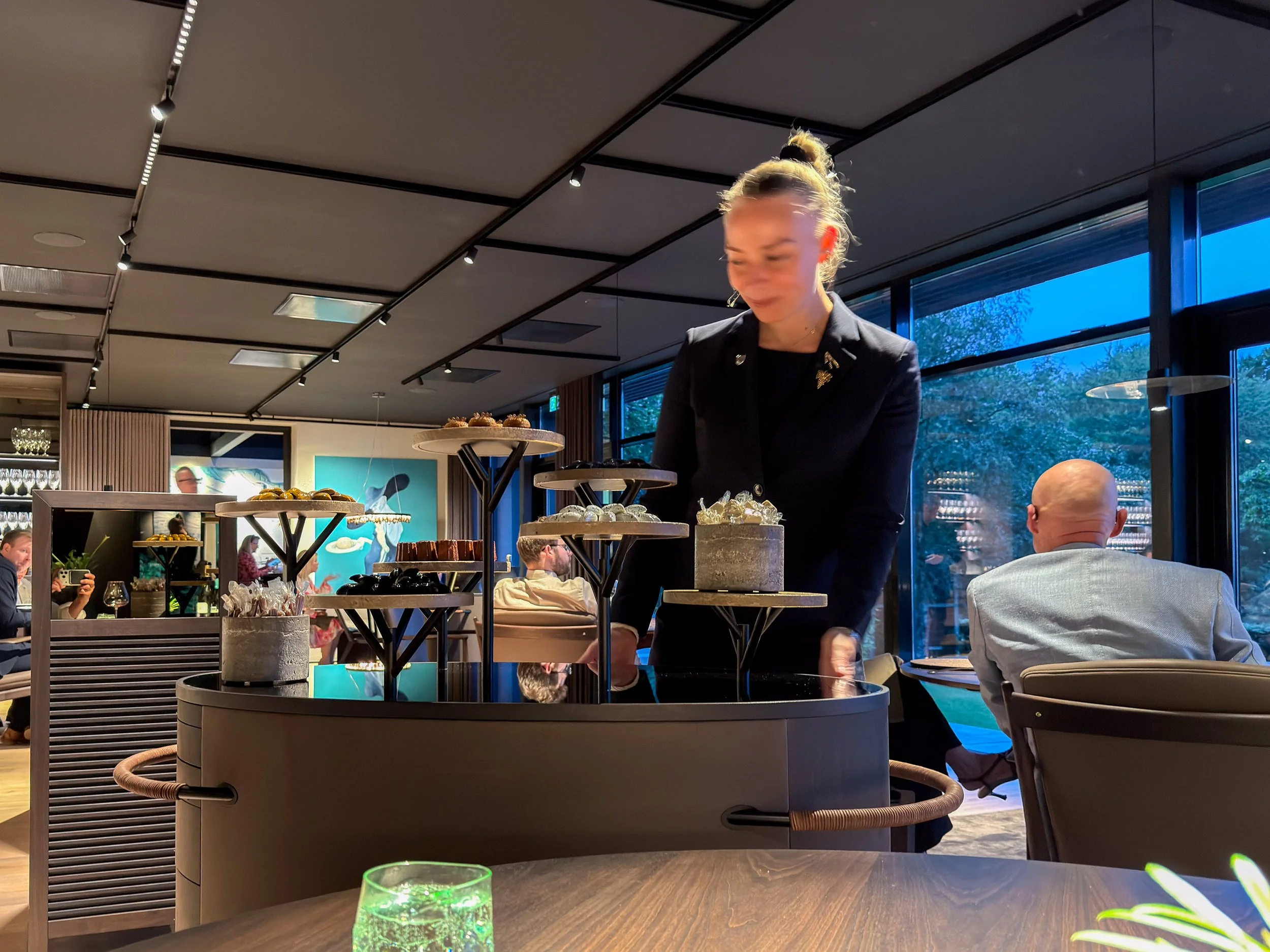
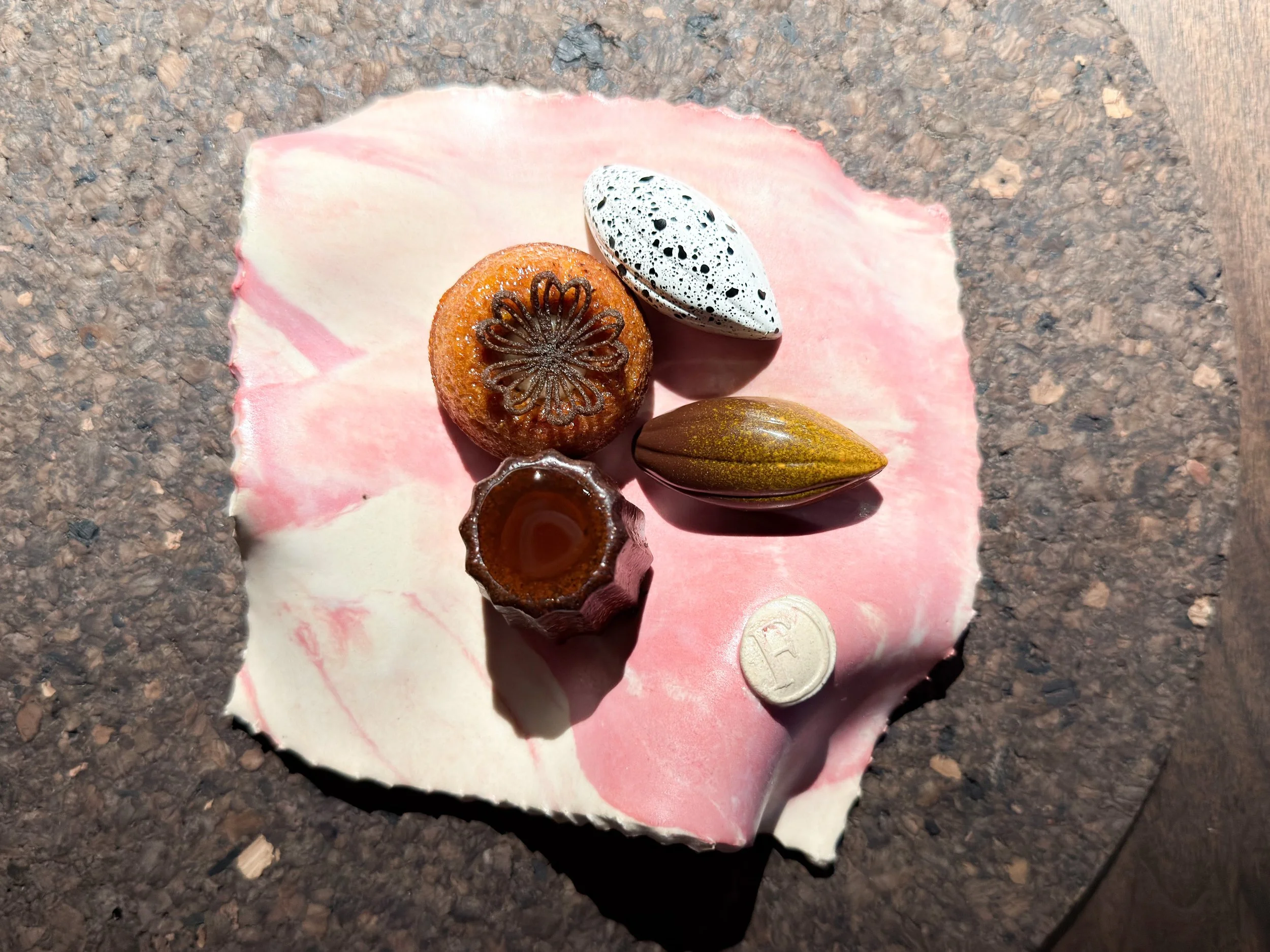
Not quite, though, because I do not let a few petits fours from the trolley pass me by. A canelé with mandarin, an interpretation of a madeleine with malt and lemon curd, white chocolate with licorice, and a nougat praline remain classic, technically perfect, and confirm the high level of the pastry department. (8/10)
I experienced an exceptionally pleasant evening at Frederikshøj. The cuisine convinces with a French-inflected foundation, avoids showmanship, and repeatedly reveals subtle influences from Hallal’s Middle Eastern background. Minor weaknesses barely matter in view of the relaxed atmosphere and the warm, humorous service. And all of this just four hours by car from Hamburg — in that respect, already worth a trip.