Evvai — Brazil Versus Italy
For the first time, the Michelin Guide has awarded three stars to restaurants in Brazil: Evvai and Tuju. The name Evvai is Italian and means something along the lines of “Hooray!” Chef Luiz Filipe Souza is said to combine his Italian roots here with Brazilian ingredients and techniques. I traveled to São Paulo to find out what, exactly, awaits the diner.
The restaurant is about a twenty-minute taxi ride from my hotel. On my second day in this gigantic metropolis, I still have no sense of orientation whatsoever. The neighborhood seems comparatively calm, yet I still do not move entirely at ease through a city in which one is constantly warned about one danger or another. So I head inside quickly, before someone has the chance to snatch the phone from my hand while I photograph the restaurant.
The building itself is inconspicuous: narrow and single-story, with a valet stand out front — it could just as easily be in Los Angeles.
Inside, the mood is polished but relaxed. The elongated dining room accommodates only seven tables on two sides divided by a long credenza; the open kitchen closes off the space at the rear. There are no tablecloths. Wood and shades of blue define the intimate interior.
The tasting menu costs 1,650 reais, about €285, and comprises sixteen courses. A concise overview is presented at the beginning; with each course comes a comic-style illustrated card containing more detailed information.
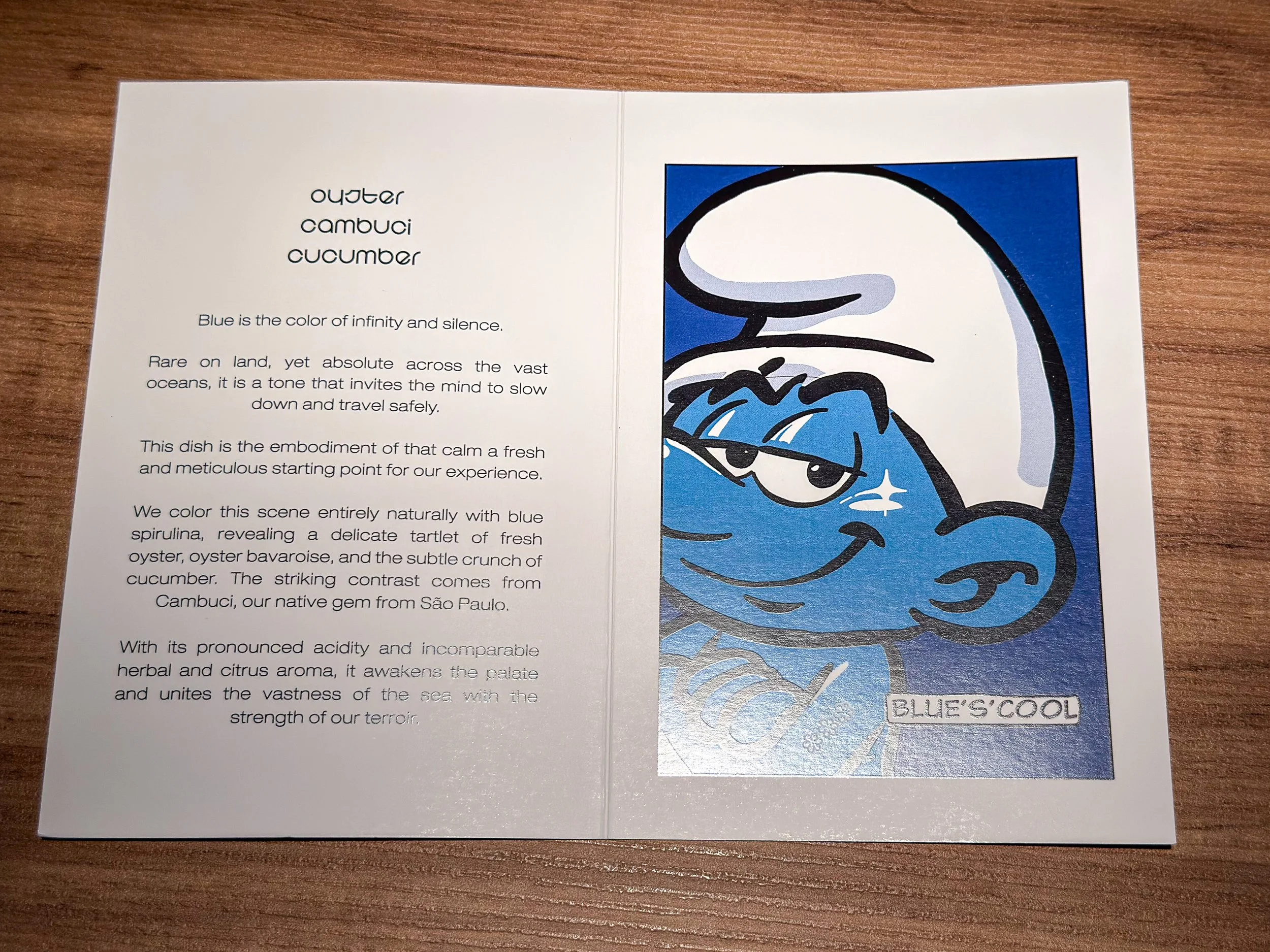
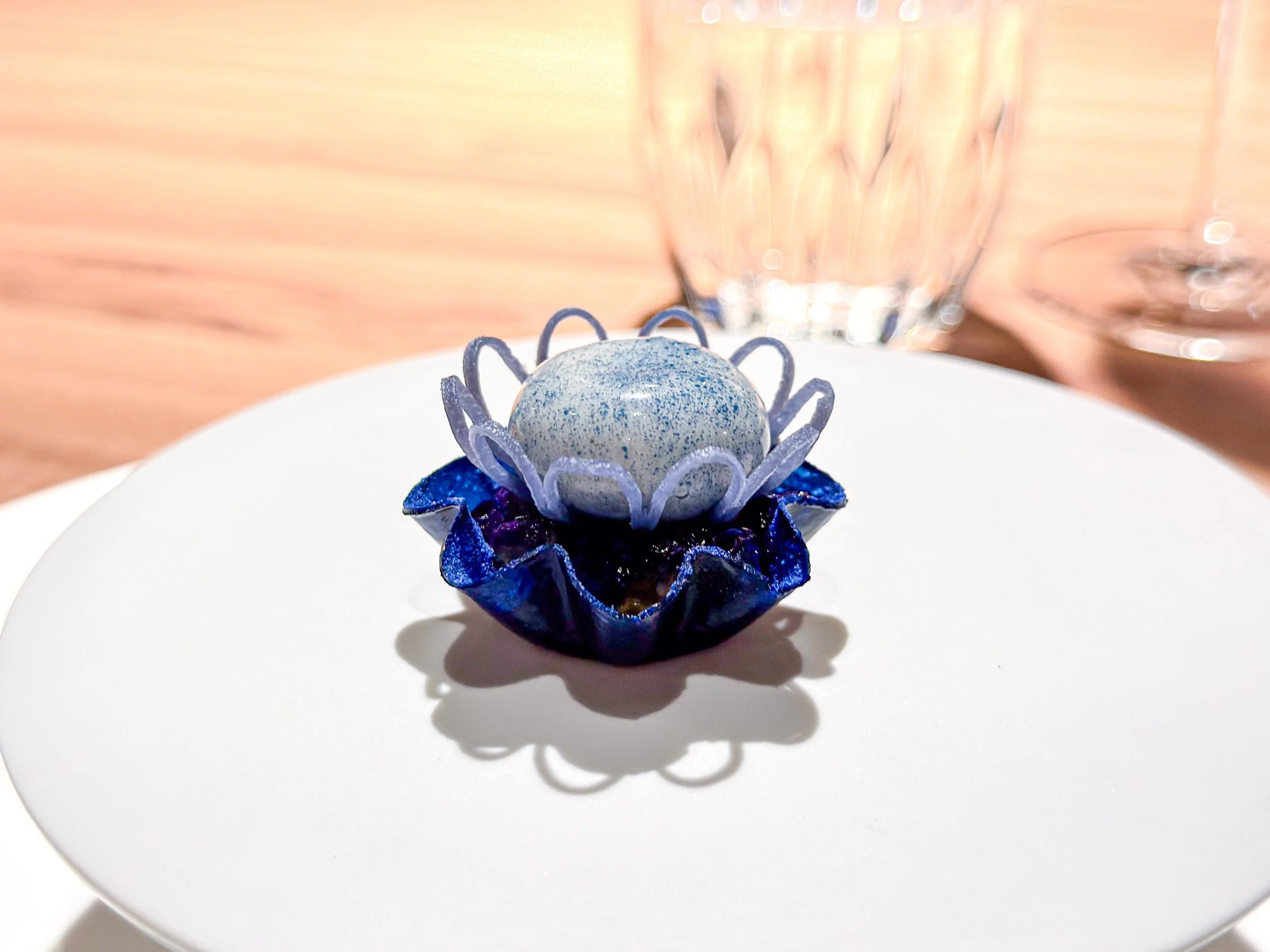
The first bite at Evvai is a tartlet. Its filling has been colored in various shades of blue with spirulina. The effect is slightly alien, yet it suits the maritime and fruity flavor profile of oyster and oyster bavarois, refreshed by cucumber and cambuci. The bite also offers compelling textural contrasts. (8/10)
There is always something thrilling about taking the first bite in a restaurant for which one has traveled so far. In that instant, expectations and accolades become tangible for the first time. This opening was excellent — but is that all? Where will the menu go from here? And what should I choose from the wine list?
The latter question is answered more quickly. The first Brazilian wine list I have ever held in my hands may offer a little of everything, but it also provides an opportunity to try regional wines — an opportunity I make use of only at the beginning.
I start with a Brazilian blanc de blancs sparkling wine from Cave Geisse, about €120, whose rather unruly acidity does not particularly win me over. My next target, then, is a 2021 Saumur “Brézé” from Domaine Guiberteau, about €320.
The second course takes up the idea of bruschetta. In place of toast, a delicate, crisp meringue made from egg white and seaweed stock acts as the base for rich, cool bluefin tuna, sweet lacto-fermented tomato — both as a paste and as another crisp layer — and a fruity glaze made from pimenta de cheiro. Because of the crunchy elements, the excellent tuna only emerges after a slight delay on the palate, but when it does, the references to Japan are unmistakable. This is more than excellent, even if the dish is almost too technically considered for its own good. (8.5/10)
The next course likewise demonstrates how central technical complexity is to this kitchen. It arrives as a delicate boat-shaped bite made from grouper garum, filled with confit squid, smoked bone marrow, and caviar. Sour cream flavored with limão caipira, a local lime variety, is served alongside and can be added at will. Acidity, lactic notes, marine flavors, and smoke interlock in a highly pleasurable and original way — a perfect bite. (9/10)
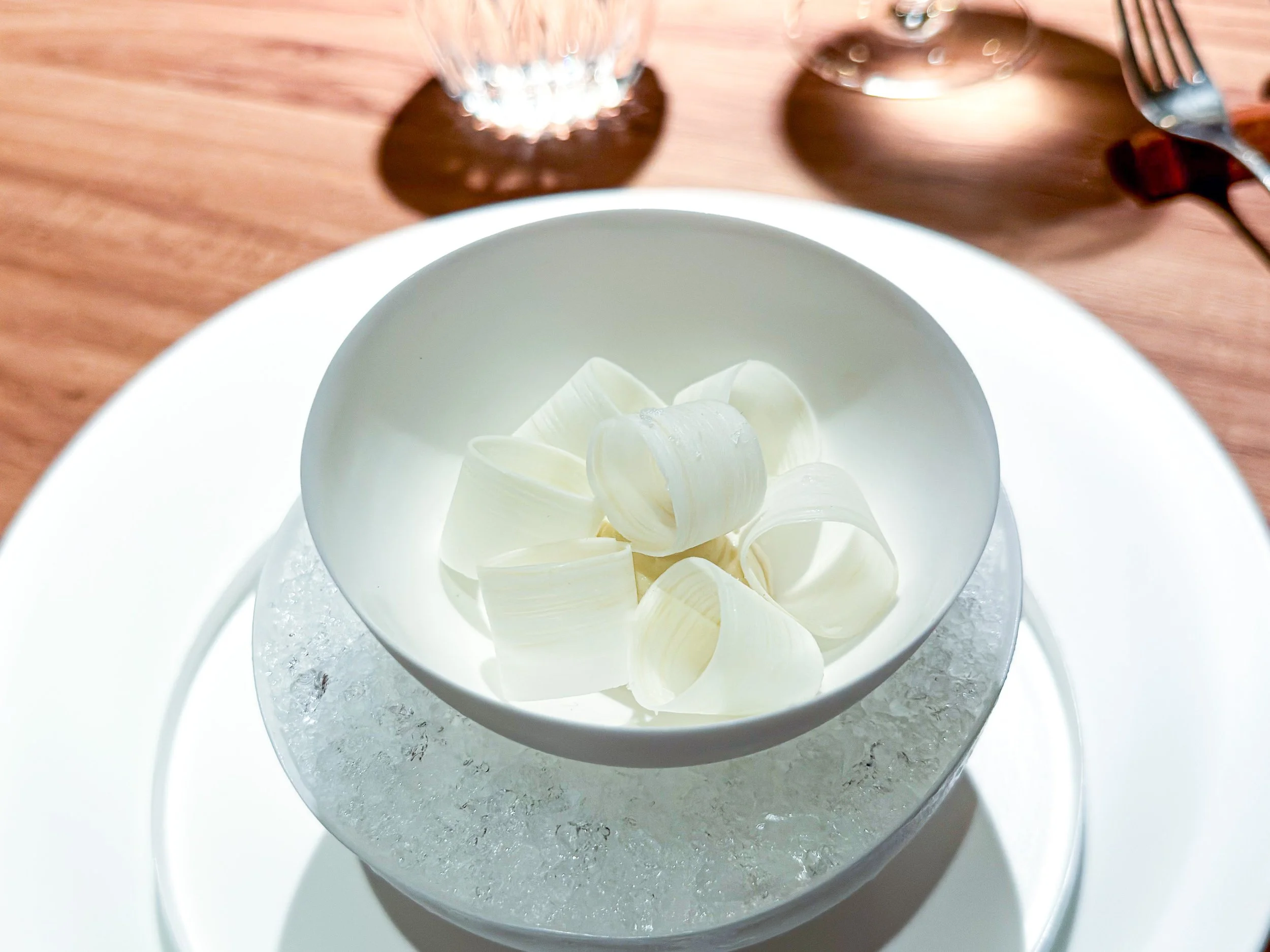
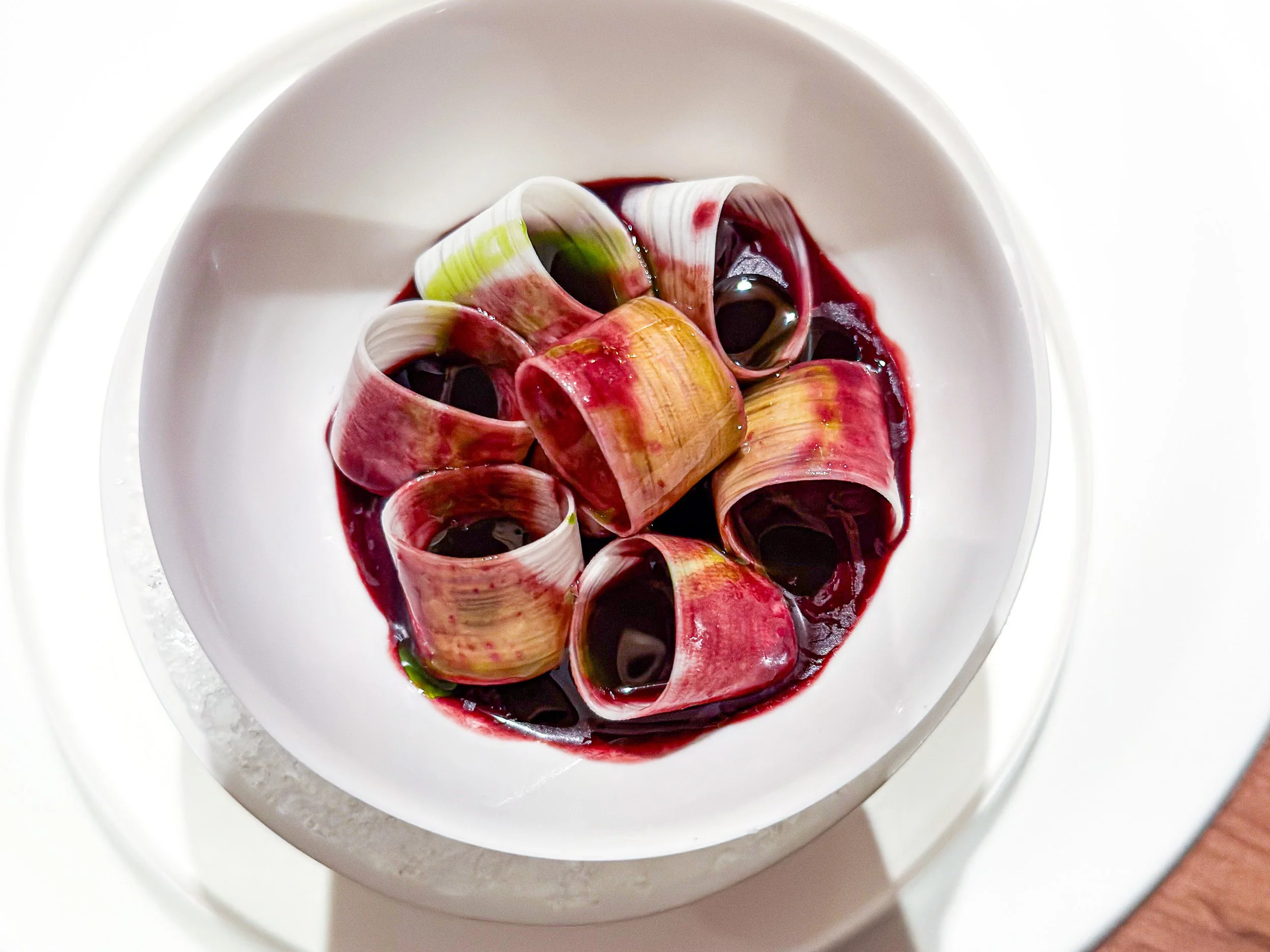
Next comes a dish completed tableside. In a small bowl lie paper-thin strips shaved from the heart of the peach palm, or pupunha, curled into white, pasta-like tubes. Beneath them is an almond cream, also white. Finally, two liquids are poured in: red açaí extract and green fig-leaf oil — and there is the Italian tricolor.
The course is persuasive not only visually. Several things are striking: its surprising richness, driven by plant fats, and a warm-cold contrast that exists only in the mind. The dish itself is lightly chilled, but the almond cream has an aroma reminiscent of classic suntan lotion, almost casually evoking the warmth of beaches and summer. (9/10)
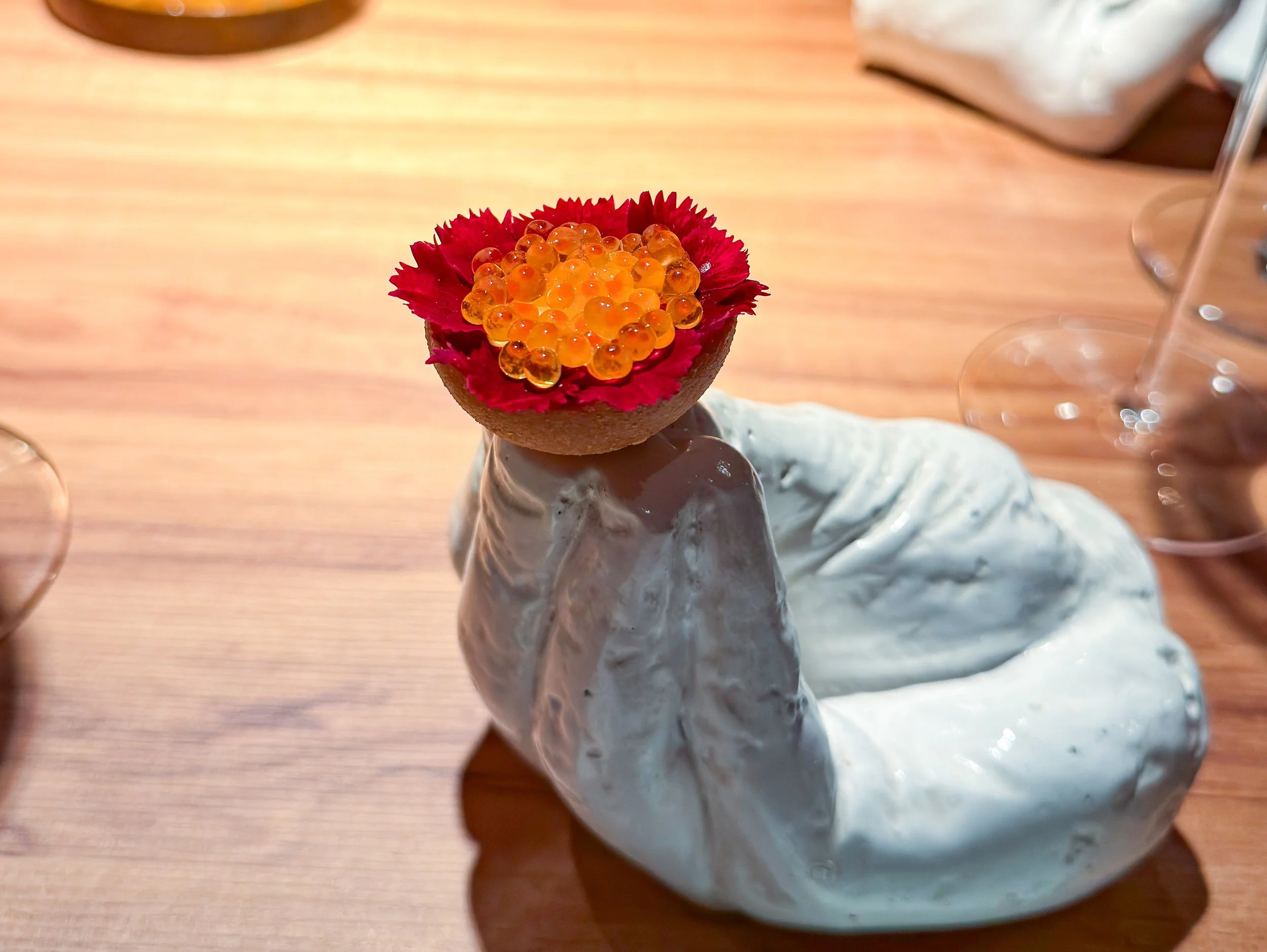
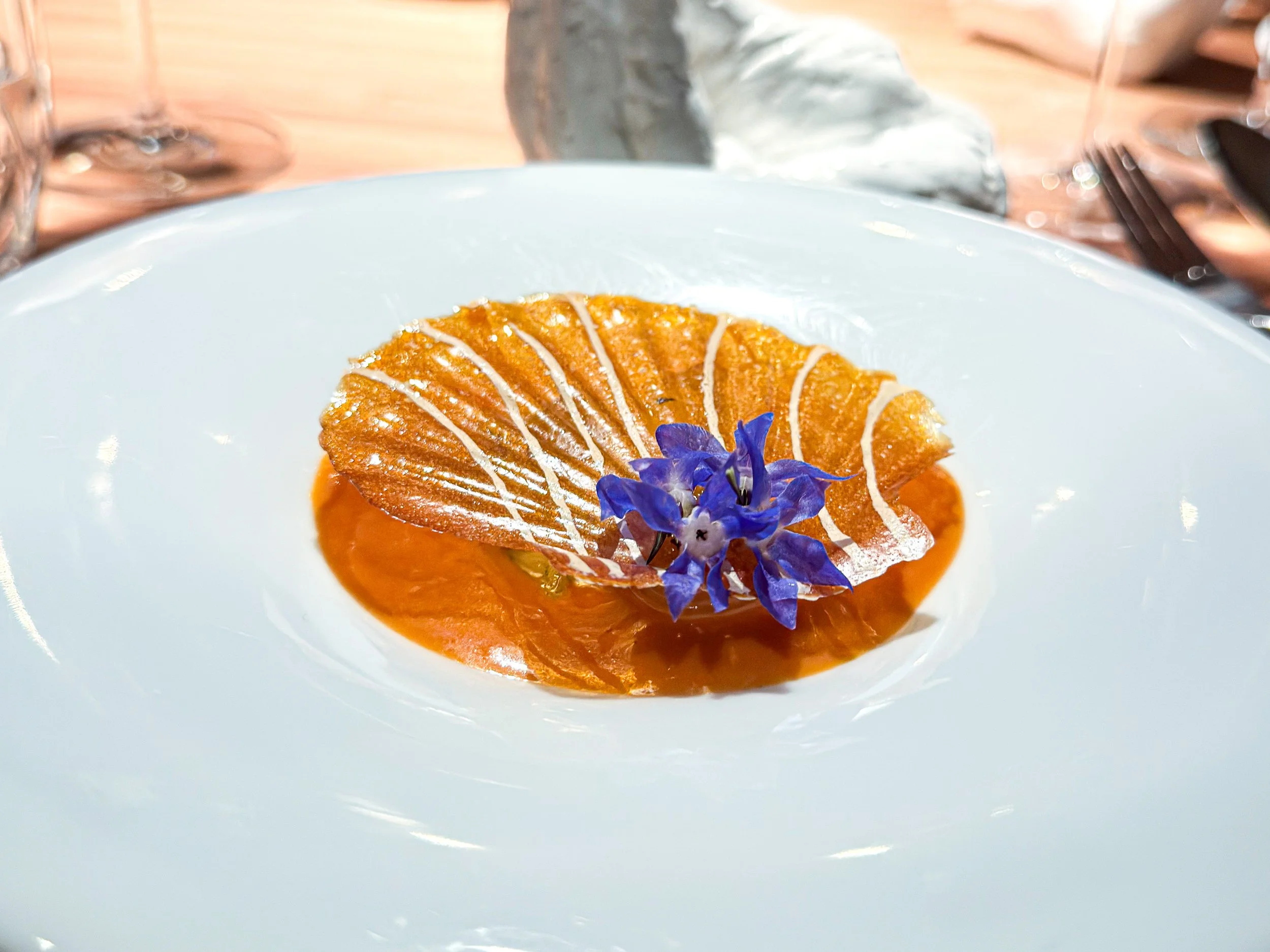
The “Scallop Bomb,” as the next course is called, arrives as a duo. A tartlet filled with fresh scallop paste, lardo from the Porco Caruncho pig, and trout roe opens the course with intense salinity — almost too much, considering that the bite is served at room temperature and the maritime flavors consequently feel somewhat heavier.
The true centerpiece, raw scallop between wafer-thin scallop crisps, is more compelling. Not only does the cool, lucid flavor of the shellfish come through beautifully; a guava gazpacho in which the composition is set adds deeply savory umami and an elegantly integrated fruitiness. Excellent. (8.5/10 for the composition as a whole.)
The menu continues with an interpretation of bobó, a traditional Brazilian stew of cassava, coconut milk, palm oil, or dendê, and shrimp. Those ingredients are employed here as well, though prepared with far greater precision than tradition requires and further refined with saffron. At the center is a carabinero prawn prepared using different cooking techniques and temperatures. This creates tension, while the intense saffron and an unabashed heat supply warmth to the dish without actually raising its temperature. Impressive. Icy tarragon powder calms the nerves. (9/10)
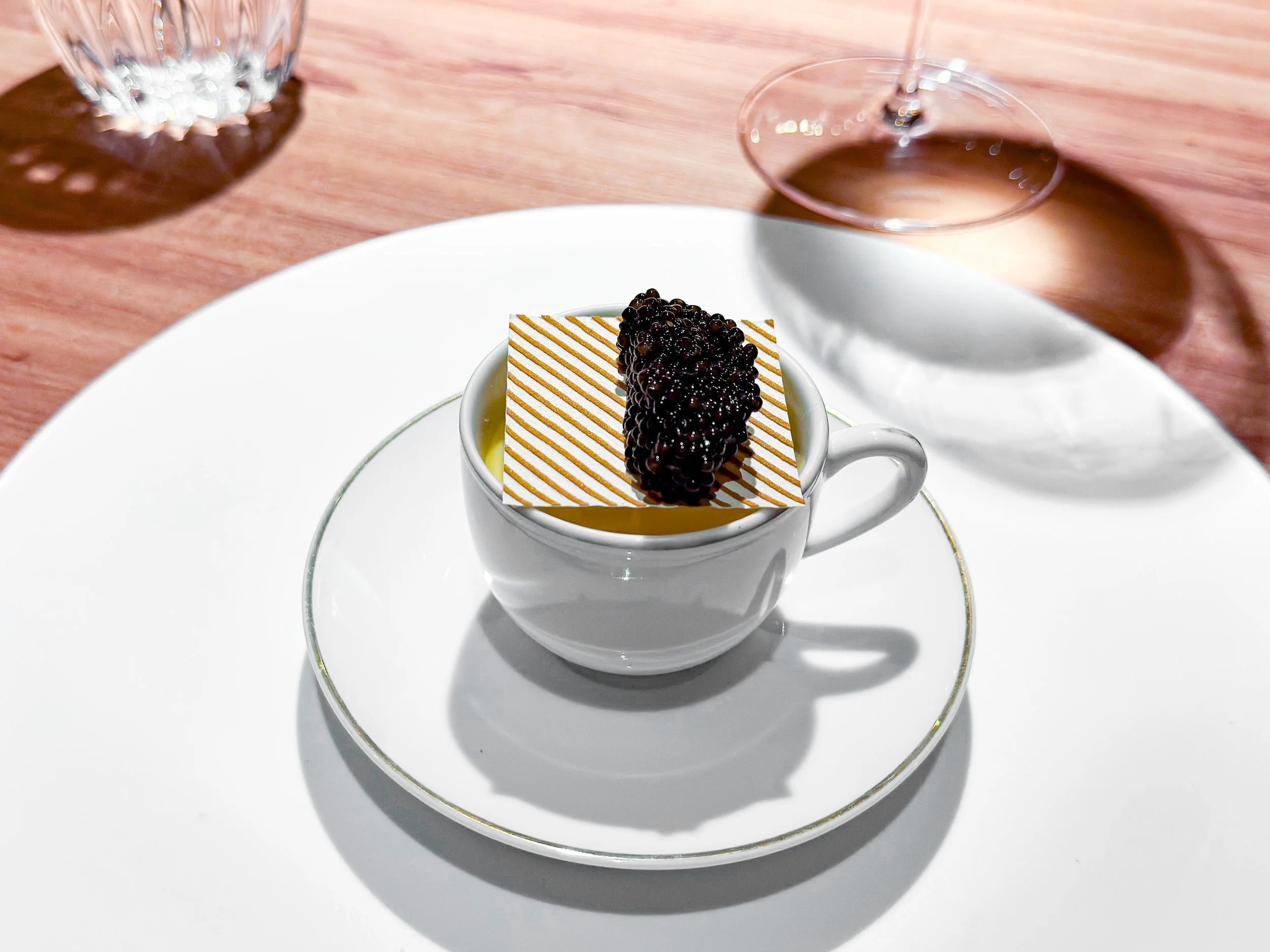
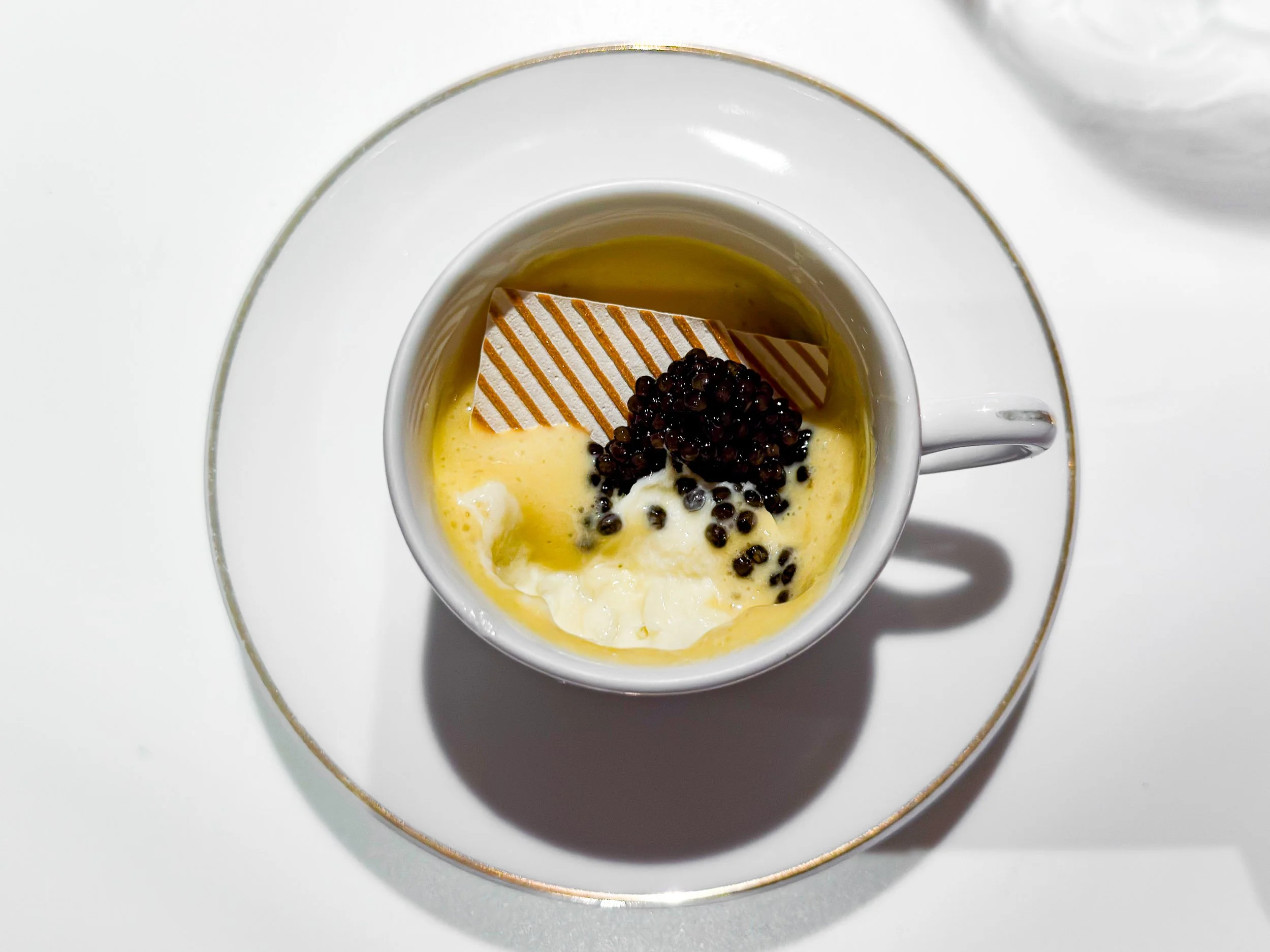
The next course also takes up a traditional Brazilian ingredient: tucupi. This pressed liquid from cassava generally tastes distinctly earthy and acidic, with considerable umami. Here it appears in several preparations as a kind of “cappuccino,” within which cod is placed both confited in olive oil and as a purée, or mantecato. A quenelle of caviar, offered as an optional supplement for about €67, finishes the dish with a luxurious saline accent. The course feels comforting and warm without being loud. It is precisely this restraint that makes it convincing. (8.5/10)
Next, things become somewhat more dough-driven. Pão de queijo, the Brazilian fried cheese bread, is prepared here from cassava starch in the shape of a doughnut and filled with smoked Céu de Minas cheese. The fine crispness of the shell and the exact proportions of the components are particularly impressive. (8/10)
At the same time, a bread made from cassava sourdough is set on the table, accompanied by passion fruit butter, honey from native bees, and fresh olive oil from the Serra da Mantiqueira — all excellent. One would never guess that the bread is based on cassava rather than grain.
As a relaxed 1980s playlist drifts through the room — at that moment, Kim Carnes’s “Bette Davis Eyes” — the next illustration introduces the following course.
This one revolves around steamed sea bass served in a deconstructed sururu broth. The mussel, traditionally served as a soup, appears here as a concentrated solid element, as a mussel purée, and as a mussel emulsion. Leek also plays a role, while a pale, foamy moqueca — a type of fish stew — frames the entire composition. The dish tastes more green than maritime. The fish is delicately cooked, everything is finely balanced, yet the temperature remains very uniform. By now, as so often in tasting menus, I miss the occasional element of genuine heat that might allow me to surrender completely. Still, there is no question that this remains more than excellent. (8.5/10)
Another wine has meanwhile found its way to the table. Having had some time to browse the list in advance, I had noticed a mature Malbec: the 1994 Tonel Único 111 from the Argentine producer Weinert, about €224. The wine, which spends twenty-three years in wooden casks before release, proves to be a genuine discovery. Its tertiary but by no means oxidative aromas are met by a lean, cool freshness; even now, further aging potential still seems entirely plausible.
With this excellent wine — and Tears for Fears’s “Everybody Wants to Rule the World” — a chicken course arrives. A section of the wing has been cooked sous vide and is served with cotechino sausage and an extraordinarily concentrated demi-glace based on oxidized Brazilian wine, alongside a lighter foamed sauce and a pungent herb.
The dish lives on collagen, concentration, and remarkable sauce work. It would be excellent if the chicken were served hot, juicy, and with crisp skin. Instead, the slow vacuum cooking produces a lukewarm, soft texture that significantly tempers my very real enthusiasm. (8/10)
And then, as though the kitchen had heard my thoughts, a hot — genuinely hot — mushroom broth arrives, scented with juniper and a little chile, with two tortellini filled with Brazil-nut farce. The broth, with its appetizing droplets of fat, is intensely savory, warming, and full of flavor, yet still elegant, almost like a dashi. This outstanding course is also the most “honest” so far, and precisely for that reason, the most magnificent. (10/10)
Another meat course follows: picanha, a highly prized South American cut taken from the outermost tip of the rump cap. It is all the more puzzling that this regional specialty can be replaced, for an additional charge, with Japanese A5 Wagyu. More regrettable still, the picanha itself is not convincing. The small piece is fairly tough and not especially flavorful, while beet and wasabi oil overwhelm rather than support it. The result is more thought-provoking than pleasurable. (7/10)
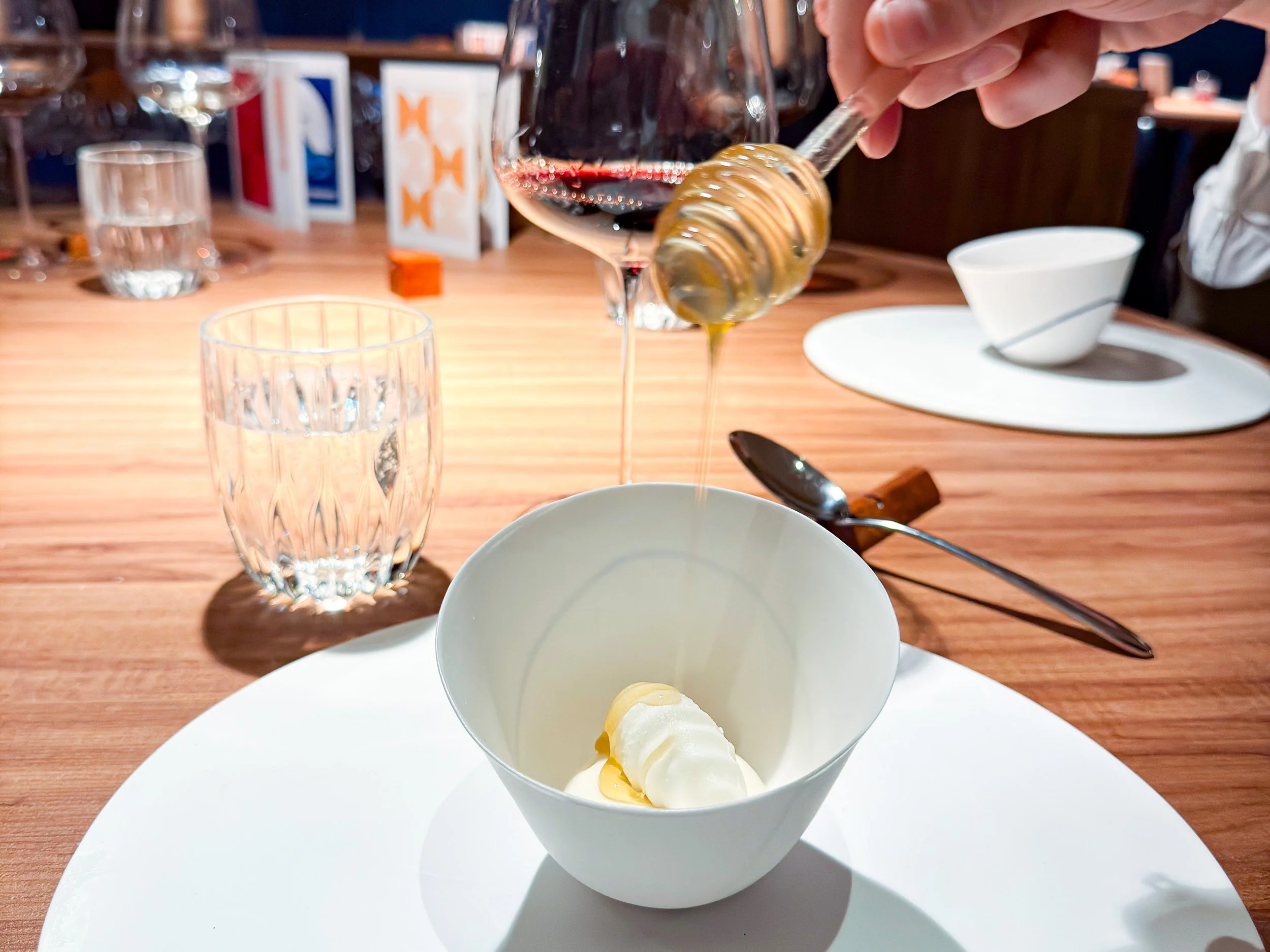
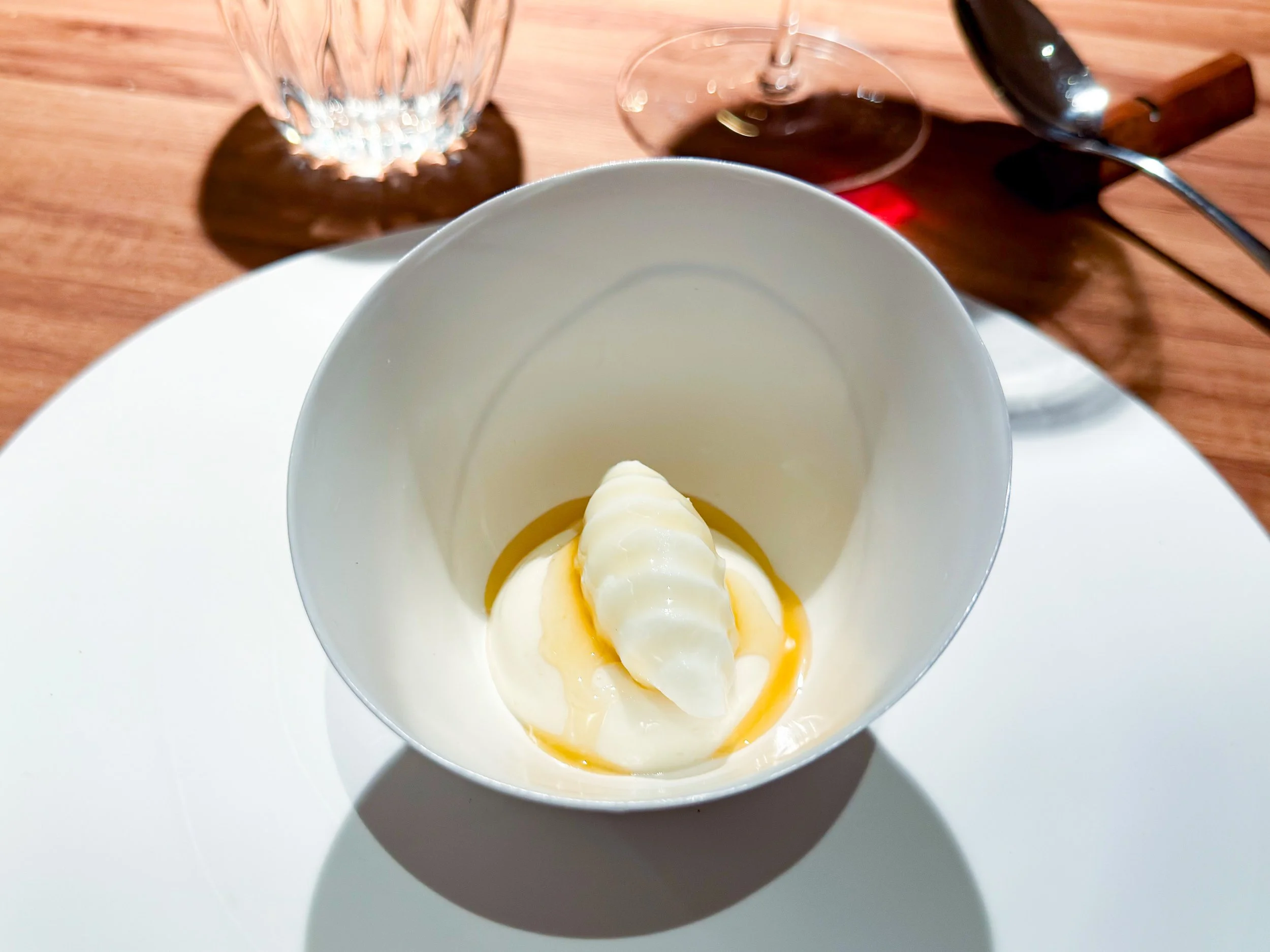
The sweet part of the menu begins with yogurt ice cream flavored with beeswax and black pepper, over which Emenina honey from Brazilian bees is poured tableside. It tastes exactly as it sounds: fresh, cool, piquant, and ethereal, but not overly sweet — instead floral and marked by acidity. Irresistibly good. (10/10)
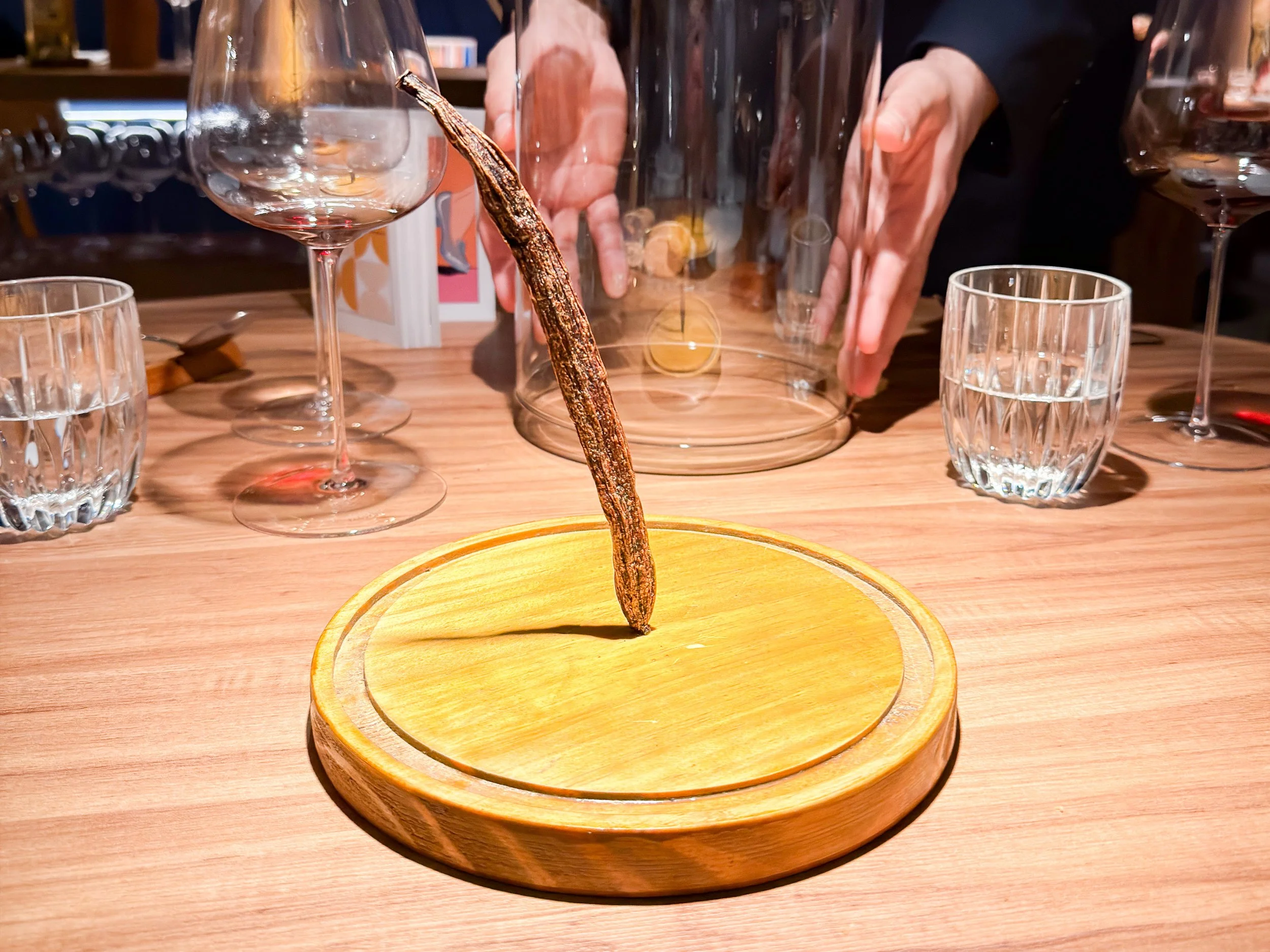
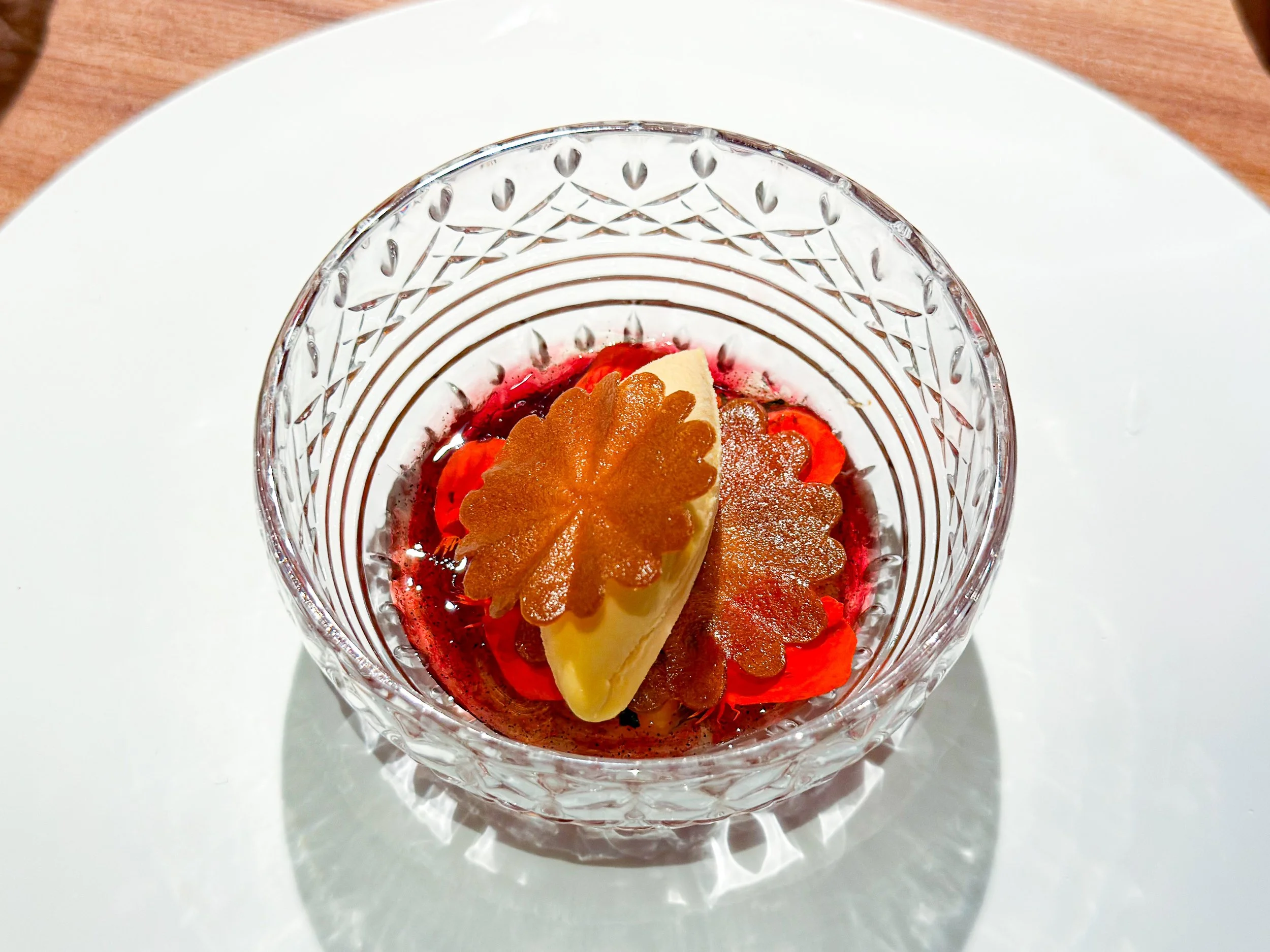
A dessert of fresh papaya, cassis, and perilla — supposedly a steakhouse classic — is equally phenomenal. In addition to the fruit itself, a papaya liqueur flavored with Brazilian vanilla also appears. Creamy papaya, a spirited, fruity liqueur, and exceptional vanilla make this another outstanding and highly original dessert. (10/10)
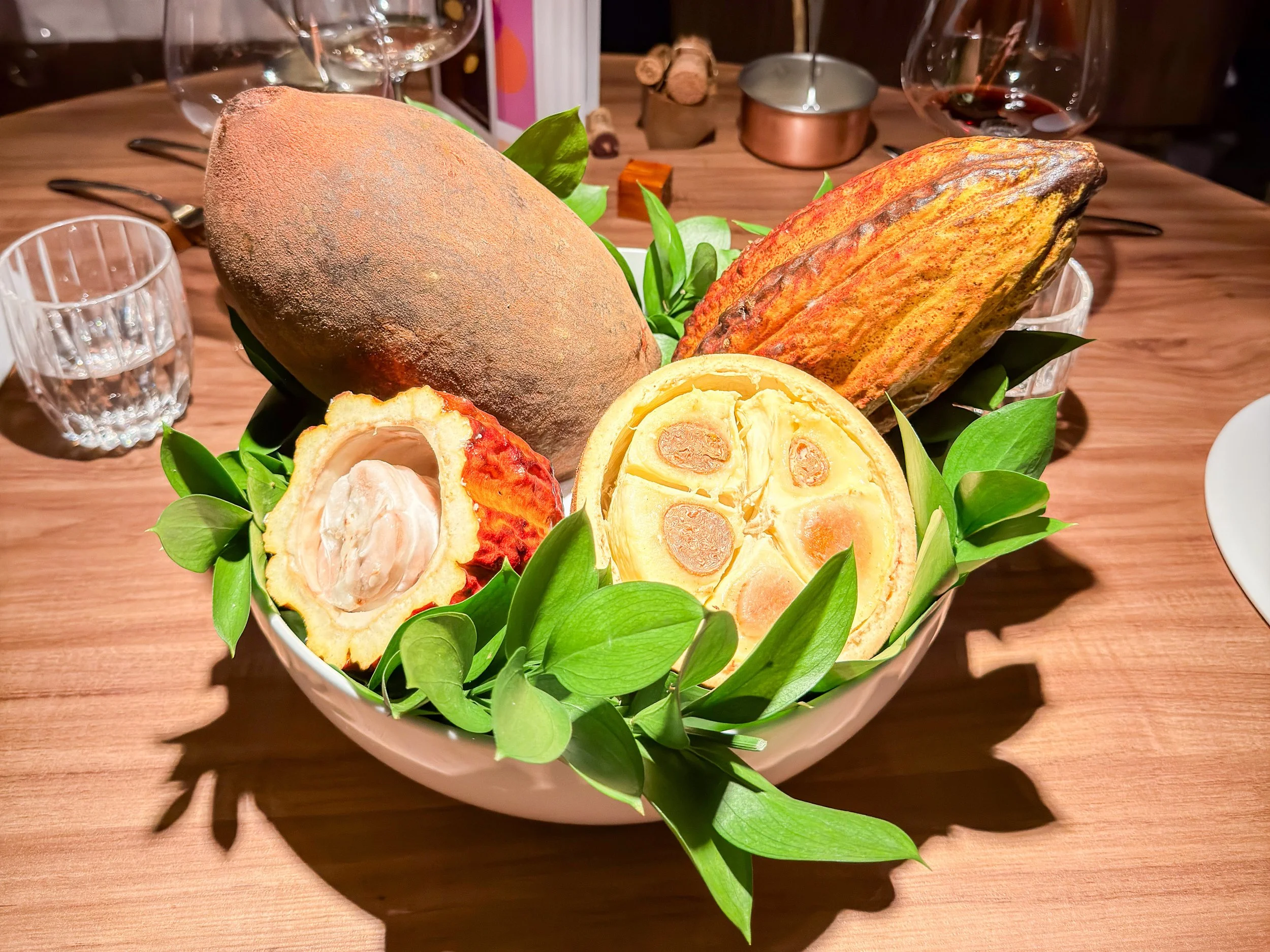
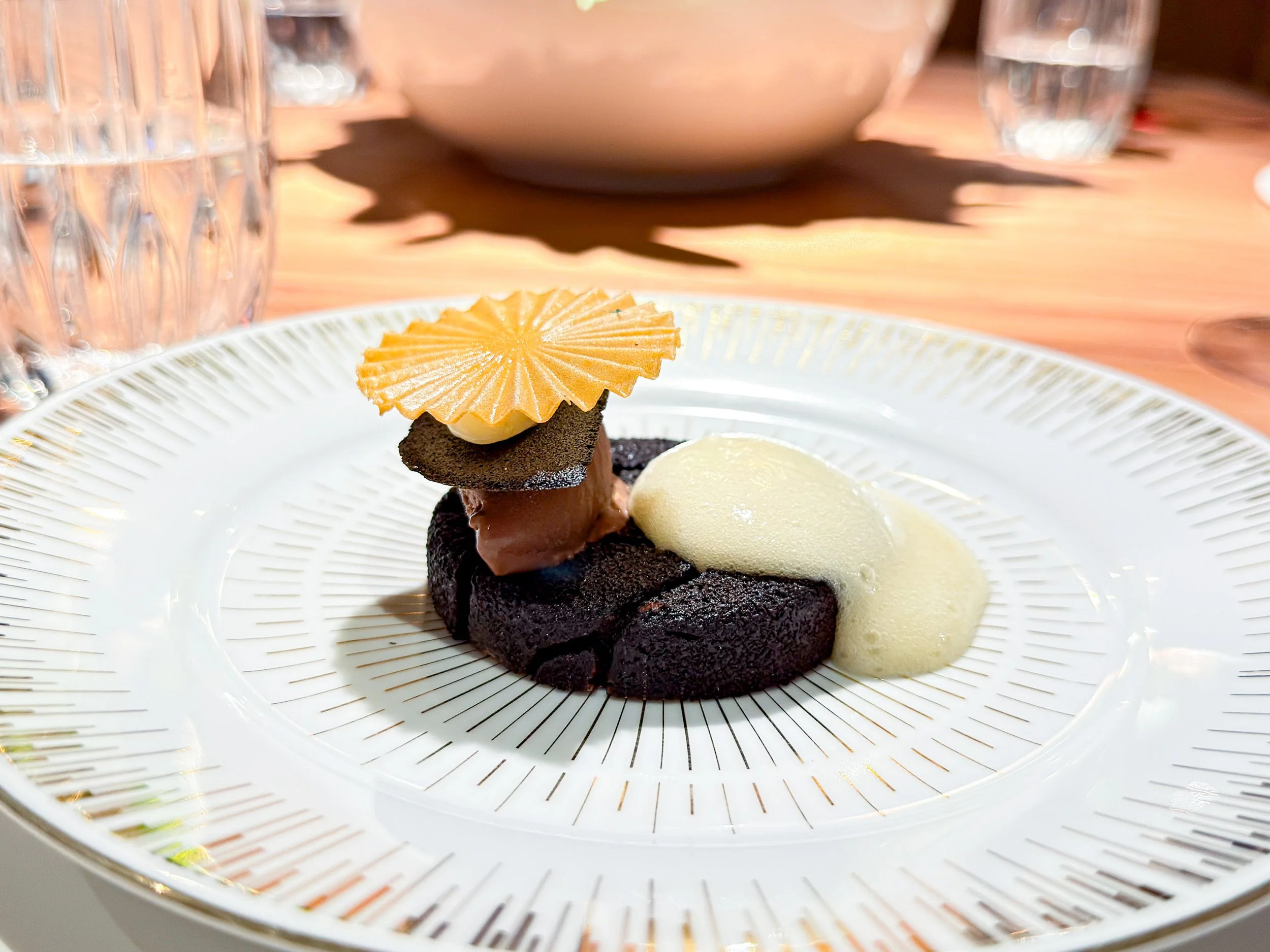
The final dessert, built around cacao, cupuaçu, and macambo, remains at a comparable level. These related Theobroma species bring both chocolate depth and intense fruit acidity. It is precisely that acidity that lends the otherwise rich composition an astonishing freshness. (9/10)
A colorful battery of mignardises closes the menu: excellent persimmon and mango, white-chocolate and pistachio ice cream, a “cheese praline” with guava, and peanut praline. Excellent overall, with the fruit as the highlight. (8/10)
As chance would have it, I am in Brazil during the soccer World Cup. Perhaps it is just as well that the country has already been eliminated — who knows what sort of chaos I might otherwise have encountered. Italy, too, failed to distinguish itself this time. On the plate, things looked rather different: an Italian chef excels with Brazilian ingredients. If that does not carry you into the final, what will?