Plénitude — Complete Contentment
I first visited Plénitude more than four years ago, just days before the Michelin Guide awarded it three stars in one fell swoop. That dinner, when the restaurant was still technically unstarred, confirmed what Arnaud Donckele had already shown me in 2016 at the three-starred La Vague d’Or in Saint-Tropez: At now 49, he is unquestionably one of the great chefs of our time.
Plénitude is the flagship restaurant of the ultra-luxury Cheval Blanc hotel on the Pont Neuf in Paris. The hotel’s other restaurants — the hushed Japanese Hakuba (two stars), the bright and bustling Le Tout-Paris (one star), and the Italian franchise hot spot Langosteria — leave guests with little reason to venture outside, particularly since the first two are also under Donckele’s direction. With the temperature hovering near 40 degrees Celsius in the shade, I have little inclination to do so this weekend either.
A reservation at Plénitude is not easy to come by. For years, requests could be made only by email, with French seemingly the preferred language. There is now an online booking system, but at the time of writing it merely announces that the next weekday tables will be available in March and the next Saturdays in mid-June 2027 — seven and ten months away, respectively. Yet, none of those dates can actually be selected. I had to pull some strings, something I reserve for exceptional circumstances.
The dining room is elegant, though its color scheme takes some getting used to, and the air-conditioning is initially losing its battle with the extraordinary heat outside. First things first: wine. I start with a 2019 Chablis 1er Cru Vaillons from Domaine Vincent Dauvissat (€250). As the first cool sip goes down, the amuse-bouches begin to arrive. The service is warm, assured and unusually graceful in the way each dish is introduced — impressive without ever becoming stiff.
Outside, the windows currently frame La Caverne du Pont Neuf, the temporary installation by the French artist JR. It is quite a sight.
The smaller details are just as compelling. An oyster from Carnac arrives in historic earthenware from the early days of La Samaritaine, the department store that once occupied this building. The piece itself dates to the late 19th century. The oyster is simply grilled, cooled by a cloud of cucumber and sorrel and punctuated with a few pearls of finger lime. It is exactly the right size and served at precisely the right temperature; the cool, saline accompaniments seem to amplify the sensation of the sea. Beyond excellent. (8.5/10)
Next comes a crisp potato waffle, served cool and filled with raw prawns from Palamós and seaweed confit. There is something here of French fries with vinegar — except rendered with far greater finesse: salty, gently acidic, subtly iodized, the whole thing playing beautifully against the sweetness of the raw prawn. (8.5/10)
The sea-breeze motif continues with a tartlet of smoked eel, beetroot and pink peppercorn, raising the level yet again. Cool acidity meets the smoke of summer. Terrific. (9/10)
Still maritime, but richer, is a tartlet of tuna belly (toro) topped with shavings of black truffle. Cool, luxurious, deeply savory and almost extravagantly mouth-filling. (9/10)
Only now are the menus brought to the table. There are two options: three dishes and a dessert chosen à la carte for €475, or the Symphonie menu for €495. We choose the latter. One feature immediately stands out: Each sauce gets its own small page. Donckele is famous for giving sauces at least equal billing with what one might ordinarily consider the main ingredients. Put another way: Donckele serves sauces — with dishes alongside them.
The first is Bouillon Cansouns, a frothy essence of smoked duck with Sauvignon Blanc, basil, green pepper and more. At the bottom of the cup sits a house classic: snails from La Dominette scented with tomato confit. The acidity is thrilling, the garlic deep and almost fermented in character, yet never harsh or overbearing. Simply superb. (10/10)
As if that were not enough, a vegetable roll packed with intensely aromatic herbs prompts another round of disbelief around the table — followed, eventually, by closed eyes. Floral, ethereal, fresh, lightly chilled and unmistakably “green,” it delivers an astonishing amount of pleasure in a very small package. Another little revelation. (10/10)
The journey through Donckele’s world of sauces next pauses at another signature dish. Sauce Velours d’Eden is a pale-green, velvety emulsion made with grilled sardine, escabèche stock, bonito vinegar and mustard from Callas. It comes with marinated sardine and fennel in several forms, including a cooling sorbet. Marigold leaves contribute an herbal, citrusy lift; pike roe adds salinity and tiny bursts of marine intensity.
The dish has an uncanny Mediterranean quality: mustard, herbs, freshness, umami and a certain appealing roughness around the edges that keeps it grounded.
Why I rate this plate “only” a perfect 9/10, rather than the higher score I awarded it on my first visit, is difficult to trace to any single concrete detail.
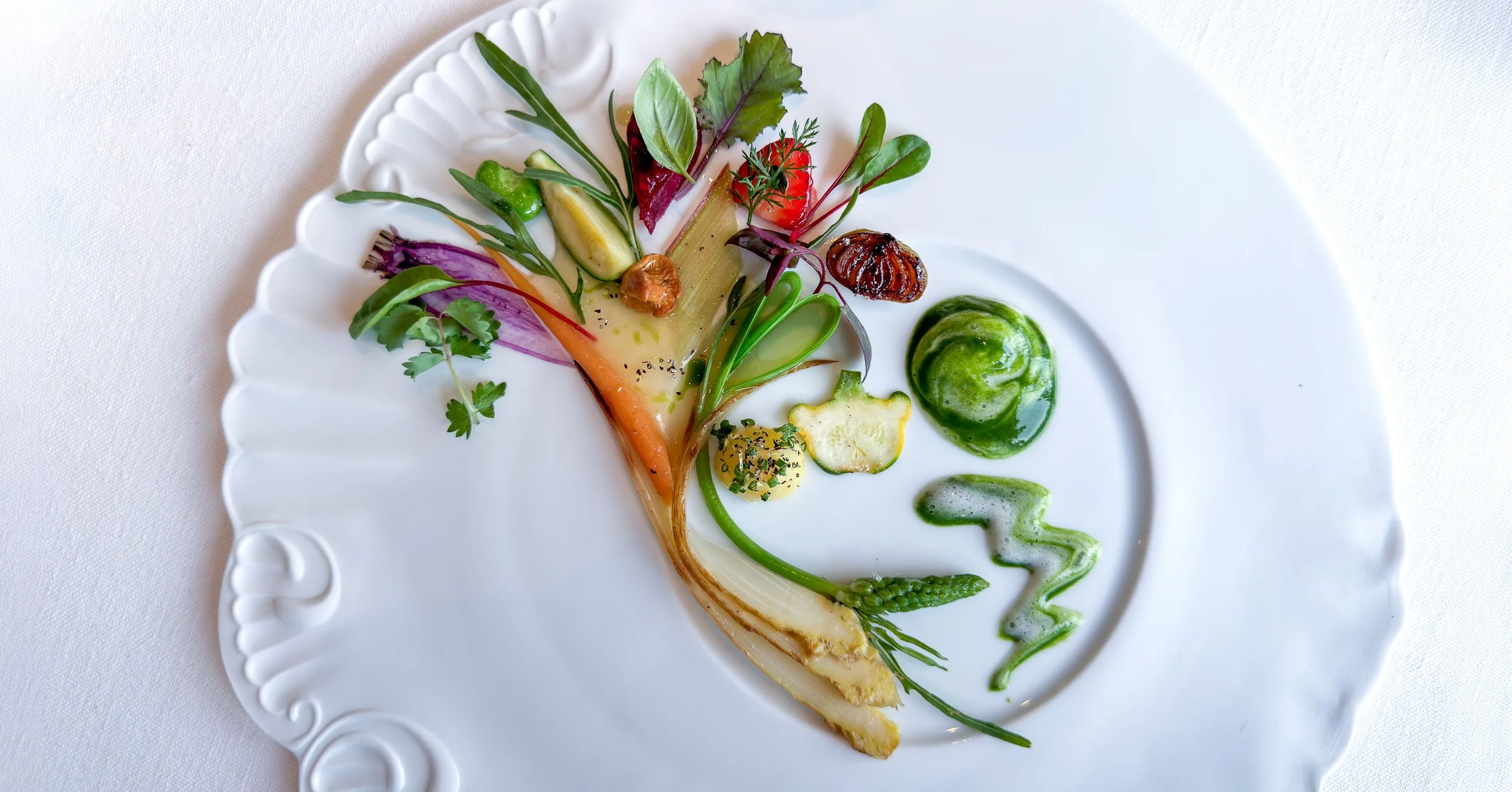
From here, the meal seems to walk straight into a vegetable garden. Coulis Marbré Amplitude — a silky green-and-white sauce made from macerated vegetables, peppery herbs and grilled white asparagus — is poured beside a magnificent bouquet of garden vegetables. I spot carrot, zucchini, peas, asparagus, leek and more, some roasted, some smoked, others left in their simplest and most beautiful state.
I cannot help wondering whether these are the very vegetables and herbs that have also found their way into the sauce.
The range is extraordinary: textures from crisp to silky, temperatures from cool to gently warm, flavors from bitter to sweet, intensities from delicate to forceful. Together they make one of the finest vegetarian dishes I have ever eaten. It is as if the entire landscape of the Côte d’Azur had suddenly burst into bloom in front of me. (10/10)
What happens next briefly leaves me speechless. I have just been thinking of the south of France when the service introduces the next course by telling us that this is precisely where we are headed, with a Double Sauce Maestra and tomatoes glowing in the fields just as they do on the plate.
A delicate, airy tart of almond puff pastry, confit tomatoes and onion marmalade comes with two sauces. The first is a shallot reduction with Lambrusco vinegar, black truffle and a brunoise of celery and fennel. The second is a rich Crème Aigrelette sharpened with Barolo vinegar and summer herbs.
The deep savor of the tomato, the puff pastry collapsing almost on contact, and the sheer deliciousness of the two sauces are magnificent: bright with acidity, elegant, appetite-inducing and, in places, almost defiantly rustic. I would happily order another one immediately. Writing this now, I want to get on a plane to Paris just for that tart. (10/10)
Another bottle is necessary. We choose a 2019 Pinot Noir “The Pivot” from Littorai in California (€292).
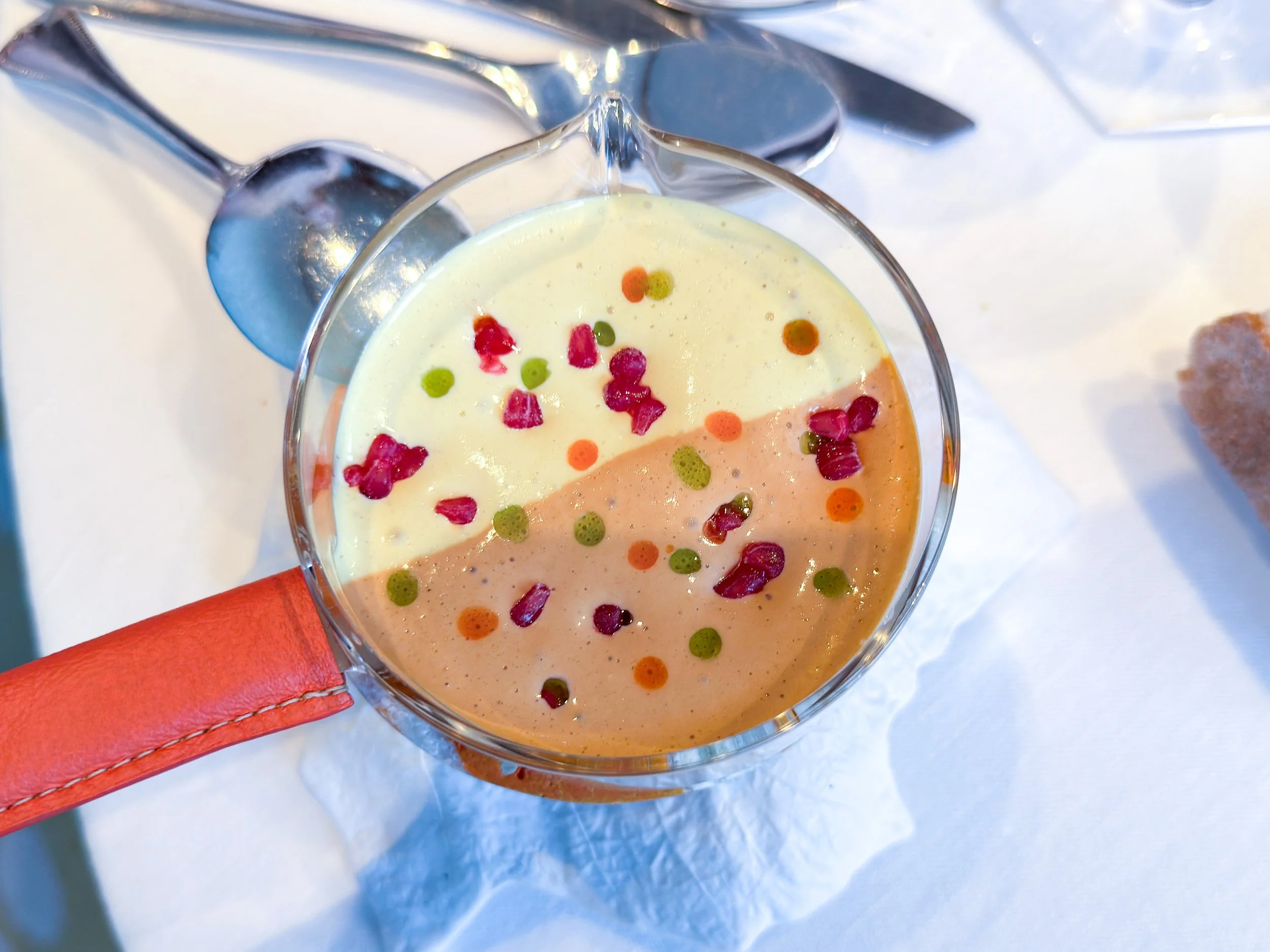
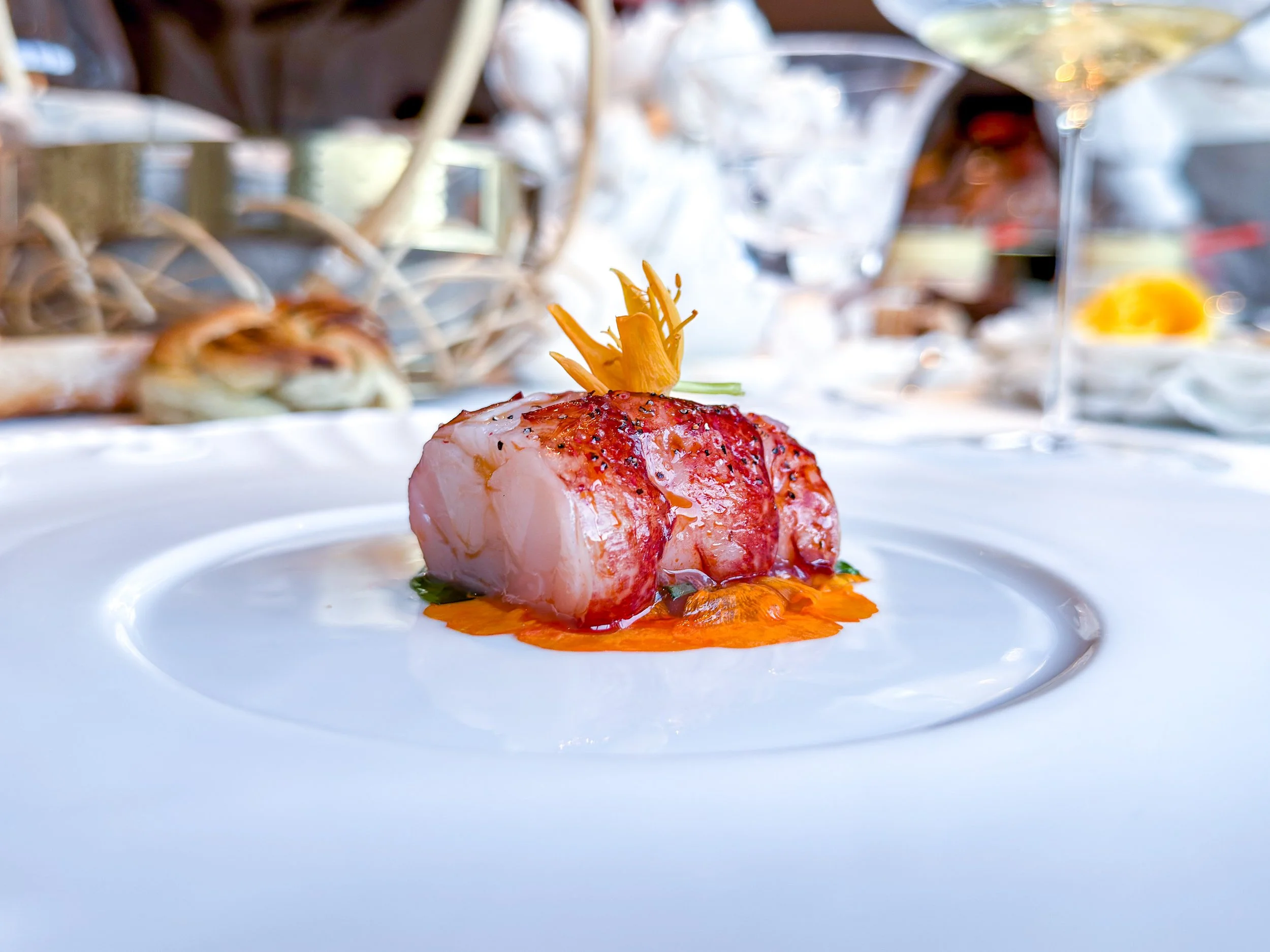
From southern France, we head north toward Brittany. Sabayon Ronce Complice is a pair of whipped sauces conceived — as the name suggests — as inseparable partners. They accompany Breton lobster laid over nasturtium, visually immaculate and cooked with equal precision: juicy, no longer quite translucent, and butter-tender.
A small glass pitcher is set down beside the plate, making it quite clear that restraint is neither expected nor encouraged. One sauce is a consommé of blue lobster bound with its roe; the other is rosemary butter brightened with yuzu and raspberry. Together they create something at once herbaceous, piquant and almost weightless despite their intensity. It is difficult to describe, yet very easy to eat. A confident, accomplished dish. (9/10)
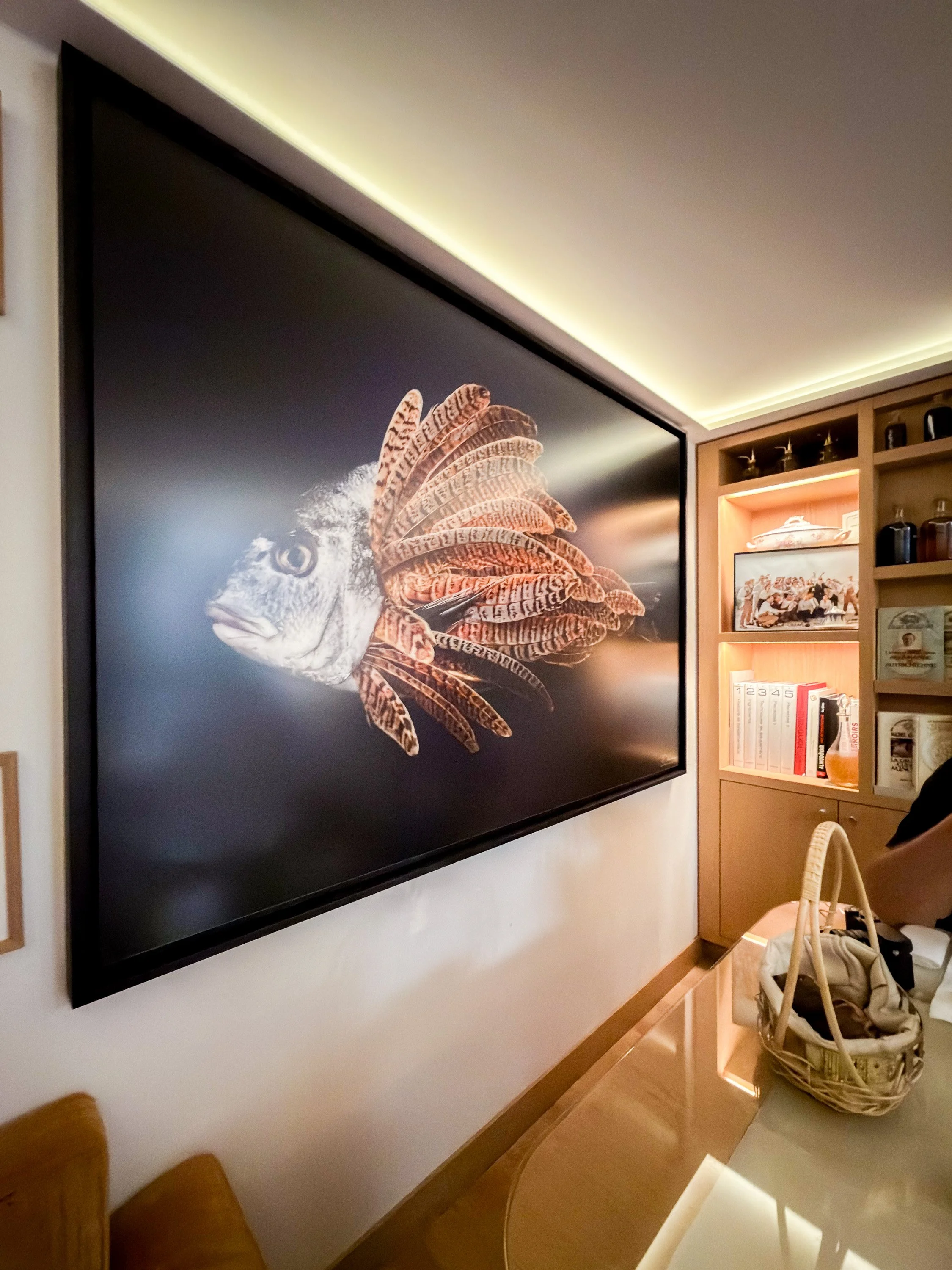
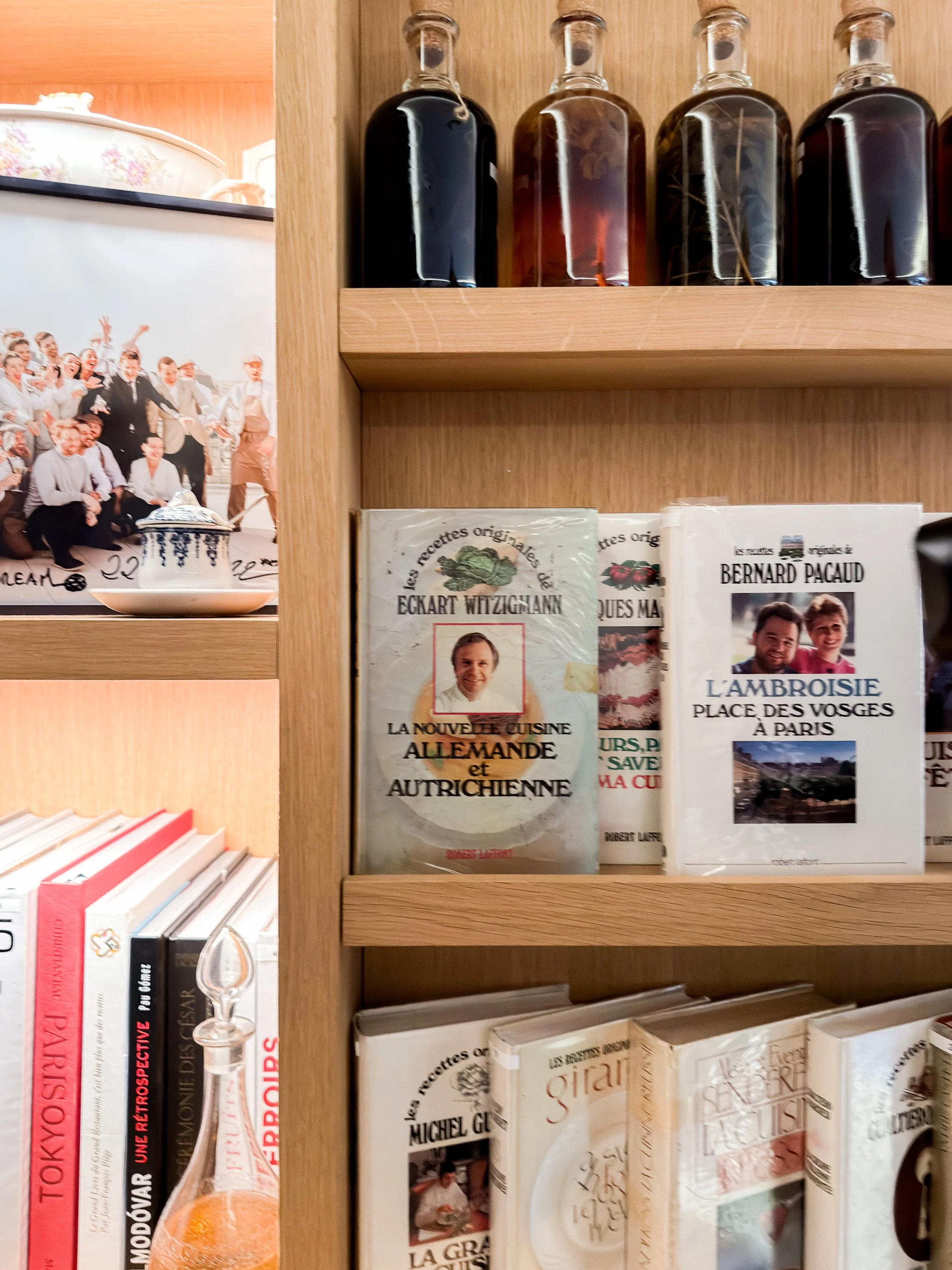
The next course is served in a private room inside the kitchen. I remember the space well: handsome and intimate, with books, photographs, bottles and other memorabilia displayed in a custom-lit wall unit around a table for four.
Bouillon Ode à l’iode — essentially an ode to iodine in broth form — brings together four of Donckele’s formative taste memories. There is a natural oyster, halved; a piece of turbot prepared meunière-style, its surface showing the subtle sheen of maturation; toasted brioche with a quenelle of caviar and hazelnuts; and a potato cooked in an iodine-rich bouillon.
A knife would be pointless. Everything is tender and juicy, built to be eaten with the warm, elegantly saline sauce. That sauce contains fish stock, caramelized lemon, lemon-balm stems, plankton powder, abalone jus, brown butter, oyster, olive oil, red-wine vinegar and verbena pepper.
What makes the dish unforgettable is the way all of this complexity resolves into something deeply comforting. Exceptional ingredients, extraordinary sauce work, absolute balance. (10/10)
Back in the dining room, the thought of fish soup that had already begun to form in my mind is taken much further with another classic. Once again, there is a pair of sauces with a name of its own: Double Sauce Estéline.
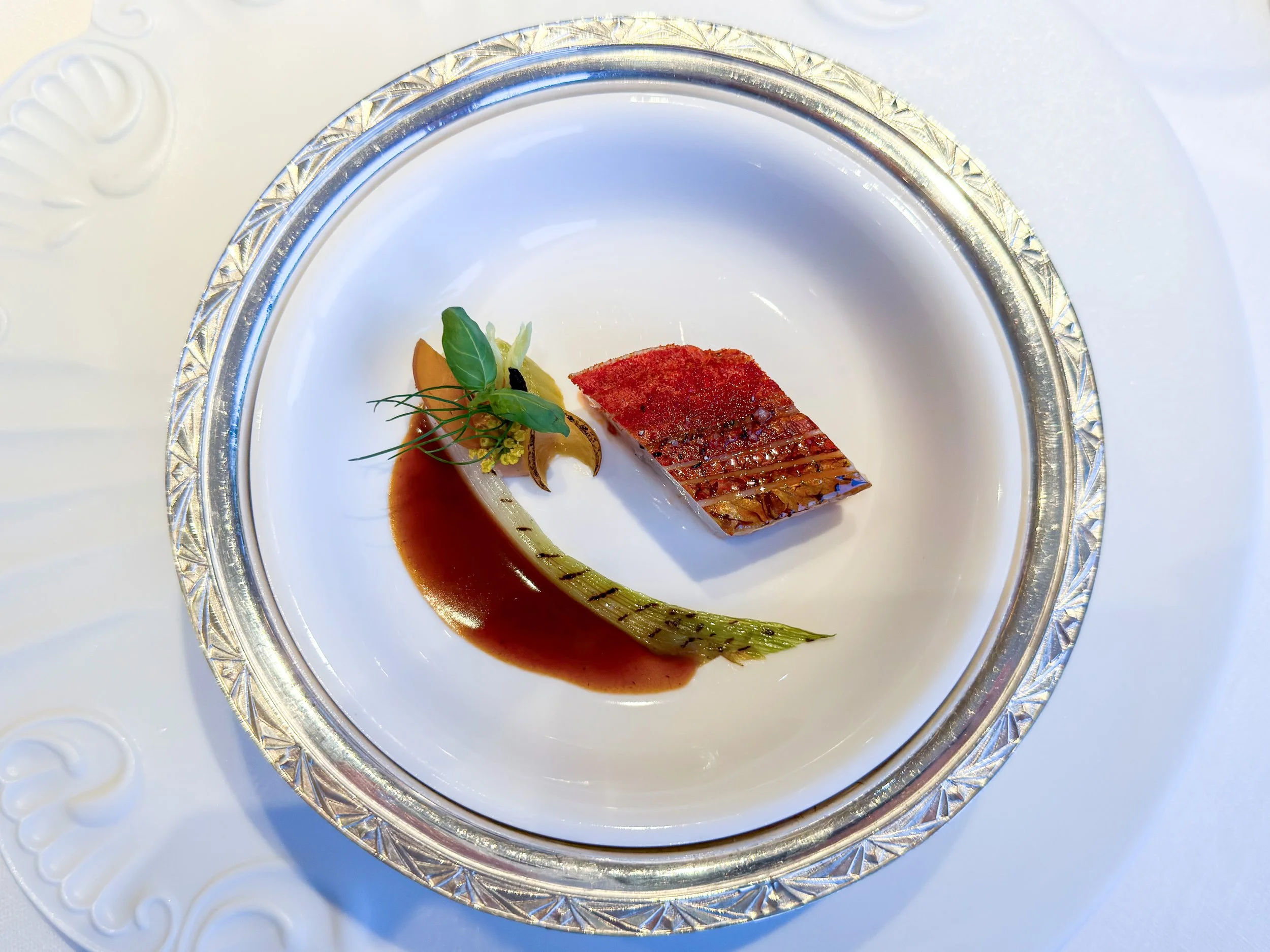
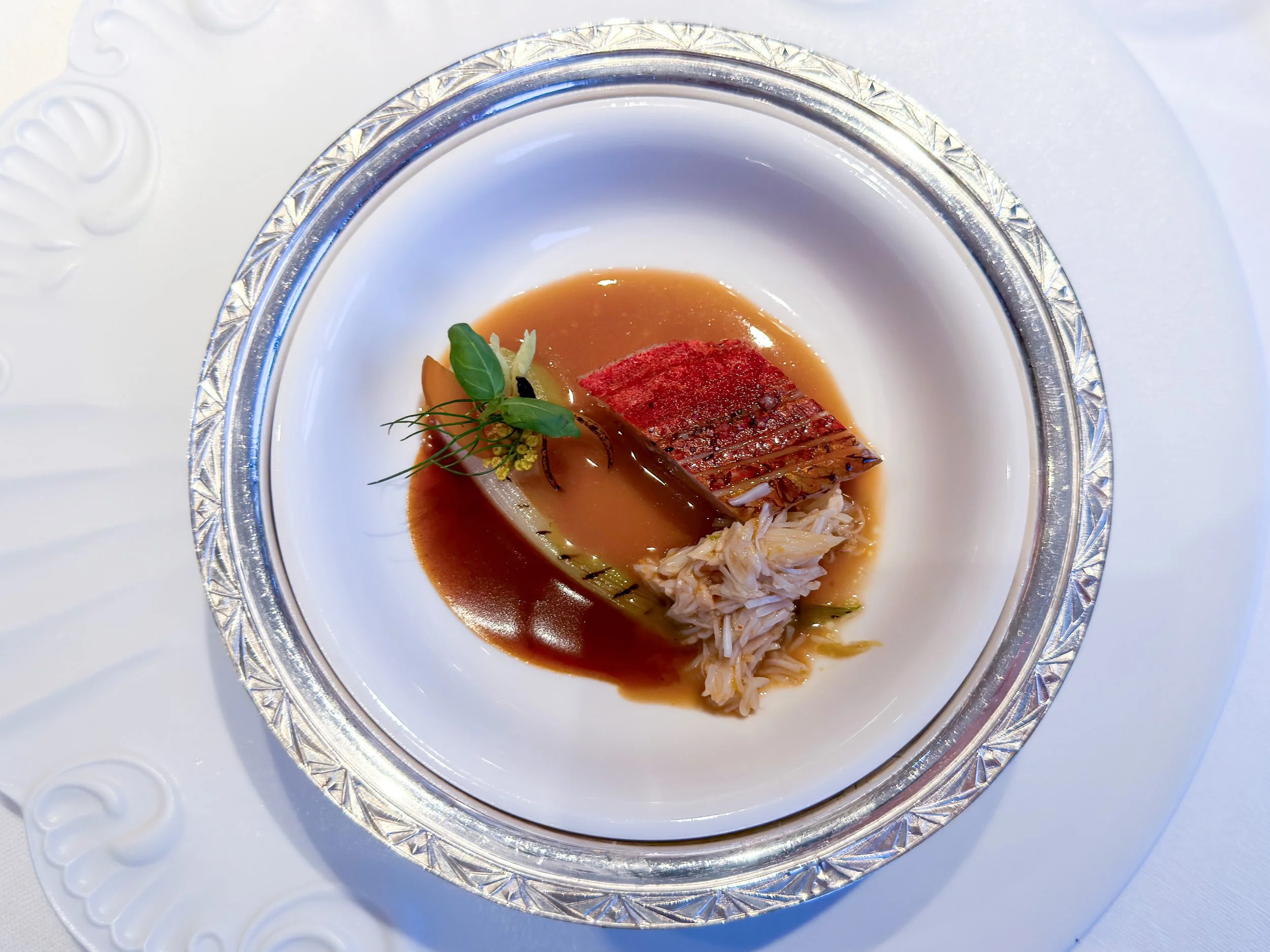
Waiting on the plate beneath a cloche is a dense, glossy sauce made from Mediterranean rockfish and shore crabs, scented with pastis and lemon thyme. A long spring onion acts almost like a barrier on the plate. Beside it is a piece of bécasse de mer, roasted until butter-soft. Its skin has been carefully scored and browned to a glossy gold, one half dusted with tomato powder and finished with a little sea salt.
Then the service adds a quenelle of brown crab, its fibrous flesh flavored with sea-urchin butter and citrus. While I am still taking in the number of preparations involved, bouillabaisse broth is poured onto the plate. And then comes yet another sauce: Sabayon Borgne, a frothy preparation based on grilled vegetables and dusted with coral and tomato powder. Donckele is playing here with the rustic Provençal tradition of bouillabaisse borgne, in which vegetables and eggs enter the fish broth.
The aroma rising from the still-hot plate is a Mediterranean symphony of coastal fish, herbs and long, warm lunches in the shade.
Just as striking is the fish itself. Its flesh is tender, aromatic and richly fatty, with a quality every bit as impressive as prized Japanese fish such as kinmedai. Meals like this teach you not to become too excited by the word “turbot.” Sometimes it is bécasse de mer. What always matters is the quality, not its prestige.
Every bite reveals something new. A flash of vegetable here or there can suddenly send a spoonful in an entirely different direction.
And as if this were not generous enough, another preparation arrives while we are still eating the main plate: ravioli filled with red mullet in a rockfish consommé perfumed with mandarin. A gentle aromatic heat gives this smaller dish its own character. At this point, the abundance is almost comical.
For all the exceptional ingredients and staggering amount of work involved, the main plate never feels cerebral. It feels oddly familiar — like a bouillabaisse from which Donckele has stripped away every rustic edge, leaving only its warmth, depth and comfort. The ravioli are a lighter, more delicate variation on the same Mediterranean theme.
This is cooking of enormous complexity that still reaches you immediately. A dish for the ages. (10/10)
This is exactly the right moment for something cold. The meal turns toward Normandy, Donckele’s native region, and the tradition of the Trou Normand, often served at large family meals before the final savory course.
Here it becomes cider granita topped with apple sorbet and a splash of fine Calvados. Normandy is there instantly: boozy apple, a little roughness, a cool breeze. There is nothing to improve. (9/10)
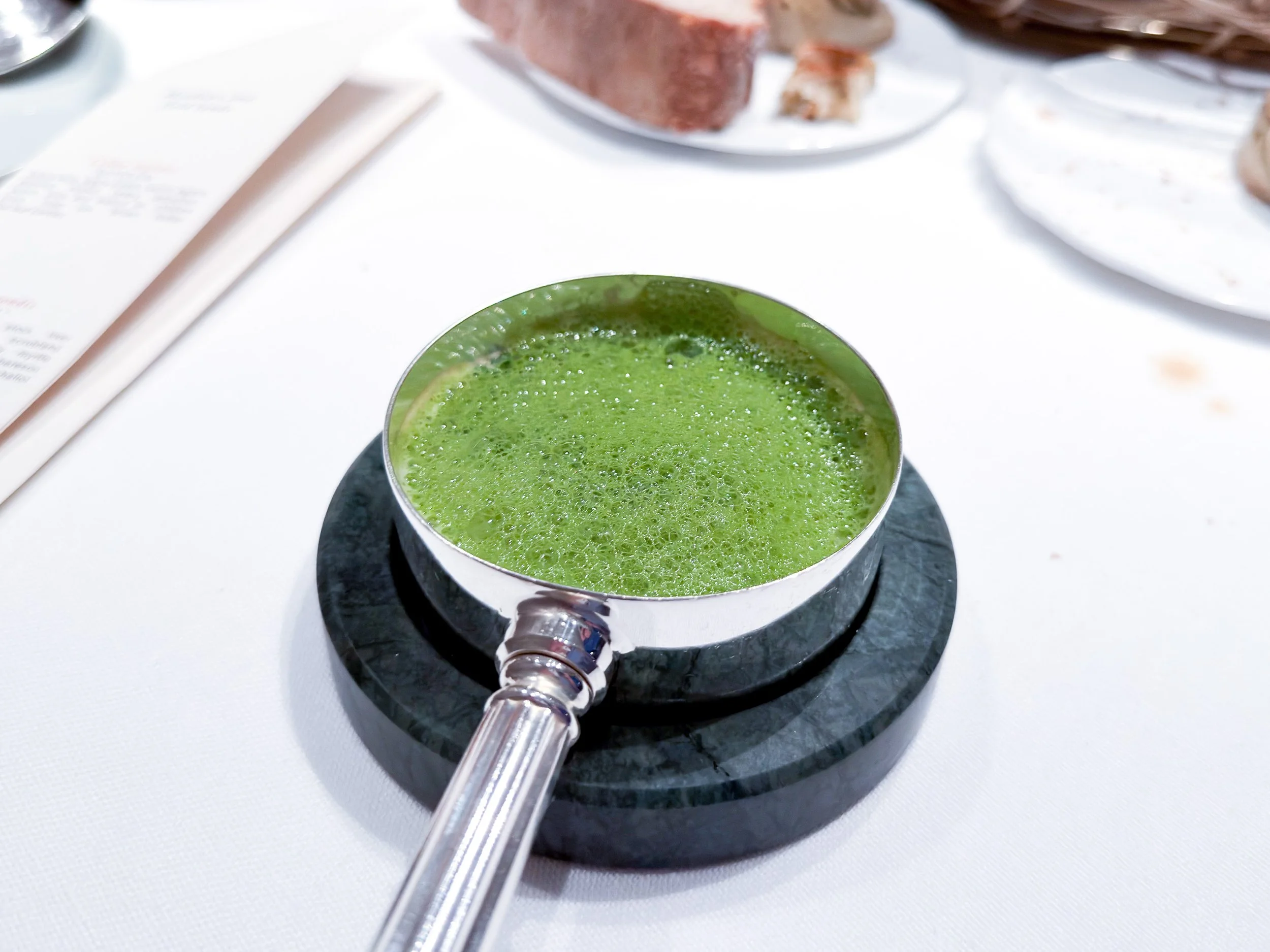
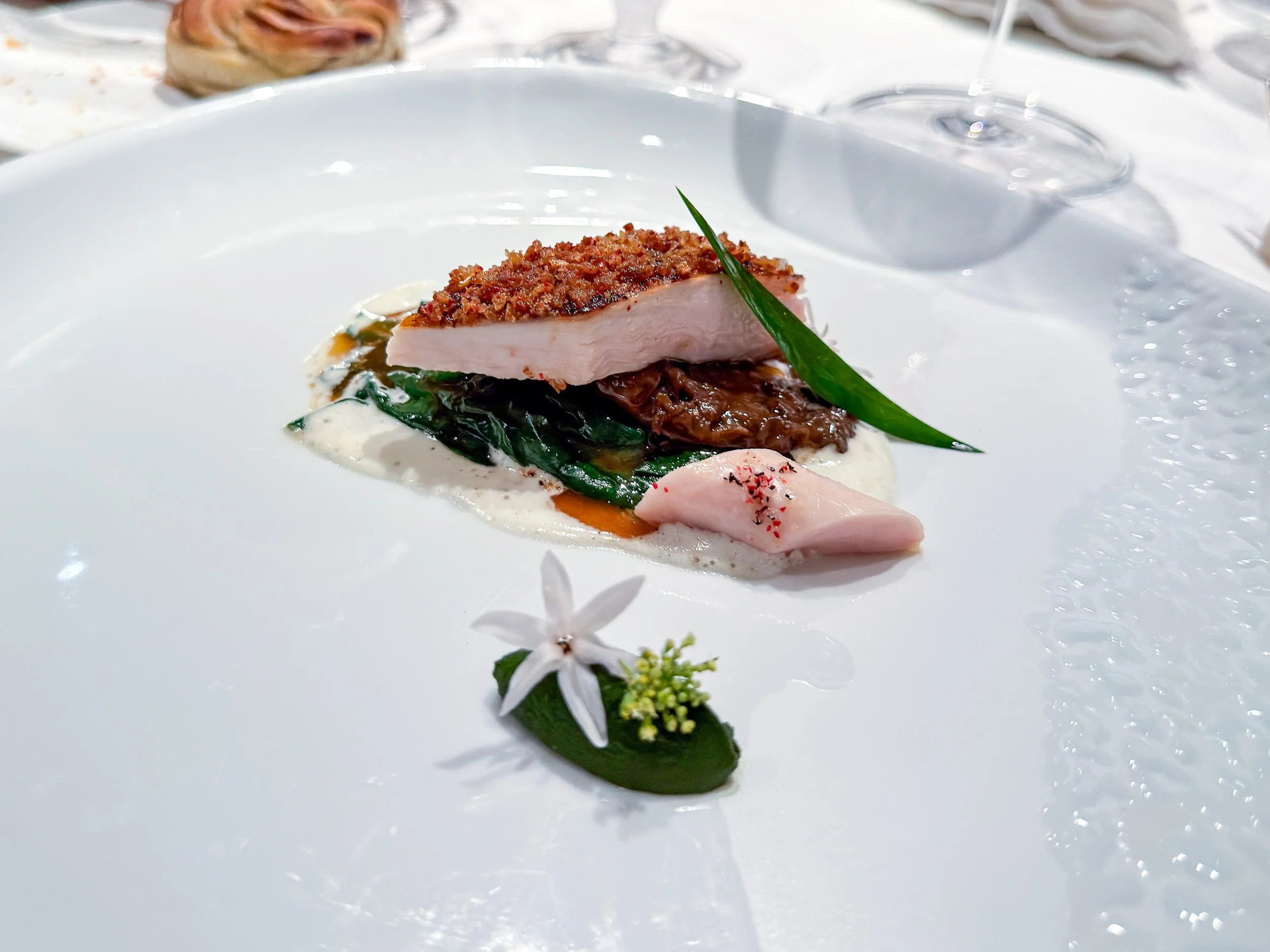
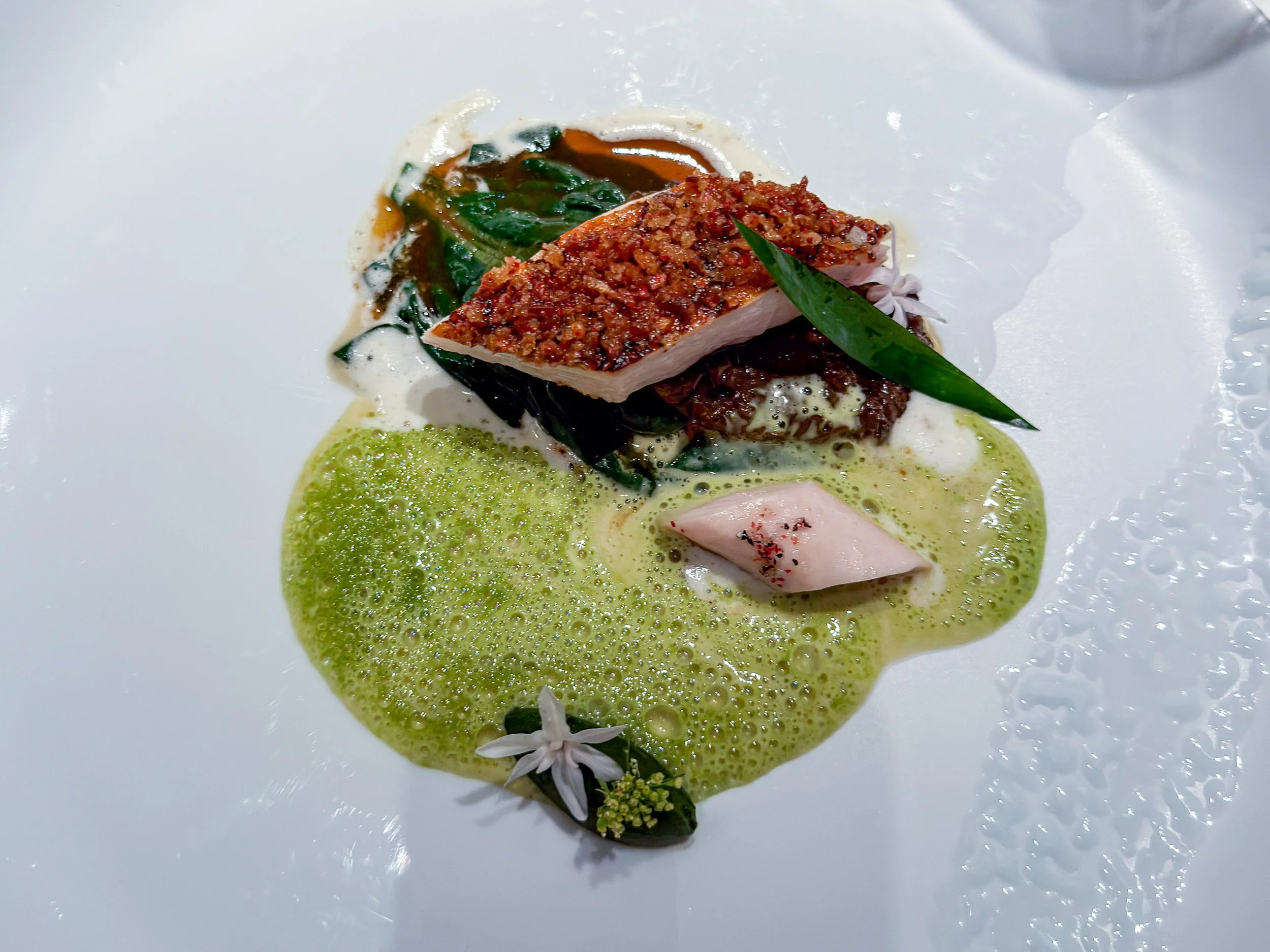
Even the transitions now seem almost impossibly well judged. The next course stays in the north with Crème Soyeuse Sotolon, a sauce bringing together the comforting flavor of poultry broth, the richness of Crème d’Isigny, fresh parsley and a touch of Vin d’Arbois. It accompanies a supreme of Norman poularde, roasted golden in the oven and set over Viroflay spinach and a lavish amount of morels.
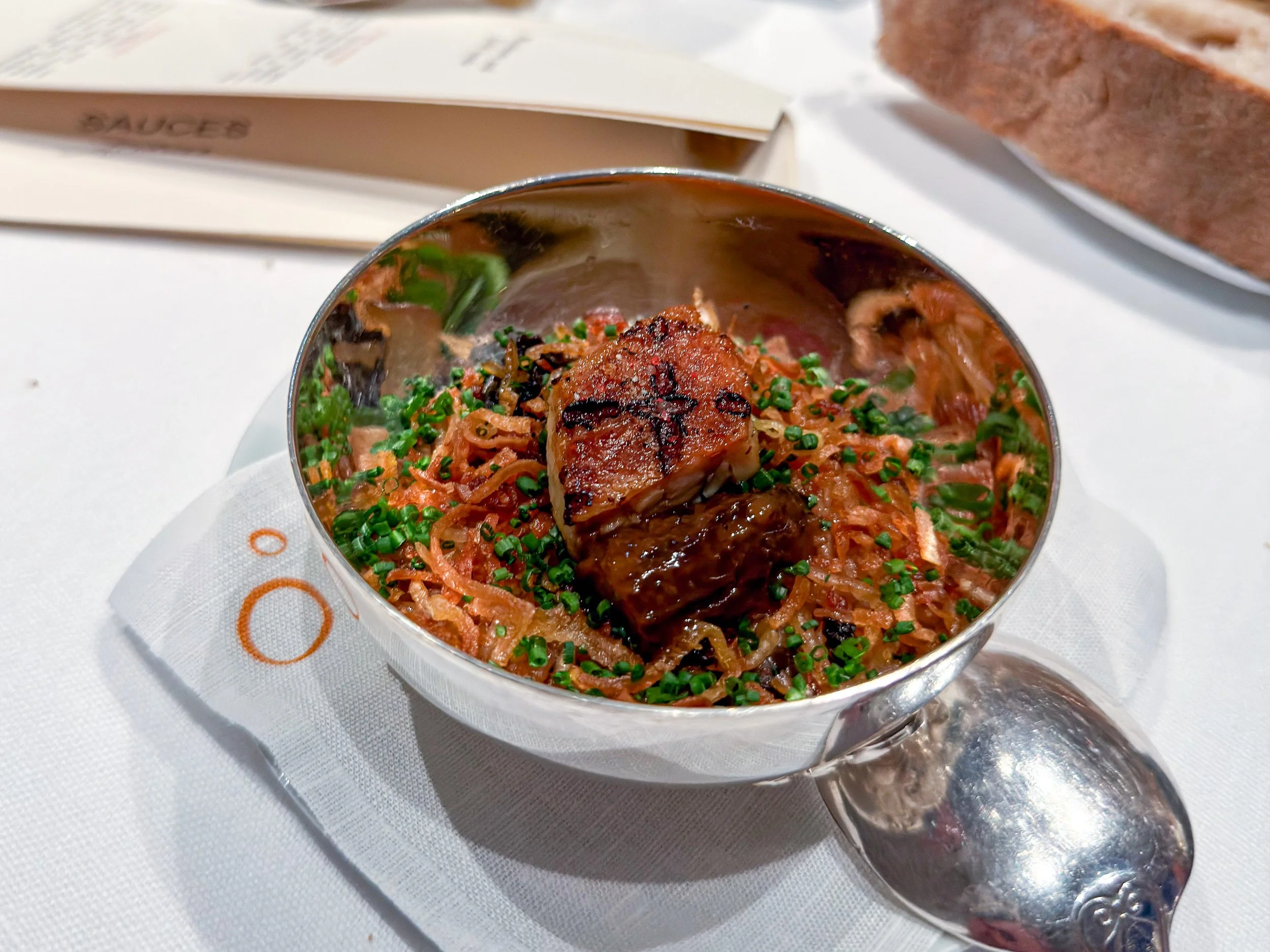
And when poultry is served in France, pilaf rice is never far away. Here it arrives hot and crisp, as though it had been almost deliberately forgotten in the oven, topped with a confited, roasted poularde wing.
With the bright, herbaceous sauce, you quickly stop eating the components separately and start mixing everything together, spoonful after spoonful. That freedom — changing the proportions, combining the textures, chasing the sauce around the plate — is immensely pleasurable. Once again, the ingredients, technique and flavors leave almost nowhere higher to go. (10/10)
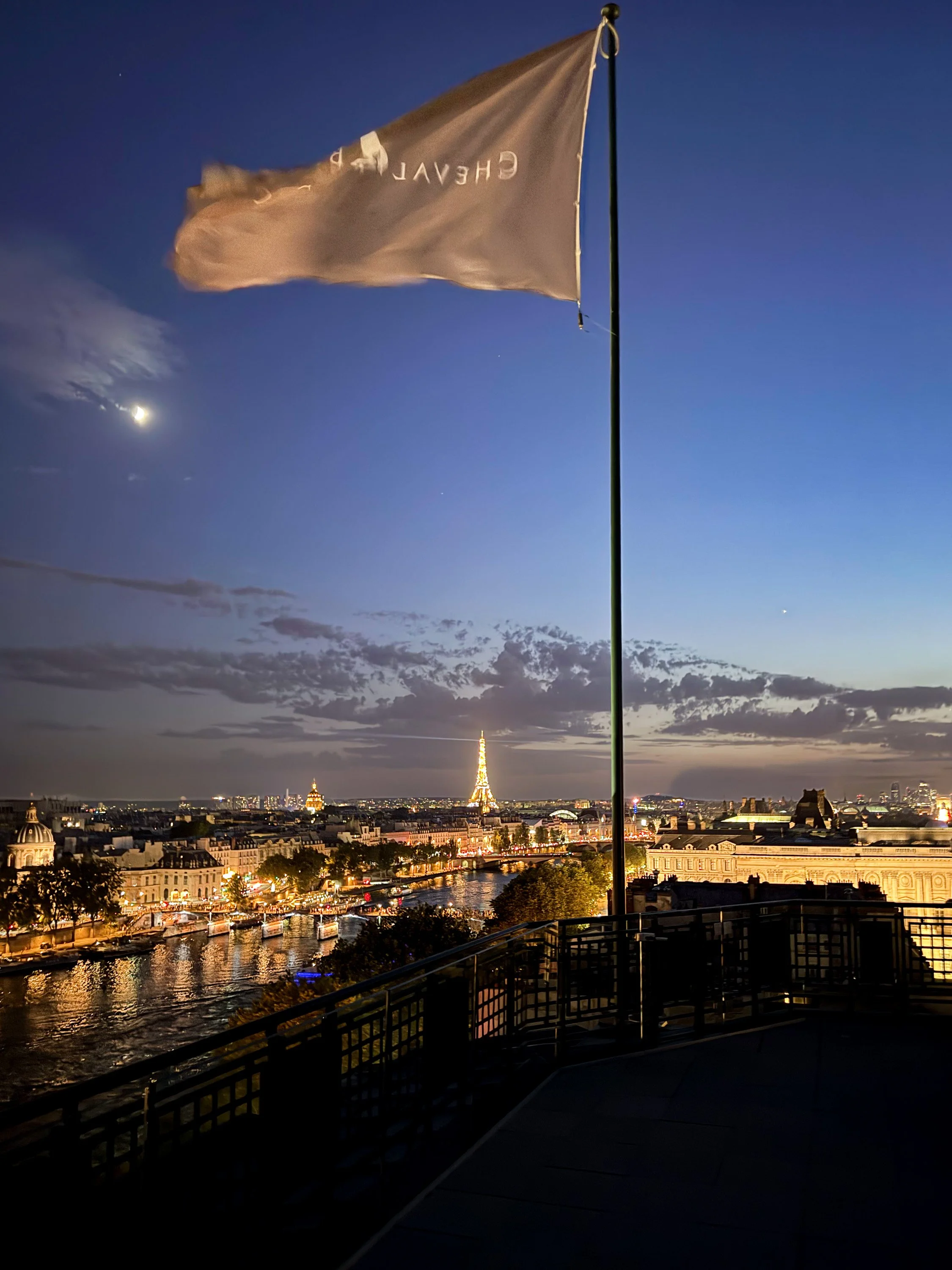
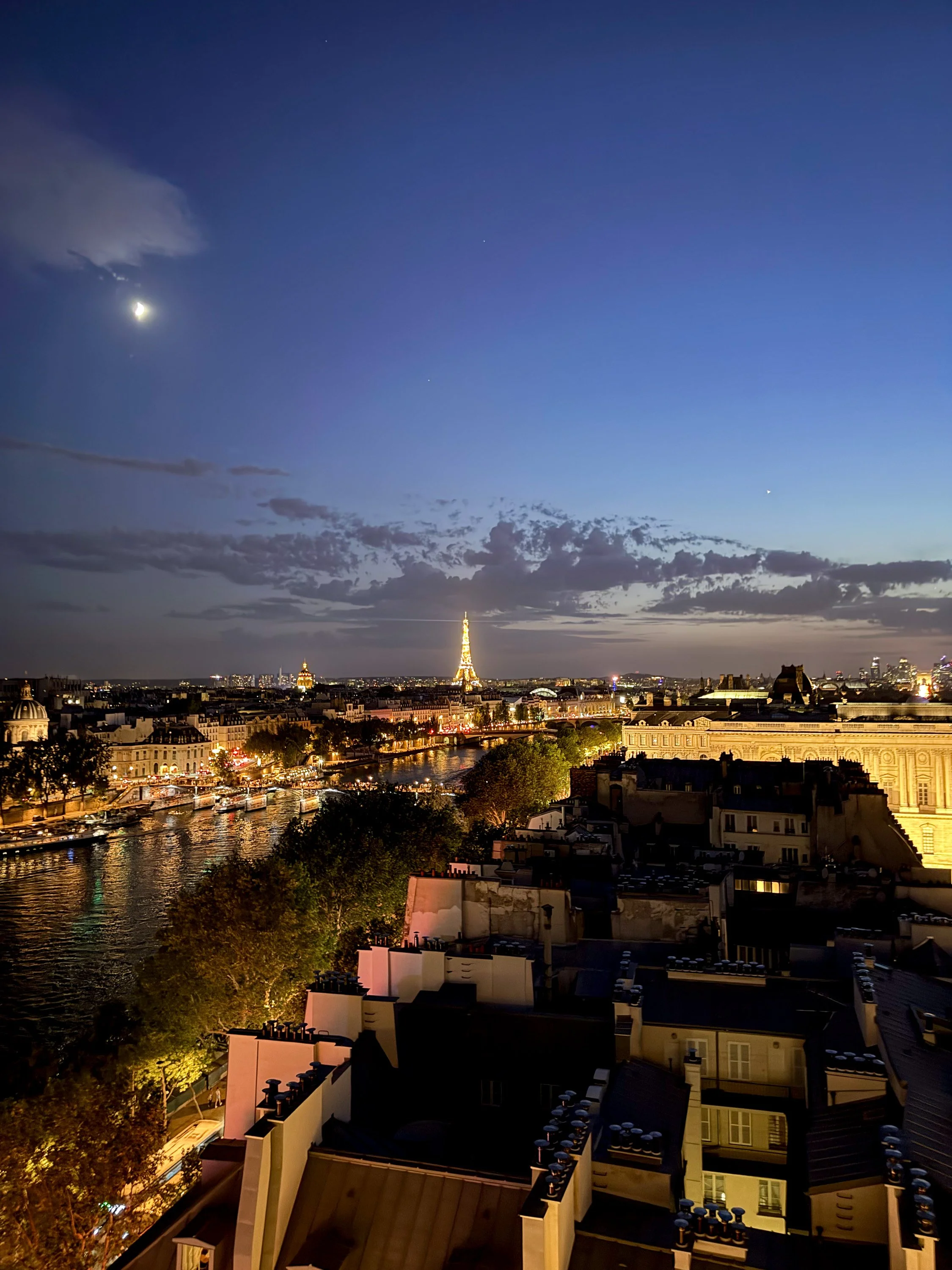
After three and a half hours — it is now 11 p.m. — Alexandre, the charming restaurant manager, has one more surprise. We take the elevator to the rooftop terrace of Cheval Blanc, surely one of the most spectacular places in Paris.
Montmartre glows to the north, the Eiffel Tower to the west, and the whole city lies beneath me. It is a magical moment.
With dessert — I pass on the cheese course — another white wine seems appropriate. The sommelier makes an uncomplicated and exactly right suggestion: a 2020 Vougeot 1er Cru “Le Clos Blanc de Vougeot” from Domaine de la Vougeraie, poured by the glass (€33).
The first dessert revolves around Sauce pectinée et condimentée Perle d’Endocarpe, a delicate, lightly set fruit sauce flecked with citrus, aloe vera and rose. A cloudlike Crème Fontainebleau sits on top, wrapped in crisp meringue and crowned with a frozen flower of rose and grapefruit.
The aroma suggests Provence. It is as though you were watching a perfumer compose something meant to capture the freshness of summer. Wonderful. (10/10)
By now nothing needs to prove anything. Nothing needs to fill you up. Nothing needs to impress.
And yet it keeps happening.
I try every dessert on offer.
Und so verwundert es nicht, dass einem auch noch die letzten Kreationen und Happen den Verstand rauben. Von sämtlichen Desserts, die man auswählen kann, probiere ich alle.
Sauce à manger Crocus d’Aurore begins with macerated apricots flavored with saffron and Sauternes and accompanies a construction of paper-thin, cookie-crisp pastry leaves. At the table, a cream scented with rice and apricot liqueur is spooned between the layers, with more available whenever you want it. A separate almond-apricot ice cream comes with Sauternes jelly. Needless to say, none of it survives.
It tastes like sitting beneath an apricot tree with a chilled bottle of Sauternes in your hand. Fittingly, the service pours a glass of 1996 Château d’Yquem. But even without the wine: 10/10.
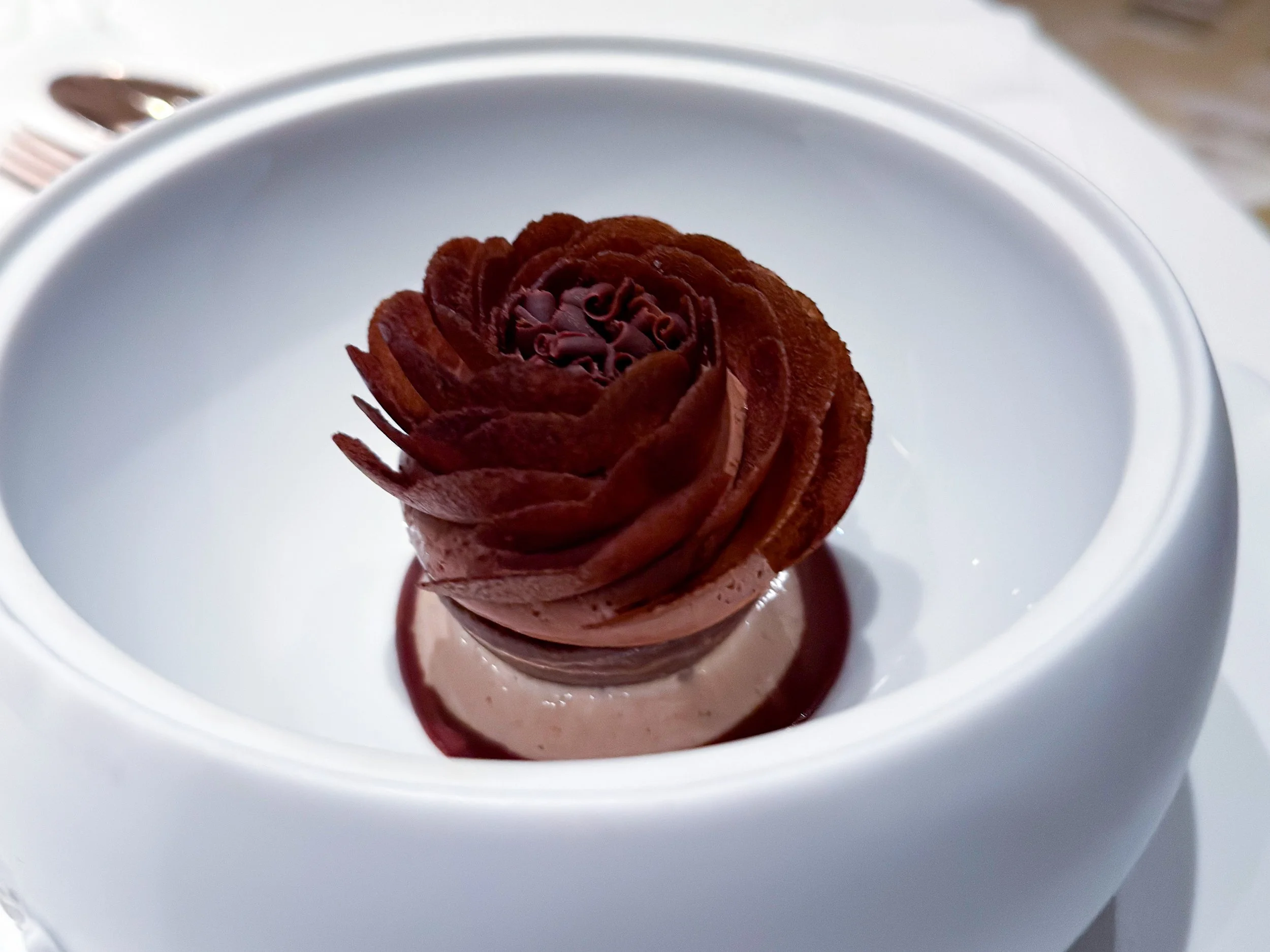
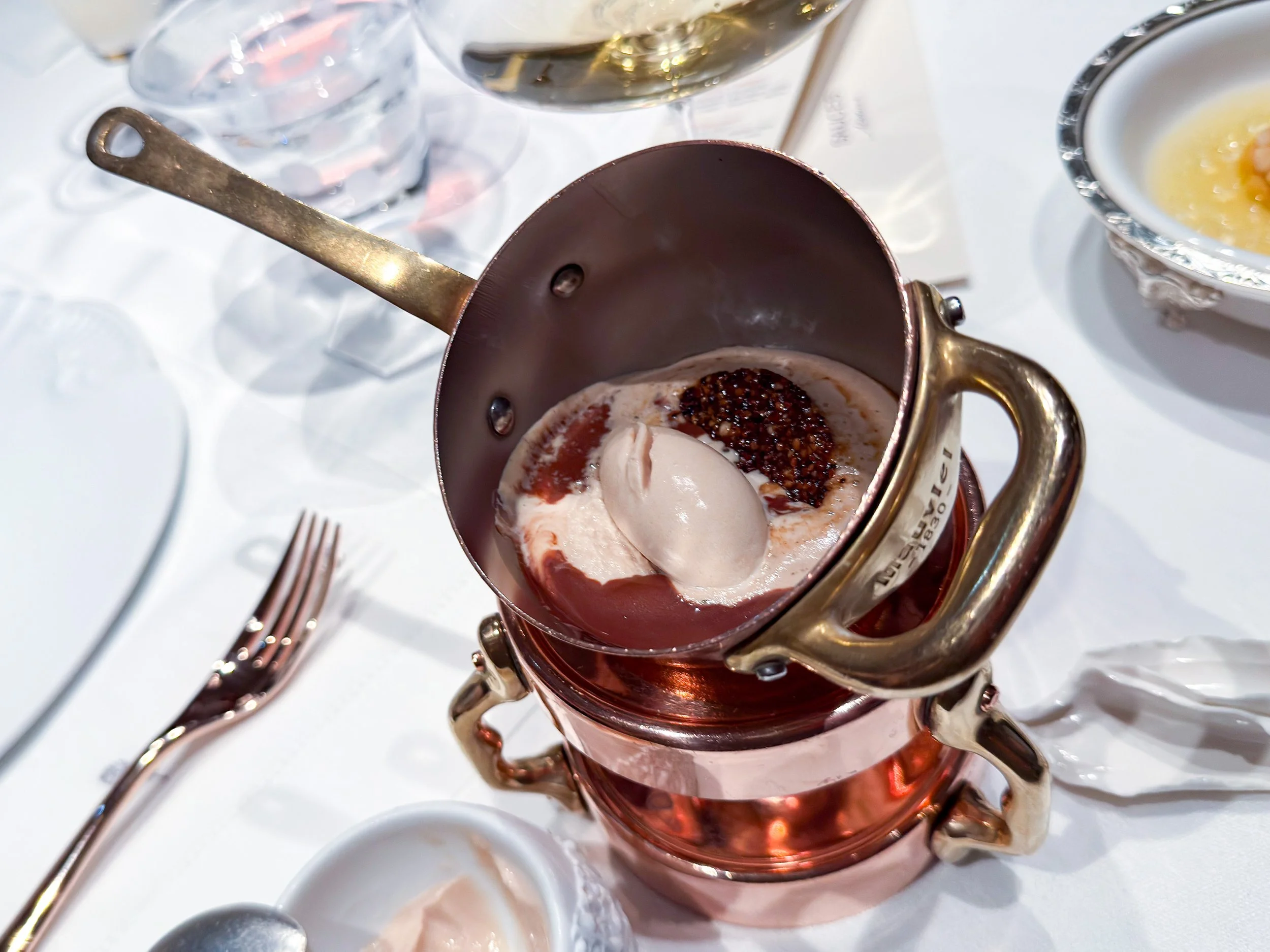
Then comes one final act of excess. A warm chocolate sauce kept molten over a small burner, cocoa ice cream and a cloud of cacao beans make up the Triple Sauce Monochrome. You can eat it straight from the dish or combine it with a flower made from cacao pod and other chocolate preparations at different temperatures and textures.
Chocolate heaven. (10/10)
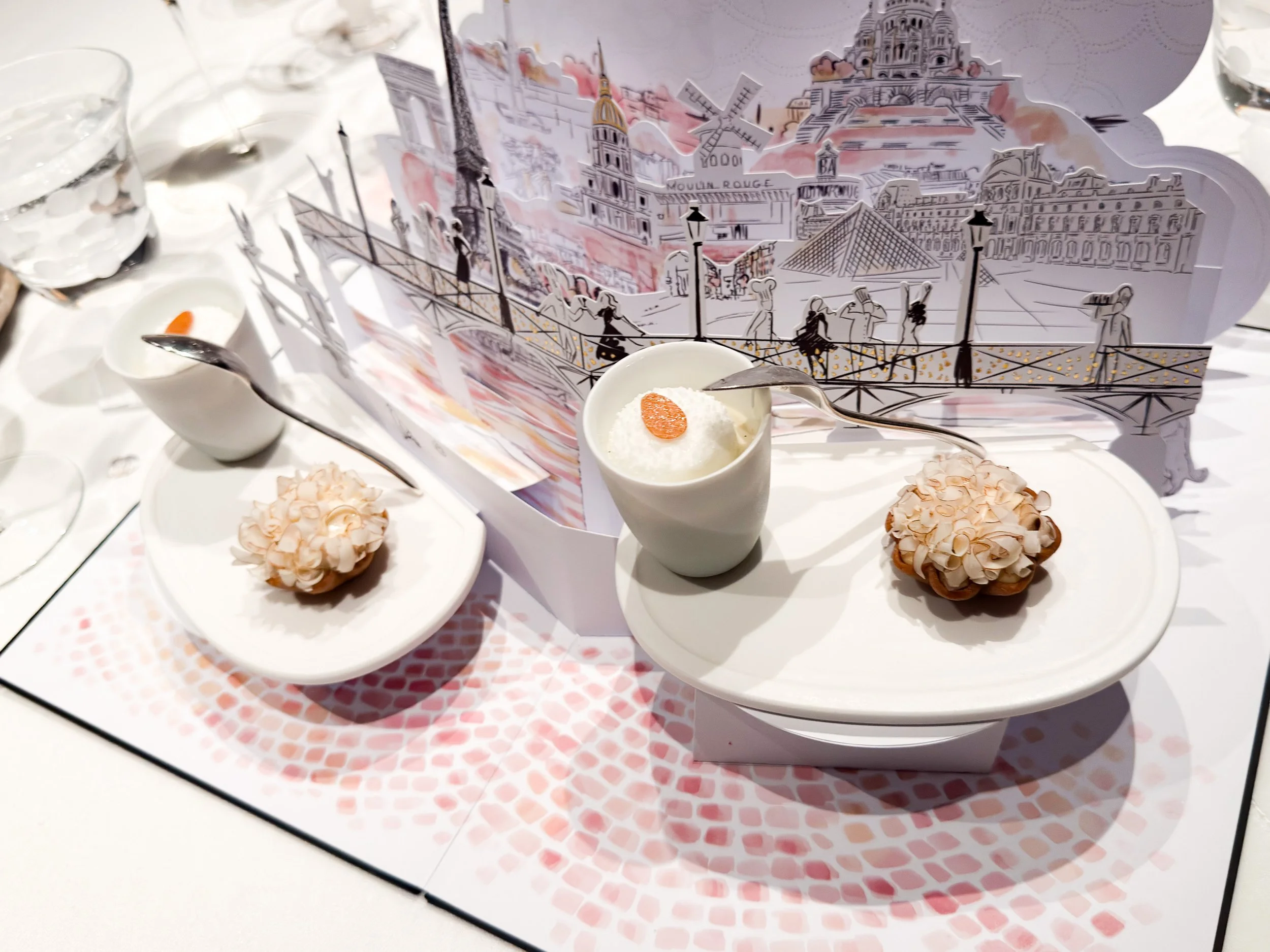
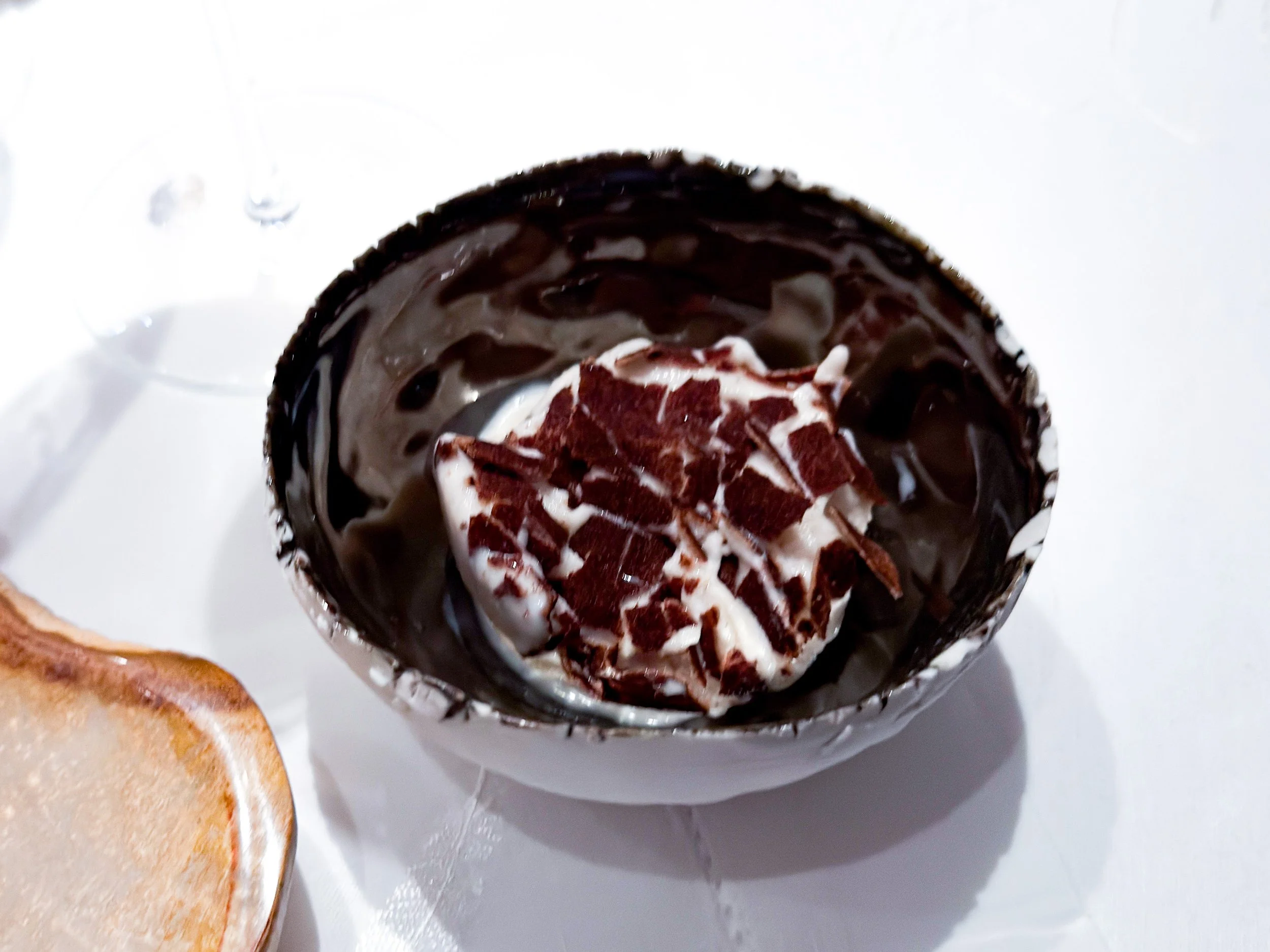
At around 12:30 a.m., the last bites finally arrive: a Crème anglaise scented with vanilla and orange blossom, a hazelnut tartlet filled with praline, and finally Teurgoule, a Norman rice pudding flavored with cinnamon. Each one could easily have been the centerpiece of a dessert course of its own. (10/10)
What remains after five hours is, above all, the feeling of having moved through a culinary world with its own geography. Gardens and coastlines. Provence, Brittany and Normandy. Memories, ingredients and, again and again, sauces.
Donckele does something rare at this level. His cooking is enormously complex and technically almost absurdly elaborate, but eating it never feels like work. You do not need to decode anything to be moved by it. You do not need to “understand” it. You only need to eat and indulge.
Perhaps that is what makes Plénitude so great. Eventually, you stop thinking about the reductions, infusions, consommés, sabayons and emulsions. You simply taste: warmth, freshness, acidity, depth — and something strangely familiar that is difficult to name.
When I leave close to 1 a.m., the restaurant’s name suddenly feels remarkably precise. Plénitude means fullness, completeness, a state of complete contentment.
It is hard to imagine a better description of the night.