Tuju — Maximum Altitude
Arriving at Tuju could hardly feel more different from entering Evvai, São Paulo’s other three-Michelin-starred restaurant.
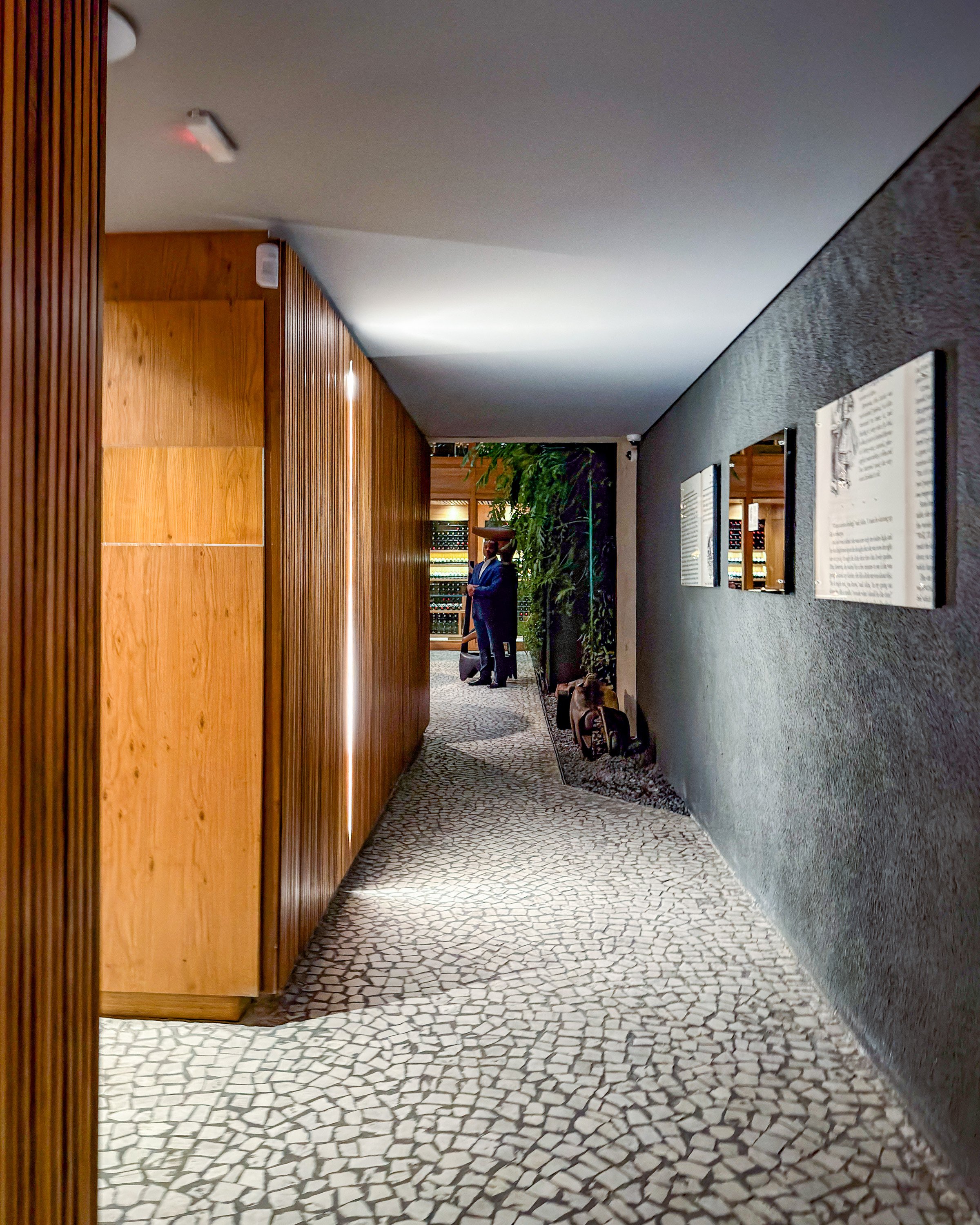
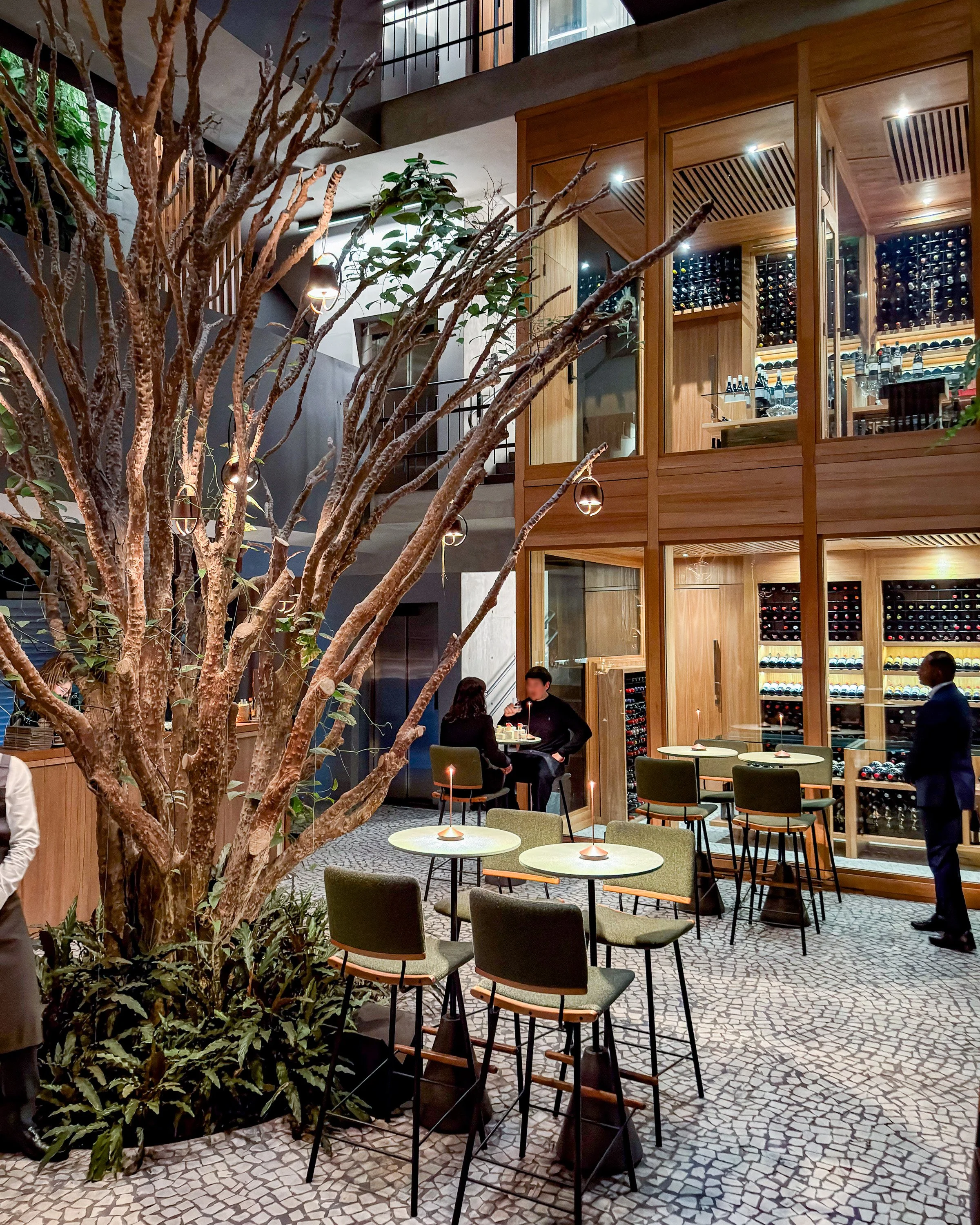
Small stone tiles lead seamlessly from the forecourt into the building, through a nicely designed corridor lined with wood paneling, and finally into an imposing atrium. Only here does the full scale of the restaurant become apparent: It rises across three floors. The space immediately recalls Björn Frantzén’s three-star restaurants, all of which are similarly conceived vertically.
Tuju was opened in 2014 by the Brazilian chef Ivan Ralston. The restaurant even has its own research laboratory — shades of Noma. After closing for three years during the pandemic, the then two-star restaurant reopened only at the end of 2023. Its third Michelin star followed in April 2026.
The menu, that is priced at 1,650 Real (approximately €280), begins without much ceremony at a small table with bar stools, though not before I have selected a white wine. For an “uncomplicated” start, I choose a 2020 Bourgogne Blanc from Domaine Paul Pillot (approximately €142), although I already feel inclined to stay regional with the wines that follow.
The setting is impressive. Moodily lit and designed to feel half indoors, half outdoors, it builds anticipation for what is still to come — in the cooking, the pacing and the architecture. There are charming touches, too. Each napkin is embroidered with a different regional bird. When I ask about mine, a prepared reference sheet is brought to the table. The bird on my napkin is an azure-shouldered tanager.
The restaurant’s ornithological leanings are already evident in its name: Tuju refers to the South American band-winged nightjar.
The first snacks arrive alongside it, and I immediately appreciate their measured number: three compact bites, presented together. Some restaurants serve what already amounts to a small menu at this point, one whose conclusion you begin longing for before the actual meal has even started.
A miniature chicken-skin sandwich with crab and green pimenta de cheiro is fresh, juicy and crisp, though otherwise still somewhat unremarkable. (7.5/10)
The level rises sharply with a cassava-starch cornet filled with Wagyu. A fine wasabi mayonnaise provides a mustardy, green burst of freshness that deliciously offsets the richness of the tartare. (9/10)
A small roll of paper-thin, translucent radish, filled with assorted herbs and peanuts, answers the question of whether one might rather smoke it with a firm no. Even as it is, it opens the door to a hidden world of unfamiliar flavors. (10/10)
With these first impressions behind us, our party soon moves one floor higher to the dining room, which is every bit as striking as the atrium. Ten round tables are arranged around a kitchen open on all sides. The room itself is rather dark, while both the workstations and the tables are precisely illuminated.
One detail becomes apparent only later: The entire team, in both kitchen and dining room, communicates through in-ear systems and microphones. This noticeably lowers the noise level, though it also deprives the atmosphere of some of its vitality. That, of course, is something one can remedy at the table.
The first dish to arrive consists of a white wedge clam in a lightly chilled, gently thickened coconut soup with peanuts and Beluga caviar. Everything about it is already of exceptional quality, yet it is only the addition of basil — tasting distinctly of Thai basil — that makes the composition truly bloom. Its ethereal freshness draws the coconut, peanut and clam into a precisely articulated Thai flavor profile — or at least that is my association — while the caviar contributes a pointed saline accent. Whether or not the association does the dish justice, the dish itself is magnificent. (10/10)
The next wine is a 2023 “Cave” Chardonnay from the Brazilian producer Luiz Argenta in the Serra Gaúcha wine region (approximately €96).
Next comes a reinterpretation of the Brazilian classic Cuscuz Paulista, a savory corn dish, with sardine marinated in rice vinegar, several textures of corn, bell pepper and green tomato. Layered almost like a mille-feuille, the snack is surprisingly weighty in the hand and complex on the palate: crisp corn, juicy sardine and bell pepper, precisely proportioned and technically immaculate.
The dominant flavors are fruity notes of corn and tomato, joined by maritime accents. A little more umami and acidity — the rice vinegar is barely perceptible — might have made it even more pleasurable. As I do not know the original dish, however, this objection may be sacrilegious. (8.5/10)
The next course appears minimalist: steamed octopus with Brazilian sea urchin and a sauce made from it, a scallion mille-feuille and crisp quinoa seasoned with freeze-dried kimchi. Thanks to a Japanese-inspired cooking method, the octopus has a pleasantly firm bite — entirely unlike the rubbery, fishy specimen I had to send back at my otherwise excellent hotel’s pool restaurant only yesterday.
The iodine-rich intensity of the sea urchin is a phenomenal match and immediately inspires longing for Japan. Scallion and saltwort bring green freshness, the quinoa adds crunch, and the kimchi contributes a subtle fermented note. A superb plate. (10/10)
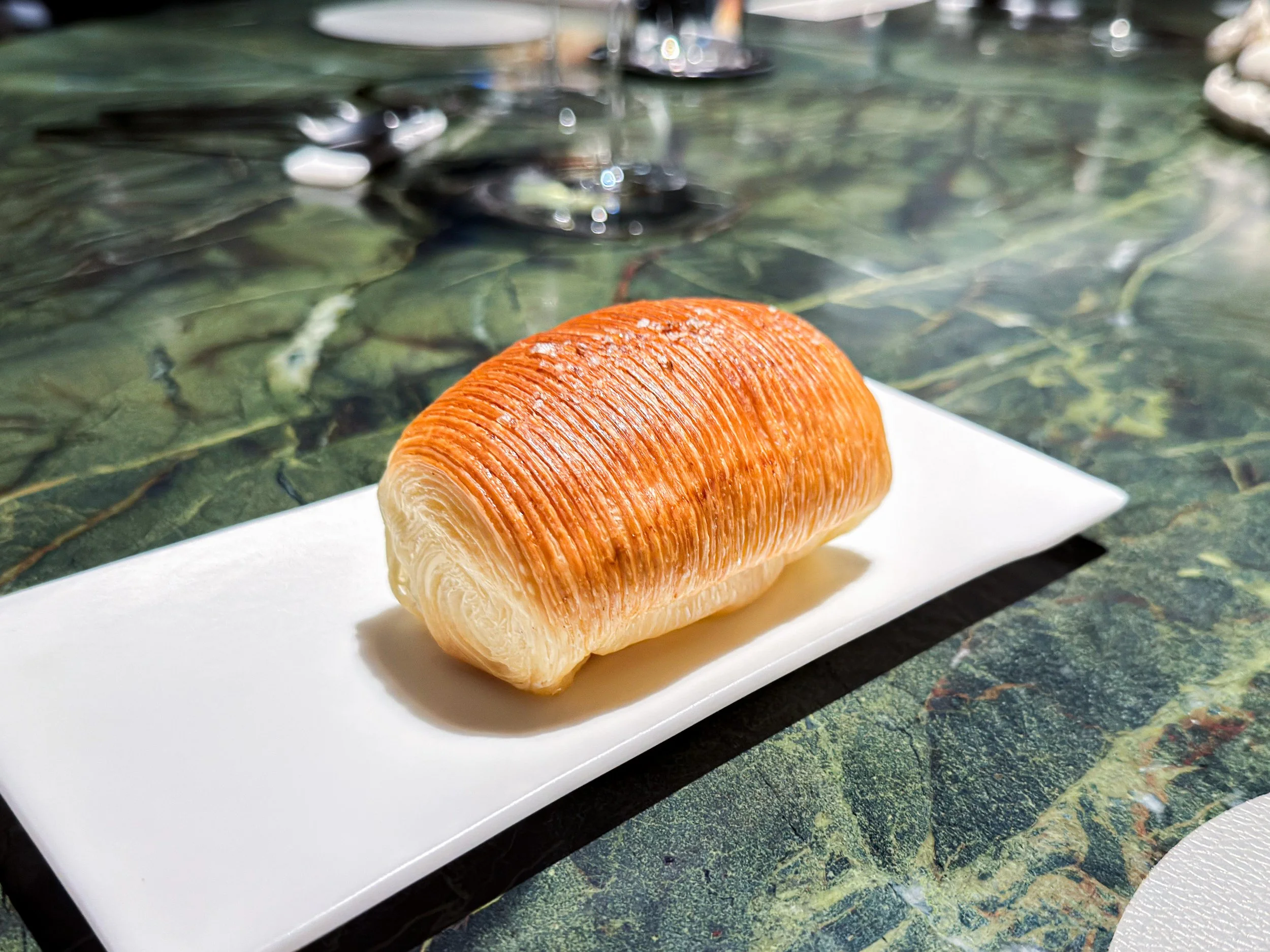
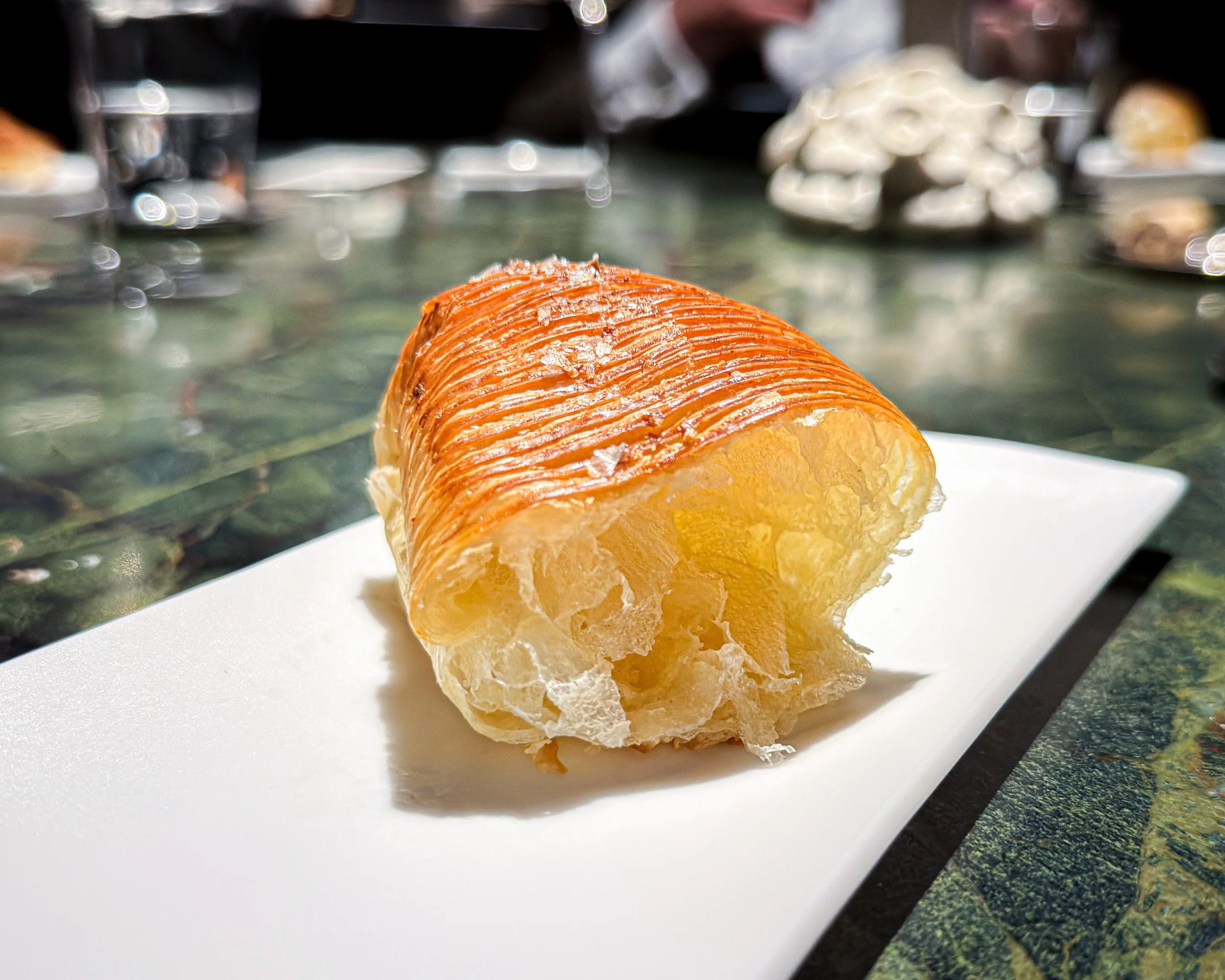
An intermezzo follows in the form of a pastry resembling a cross between a brioche feuilletée and a croissant. Sprinkled with a little salt, the golden-brown piece is delicately crisp and buttery, yet surprisingly airy inside — almost like cotton candy, though without its sweet stickiness. It is among the finest pastries I have ever tasted, and I relish it quickly. For once, even a piece of bread requires a rating: 10/10.
The outstanding menu, in which pleasure, atmosphere, architecture and mood come together to remarkable effect, continues with a charmingly simple plate. Potato leaves and slices of Jerusalem artichoke and black truffle from Argentina sit in a sauce made from Tulha cheese, whose flavor recalls Parmesan. The earthy notes interlock perfectly, while the cheese’s gentle pungency amplifies the truffle’s ethereal intensity. The dish is forceful — piquant, aromatic, acidic and earthy — yet entirely delicious. (9/10)
For the remaining sauce — for la scarpetta — I order another piece of the fantastic bread.
With a black-fruited, smoky and cool-toned 2020 “Vista do Chá” Syrah from the Brazilian winery Guaspari (approximately €164), porcini mushrooms from Santa Catarina arrive in two preparations. A separately served, lightly oily and piping-hot broth tastes intensely of the forest and possesses considerable umami depth.
On the main plate, the mushrooms appear partly raw and partly lightly sautéed, with a vinaigrette made from pinhões, the seeds of the Brazilian araucaria, and a sauce of cured egg yolk. Frozen pesto made from the leaves of the same tree completes the dish.
In principle, this could have joined the sequence of excellent courses without interruption. Yet the ice-cold pesto powder substantially diminishes the pleasure. It cools the palate so aggressively that the delicate mushroom flavors are muted, while its temperature disrupts the warm, earthy harmony of the plate. A pity for a course that comes close to greatness. (7/10)
Fortunately, one does not have to wait long for greatness to return.
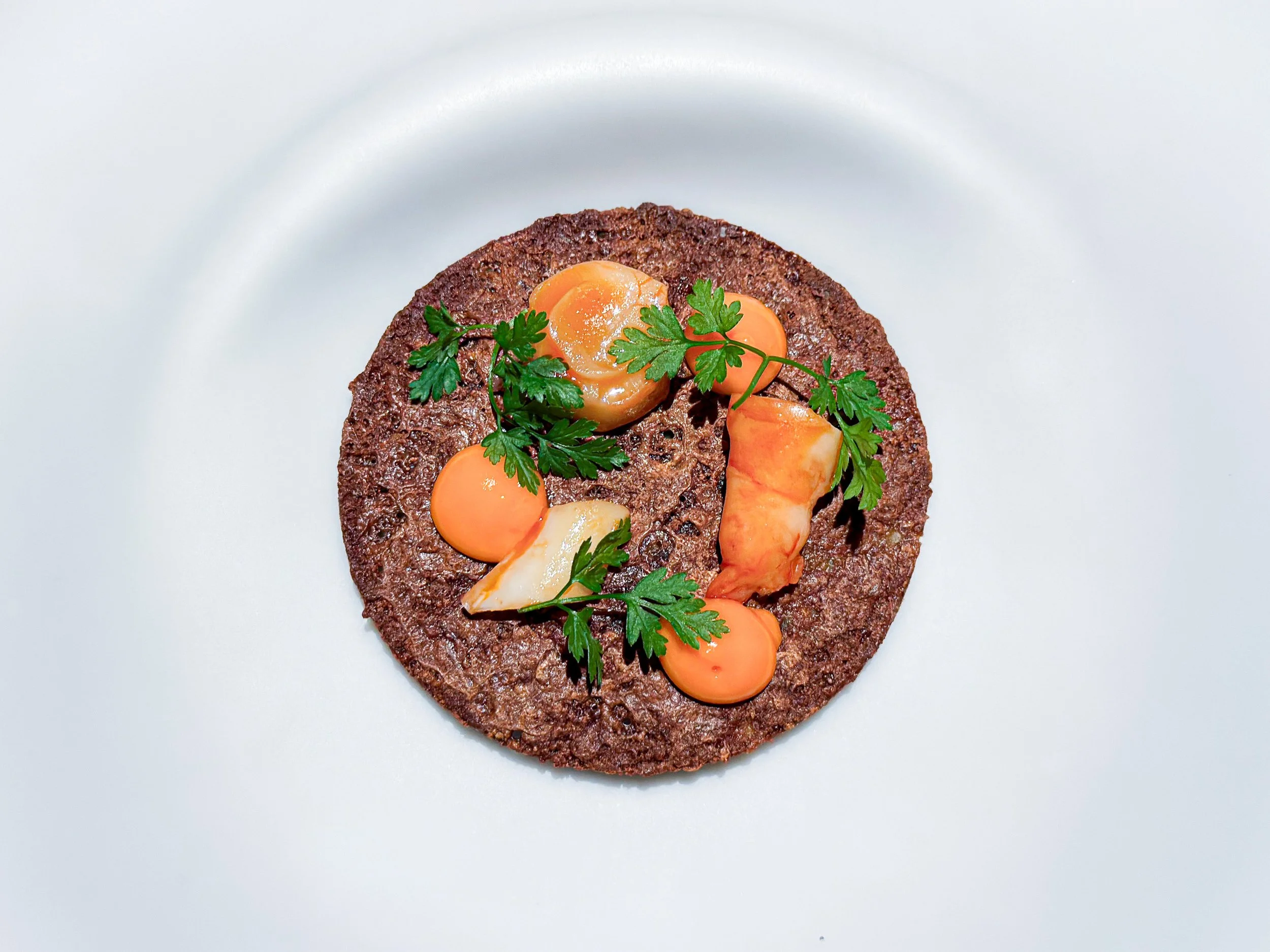
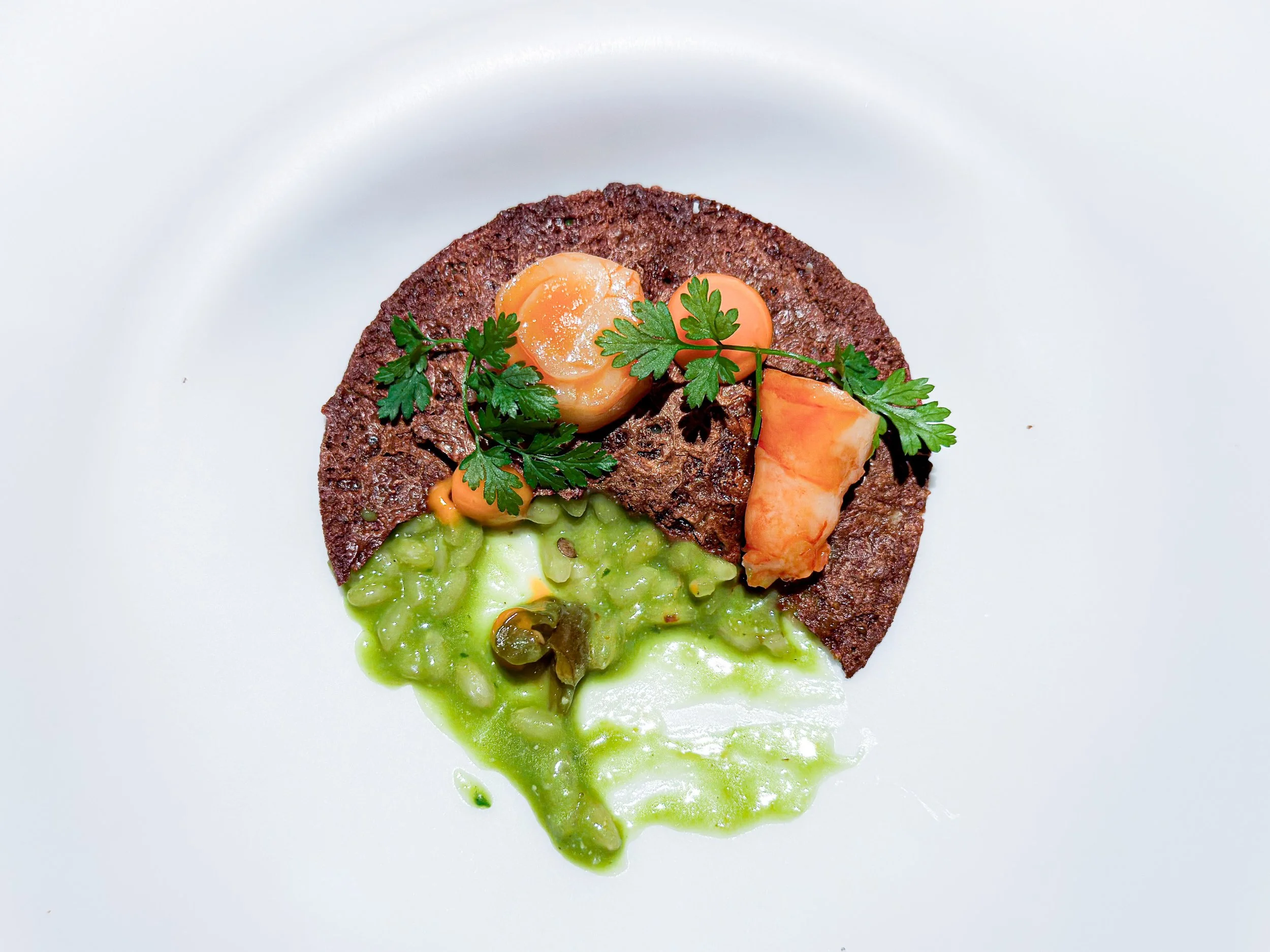
Arborio rice from the Marins region in the Vale do Paraíba is prepared in two forms: creamy and infused with spices — essentially as a risotto — and as a dark, crisp rice cracker. On top sits pitu, a prized freshwater prawn, with an emulsion made from its heads and green pepper.
The rice crust is broken like the caramelized surface of a crème brûlée and mixed with the other components. The result is a breathtaking interplay of creaminess and crunch, gentle heat, ethereal maritime intensity and herbaceous, silken rice. It tastes like the concentrated, lightly toasted layer scraped from the bottom of a paella pan — simply sensational. (10/10)
The next dish already promises something exceptional on sight. A visibly delicate, almost translucent red mullet rests in a buttermilk beurre blanc with sweet peas and trout roe. Fried scales and some of the fish’s liver are arranged on top.
The fish is tender yet pleasantly firm, with a lightly gelatinous, almost silky texture — an experience in itself. The peas are equally astonishing, of a quality I otherwise encounter almost exclusively in the great guisantes of the Basque Country: bursting crisply on the palate, intensely sweet and remarkably concentrated in flavor. Flawless. (9/10)
The final savory course is slowly braised pork cheek with yellow cassava from Terra Roxa, sourced directly from the chef’s farm, Mantiqueira capers and fresh vegetables.
It is the first dish that does not immediately excite. The dark jus glazing the meat has a faintly Christmas-like character and, with its warm, sweetly spiced weight, departs markedly from the bright, precise and often ethereal maritime flavor language that has defined the menu until now.
The meat itself is unusually firm and compact for a braised cheek. Sauerkraut foam, capers and sansho leaves lighten matters somewhat, but do not provide enough acidity or aromatic freshness to counter the heaviness. By any conventional standard of fine cooking, this remains very good. It is nevertheless far from greatness. (7/10)
The menu does not settle down with dessert. The first consists of a sorbet of yuzu and cambuci, a highly acidic, slightly bitter fruit with green, citrusy aromas. It is accompanied by frozen shavings of Brazil-nut milk, yuba — the skin formed on heated soy milk — Pilar Moscato grapes and cucumber infused with white balsamic vinegar.
The citrusy, herbaceous and almost minty notes of the sorbet combine remarkably well with the cucumber’s watery freshness, while a fine saline accent gives the dessert additional tension. Outstanding. (9/10)
The final dessert is devoted to one of the characteristic fruits of the season: persimmon. One portion is served simply sliced, while another is nixtamalized with lime and combined with clarified tamarind juice. Yogurt ice cream from Fazenda Santa Vitória and honey from native Partamona bees complete the dish.
An intense, candy-like fruit flavor emerges immediately, recalling peach rings, orange gummy bears or tropically flavored chewing gum. I have written before about the striking aromatic parallels that sometimes exist between desserts in haute cuisine and industrial confectionery.
The quality here, of course, belongs to an entirely different realm, thanks to natural ingredients, finely calibrated temperatures and considerable technical precision. The dessert is not especially complex in its construction — and yet it is phenomenally delicious. (10/10)
After three hours in the main restaurant, we climb one final floor to a room that appears to be part lounge, part library and part bar.
A selection of chocolates follows. All are excellent, though none find their way into my notes. At this point, a detailed description hardly matters anymore. Tuju flies at maximum altitude until the very end — light turbulence included.