D.O.M. — For Heaven’s Sake
D.O.M. stands for Deo optimo maximo, “to God, the best and greatest,” and is the name of what is probably São Paulo’s most famous restaurant. For more than twenty years it has regularly landed high on various rankings; its owner, Alex Atala, is one of South America’s best-known chefs. The Michelin Guide awards it “only” two stars.
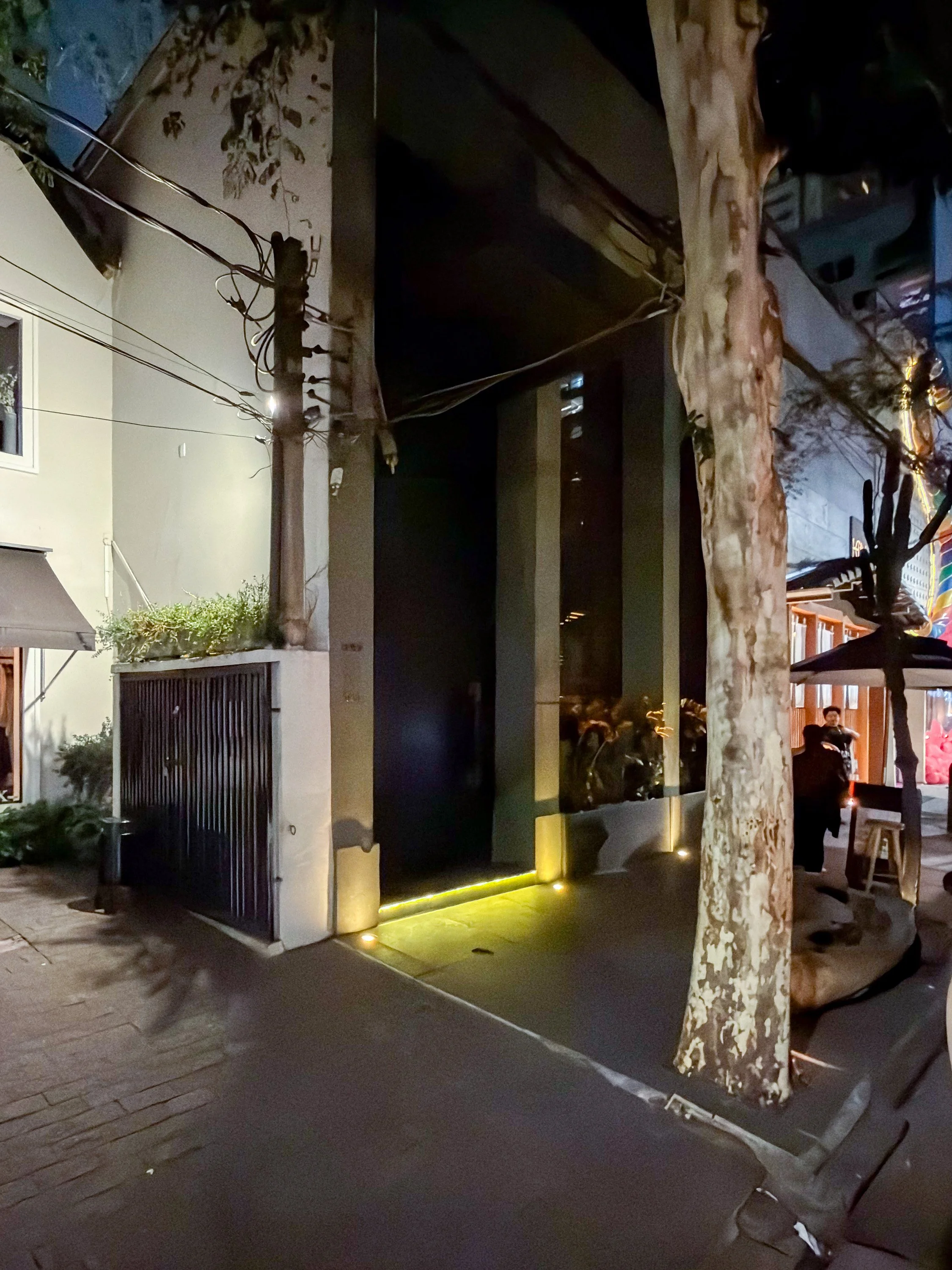
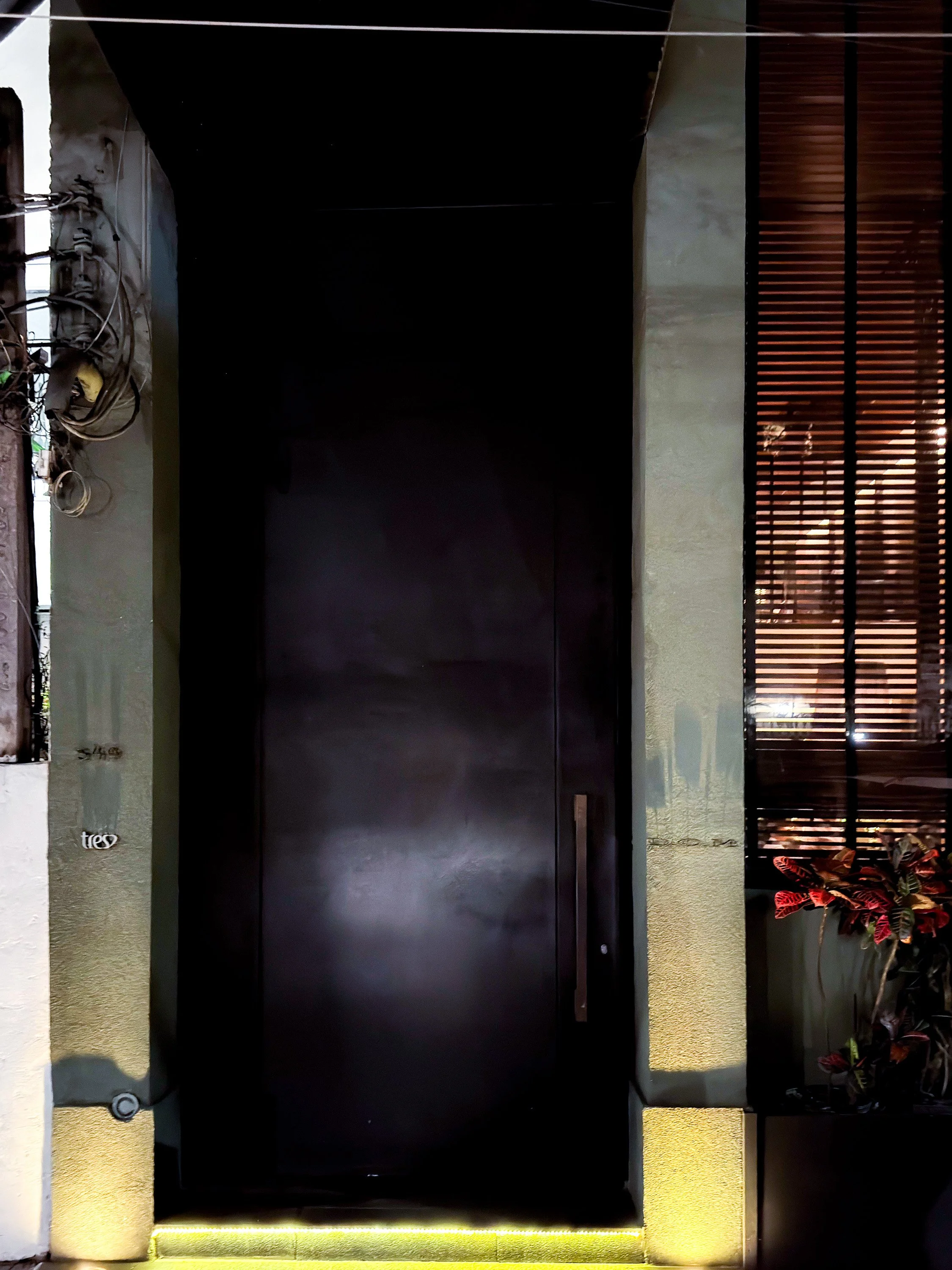
But it isn’t only God who looms large here. So does the front door: a good five meters tall and two meters wide. It nonetheless opens with surprising ease. Behind it lies a dining room that catches you off guard.
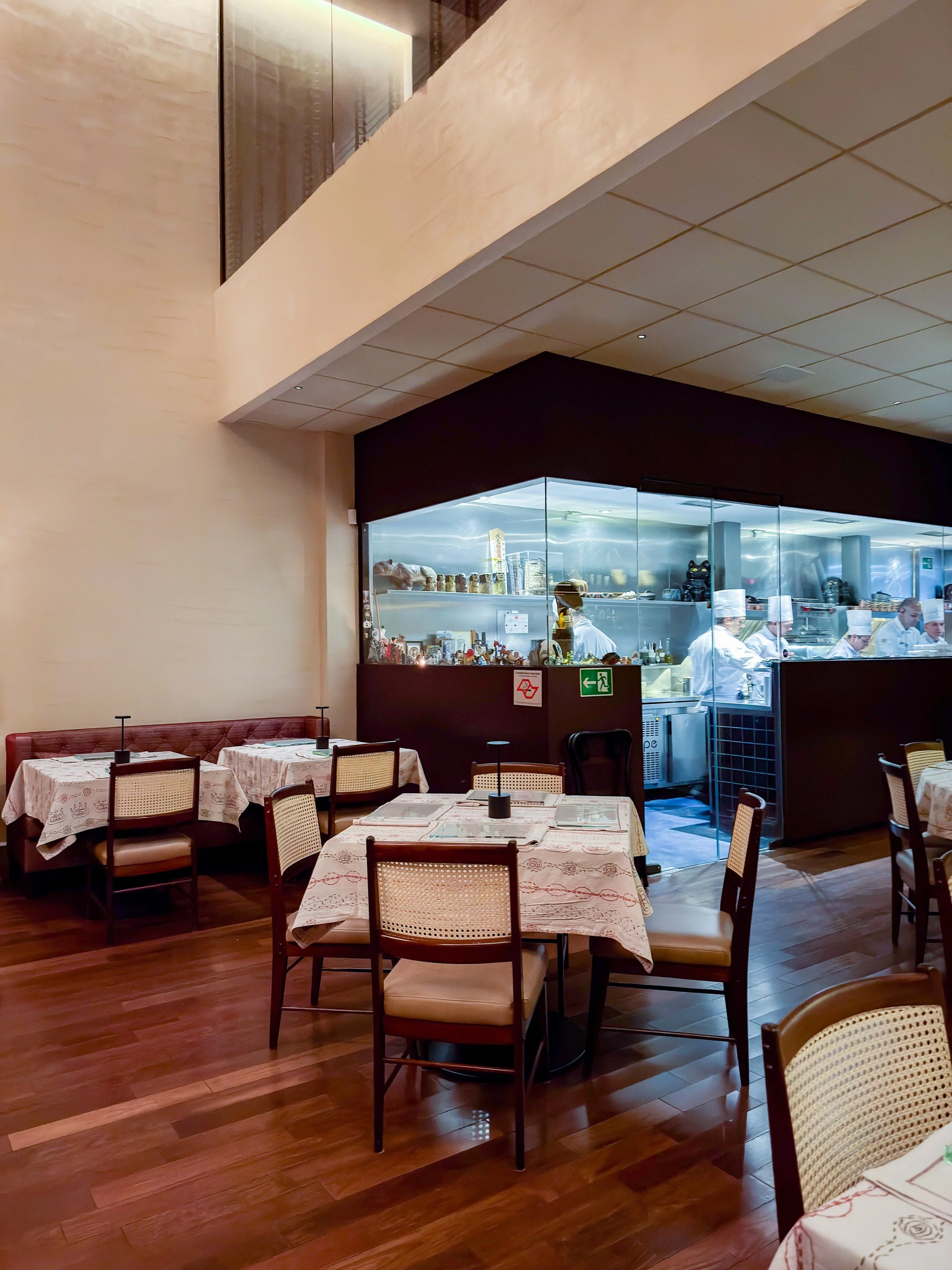
The almost entirely brown interior, spread across two levels, is more reminiscent of a traditional Spanish steakhouse. It smells slightly musty, of sea urchin and an old attic — rather charmingly so. Nothing about it suggests that creative Brazilian avant-garde cuisine awaits here — presumably a very deliberate contrast.
D.O.M. serves a single tasting menu, newly conceived each year. It currently costs 1,150 reais (approximately €200), of which just under a third is paid in advance when making the straightforward reservation through Tock. The current menu, served since May, is called “When the Jaguar Drinks Water.” Apart from a mural depicting the big cat doing exactly that, the theme is not referenced again during the evening.
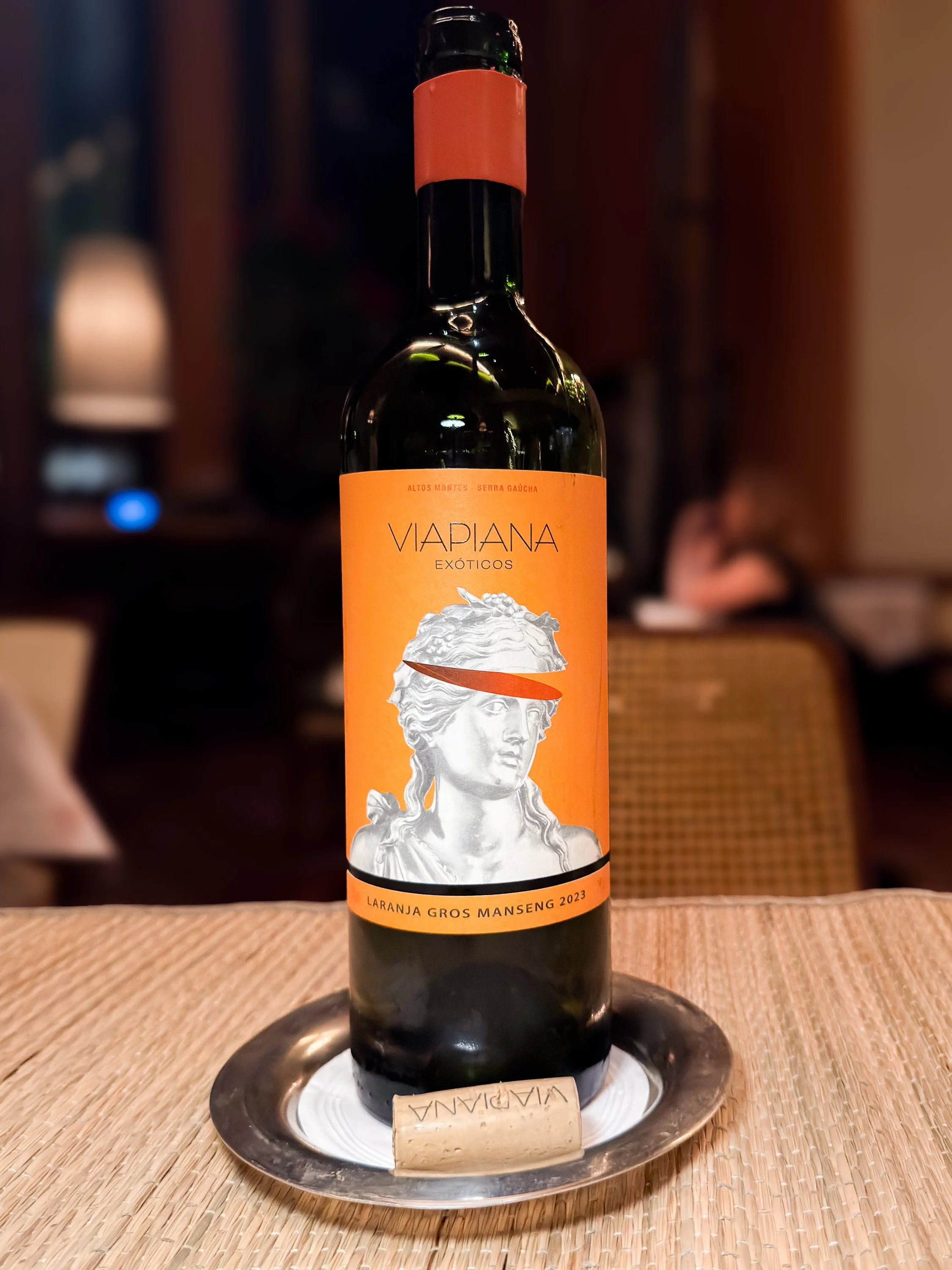
The wine list is surprisingly compact for a restaurant of this renown. Still, we do not want to miss the opportunity to try a Brazilian wine. In the spirit of “in for a penny, in for a pound,” we even choose an orange wine. The 2023 Viapiana “Exóticos Laranja,” made from Gros Manseng grapes (approximately €60), comes from the Altos Montes wine region in southern Brazil. It is surprisingly complex, with aromas of red fruit and hints of wax.
The first course is served on a spoon, half filled with candied coconut and half with Iranian “Persian Majestic” Beluga caviar. The interplay between saltiness and sweetness, as well as creamy softness and delicate bite, is quite compelling; on the palate, however, the very pronounced sweetness of the coconut preparation ultimately prevails. (7.5/10)
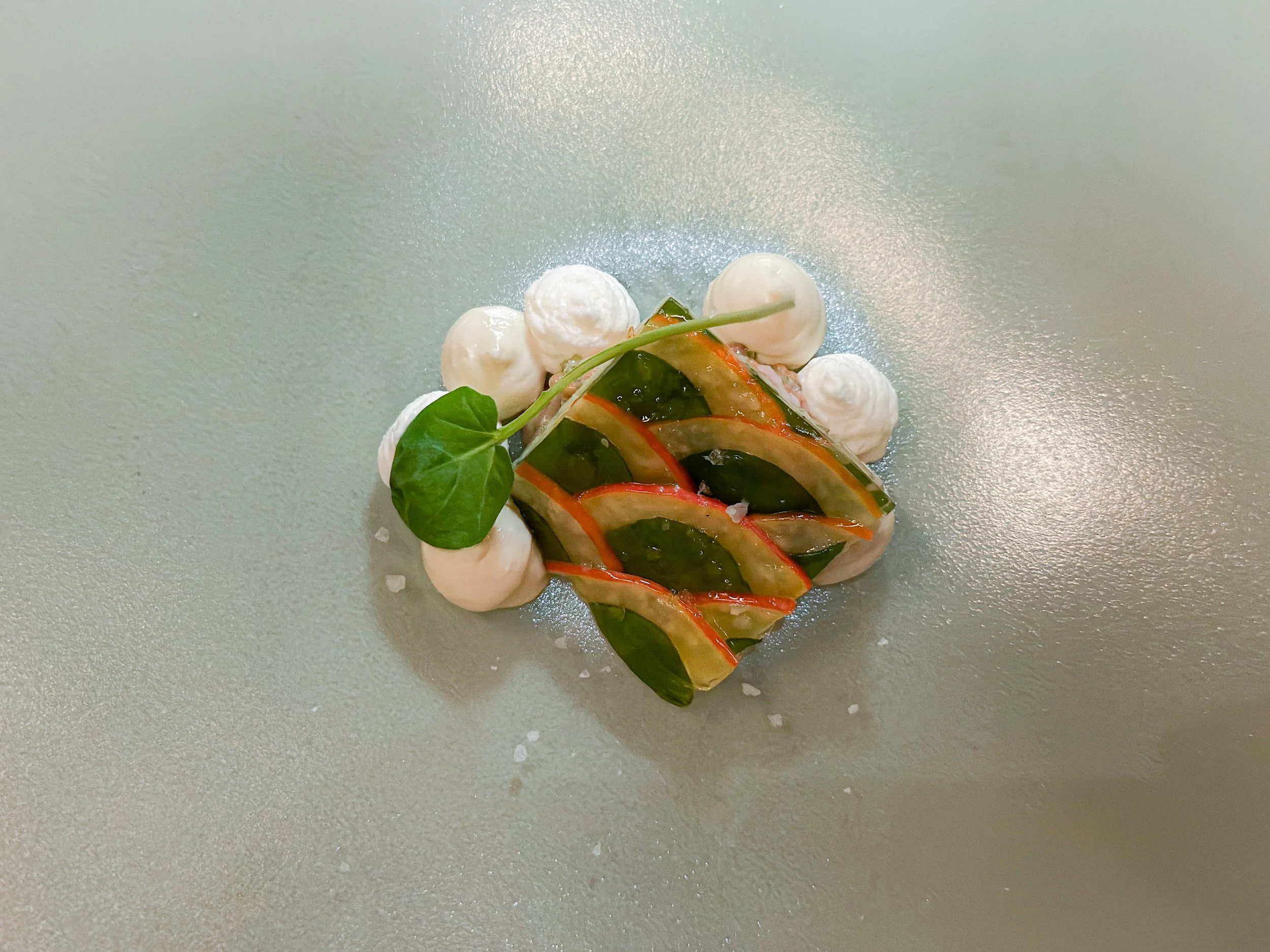
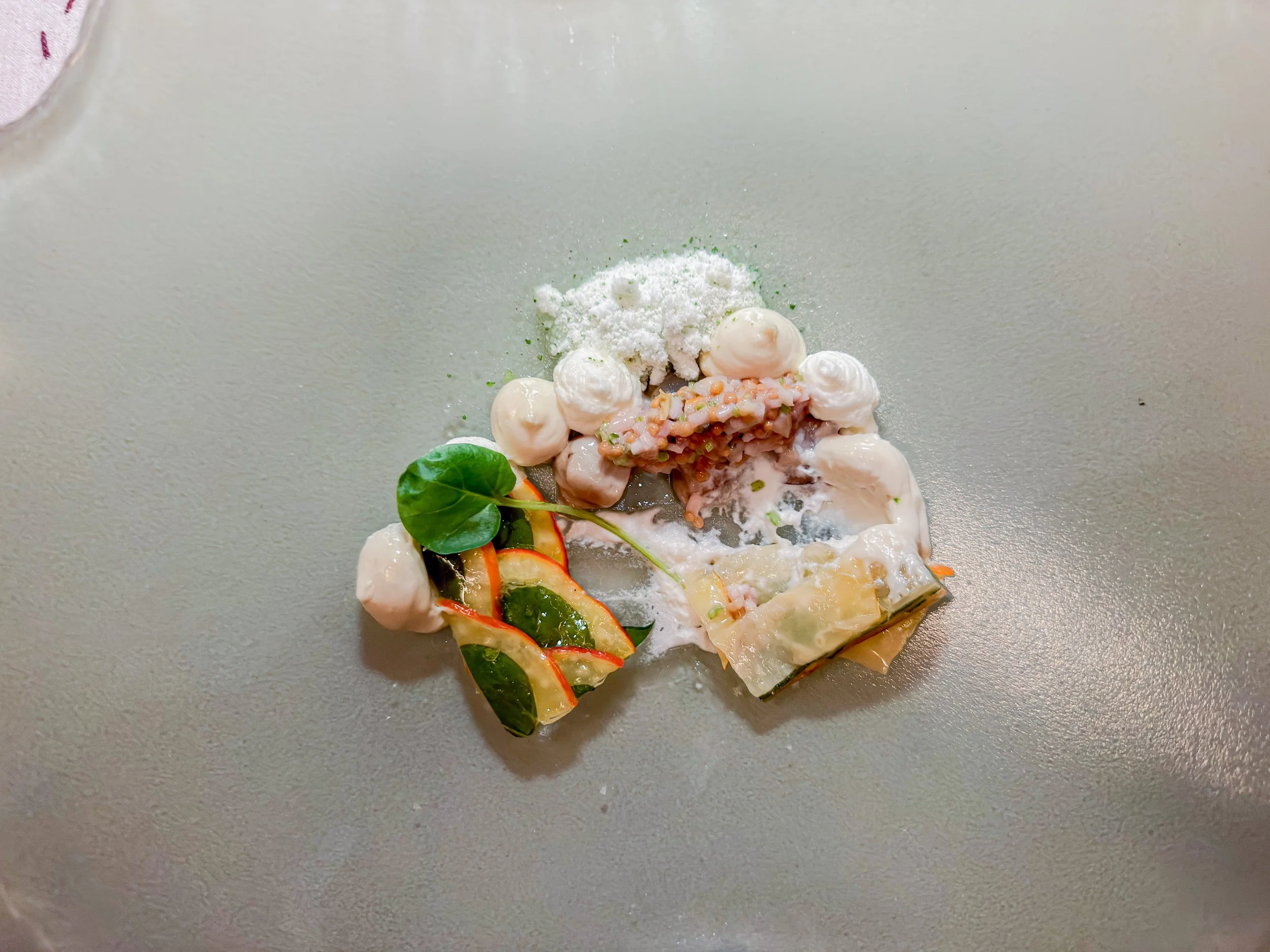
The sweetness returns in visual form in the next course, which resembles a small rectangular slice of cake placed on dollops of cream. It is in fact a preparation of cashew apple and watercress, beneath which lies an oyster tartare. The combination tastes maritime, bitter and fruity, quite pleasant but not especially remarkable.
What causes irritation are the various piped dots of cream applied to the plate and combined with cashew dust frozen in liquid nitrogen. The creams taste sweet and dairy-rich, with no comprehensible flavor connection to the rest of the composition.
Then there is the unnecessarily finely chopped oyster tartare, which does nothing to improve the mollusk’s presence on the palate. Amid all the creams, dust and tiny pieces, scarcely any ingredient remains perceptible as a distinct, authentic product. Even after eating this dish, I still have no idea what a fresh cashew apple actually tastes like.
I therefore leave most of the foamy, creamy, dusty components on the plate and remain hopeful that the menu will still take a different direction. (6.5/10)
The next course looks better. Two yellow rectangular components resemble classic pasta, but reveal themselves to be “tapioca ravioli” filled with various herbs and leek-like vegetables. They sit in a viscous, slightly earthy sauce made from mushrooms and tucupi, a fermented cassava juice. The “ravioli” themselves taste prominently of fresh herbs, especially chervil. The brief moment of authenticity that appears here is welcome.
I find the dark gray plate somewhat poorly chosen, as the color of the sauce is difficult to make out against it. Even more distracting is its rough surface, which creates an unpleasant sensation when scraping up the sauce with a spoon. Decisions like these are difficult for me to understand because they appear to have been made — quite deliberately — far removed from the guest and any possible pleasure at the table. Apart from that, this is a very good course. (7/10)
To the menu’s already numerous curiosities is now added a change in the table setting. Not because of a stain, though: a raffia mat is simply placed over the cotton tablecloth. I wait expectantly for an explanation, but none arrives, just as no comprehensible reason becomes apparent. The last time anyone served me a special tablecloth was in 2013 at the three-star Alinea in Chicago, when the famous “Messy Table” dessert was presented.
The next course, however, arrives on an ordinary plate. Although normality is once again hardly the word. The plate in front of me contains a slimy mixture of yam pudding seasoned with garlic and fish sauce, sea urchin processed into a cream, and green and blue spirulina powder.
That even the sea urchin has been reduced to mush feels like an act of malice — not a single ingredient remains on the plate that appeals to me. Mind you, I do not really find any ingredients in this dish at all, only preparations. I nevertheless taste a small amount. The sludge is cheesy, sticky, fishy and bitter. What is the point? (5/10)
I gradually begin to consider leaving. Not because I am upset in any way, but because I am simply not interested in whether a weak menu might eventually manage to produce a good course. What interests me are good products prepared respectfully, pleasurably and with passion. It has long since become obvious that these principles are not the priority here — so why continue subjecting oneself to it? What bothers me is neither technical error nor poor product quality, but a cuisine that subordinates its ingredients to its own staging.
At the table — there are three of us — we agree to stick it out for a few more courses.
The next oddity follows immediately: alligator from the Amazon now takes center stage. Whether reptiles need to be eaten at all is not a question I am asking myself for the first time — in the case of turtles, my answer is already an unequivocal no — but alligator is new to me. The meat is prepared as a kind of ballotine, accompanied by finely diced pieces of equally white bacuri fruit. Everything is served in an alligator broth scented with lemongrass and other aromatics.
The meat itself is dry, tough and virtually flavorless. One wonders why such an exotic ingredient is selected at all if it cannot subsequently be shown in its best light. The broth, by contrast, is rather interesting, somewhere between damp forest floor and exotic fruit, perhaps quite appropriate for the Amazon. Overall, however, this amounts to nothing. (6/10)
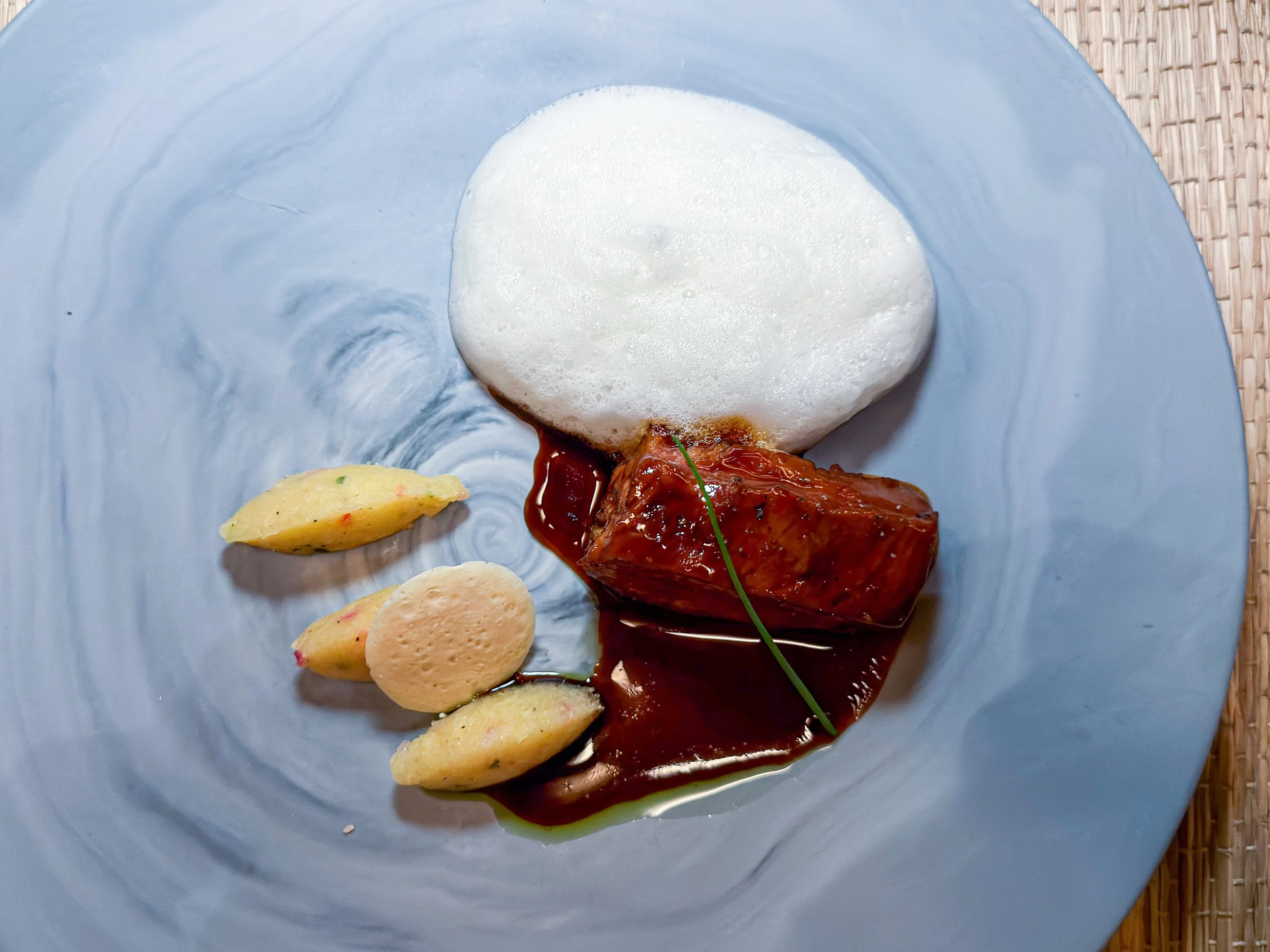
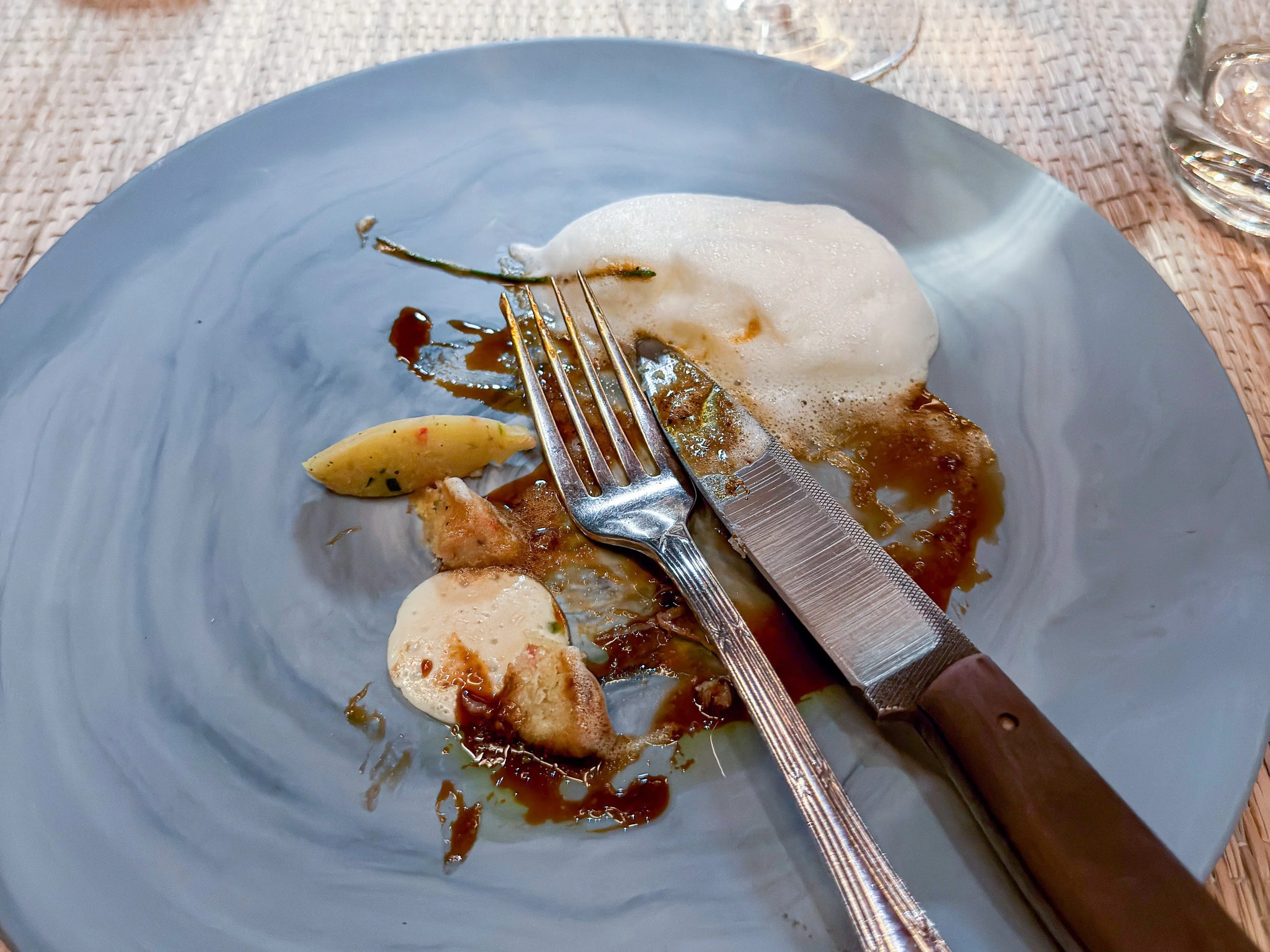
Next comes milk-fed veal in a jus flavored with coffee. The meat is tender; its texture lies somewhere between sous-vide and braised. It is accompanied by milk foam, a milk crisp and cassava dumplings — all very peculiar companions, sometimes bitter, sometimes nearly flavorless, alongside a piece of meat that tastes rather “French.” I am somewhat hungry, particularly for protein, so I finish the meat and leave the rest. (6/10)
We will have one more course, but the decision to stop afterward has already been made, and the staff already informed.
An unappetizing sweet, warm purée of baroa potato with balsamic vinegar and a tapioca crisp predictably does nothing to turn the menu around. (5/10)
The service team now attempts some damage control — for the first time all evening, anyone takes an interest in what has been happening at our table. A discount of approximately €60 also appears on the bill.
But this is not about the money.
I do not look for faults as a matter of principle. I am not bothered by minor imperfections. I am neither pedantic nor fussy nor resentful. On the contrary: I derive more pleasure from simple, good food than from many other things, and I am happy to overlook imperfections when a chef is genuinely passionate about the ingredients.
What bothers me about a cuisine like this is something else entirely: This is about neither pleasure nor the ingredients themselves — at best, they become a pretext for culinary technique. And unlike at the unfortunately equally inedible Mugaritz, where one can at least recognize the ambition to present cuisine as art, even that ambition remains unfulfilled at D.O.M. Nor does anything emerge here as a distinctive gastronomic experience.
What remains is a cuisine devoid of any real substance, a phantom menu that offers neither pleasure nor insight. Above all, it betrays the trust that a guest inevitably places in a restaurant of such renown. For me, that weighs even more heavily than the unsatisfying food itself. A great god certainly had no hand in this.