Kadeau — A Costly Gift
Nearly eight years have passed since my last meal at Kadeau in Copenhagen. Only in retrospect have I realized how few restaurants remain so vivid in my mind for so long. It is not so much individual dishes that I find myself dreaming about, but the unusually coherent whole: the relaxed atmosphere, the quietly assured aesthetics and, most of all, the welcome absence of theater for theater’s sake.
The restaurant’s recently awarded third Michelin star offered a perfect reason to return.
My visit falls during Kadeau’s Growing Season. For six months, from May through October, the kitchen centers its cooking on freshly harvested produce from its own garden and wild ingredients foraged on Bornholm. The island is where the Kadeau project began. The original restaurant remains there today, now with one Michelin star — and, regrettably, still on my list of places yet to visit.
One thing I remember differently is the wine list, which I had studied before dinner. It is extensive yet oddly difficult to navigate: plenty of good producers are represented, but rarely by bottles compelling enough at the prices being charged. The few genuinely exciting names can be ruinously expensive.
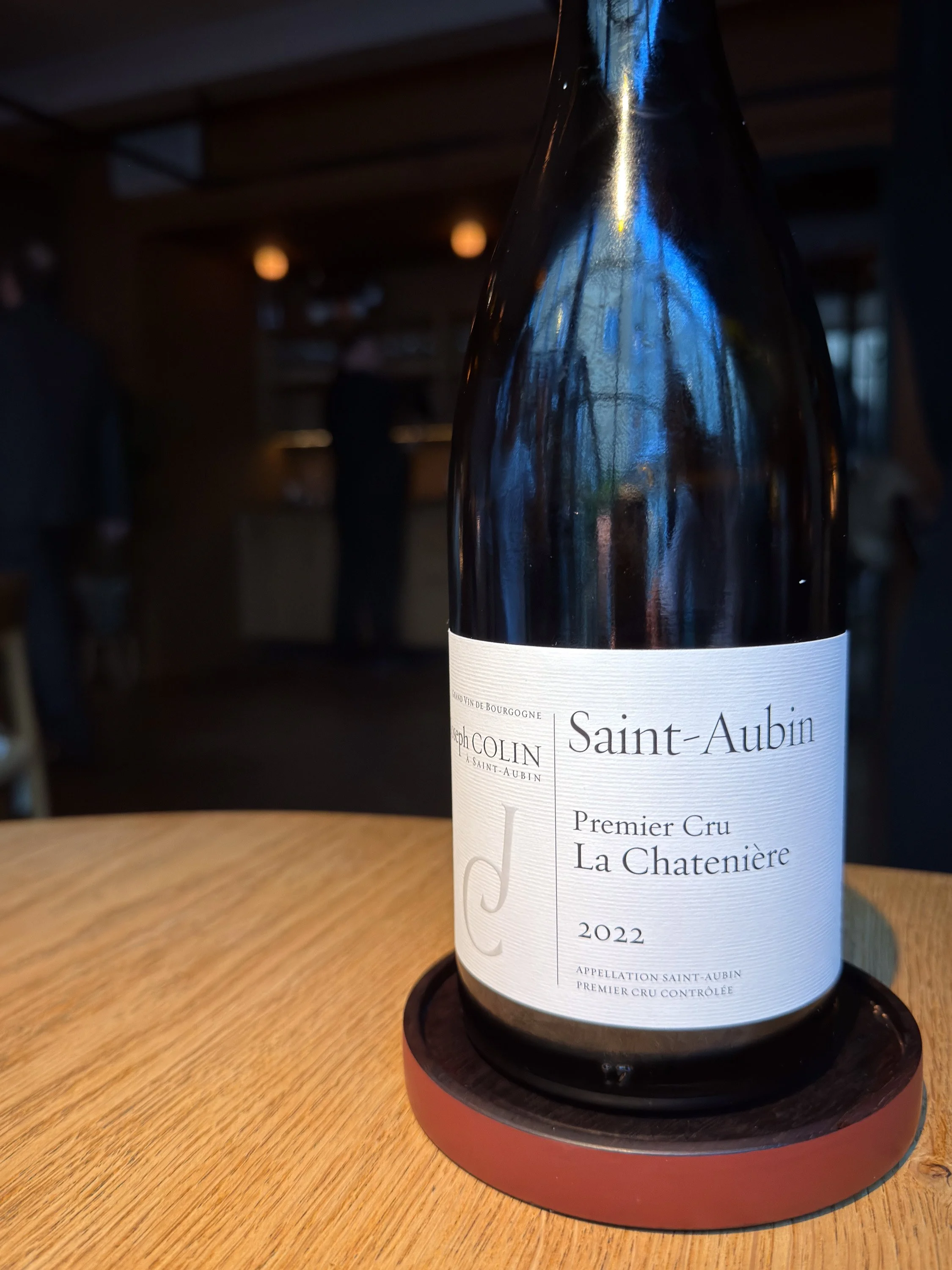
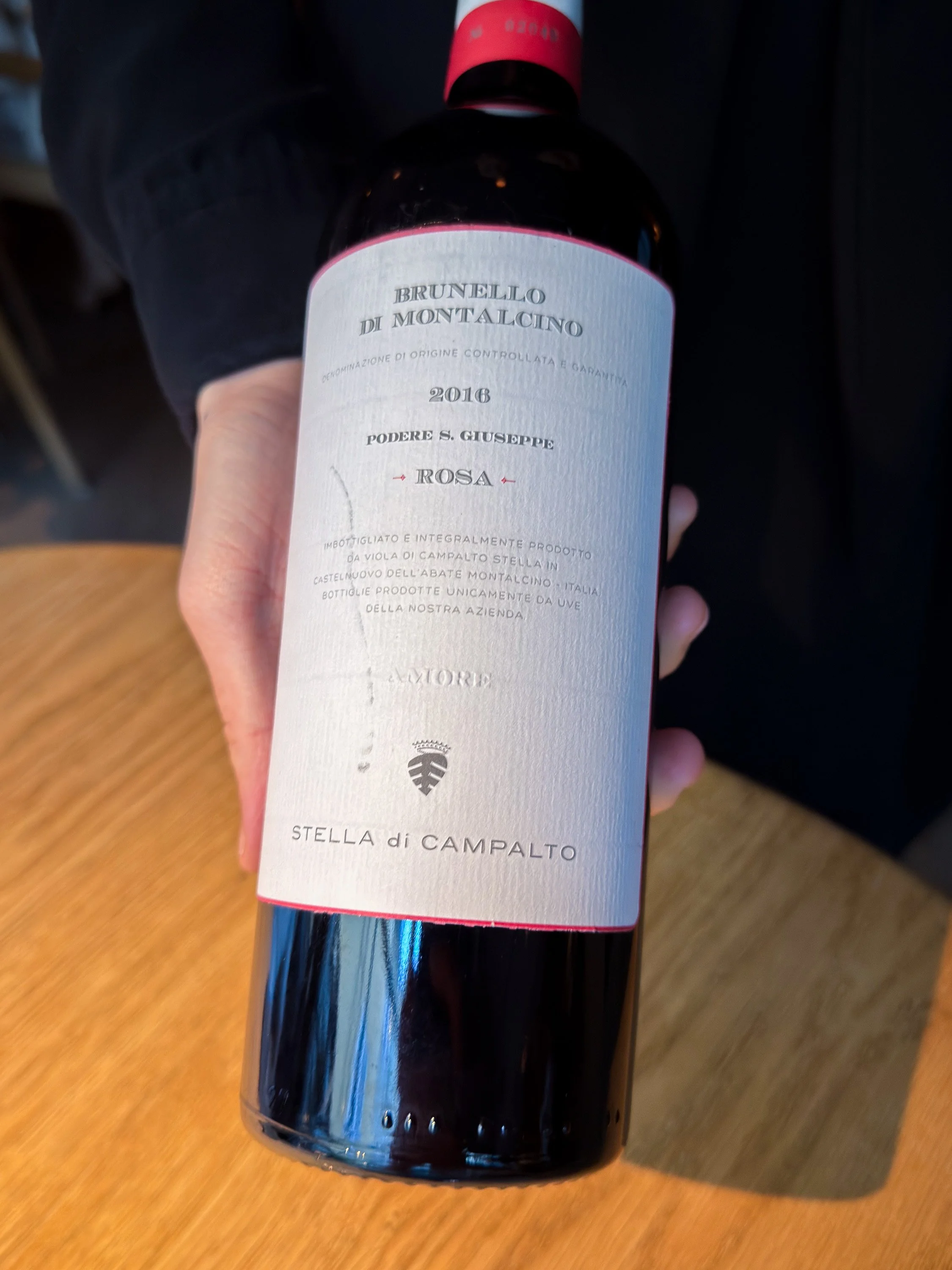
After some discussion with the sommelier, we arrange to begin with a few wines billed by the glass, starting with a 2022 Saint-Aubin Premier Cru La Chatenière from Domaine Joseph Colin. For later in the meal, we choose the 2016 Brunello di Montalcino “Rosa” from Stella di Campalto (5,000 Danish kroner, or about €670). One must celebrate occasions as they arise.
The price of the menu has more than doubled since my last visit. At 4,150 kroner, or roughly €555, it now ranks among the most expensive tasting menus in Europe. Anyone expecting an endless procession of extras beyond the meal itself, however, will be disappointed. There is no overture of canapés: dinner begins, without ceremony, with the first course.
It is an exceptionally beautiful composition of green garden vegetables — including zucchini, celery, radish and scallion — and three kinds of shellfish: pen shell, ocean quahog and carpet shell clam. Untouched specimens are placed beside the plate for inspection.
A cool, translucent broth of fermented peach and shellfish stock draws sea and garden together with delicate acidity and elegance. What I find especially compelling is the precisely calibrated chill, deployed here as deliberately as any other ingredient. A superb opening, full of freshness and ease. (9/10)
Next come three rectangular bites, each pairing a slice of cooked Annabelle potato with a thick, finely scored piece of smoked squid, the two secured by a strip of kombu. A buttery, cream-enriched sauce scented with magnolia settles over them like silk, drawing their contrasting textures together. The squid is cooked with extraordinary precision. It is gently sweet, with exactly the satisfying resistance one wants, yet not the slightest trace of toughness. The potato occupies the textural space somewhere in between. Rarely have I encountered a dish so riveting in its play of textures while being so deliberately restrained in flavor — an approach that feels distinctly Japanese. Subtle gradations in temperature, from lukewarm to slightly cooler, are equally precise, bringing different qualities of the food into focus. An unforgettable dish. (10/10)
The maritime theme continues with a mackerel tart. Strips of raw mackerel are arranged like flower petals over cream cheese in a small tart shell, then seasoned with fresh herbs and pickled vegetables. Their gentle acidity cuts through the richness of the fish, whose flavor remains mild and cleanly marine. Dill is the clearest aromatic note, and an apt one. This, too, is an outstanding snack, if not quite as startling as what came before. (8.5/10)
While the Brunello is given time to open, the sommelier has some fun with individual pairings. With the next course she pours a spicy, characterful 2024 Château Simone rosé from Provence.
It works well with a composition of fresh and semi-dried tomatoes and assorted herbs. The deliberately unruly arrangement, with no single ingredient claiming the spotlight, hints at the point of the dish: everything depends on the interaction of the whole. On the palate, the flavors erupt against a foundation of umami and acidity. Nasturtium contributes an intense, peppery, mustardlike heat. Surprisingly, the ingredients are barely chilled, allowing their aromas to emerge in full and meet on the palate as a seamless whole. A small, entirely vegetarian masterpiece. (10/10)
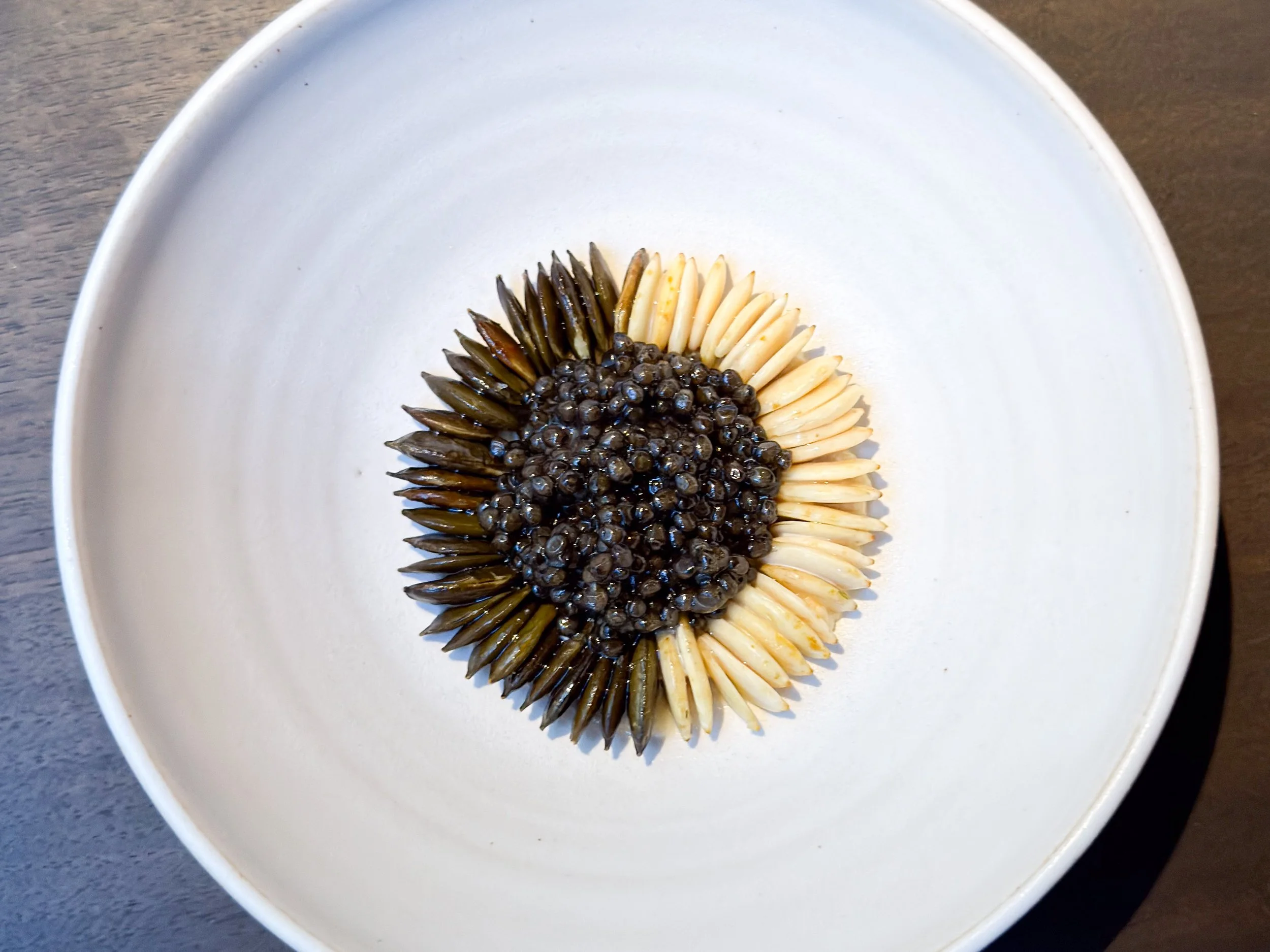
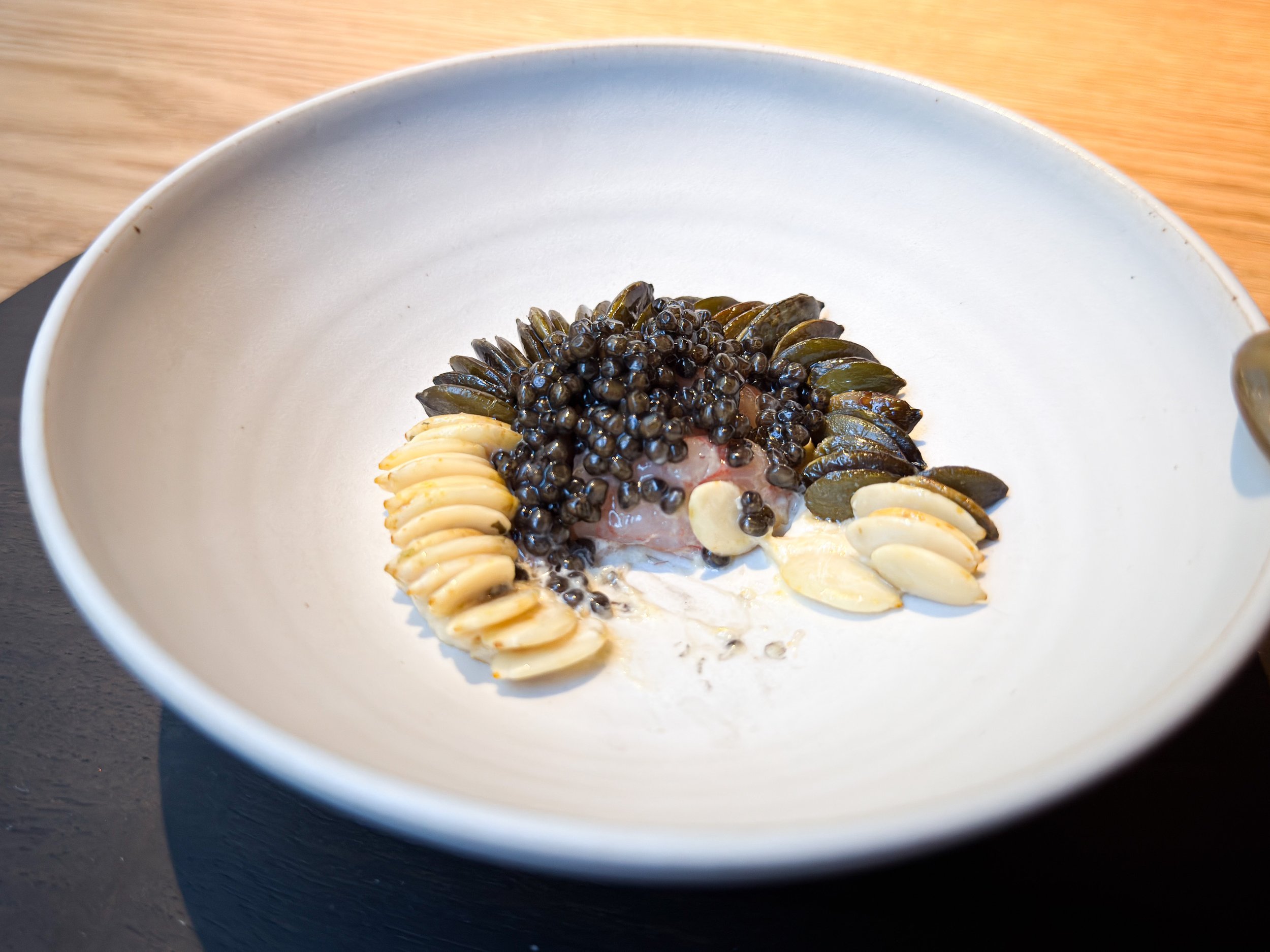
The menu, so far both understated and exceptional, continues with a particularly photogenic dish. I count 68 pumpkin seeds. Half have been marinated and roasted; the others peeled and blanched. Together with Ossetra caviar, they are arranged in the shape of a sunflower. Raw shrimp lie beneath the caviar, and rose oil perfumes the composition.
The pumpkin seeds have the firm bite of properly al dente Italian pasta. They provide a striking textural counterpoint to the soft seafood while introducing a savory nuttiness. The rose oil remains restrained, serving less as perfume than as a way of emphasizing the shrimp’s faint bitterness. The caviar supplies salinity, though it is not, in itself, a benchmark example.
There is no question that this is an ambitious and highly original course. What convinces me less are the proportions among its components and the surprisingly warm, almost room-temperature service. A temperature that seemed so persuasive in the previous dish now draws out a slightly oily, fishy quality in the shrimp. Even so, the result remains excellent. (8/10)
Then comes another small marvel: a delicate leaf sandwich. Two paper-thin, leaf-shaped sunflower-seed crackers enclose an intricate stack of actual leaves — cherry leaves preserved in salt and fried crisp, raw sorrel and oyster leaf, along with salted walnut and fig leaves. Its layered crunch is deeply appetizing, while the flavors move through nuttiness, the sea, gentle bitterness and fine acidity. Something remarkable is achieved with disarming simplicity. A striking bite. (8.9/10)
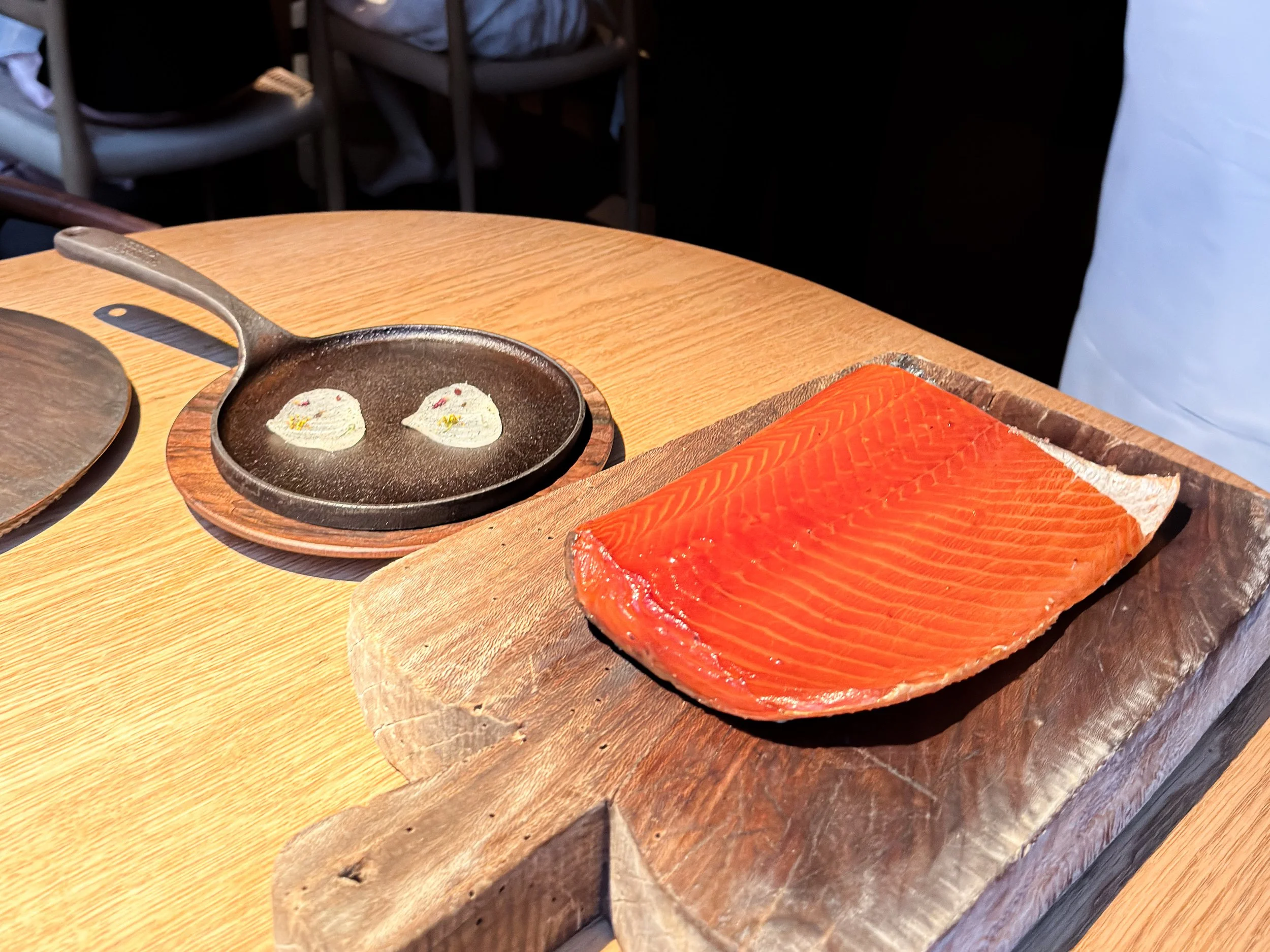
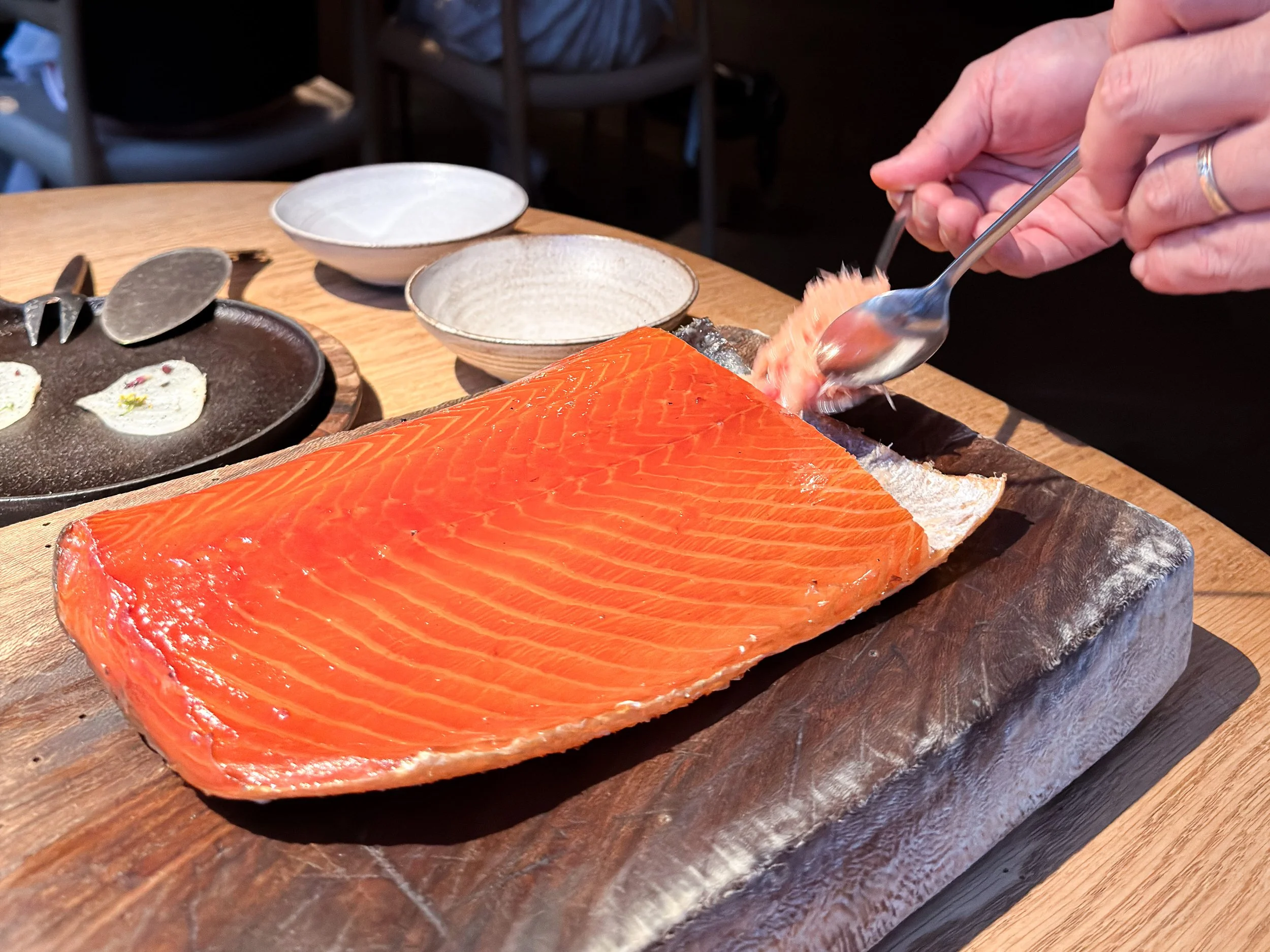
Next is one of Kadeau’s defining dishes: salmon that has been both cold- and hot-smoked. The preparation looks back to Bornholm, where smoking fish is a long-standing tradition. The salmon is first cured, then cold-smoked and finally hot-smoked. A dark, deeply flavored crust forms on the outside while the flesh remains exceptionally tender and juicy.
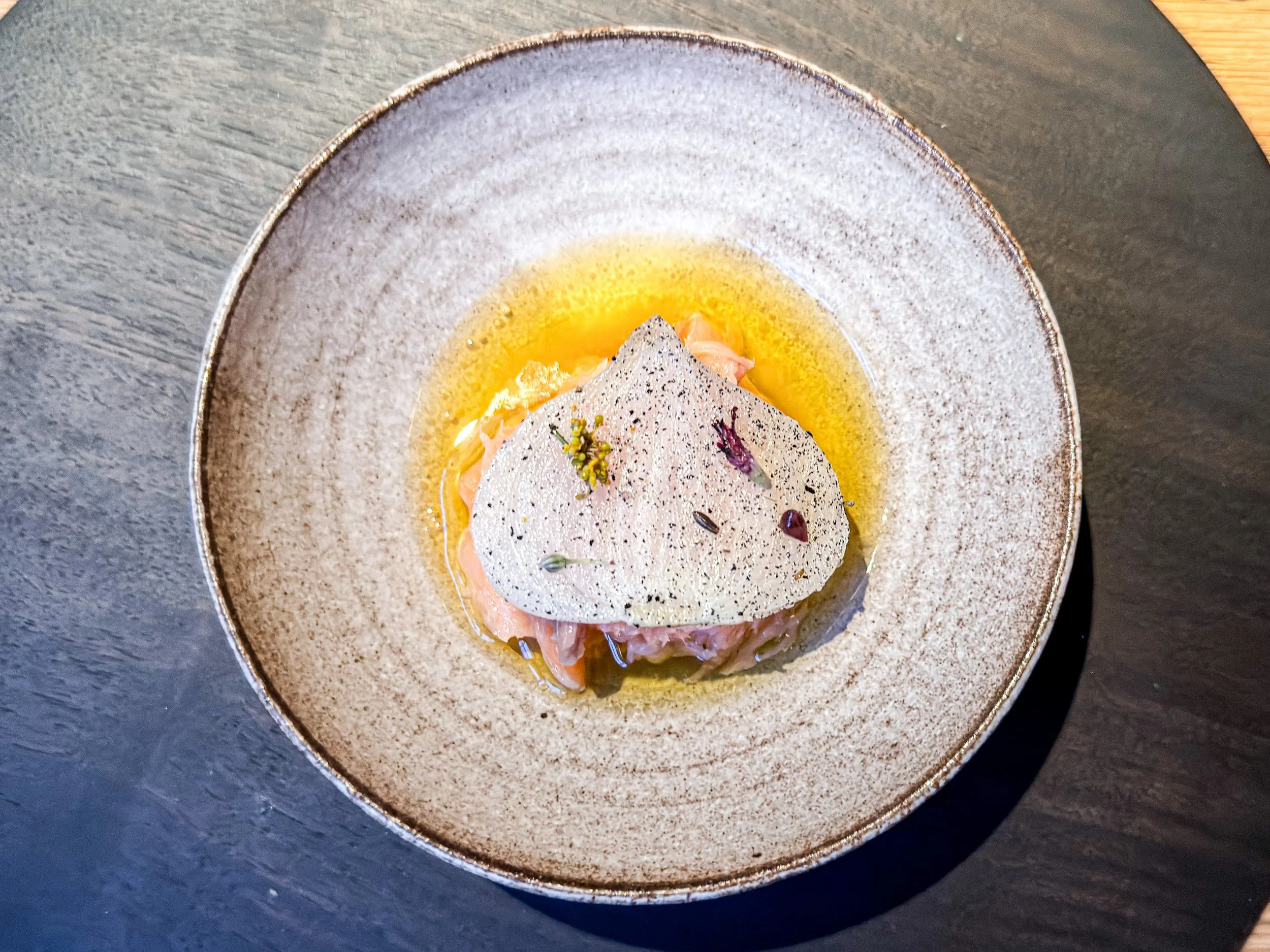
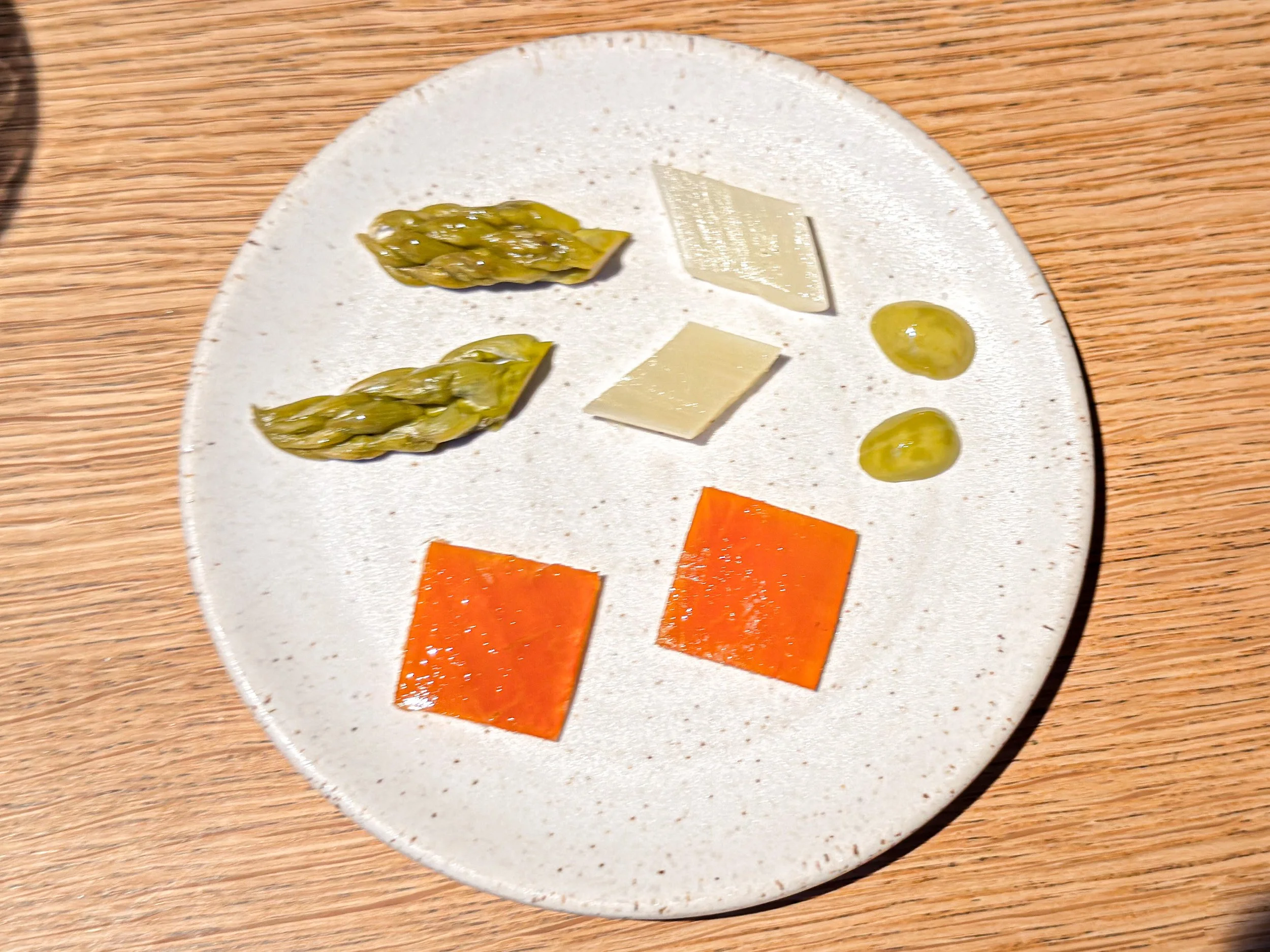
The nearly creamy salmon is accompanied differently from season to season. This version comes with lavender butter, sardine garum, a sweet onion poached in butter and roasted garlic. Salmon-skin jerky and an assortment of pickles — including asparagus and mirabelle plum — are served alongside.
This is a course built on richness, succulence, salt and acid. It pushes close to the limit of salinity, but the salmon’s phenomenal texture holds my attention from the first bite to the last. It is even better than I remember — good enough that I ask for another portion. (8.9/10)
The elegantly sweet onion reappears in the next course, this time with raw scallop, yet the repetition never feels repetitive. The two are set in a mild sauce of butter, hazelnut milk and hazelnut oil, with grated quince adding a discreet note of fruit.
The onion remains in the background. The sauce, meanwhile, forms a fine film around the ingredients, allowing their sweetness and nutty flavors to linger. The dish is served only a few degrees below room temperature — cool enough for the raw shellfish, but not so cold that its aroma is muted. The exceptional scallop remains at the center of a composition whose simplicity is matched by its remarkable coherence. (9/10)
What arrives next looks like a dessert, all in white, but turns out to be a combination of brown crab, raw walnut, blackthorn blossom and celery. The flavors are nutty, buttery, smoky and comparatively sweet. Served close to room temperature, the dish feels heavier than it actually is. Yet whenever one reaches the succulent crabmeat, a flash of maritime freshness breaks through. It lands somewhere between very good and excellent. (7.5/10)
Next comes a four-part study of langoustine. The tail, grilled over charcoal and lacquered with a plum glaze, is tucked into a seaweed taco. The first bite is pure pleasure: juicy, nutty-sweet shellfish against the taco’s delicate crunch and the subtle fruitiness of plum. Dip it into a buttery sauce made from the langoustine’s innards, sharpened with saffron and a little lemon and served in the shell, and the flavors become rounder, richer and still more seductive.
The head is filled with a mixture of its creamy contents, nuts, cheese and flowers — a combination that, oddly enough, reminds me of an exceptionally good Caesar salad. The claw can come last, or simply somewhere in between: its meat is fried in tempura batter, arriving delicate, hot and juicy.
What makes the dish genuinely moving is everything that happens between its principal flavors: an elusive note of garlic, saffron’s metallic spice, the floral accents and the plum glaze, barely perceptible yet quietly essential. These details transform a technically flawless presentation of pristine langoustine into a dish that does more than impress. It stirs something. (10/10)
The meal proceeds to lamb, presented in several forms. On a warm stone is a layered bite of grilled cabbage, maitake mushroom and raw lamb aged for two weeks with juniper. It is oily, fatty and buttery on the palate, with delicate smoke and absorbing textural contrasts. Every ingredient is of exceptional quality. (8.5/10)
The second part arrives 15 minutes later: small portions of grilled lamb offal — tripe, sweetbread, heart and tongue — set in a densely reduced lamb jus. Precise cooking preserves the tenderness of each cut while adding a fine roasted edge to its individual character.
A separate plate of pickled vegetables and fruits brings freshness and variation.
Everything is executed at a very high level and is, of course, entirely consistent with the restaurant’s whole-animal philosophy. Only the barely lukewarm temperature of the offal strikes me as a minor lapse rather than a deliberate choice. (8/10)
Bridging the savory courses and dessert — if this does not already qualify as dessert — is a kind of sea buckthorn waffle with sea buckthorn caramel and several fruit leathers, among them gooseberry, plum and black currant. Spruce cones have also been worked into the dish, adding an ethereal freshness to the concentrated fruit. Everything about it is thrilling: the intensity and balance of the flavors, the finely judged sweetness and the textures, which shift between sticky and delicately crisp. Magnificent. (9/10)
A dessert centered on mirabelle plums sustains that level, though its resemblance to yogurt with fruit purée hardly announces greatness. Yet mirabelle ice cream, jam and blossoms, finished at the table with honey, taste the way a beautifully composed floral fragrance smells: beguiling and layered. Especially impressive is the way fruit acidity, sweetness and blossom notes interlock. Visually unassuming, aromatically exceptional. (9/10)
A walnut tart, made almost entirely from walnuts, brings the three-hour meal to a close. It is buttery, nutty and rich; whipped cream served alongside supplies freshness and a cool counterpoint. Another excellent dessert. (8.5/10)
Even as the final course recedes, Kadeau already makes me want to return — or, perhaps more accurately, to continue. The next chapter, Preservation Season, is just around the corner.
The elephant in the room is the price. Even with the least expensive wine pairing, about €334, the total approaches €1,000 a person. That is nearly as rich as the double-smoked salmon. There is no parade of ostentatious luxury ingredients, the menu never sprawls, and the restaurant itself remains disarmingly modest. Some diners will inevitably question the value equation. For me, however, the answer is clear: the cooking is overwhelmingly superb, charged with originality and surprise, and served in a setting of understated beauty. I will return before the menu doubles in price again.