La Rei Natura by Michelangelo Mammoliti — An Evening in the Langhe
Nestled among the gentle hills of the Langhe, surrounded by celebrated vineyard sites such as Falletto and Cerretta, sits Il Boscareto. The setting is spectacular and begs for long evenings on the terrace, hearty food, and more than a few bottles of wine.
In addition to a somewhat staid bistro that is hardly worth mentioning from a culinary perspective, the hotel is home to Italy’s newest three-Michelin-starred restaurant, La Rei Natura by Michelangelo Mammoliti. Immortalizing the chef in the restaurant’s admittedly cumbersome name seems only logical. In less than four years, the now 41-year-old Mammoliti guided the restaurant to Michelin’s highest distinction. With a cuisine centered on emotion and memory, he has established himself among the leading chefs in Piedmont.
The evening begins with an aperitif in an anteroom adjacent to the dining room. Alongside a glass of regional sparkling wine — an Alta Langa from Agricola Brandini (€15), which, here in Piedmont, I gladly choose over Champagne — the first snacks arrive.
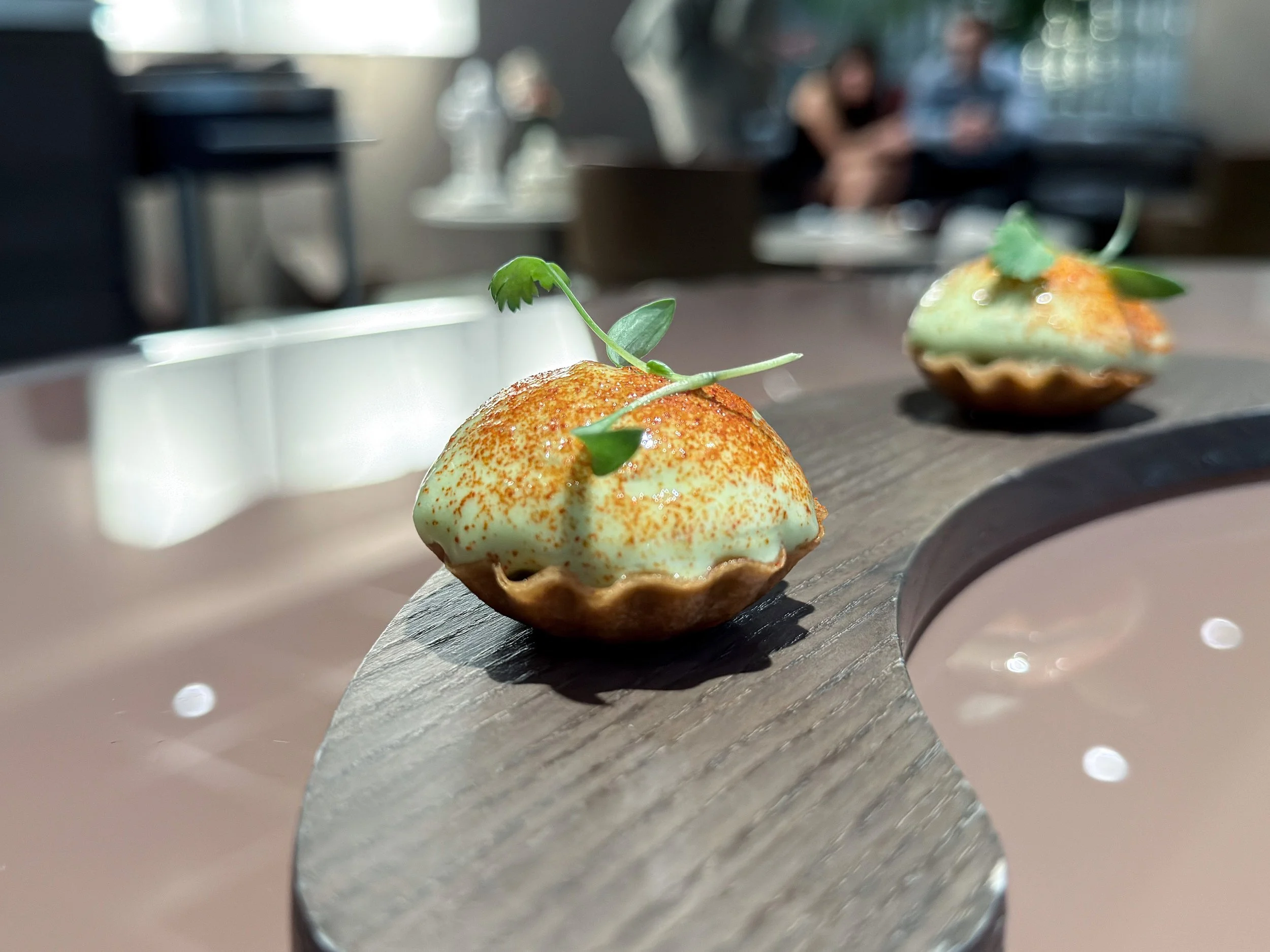
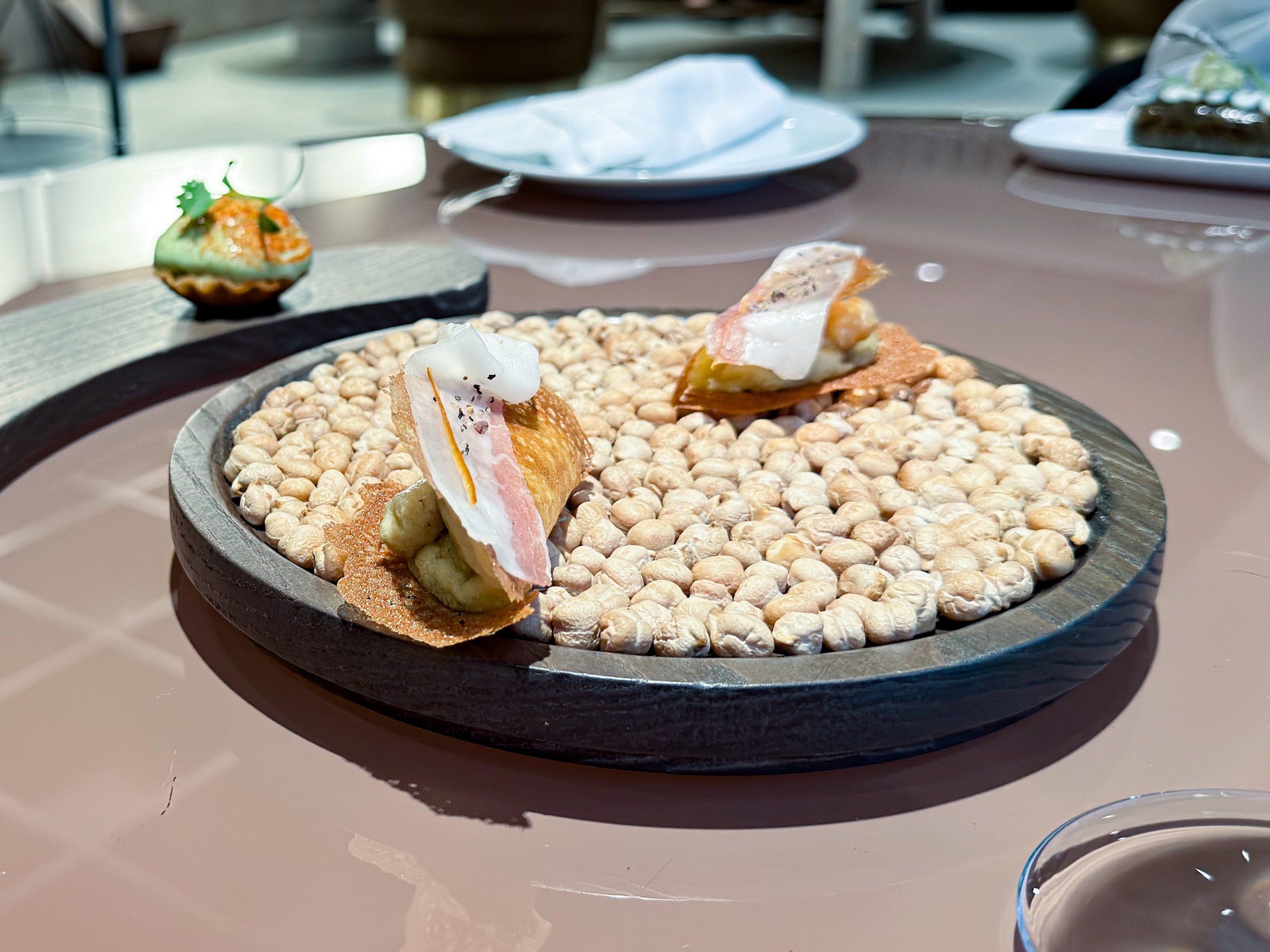
A delicate tartlet of mackerel, avocado, and cucumber-coriander foam opens the meal with remarkable lightness, freshness, and precise maritime character (8.5/10). A farinata — a paper-thin chickpea pancake folded taco-style — filled with blini batter and lardo is savory and unexpectedly exotic, supported by a subtle sweetness (8.5/10).
Cotechino — traditionally a richly seasoned pork sausage — appears here in combination with smoked eel, lentils, and horseradish. The result is a deeply savory bite in which everything falls into place: proportions, seasoning, heat, and fat (9/10).
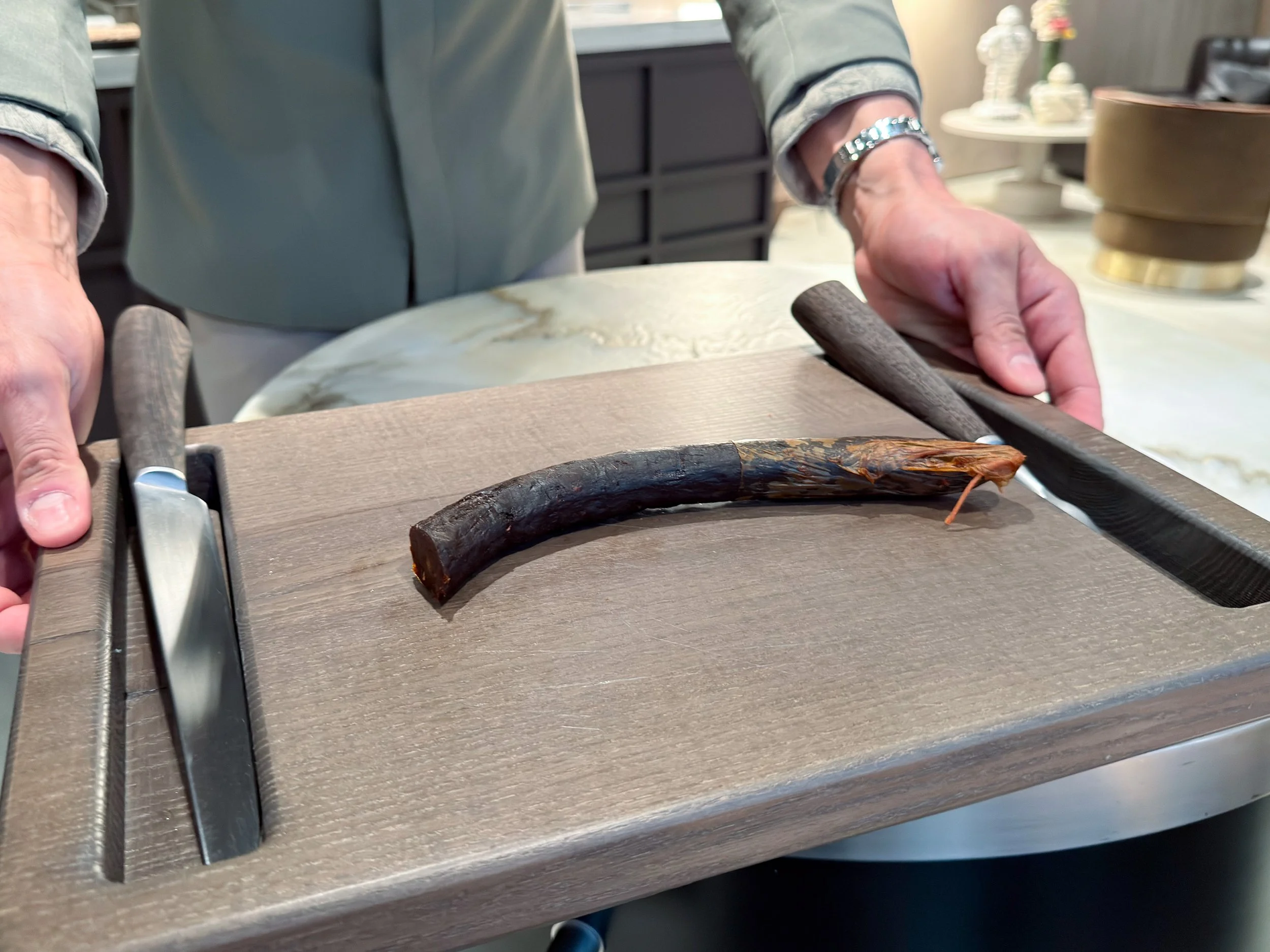
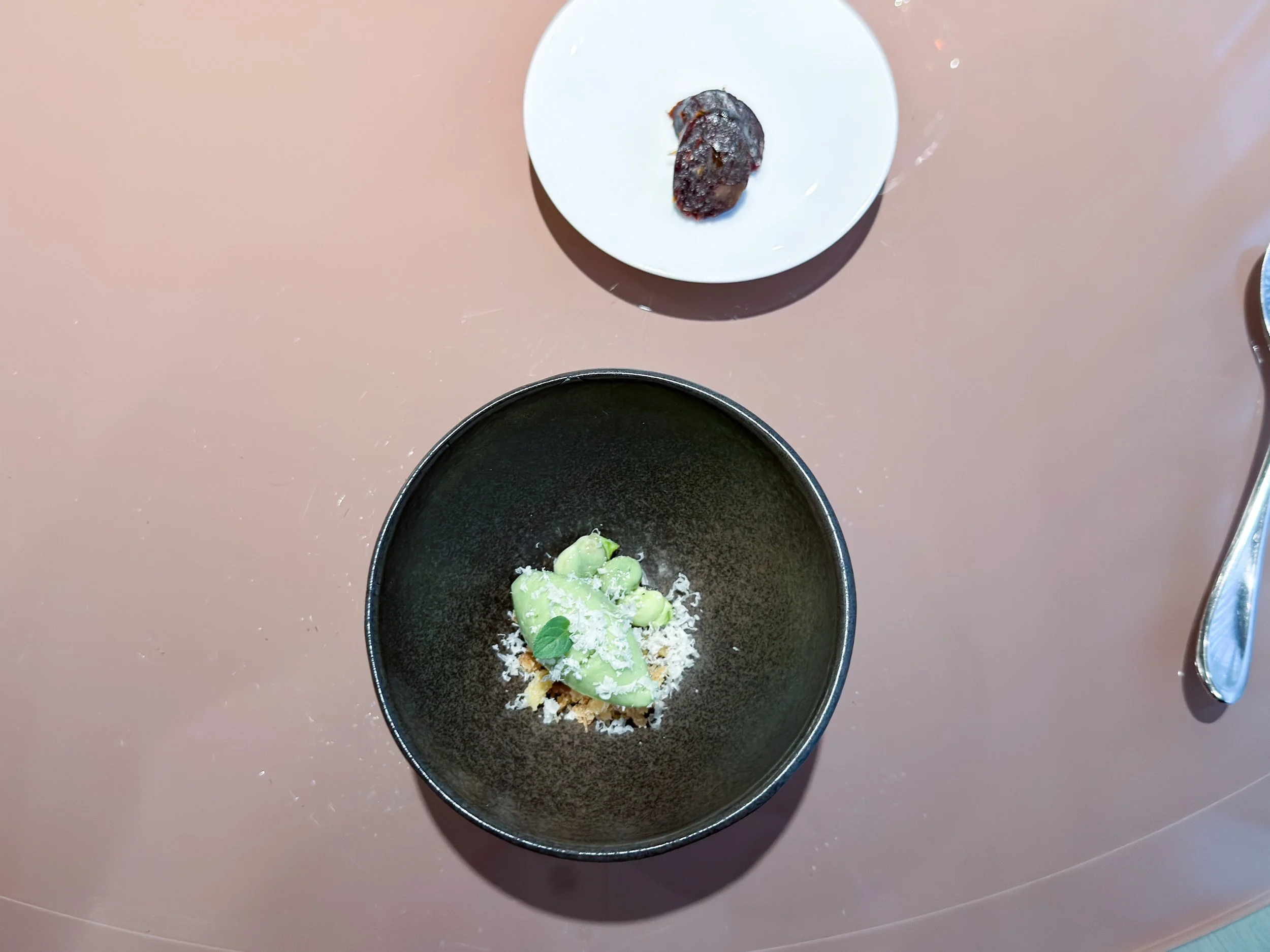
Next comes a vegetarian chorizo made from paprika, avocado, and rice skin. With its slightly licorice-like texture and deeply spiced pepper flavor, it has little reason to hide behind the original. Alongside it is a chilled bean sorbet with bean salad, breadcrumbs, and Pecorino — gently minty on the finish and pleasantly refreshing (8.9/10).
Only then does the menu arrive, offering a choice between three tasting experiences: De Rerum (€450), Mad100% Natura (€350), and Voyage (€280). The philosophy behind each is explained in considerable detail, which initially feels somewhat overwhelming. After a brief conversation with the staff, I settle on the middle option.
With growing anticipation, I enter the dining room. Unlike much of the hotel’s design, it embraces an elegant minimalism. Outside, the setting sun begins to wash the Piedmontese landscape in soft shades of pink and blue.
I stay local for the wine as well and, after some discussion with the sommelier, arrive at a 2010 Barolo Riserva “Rüncot” from Elio Grasso (€560) — a powerful, expansive wine marked by black cherry, menthol, and mocha.
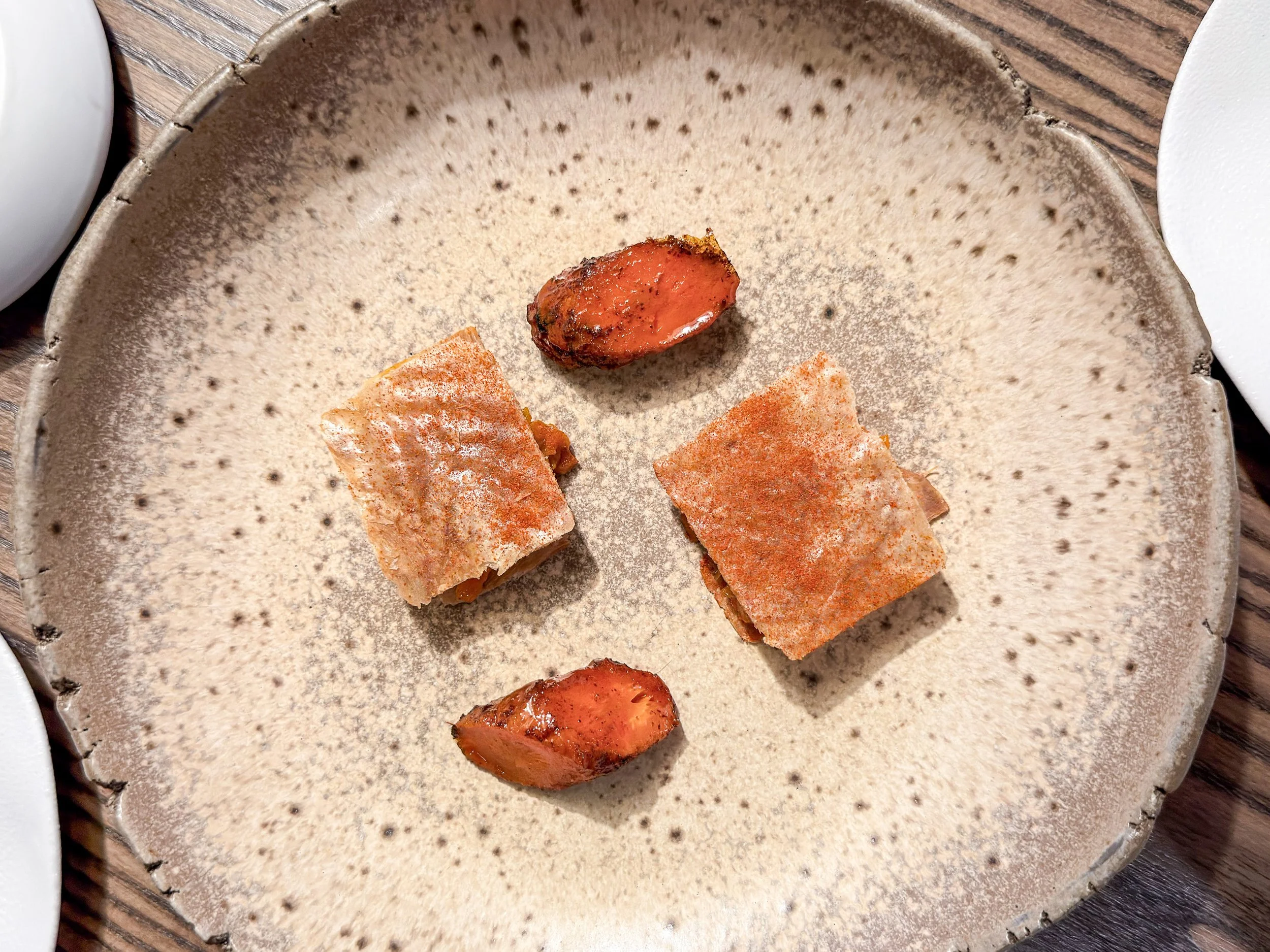
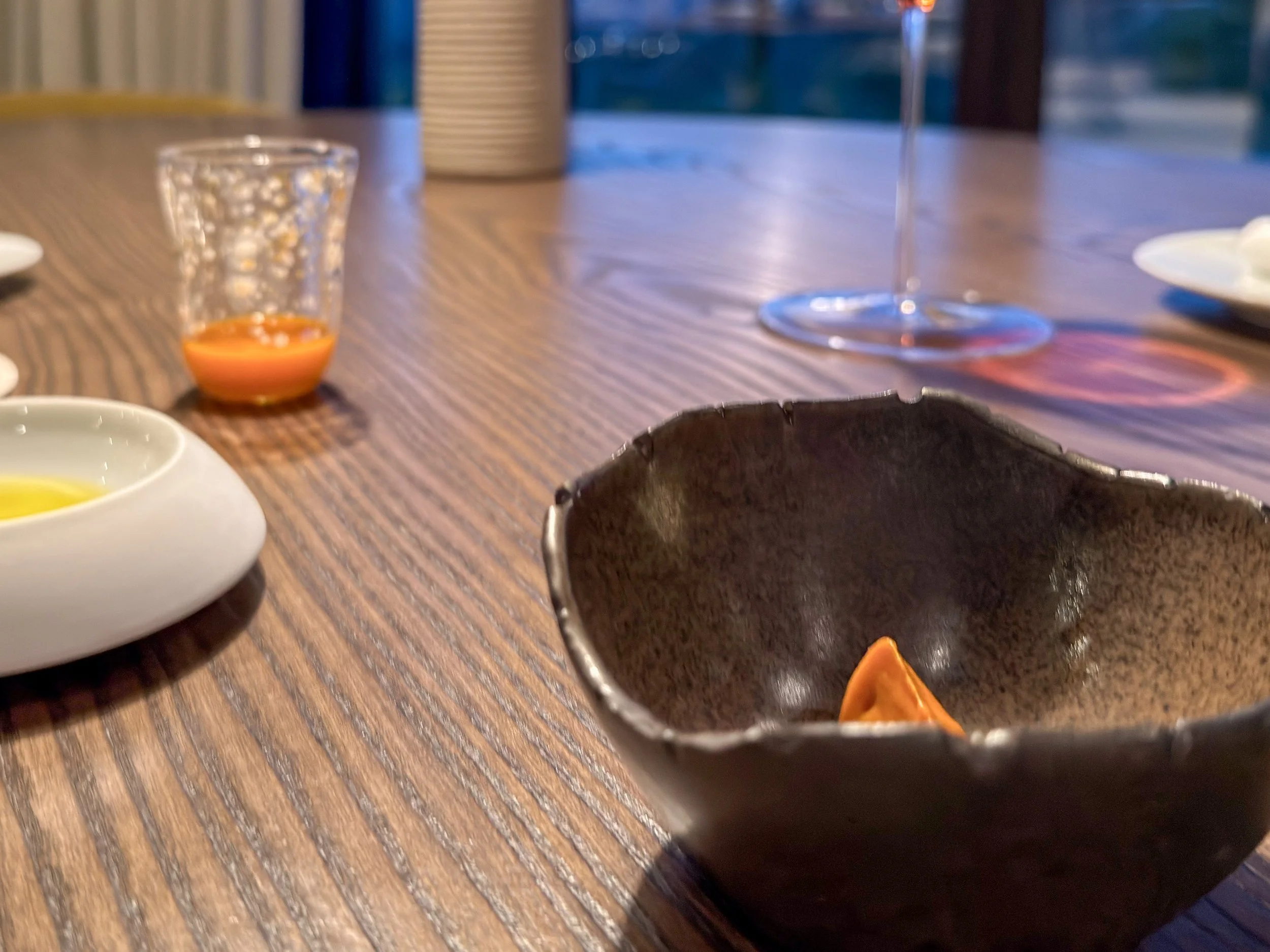
The menu begins with a study of carrot. A piece of dried carrot, rendered almost wax-like in texture, is paired with an intense carrot cream that delivers surprising carrot umami alongside earthy depth and gentle sweetness. A sandwich of crisp chicken skin filled with a purée of fermented carrot and chicken liver is seasoned with exotic restraint rather than showmanship. A shot of liquid carrot salad, bright with vinegar, provides refreshment. It would be difficult to imagine this ingredient explored with greater precision or versatility. (8.9/10)
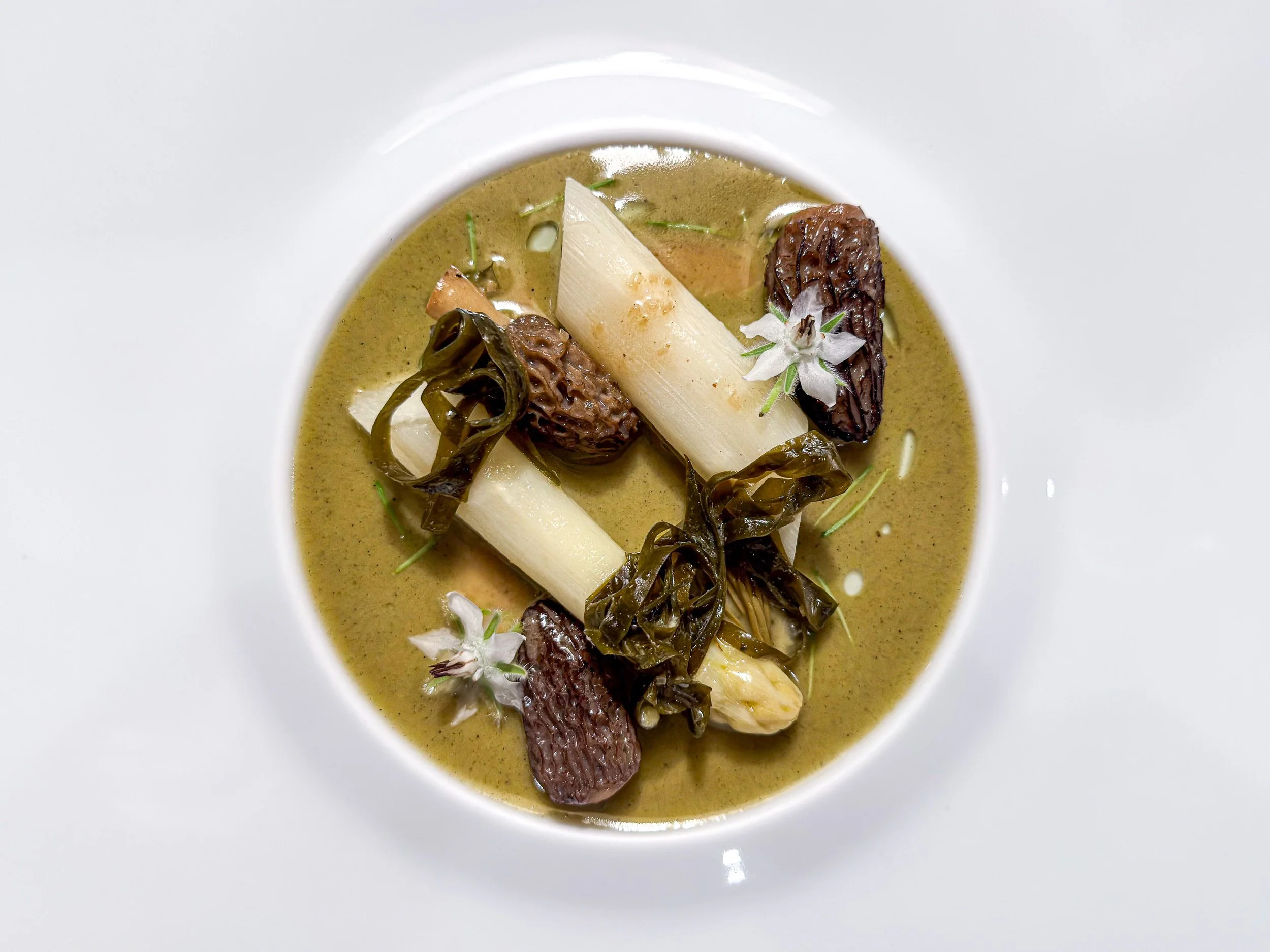
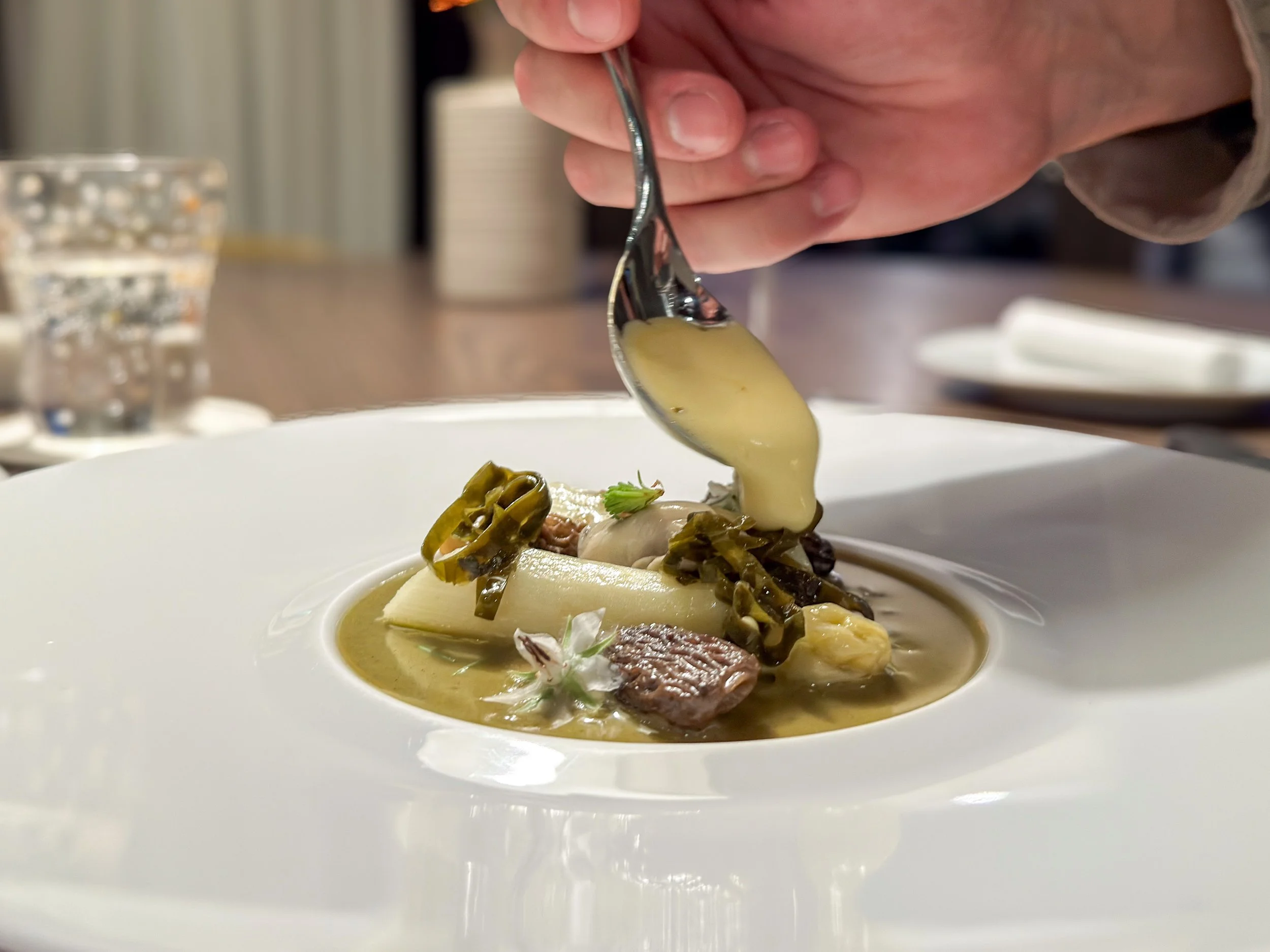
The second course combines white asparagus cooked en papillote with oyster, morels, wild garlic, and pine oil. The lukewarm interplay of the oyster’s iodine-rich salinity and the savory flavors of forest and meadow is astonishingly effective. Equally impressive is the asparagus itself, whose crisp, assertive texture remains fully intact. A savory zabaglione poured tableside introduces mustard-like notes through the wild garlic, lending freshness and energy to the dish. Magnificent. (9/10)
It gets even better.
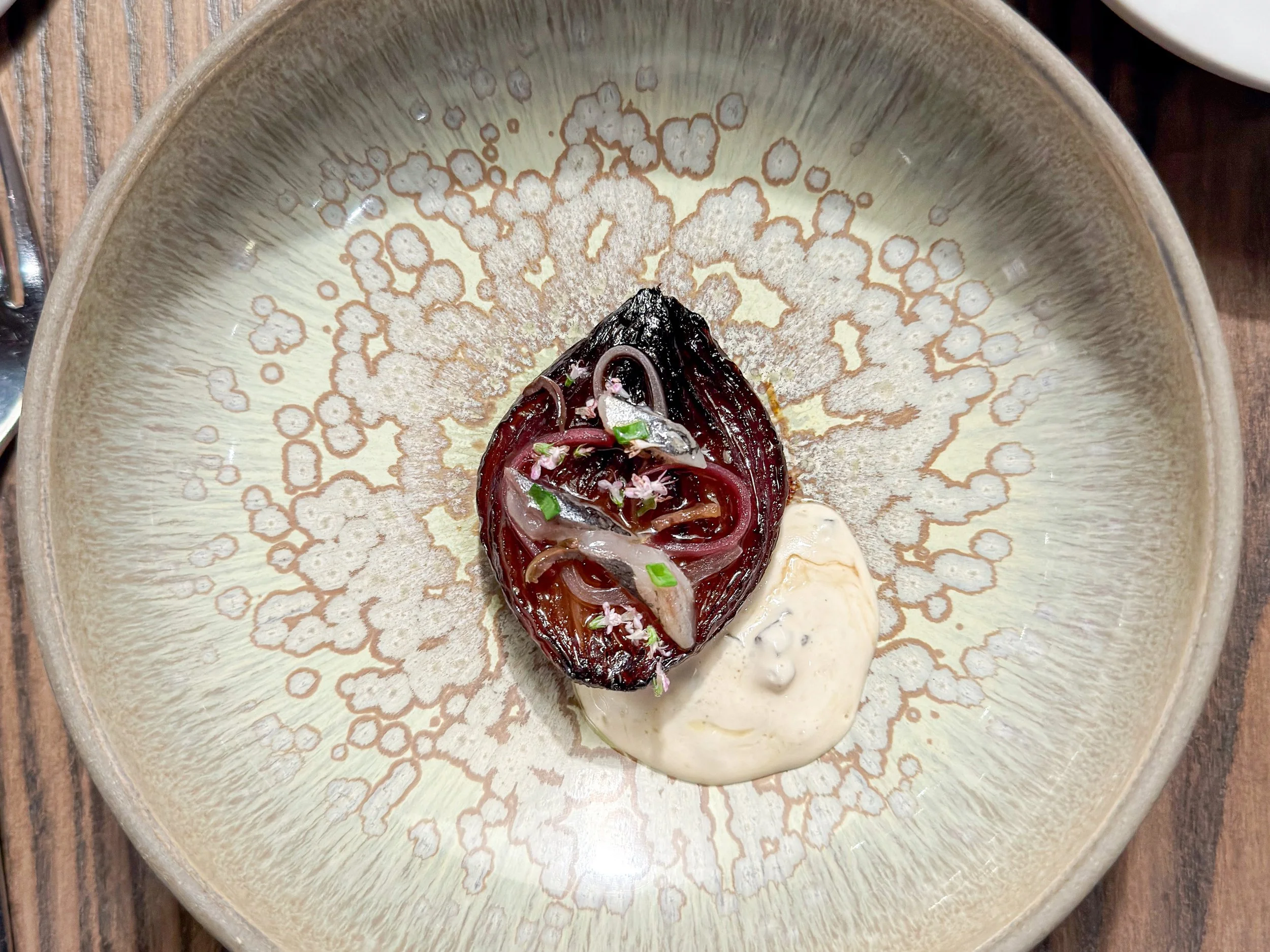
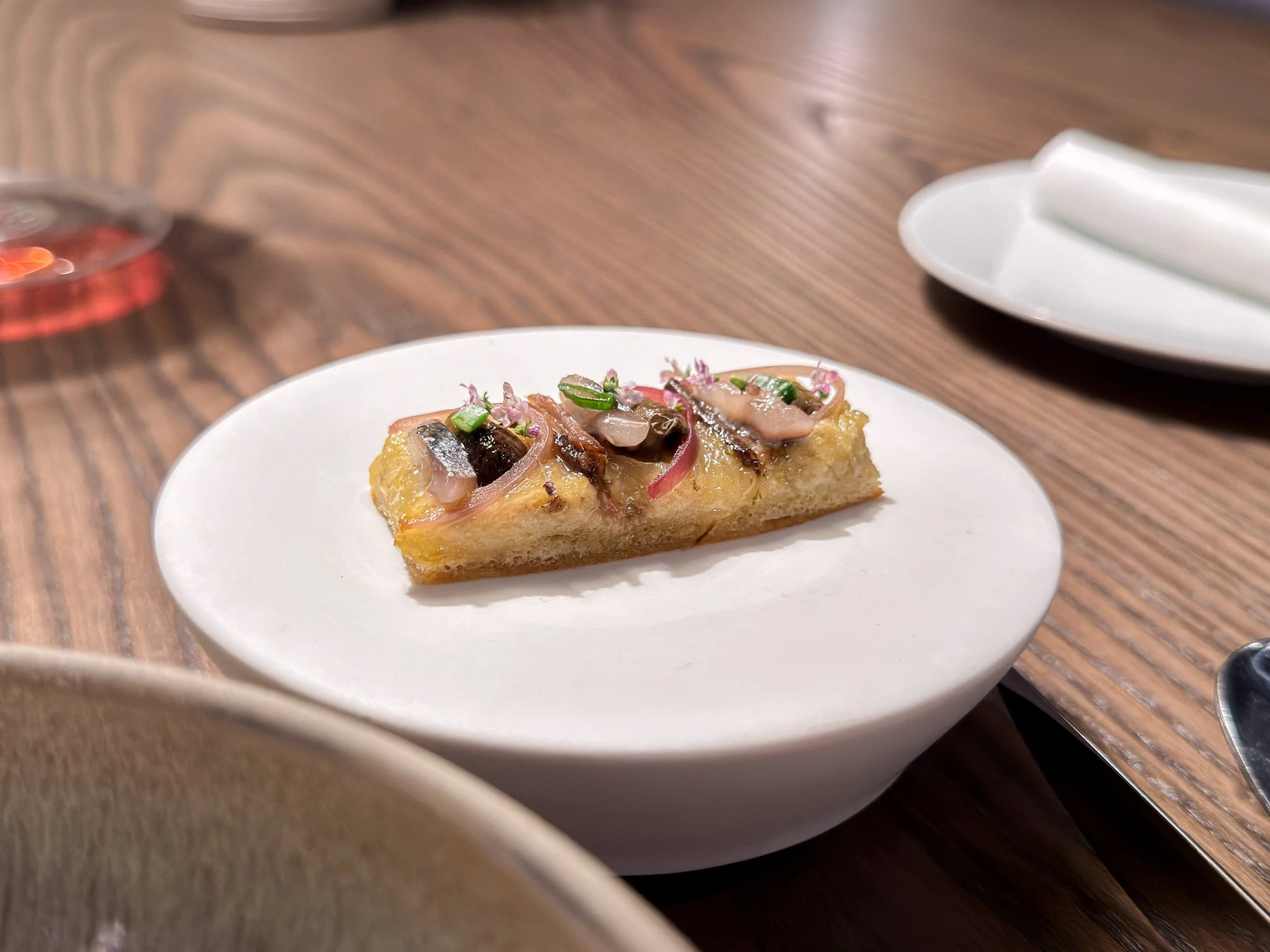
A gently cooked Tropea onion, warm, sweet, and succulent, is served with a kind of anchoïade. Alongside it comes a piece of focaccia topped with onions, anchovies, and Taggiasca olives — effectively a miniature pissaladière. Together, the two preparations capture an entire summer in Nice: the dazzling light of the Côte d’Azur, the salty warmth of the Mediterranean, and those long evenings when bread, wine, and a view of the sea seem entirely sufficient. (10/10)
The next creation centers on artichoke, roasted, filled with pesto, and paired with giardiniera — pickled vegetables — “from 1991.” Whether the vegetables have truly been preserved for that long or whether the year refers to a particular recipe remains unclear. A card made from handmade paper explains some of the thinking behind the dish, suggesting that even a stubbornly bitter ingredient like the artichoke can simultaneously convey culture, memory, and nature.
For all the explanations, however, the dish feels somewhat heavy, largely because of the pesto. A broth-like extraction made from artichoke leaves, poured tableside, succeeds in restoring some balance. Clove introduces a distinctly holiday-like note that feels somewhat out of step with the menu’s otherwise coherent trajectory. The level of cooking remains high nonetheless. (7.5/10)
The next course brings house-made pappardelle enriched with egg whites, paired with a sauce made from dried celeriac. Characteristically for fresh pasta, the noodles are softer in texture and slightly sticky here, making them ideal vehicles for the sauce. The latter possesses a striking sweetness balanced by deep umami and delicious roasted notes. Original, remarkably light, and absolutely superb. (8.5/10)
Ein weiterer Pastagang präsentiert sich in Form von Spaghetti, diesmal aus Hartweizengrieß vom Produzenten Mancini. Es ist spannend, wie die Unterschiede zwischen hausgemachter und zugekaufter Pasta hier in Szene gesetzt werden. Die Nudeln, nun mit sehr italienischem Biss gekocht, sind in einer Buttersauce mit rauchigen Barbecue-Noten angerichtet, die durch die Aromatisierung der Butter mit Schweinerippchen und Schinken entstanden sind. Ein Pulver von verbrannten Brotkrumen liefert dazu etwas Bitterkeit. Das ist ein großer Pastagang, voller Tiefe, Würze – und nicht verortbarer Zitrusfrische, obwohl keine Zitrusfrüchte verarbeitet wurden. Das klingt lange nach. (9/10)
Another pasta course follows, this time featuring spaghetti made from durum wheat semolina produced by Mancini. It is fascinating to see how deliberately the differences between house-made and purchased pasta are highlighted. Cooked with unapologetically Italian firmness, the noodles are dressed in a butter sauce infused with smoky barbecue notes derived from pork ribs and ham. A powder of burnt breadcrumbs contributes a touch of bitterness. It is a great pasta dish, full of depth and savoriness, yet somehow carrying a citrus-like brightness despite containing no citrus at all. The impression lingers long after the plate is gone. (9/10)
Only while writing these lines do I realize that not a single dish so far has placed an animal protein at its center. At no point does this feel like a deficiency. More surprising is how effortlessly Mammoliti avoids turning the concept into either dogma or deprivation.
Before the menu shifts, at least slightly, toward more overtly savory territory, there is a refreshing interlude.
A silky mandarin sorbet arrives alongside grapefruit, Washington orange, lime, ice plant, and samphire. The green elements add a pleasant crunch while contributing a gentle bitterness that provides exactly the right stage for the aromatic citrus fruits. The sorbet is not too cold, the citrus not overly acidic — details such as these are what transform an apparently simple composition into a world-class plate. (9/10)
Next comes sturgeon, grilled over open fire and served with a densely reduced lemon sauce built on chicken stock. Italian caviar supplies the appropriate saline depth. The dish is intended to evoke chicken al limone — to me, it recalls a lemony veal cutlet more than anything else.
There is no doubt that the rich sauce, lifted by citrus freshness, suits the fish beautifully. The sturgeon itself could have been served hotter and cooked slightly less. Perhaps the faint dryness is intentional, meant to reinforce the poultry association, but I suspect a minor timing issue instead. Thanks to the superb sauce and a flavor profile that manages to be both generous and elegant, the dish remains excellent nonetheless. (8/10)
At this point, however, the pace of the meal begins to feel like a small drawback. Once a tasting menu stretches too long — we are now beyond the three-hour mark — appetite gradually turns into endurance. That is especially true when every table around you has already finished, apparently having chosen shorter menus.
And yet I look forward to the next course, as sweetbreads are among my favorite ingredients.
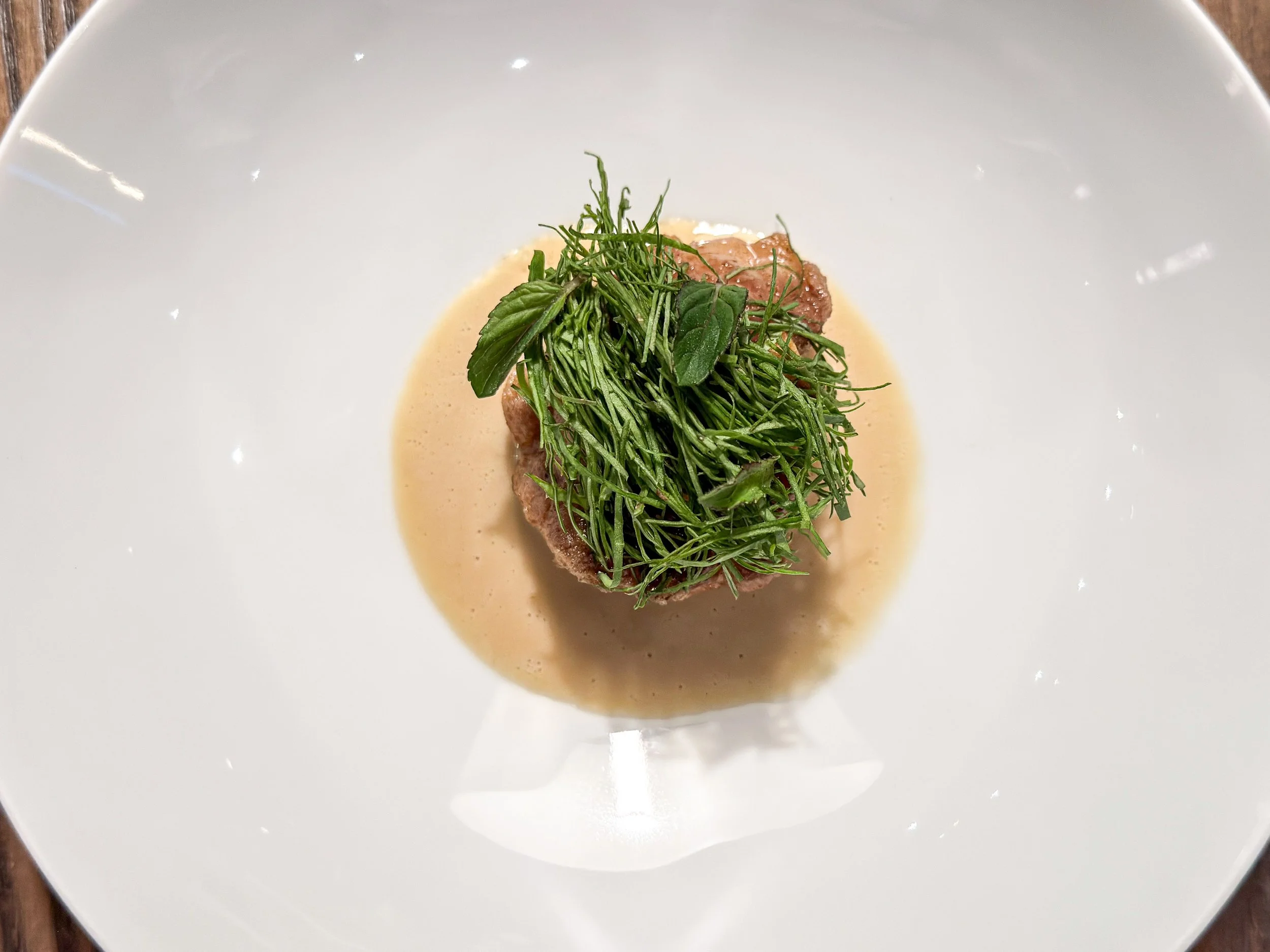
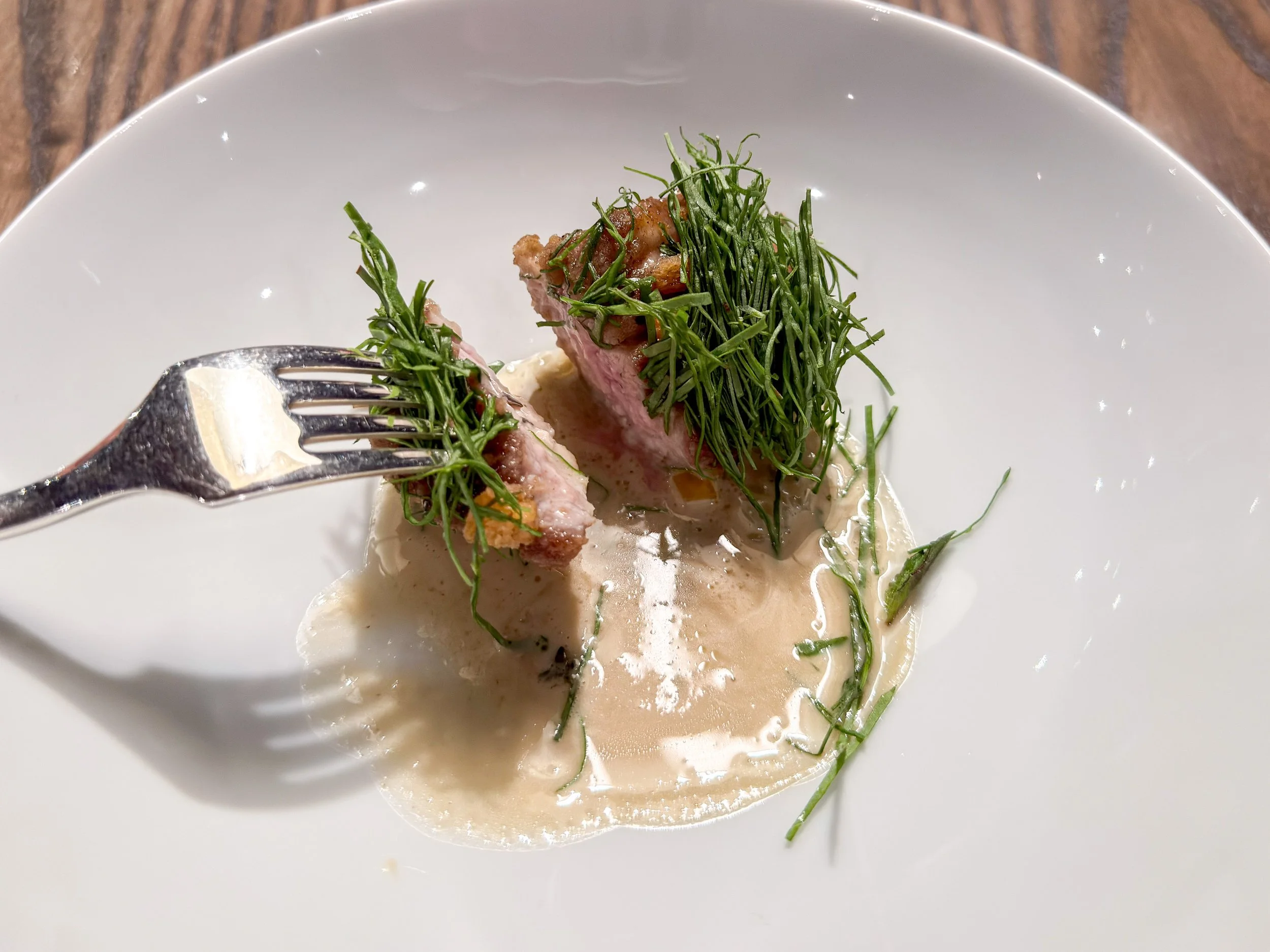
The sweetbread is presented as an homage to steak au poivre, which in this case means resting in a sauce flavored with lemon, honey, and Kerala pepper. Chopped herbs — particularly mint and sorrel — are scattered generously across the top.
Almost everything about the dish is excellent, especially the aromatic, densely flavored sauce with its ethereal, pungent pepper character. The sweetbread itself is tender, flavorful, and impeccably trimmed. Personally, I miss some of the roasted notes that often make sweetbreads so irresistible, and I would not have minded a touch more juiciness. These are minor quibbles at a very high level. (8.9/10)
The first dessert arrives after another fifteen-minute wait. Marinated wild strawberries are paired with ricotta ice cream, basil, arugula, crunchy pistachios, and black olive. The strawberries shine with vivid, intense flavor, while the ice cream cools and the remaining ingredients provide grounding contrast. Quite simply, it is outstanding. (9/10)
Then comes pineapple, “aged like salami,” served alongside a pineapple-vanilla sorbet and a rum-pineapple Chantilly. The aging process has given the fruit an intensely concentrated aroma that borders on the artificial — in the most delightful way possible. Rather than contrasting the pineapple, the sorbet complements it perfectly. Remarkably spicy pepperoni also finds its way into the dessert, creating an element of surprise and challenge. It is a magnificent dessert, one of the best I have enjoyed in recent memory. (10/10)
After four hours, the petits fours finally arrive. There is cream gelato with chestnut caramel, citron, toasted pine nuts, and meringue, accompanied by a fragrant little focaccia, as well as a small cone made from mushroom and filled with coffee crémeux. The sweets do not appear to share a common theme, but their quality is undeniably high. (8.9/10)
Even now, a persistent thread of spice lingers on my palate — something that surfaced intermittently throughout the meal, yet never truly disappeared. Despite a few fluctuations and the occasionally sluggish pace, this is a menu I experienced with genuine enthusiasm. Many dishes felt refreshingly original, uncompromisingly focused on flavor, provenance, and pleasure rather than conventional luxury ingredients, while remaining remarkably grounded.
That, more than anything else, is what makes Mammoliti so impressive.