Quintonil — Vicente’s Smile
Jorge Vallejo and Alejandra Flores, the owners of Quintonil, met while working at Pujol. In 2012, they opened their own restaurant just around the corner.
What began as a casual place with a menu that changed daily has become one of Mexico’s most highly rated restaurants.
I’m sitting at the counter with a clear view of the kitchen. The restaurant is fully booked this Wednesday at lunch, as I suspect it is most days. The crowd ranges from families with children to food enthusiasts from around the world.
I can certainly understand the urge to photograph a dish. Even so, the large SLR camera my neighbor to the right has placed on the counter between us bothers me. He seems to be here mainly to take pictures. He doesn’t look as though he’s enjoying his lunch all that much. I now come across diners like him at many of the most sought-after restaurants around the world.
Three opening bites take my mind off it. A tostada with charred cactus paddle, avocado, caviar, and pico de gallo has a light crunch that contrasts nicely with the creamy avocado and slightly sticky caviar. Just the right amount of salt, too. An excellent start. (8.5/10)
Next comes a roll of soft chile de agua filled with tuna mousse and tomato, topped with trout roe and tiny flowers. I like the fruity flavor of the chile, the pronounced umami of the filling, and the briny note from the roe. Another excellent bite. (8.5/10)
Alongside it comes leche de tigre, the tangy, seasoned liquid from a ceviche, served here as a drink in its own right with cactus juice and ginger. It’s cool, distinctly tart, and gently spicy, with a flavor that makes me think of cucumber. Impressively good. (8/10)
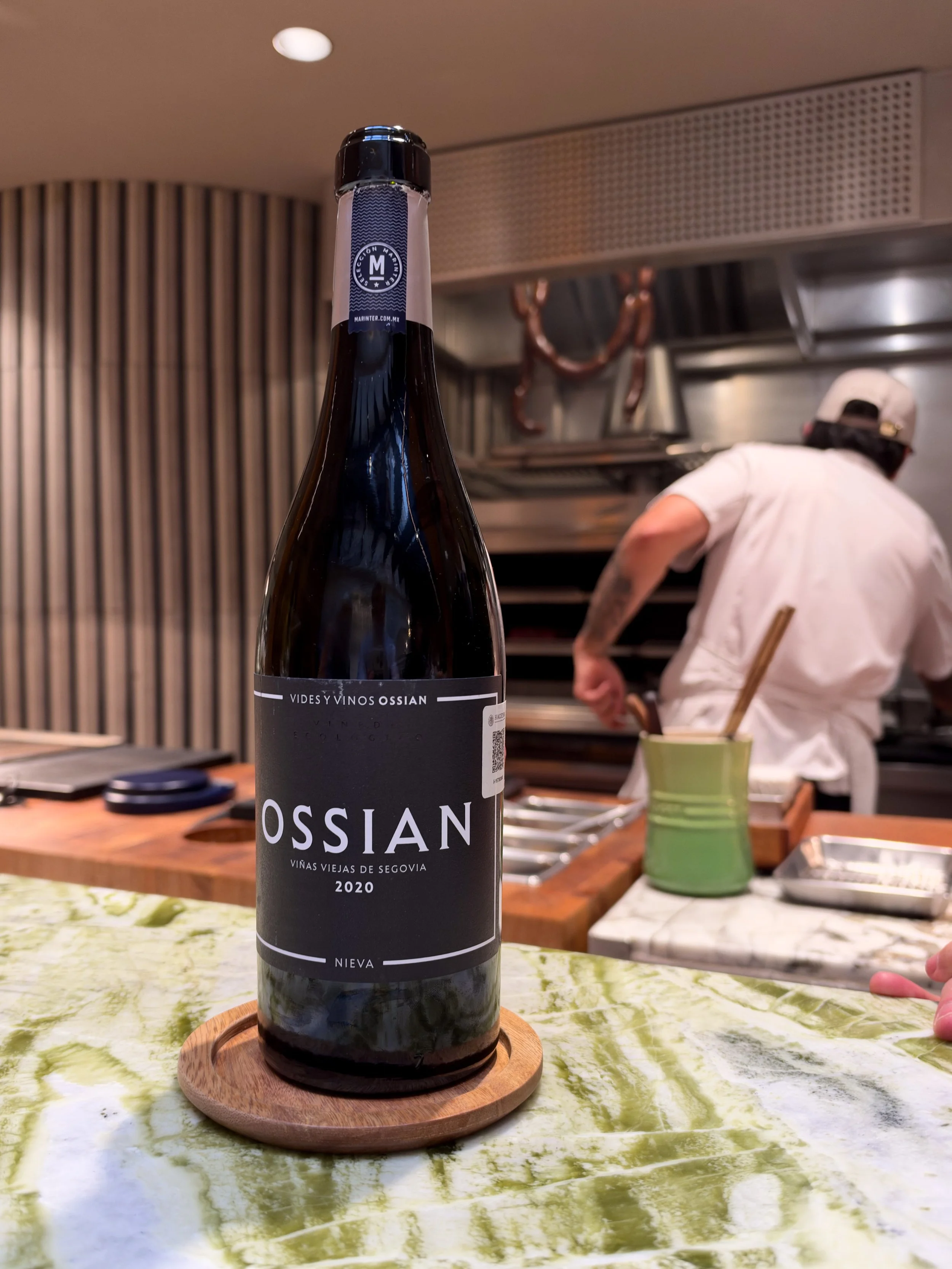
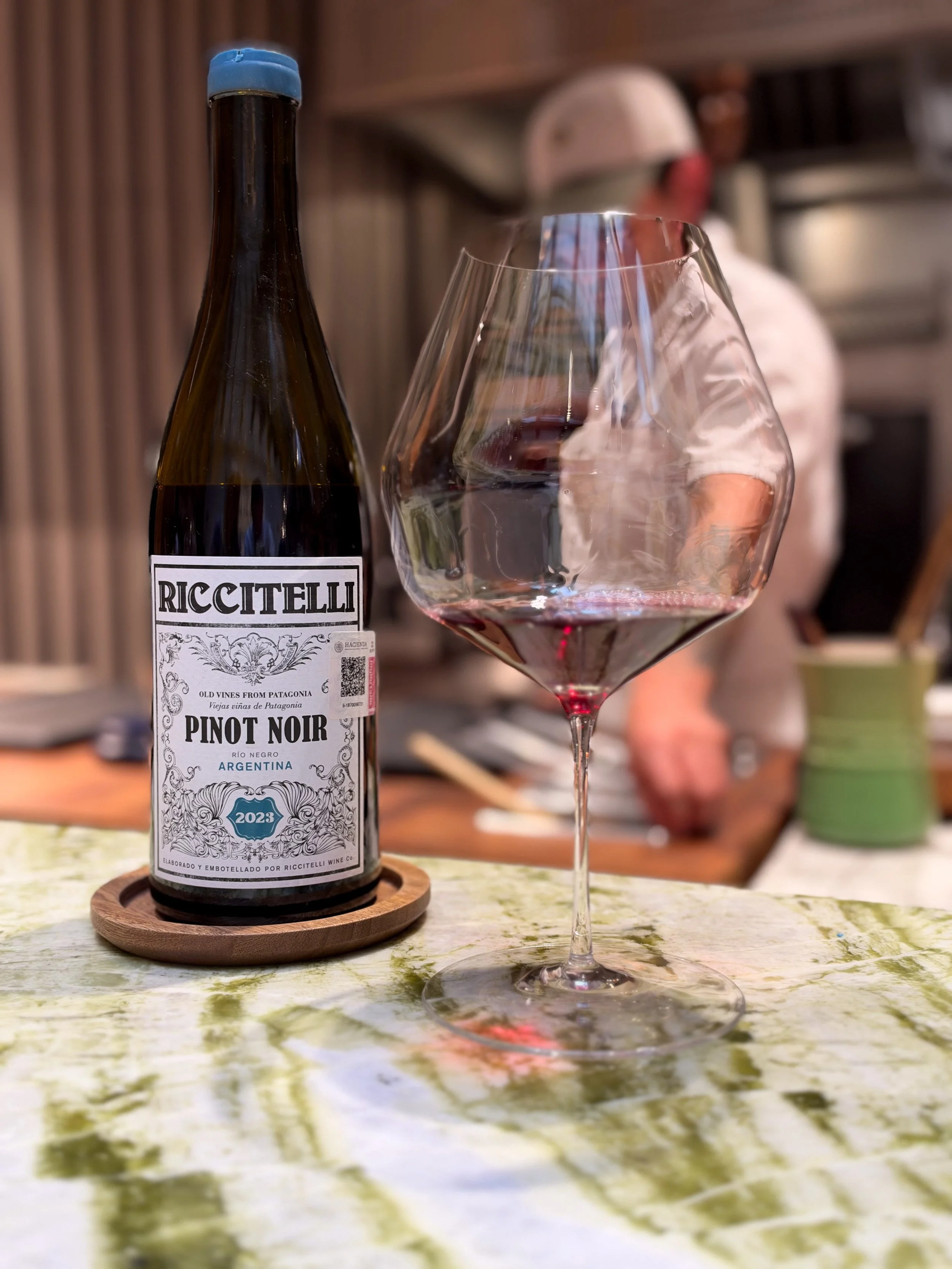
With the snacks, I drink a 2020 Ossian Verdejo from Castilla y León. The sommelier offers me a glass on the house because the California Pinot Noir I’d originally chosen, a Williams Selyem, is no longer available. A nice gesture. In its place, I go with a 2023 Pinot Noir from Riccitelli in Patagonia, about €158. Good, if a little rough around the edges.
I’m also delighted to see Mark Thomas glasses. They’ve been my first choice for years.
What follows takes the meal to a level I hadn’t expected. But one dish at a time.
A tartlet is filled with a mole of scallops and chile, then topped with mussels in a sweet-savory glaze, fresh onion rings, and cilantro blossoms. It’s lightly warm, which brings out the delicate sweetness and lively acidity. The taste of the sea stays in the background. Wonderful. (9/10)
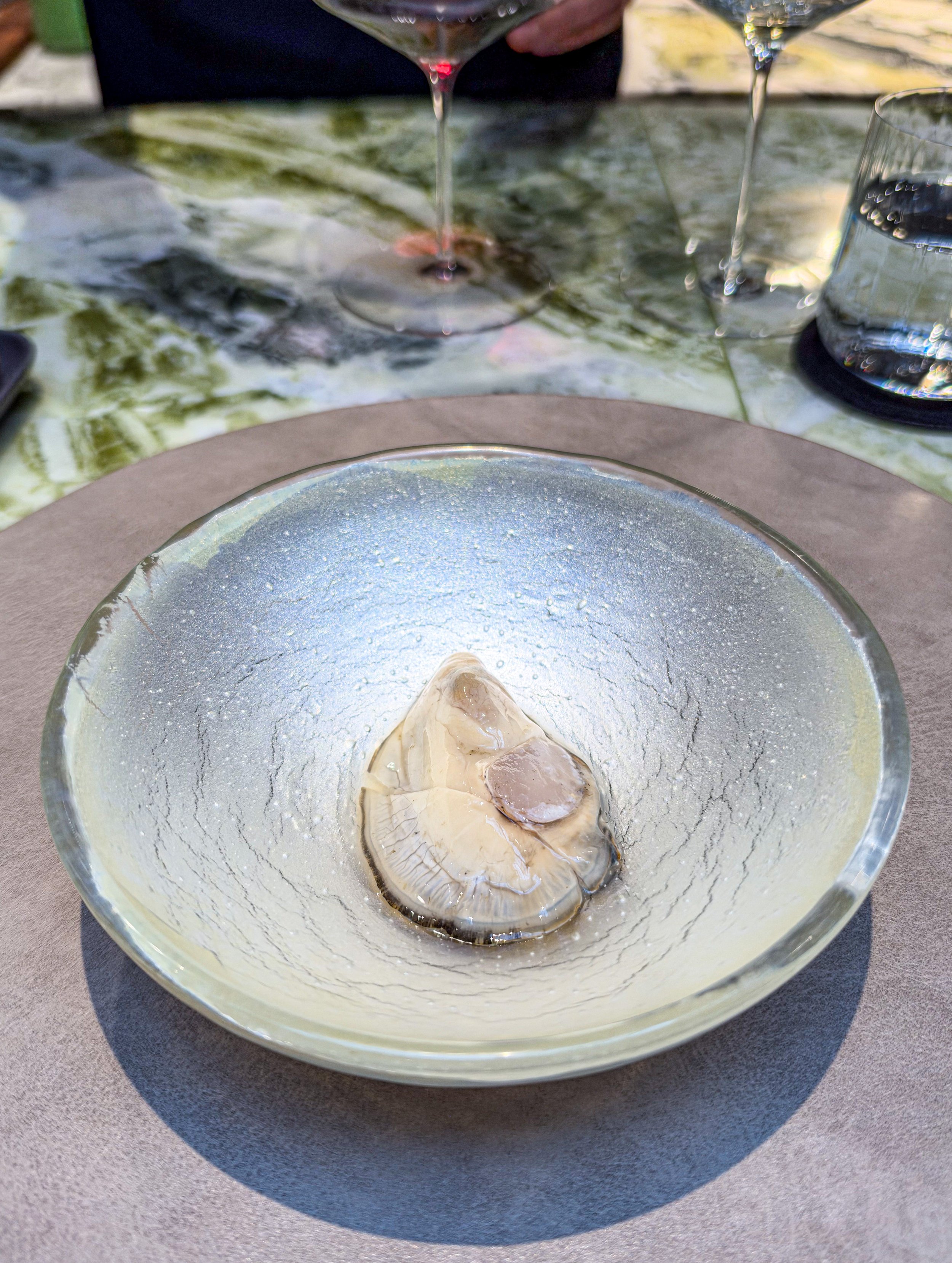
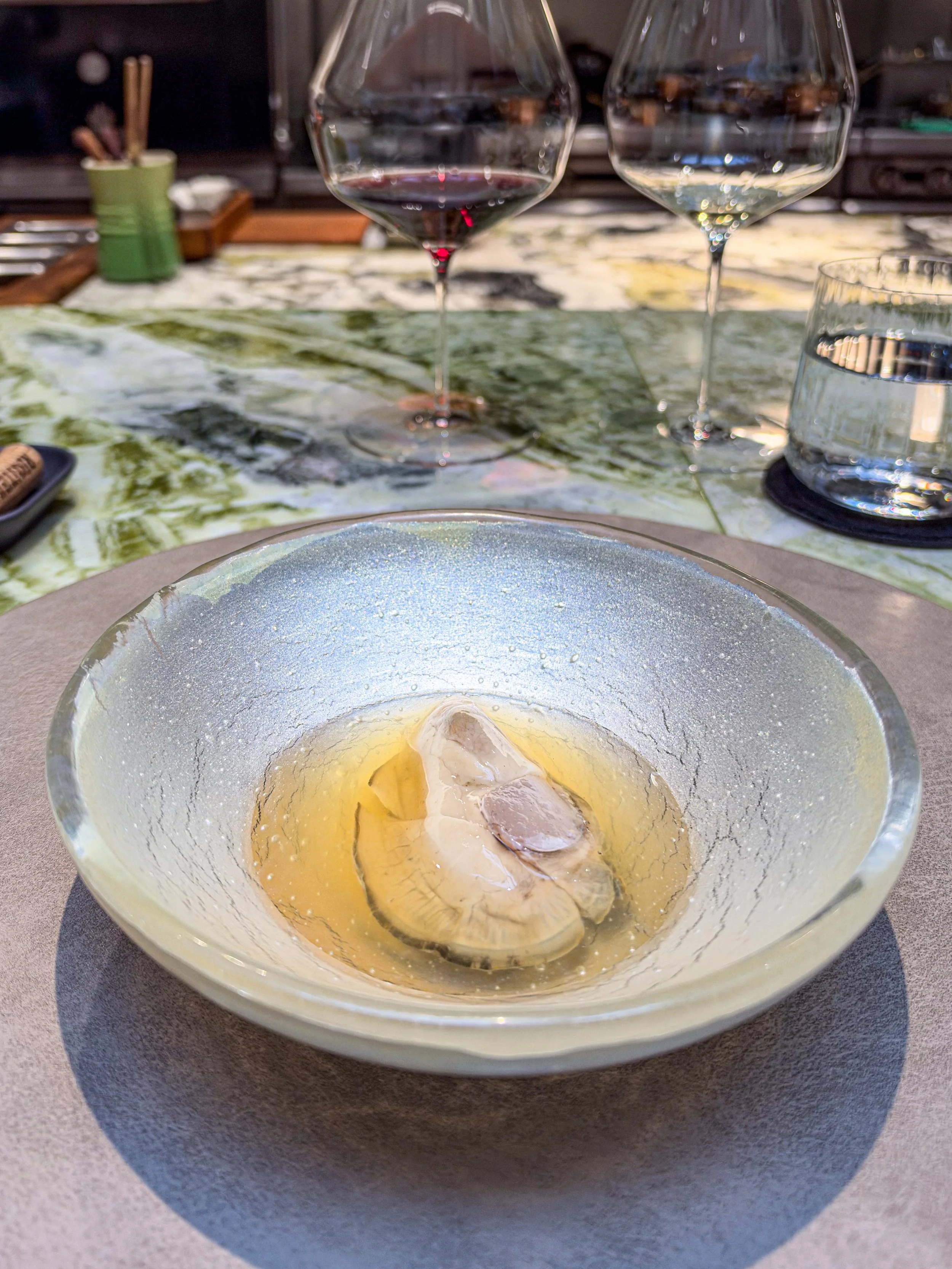
Then a shucked oyster from Baja California arrives in a small bowl on a bed of finely diced cucumber, red onion, and manzano chile. The server pours in a slightly cool dashi seasoned with salsa bruja, a Mexican spiced vinegar. It tastes of the sea and smoke, and the heat barely tickles. Sensational. The balance is remarkable, and there’s a restraint to it that makes me think of Japan. (10/10)
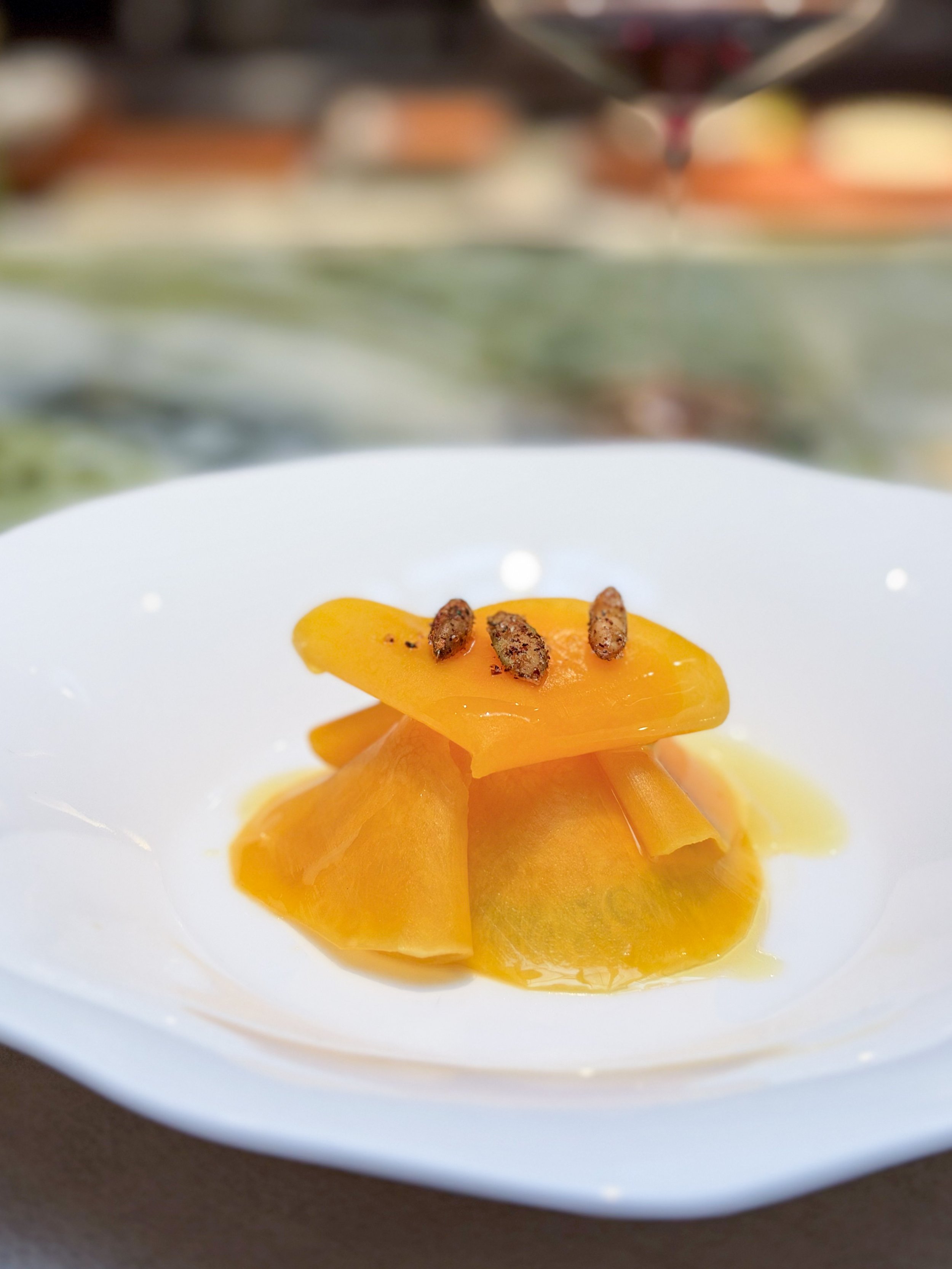
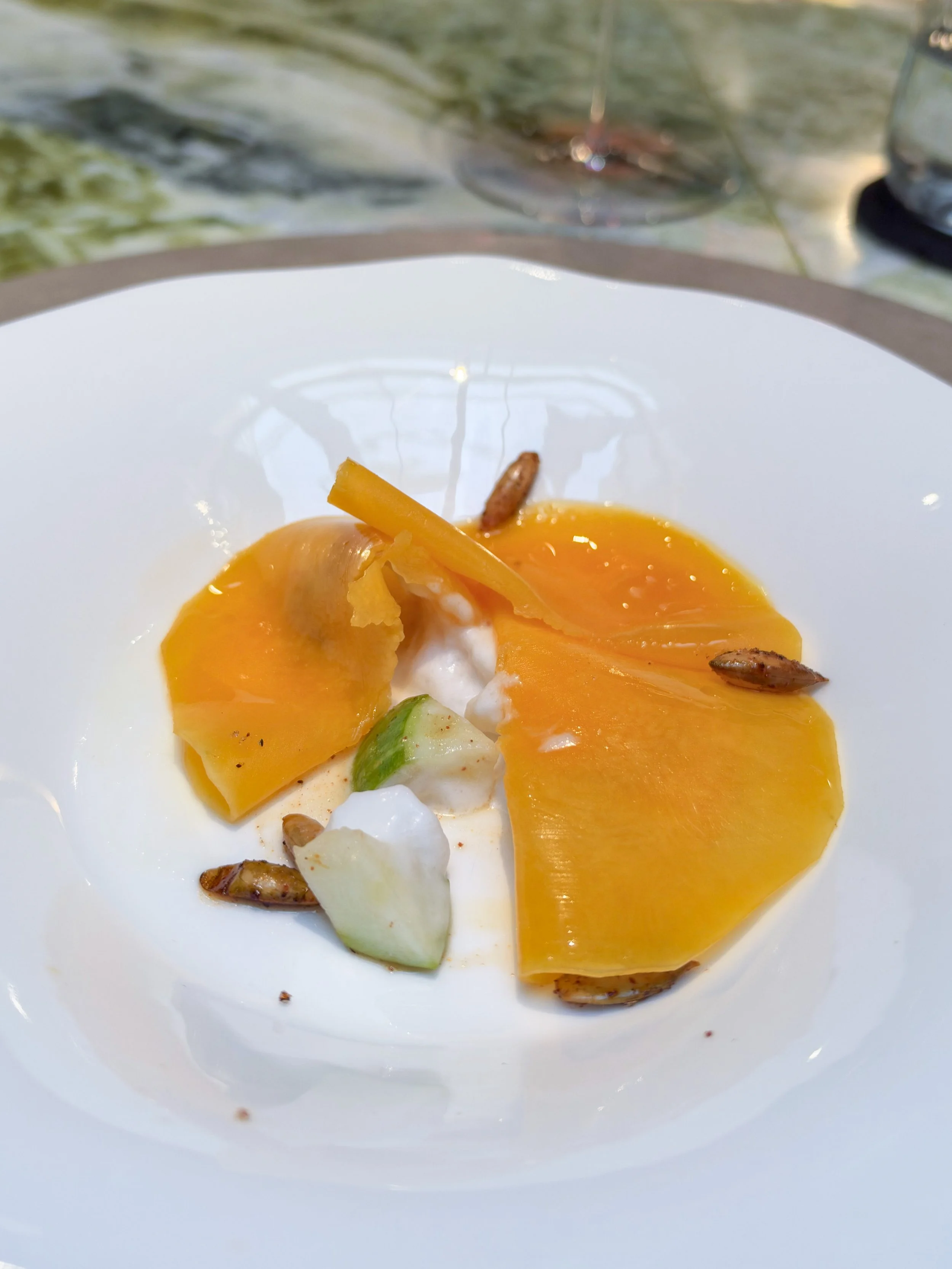
The next course is a salad of two kinds of squash. Thin slices of butternut sit on rice horchata foam, with brown butter and small pieces of figleaf squash that remind me of zucchini in more ways than one. Both kinds of squash have a particularly satisfying bite. The dish is slightly cool, tart, and a little earthy. At times it tastes almost like Christmas, and every so often, just for a moment, like fire. More than excellent. (8.5/10)
There’s time between courses to watch the kitchen. I’m struck by how many cooks there are and how quietly and intently they go about their work. I particularly enjoy watching Vicente Flores, the sous-chef, at the meat and fish station. He works with a quiet seriousness, as though nothing else in the world matters at that moment.
The next dish is a beautiful composition in green and blue. The green comes from pipián verde, a velvety, earthy, gently spicy sauce made with ground sunflower seeds. In it sit raw shrimp of exceptional quality, cool and creamy yet firm to the bite. A hint of makrut lime brightens their flavor, and a few blossoms add a floral note. It tastes of summer, of light and shade, with an earthy depth to it. Absolutely fantastic. (9/10)
Then comes steelhead trout, a form of rainbow trout. I can see the quality of the fish before I even touch it, and I can already imagine the buttery give of the flesh. It sits in a lukewarm, deeply savory adobo de chicatana made with roasted chicatana ants. Alongside it are oyster mushrooms pickled in fig leaf.
As with the dishes so far, I’m drawn to the assured simplicity of the plating, its “verticality.” Many of the best dishes I’ve eaten are arranged this way. They’re layered and compact, and everything fits together so naturally that a spoon is all I need to pick up a perfect bite. (Compositions spread across an entire plate, where I have to hunt around and assemble my own “chords” from ingredients that are often nearly cold by then, have rarely thrilled me.)
With this trout in front of me, the logic of plating this way seems obvious again. It makes the dish all the more pleasurable to eat. There’s a luxurious richness, a deep savoriness, and an elegance I can’t quite account for. Maybe it’s the way a little smoke and a delicate sweetness come together in that buttery fish. It’s rich and intense, and every spoonful makes me want another. Grand. Do I order it again now or later? (10/10)
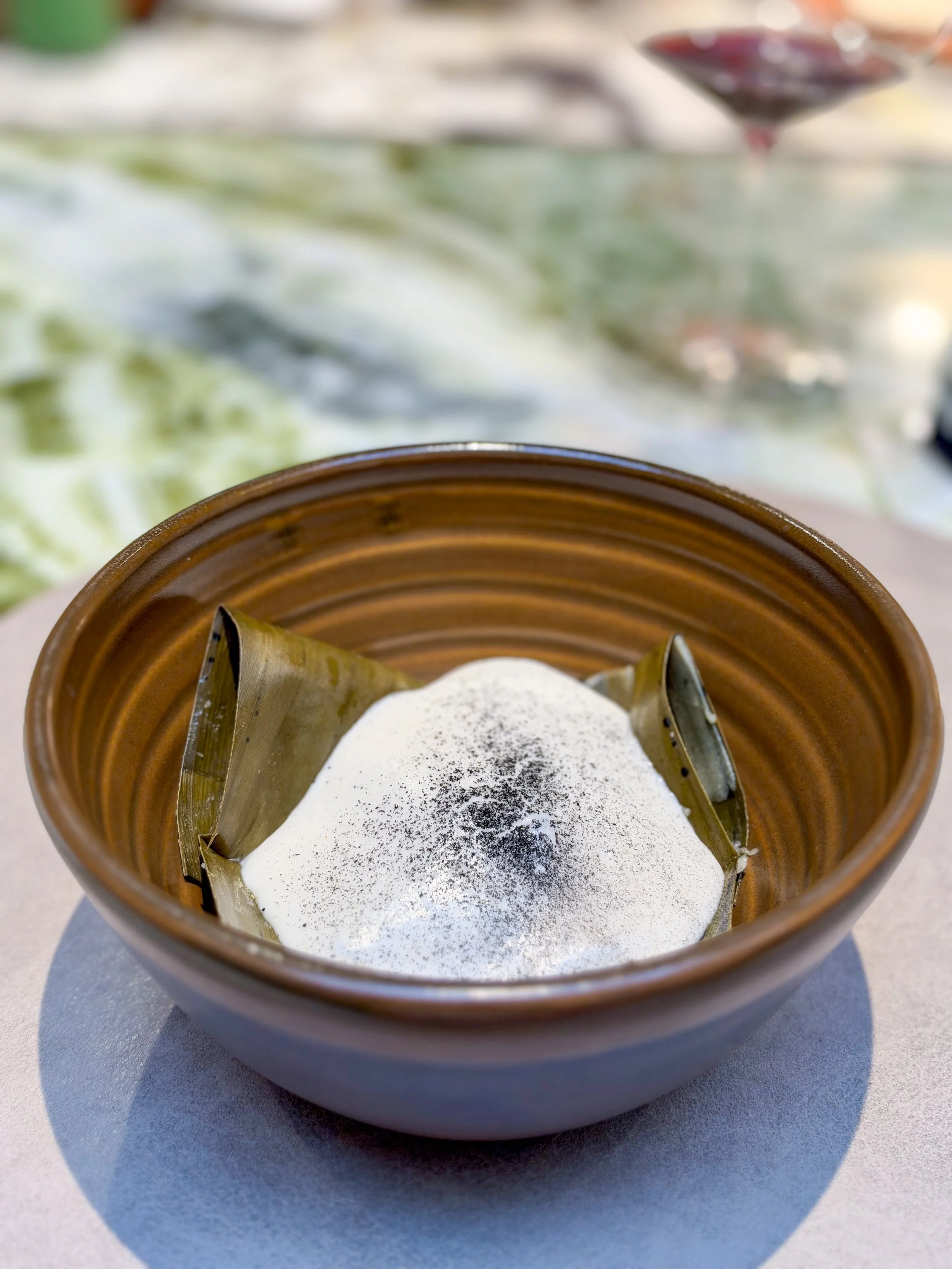
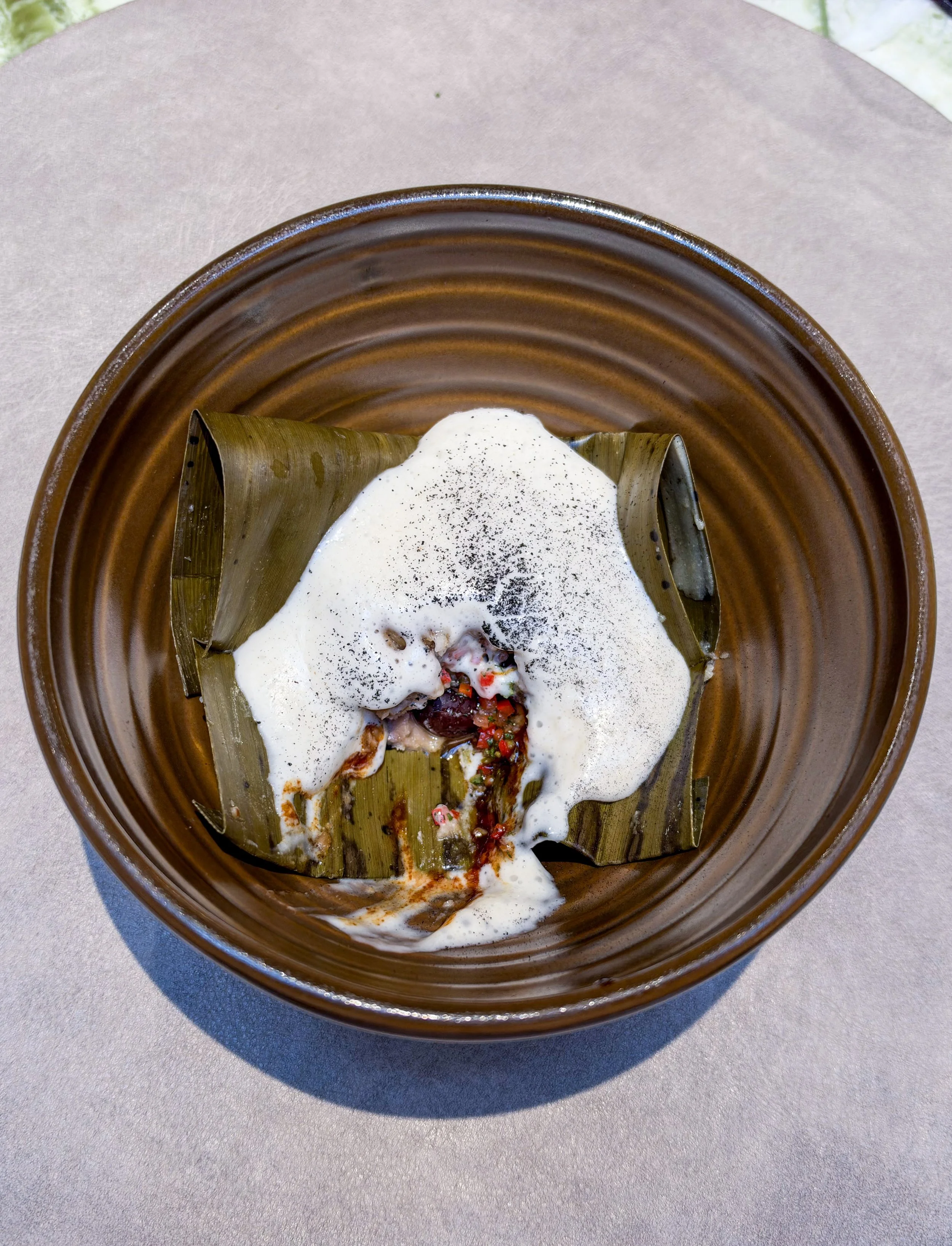
Speaking of verticality, a spoon is all I need for the next course, too. In a small bowl, beneath an airy cream of young corn, is a warm tamal of ayocote beans and white cacahuazintle corn, with tomato, habanero, and perilla. The aromatic freshness makes me think of toothpaste for a second. It sounds odd, but it tastes fantastic. The gentle sweetness of the corn and the earthiness of the beans soften that freshness, while a little heat comes through in every spoonful. Wonderful. (9/10)
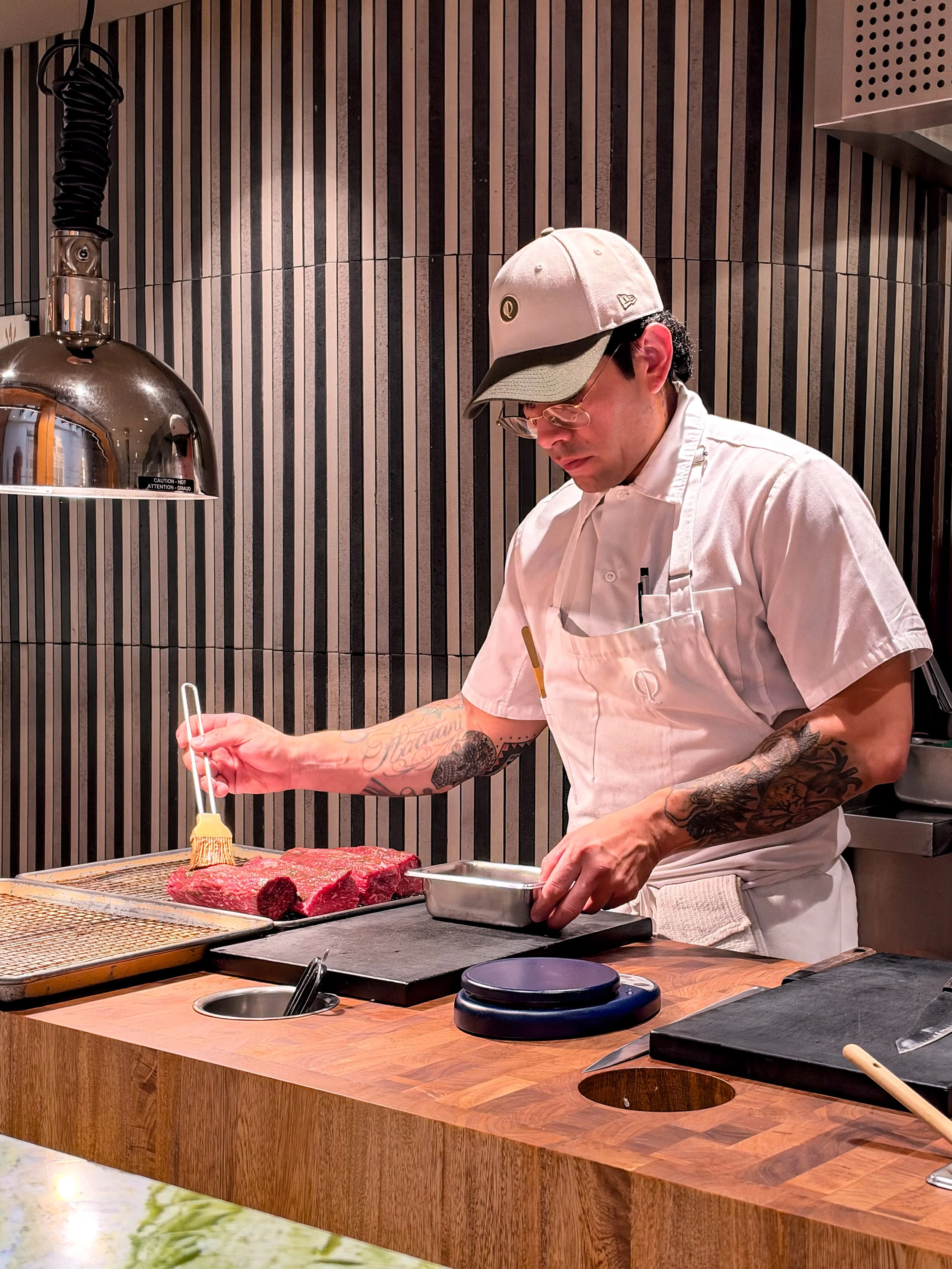
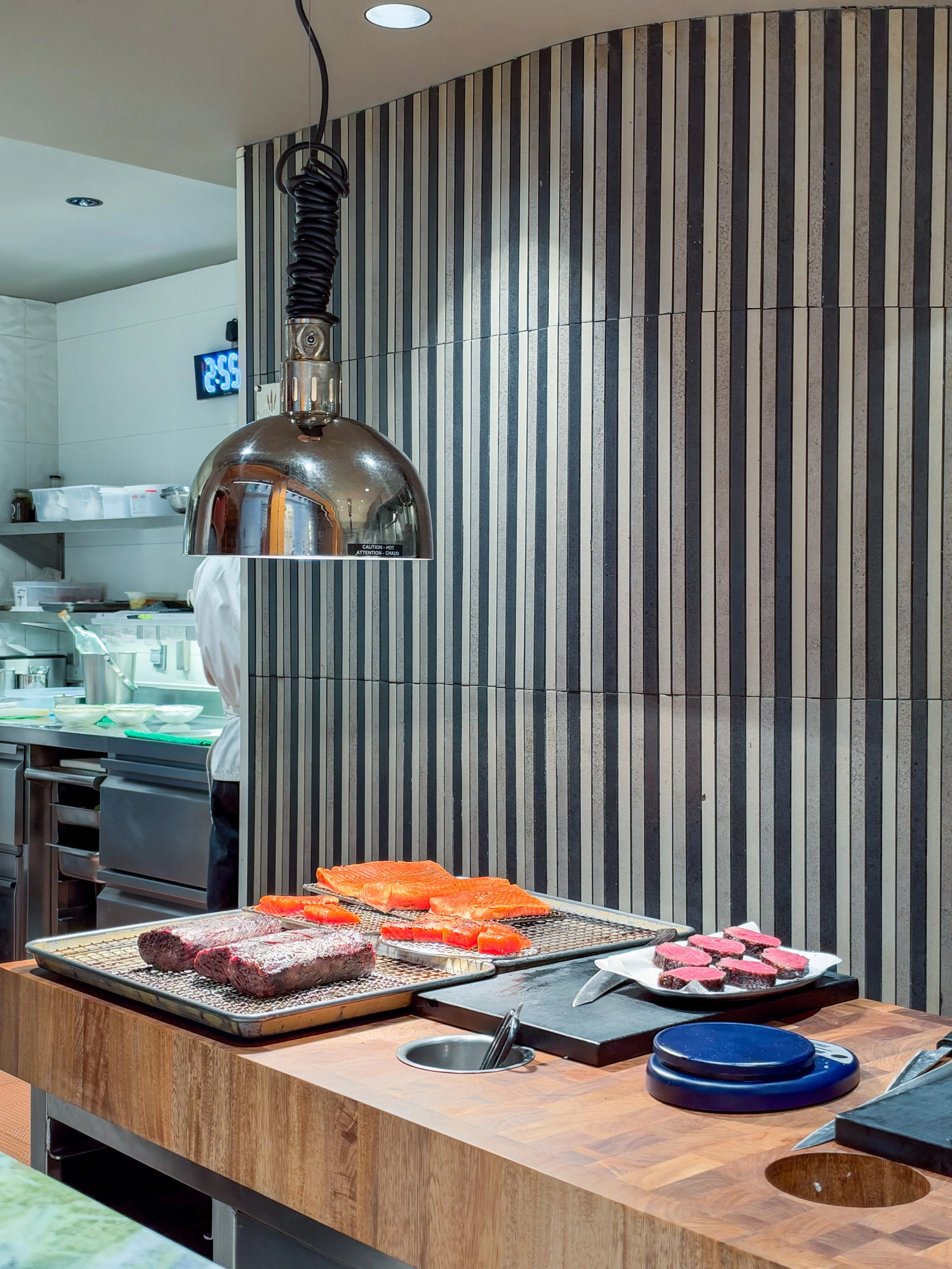
I’ve been watching Vicente prepare the main ingredient for the last savory course for some time. It’s a large piece of Wagyu rib eye from Querétaro. Once seared, the meat goes into the oven for short stretches and rests in between. During those pauses, the heat travels inward and the meat cooks more evenly. The result is an evenly pink center and a thin, delicate crust.
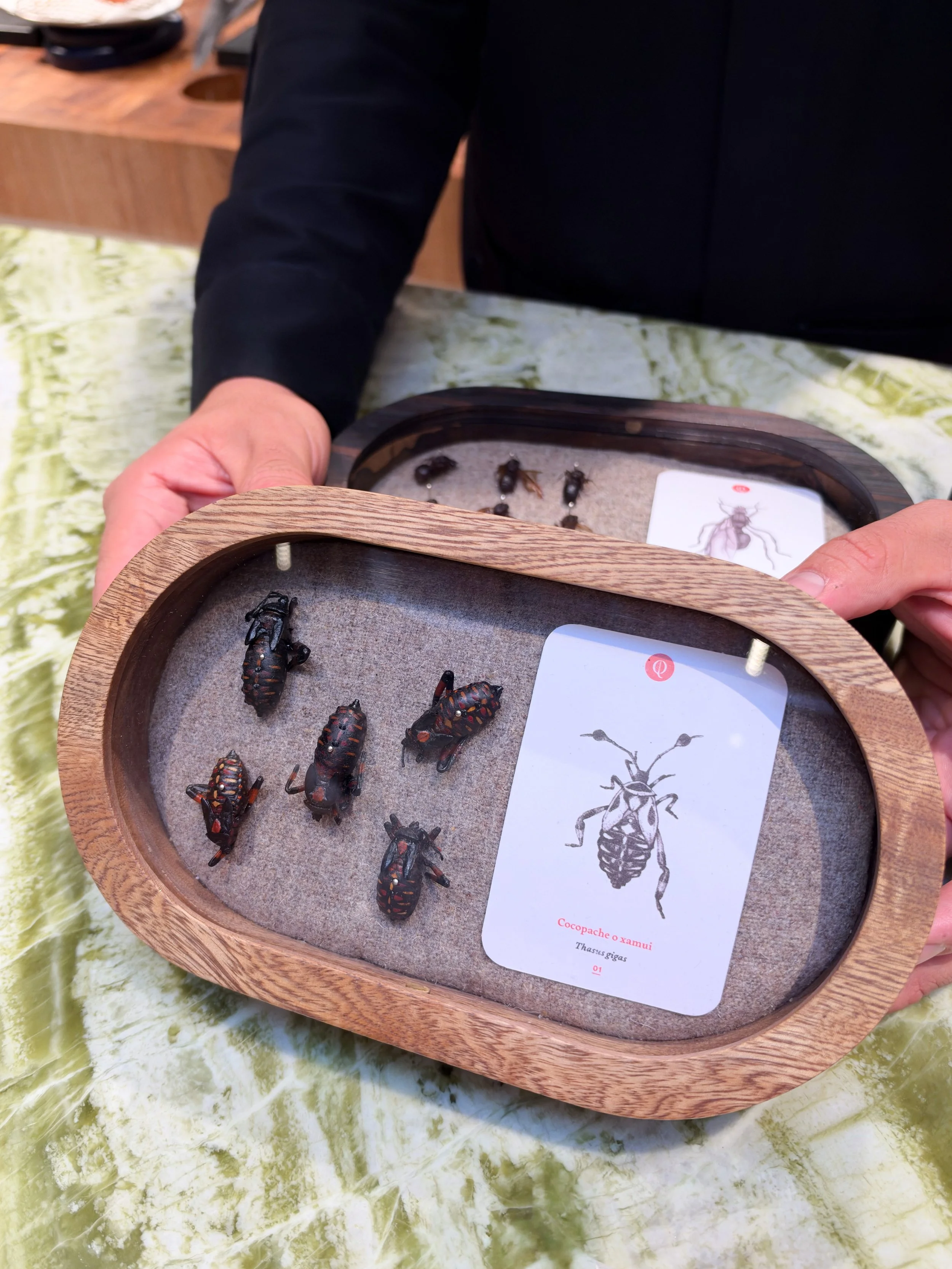
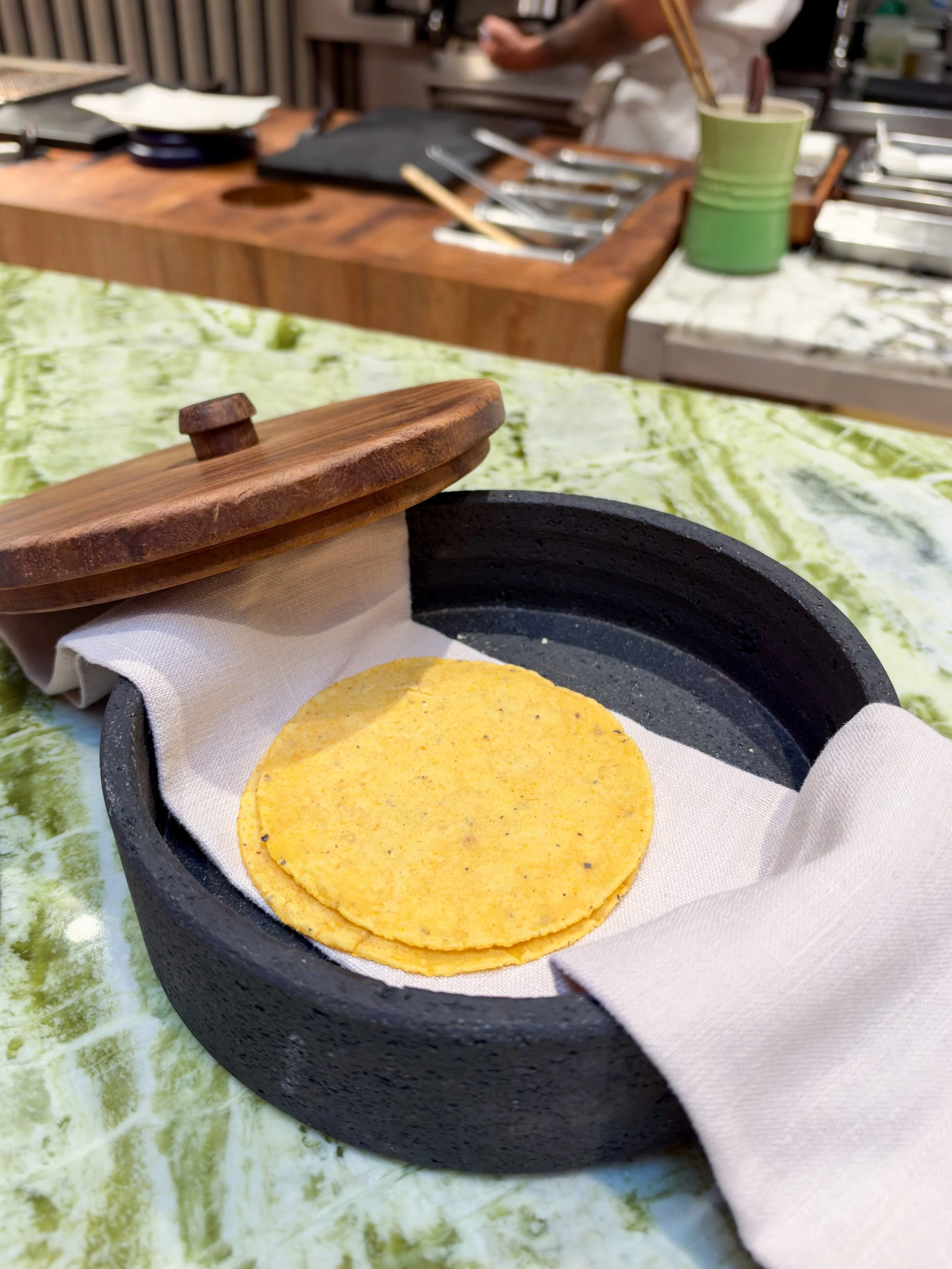
The beef is exceptional. The marbling already tells me how it’s going to melt like butter in my mouth. It comes with chichilo negro, a silky, glossy black mole, along with eggplant and huitlacoche, an edible corn fungus, and a chorizo made with pork and cocopache insects. The tortillas come separately.
I have to smile. In April 2025, the great César Ramirez served me Wagyu, mole, and huitlacoche as a nod to his homeland. I gave it my highest score for the extraordinary quality of the ingredients and the clarity of the dish. This is every bit as good. If anyone asks me from now on how I like my beef best, I already know the answer. With mole and corn smut. (10/10)
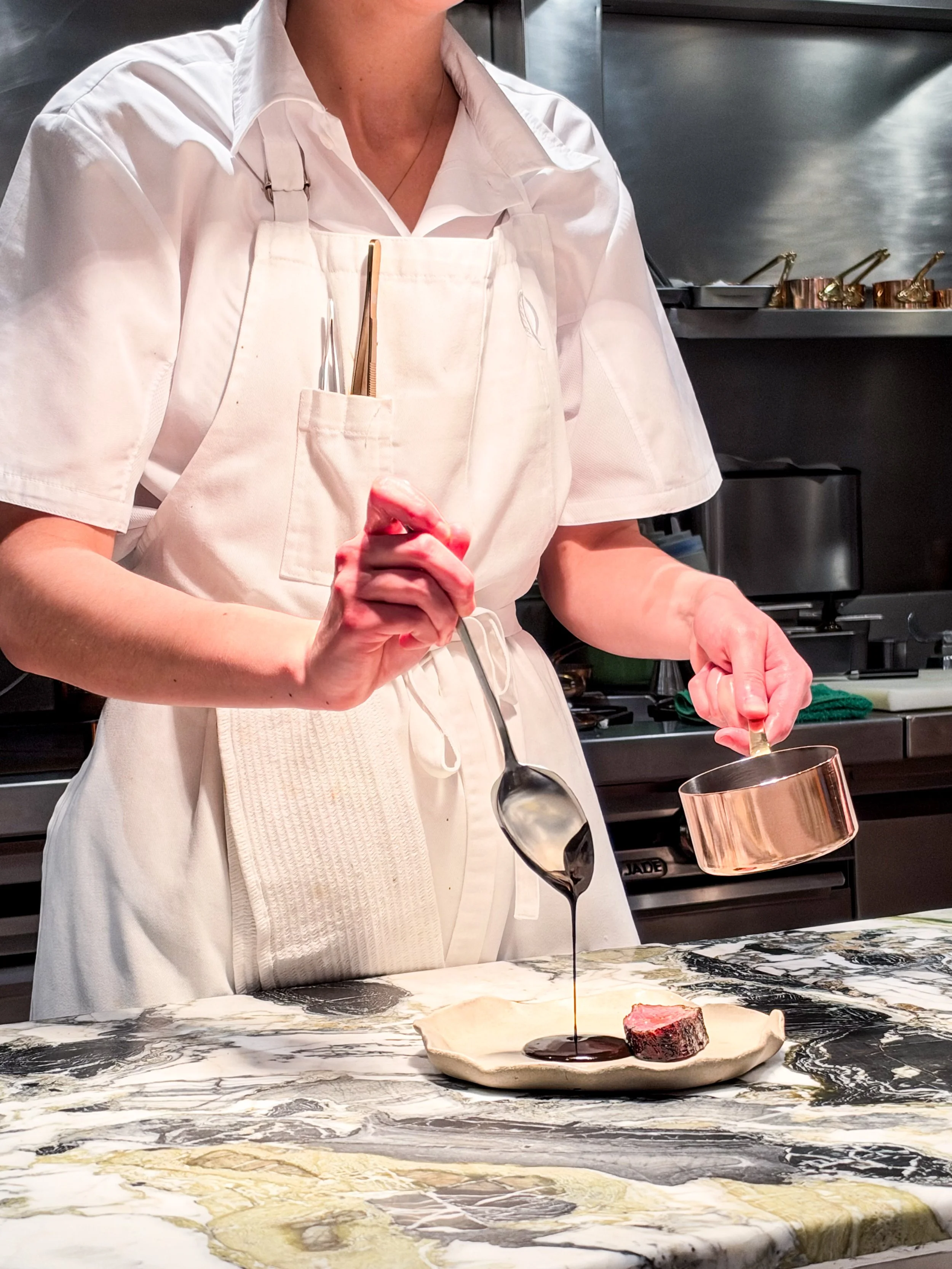
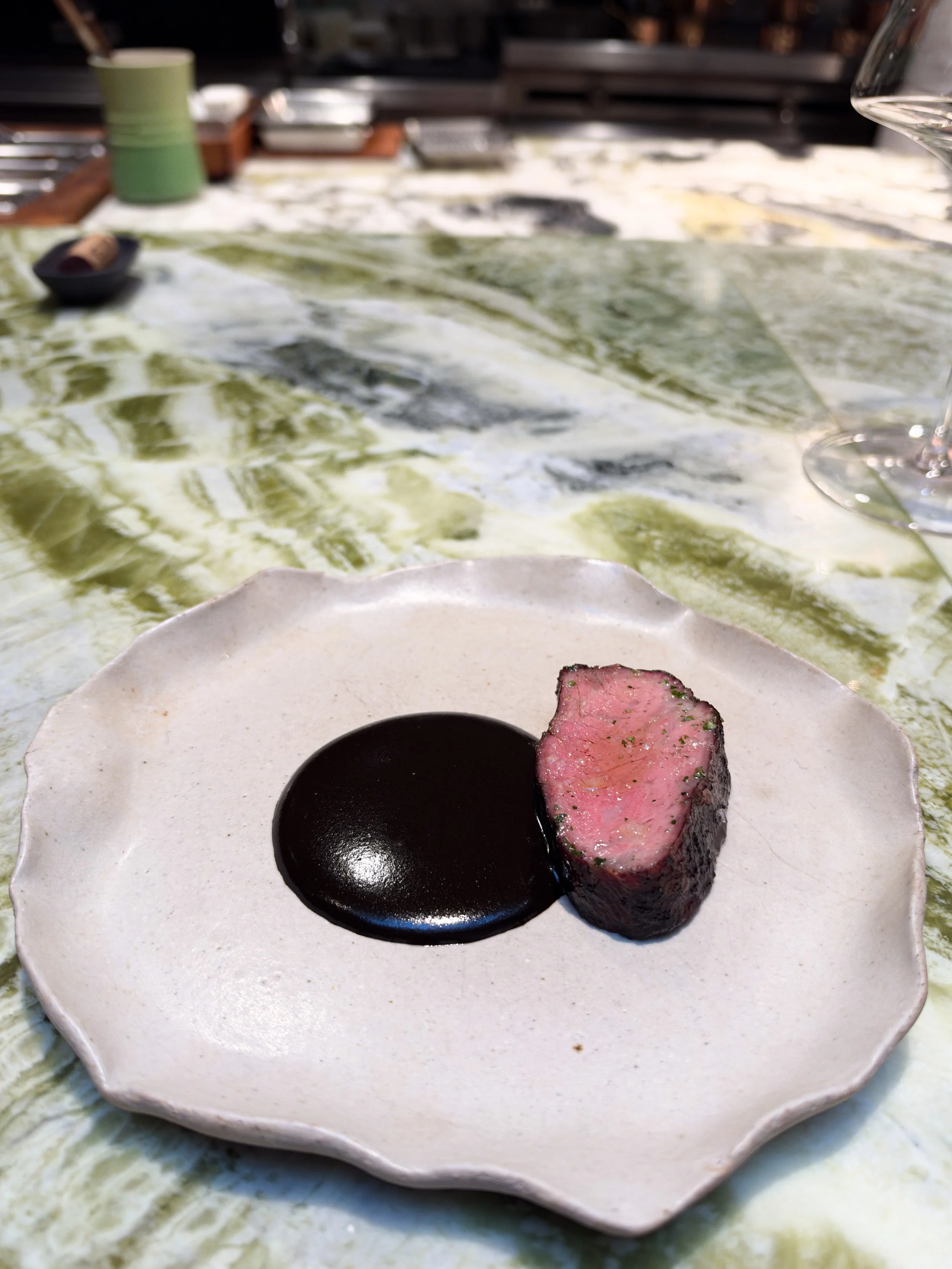
At this point I can’t help myself and order the beef again. Just the meat and the sauce. Even Vicente can’t suppress a smile.
A cactus sorbet with lime and corn-husk salt settles the nerves with a flavor that makes me think of a mojito. Wonderfully refreshing. (8/10)
A crisp tartlet with a panna cotta-like filling is topped with slices of mamey, a tropical sapote, and caviar. It’s delicate and slightly cool. When the mild, papaya-like sweetness of the fruit meets the briny saltiness of the caviar, the whole thing tastes extraordinarily elegant. Another wonderful bite. (9/10)
To finish, there’s pan de elote, a corn cake with mascarpone, passion fruit, and rompope de nixtamal, a vanilla custard sauce with Mexican corn liqueur. The cake is so moist, with that light note of liqueur, that it reminds me of a rum baba. It’s denser and more intense, and then there’s that wonderful acidity from the passion fruit. One of the best desserts I’ve had all year. (10/10)
Three hours have gone by in a flash. If I’d come to Mexico just for this restaurant, the trip would have been worth it.