Le Calandre — The Risotto Remains
Ten years. That’s how long it has been since I last stood at this rather uninviting street corner. I hadn’t particularly planned to return, but chance brings me back to this area near Padua — more precisely, to Le Calandre, awarded three Michelin stars since 2003.
If I took anything away from my visit back then, it was one of the most memorable dishes I have ever had: the saffron risotto by Massimiliano and Raffaele Alajmo. And that alone is worth the journey.
Aside from that somewhat more grounded risotto, Le Calandre remains a highly creative restaurant. The three menus (“Classico”, “Max”, and “Raf”, each €280) feature unconventional ingredients and combinations, such as hare à la royale with sea urchin or braised donkey with clams.
It is still possible to compose your own menu across the offerings, which I make use of, although my selection stays fairly close to the “Classico” menu.
The wine list is presented on an iPad – something I always find slightly cumbersome – but the first bottle is quickly chosen: a 2019 Barolo “Acclivi” by G. B. Burlotto (€206). In Italy, it feels right to keep things Italian.
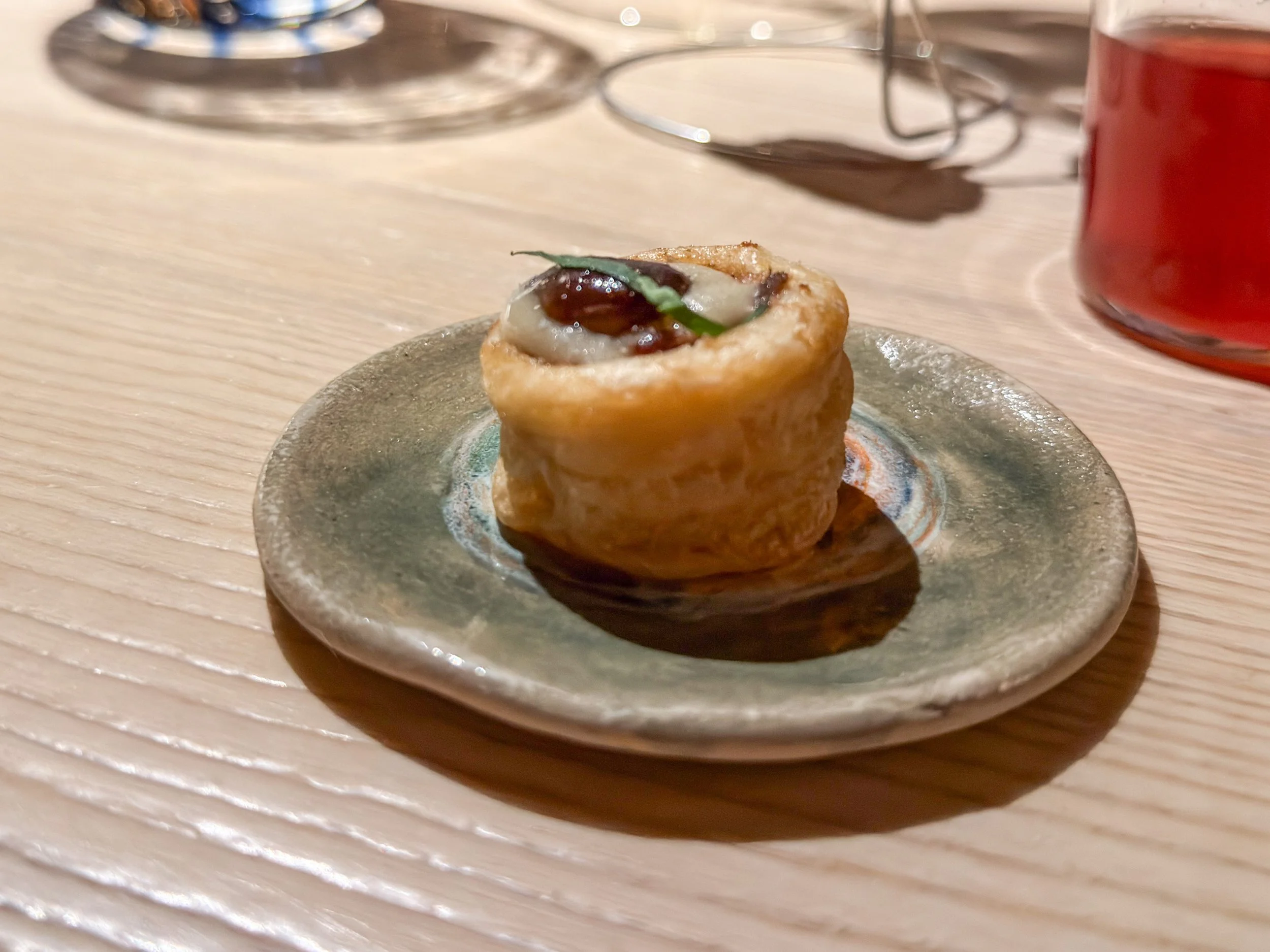
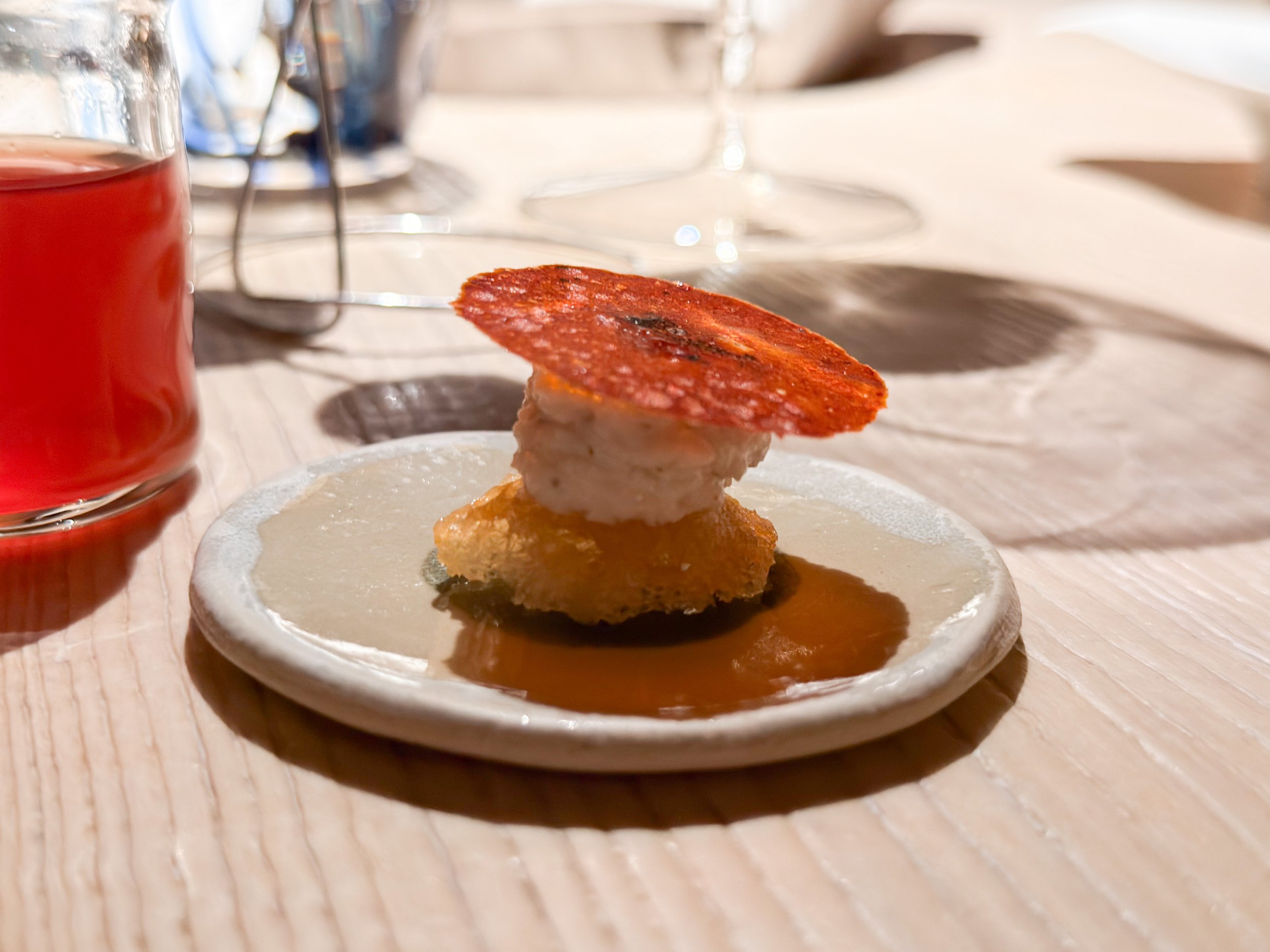
The opening snacks are then presented at the table. A warm puff pastry with hare and mushrooms offers a pleasantly firm bite and a distinctly French character (8.5/10). A crispy olive with whipped salt cod is hidden beneath a “fake salami” made from ’nduja and red pepper — quite rich, but excellent, with light, almost summery flavors (8/10).
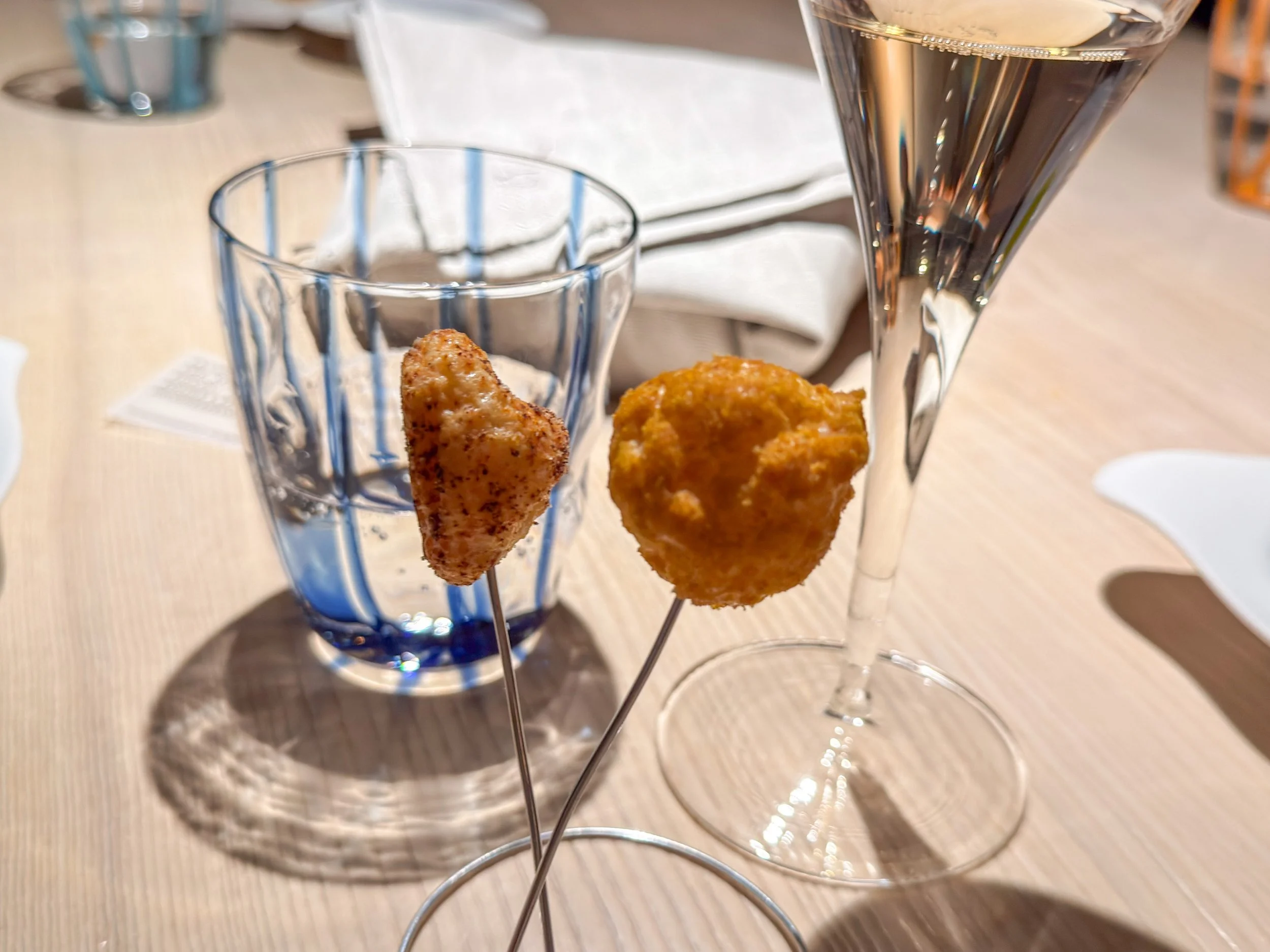
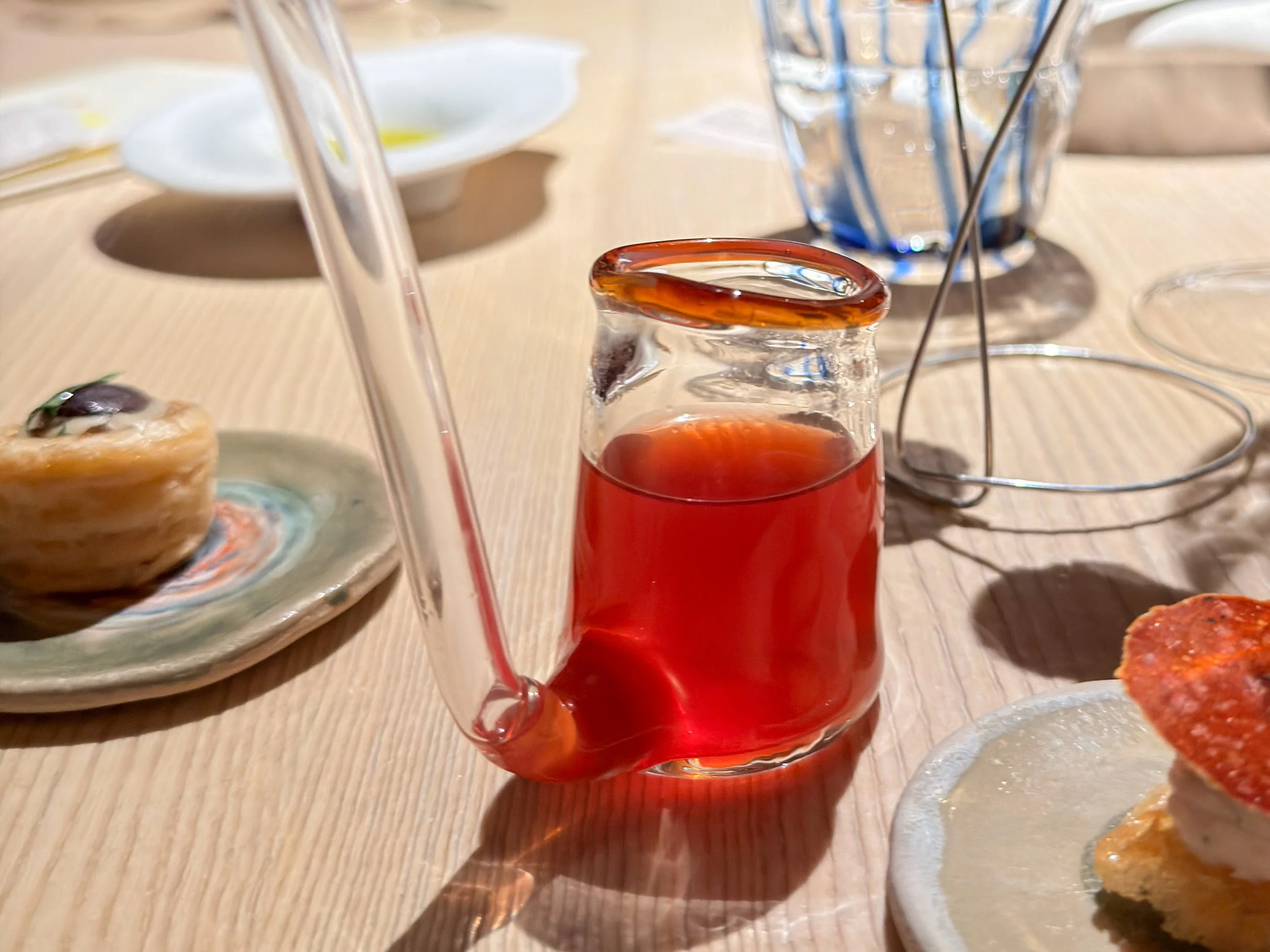
Two “Parmesan clouds”, one with turmeric and one with smoked tomato powder, impress with their lightness and subtle acidity (7.5/10), while a hot, clear winter vegetable broth — including celery — stands out for its intensity and purity (8/10).
The first proper course, titled Vibrazioni, is a variation on raw seafood. From the cardboard box in which the dish is served, headphones protrude (not pictured), intended to be worn during the meal. I find this slightly off-putting from the outset. Heston Blumenthal’s Sound of the Sea was original at the time; the culinary world might well have left it there — even if the idea here is somewhat different, aiming to amplify the sounds created by the diner. I prefer to focus on the food.
At its core are various raw seafood preparations, combined with citrus, iodine-rich and occasionally slightly spicy accents, repeatedly contrasted by crunchy elements. Sea bream with orange, mandarin, and black rice is delicately fruity, with a flavor reminiscent of puffed rice. Red prawn with (too much) guacamole, tapioca foam, and radicchio offers pleasant crunch but remains somewhat fishy, simple, and heavy. More convincing is mantis shrimp with almond and sea urchin — intensely maritime, with clear depth and precise texture.
Soy “spaghetti” with squid and seaweed lean on iodine-rich crunch but lack further tension; I leave some of it due to the generous portion. Tuna belly delivers in terms of richness, though it is overshadowed by an overly dominant seaweed note. Least convincing is a combination of mango, beef tartare, and seafood, which feels somewhat arbitrary.
Overall, this is a technically accomplished and occasionally appealing composition, but ultimately too heavy and overloaded. After this, one does not need any more raw seafood. There is also a straw emerging from the box, meant to be used — I choose to pass. (7/10)
Next comes Scarpetta Buon…sai. Sprouts from the brassica family are served together with their edible “soil” — a soft base from which they grow. Various sauces and accents accompany them, including paprika and arugula creams, olive oil, and small fried prawns. With a piece of toasted bread, one attempts a scarpetta — wiping the plate — though this works only moderately well given the structure of the dish.
Flavor-wise, the dish moves mainly between sweetness and umami; aromatically, it is dominated — very successfully — by notes of campfire and summer. The sprouts provide fresh accents, like a few drops from a garden sprinkler hitting you unexpectedly at a barbecue. It is precisely this associative context that ultimately makes the somewhat unusual dish very convincing — even without any standout main product. (7.9/10)
The next course, Murrina Cappuccino, is visually inspired by Murano glass art and correspondingly colorful. Essentially, it consists of a fine, airy potato emulsion with squid and its ink, beetroot reduction, sea urchin, spinach, and spirulina. On the palate, the dish is very well balanced, with maritime accents softened by the potato emulsion and served pleasantly warm. It is remarkably comforting and harmonious, though those focused on product-driven cuisine may find less to hold onto. Still, it is excellent in terms of flavor. (8.5/10)
A second wine follows: a 2012 Montepulciano d’Abruzzo by Valentini (€424), showing dark cherry, herbal, and slightly smoky notes, with surprising freshness and fine tannins.
The paccheri pasta — a preview of my visit to Da Vittorio tomorrow — is served with anchovy pesto, bottarga, and red prawns. The dish thrives on contrast. The pasta is so al dente that outside Italy it would likely have been cooked at least five minutes longer — a texture that matches the roe. Together with the prawns and the sauce, this creates a distinctly maritime, “fishy” profile – not negative in any way, but rather like a concentrated impression of the sea. Excellent. (8.5/10)
And then, finally — almost the real reason for my journey — the famous saffron risotto, so deeply ingrained in my memory that I have recreated it at home countless times over the past decade, thanks to the relatively simple recipe from Alajmo’s cookbook.
On the menu, it appears as “Passi d’Oro”, said to be inspired by a golden sculpture by Roberto Barni in the Uffizi — how exactly remains abstract.
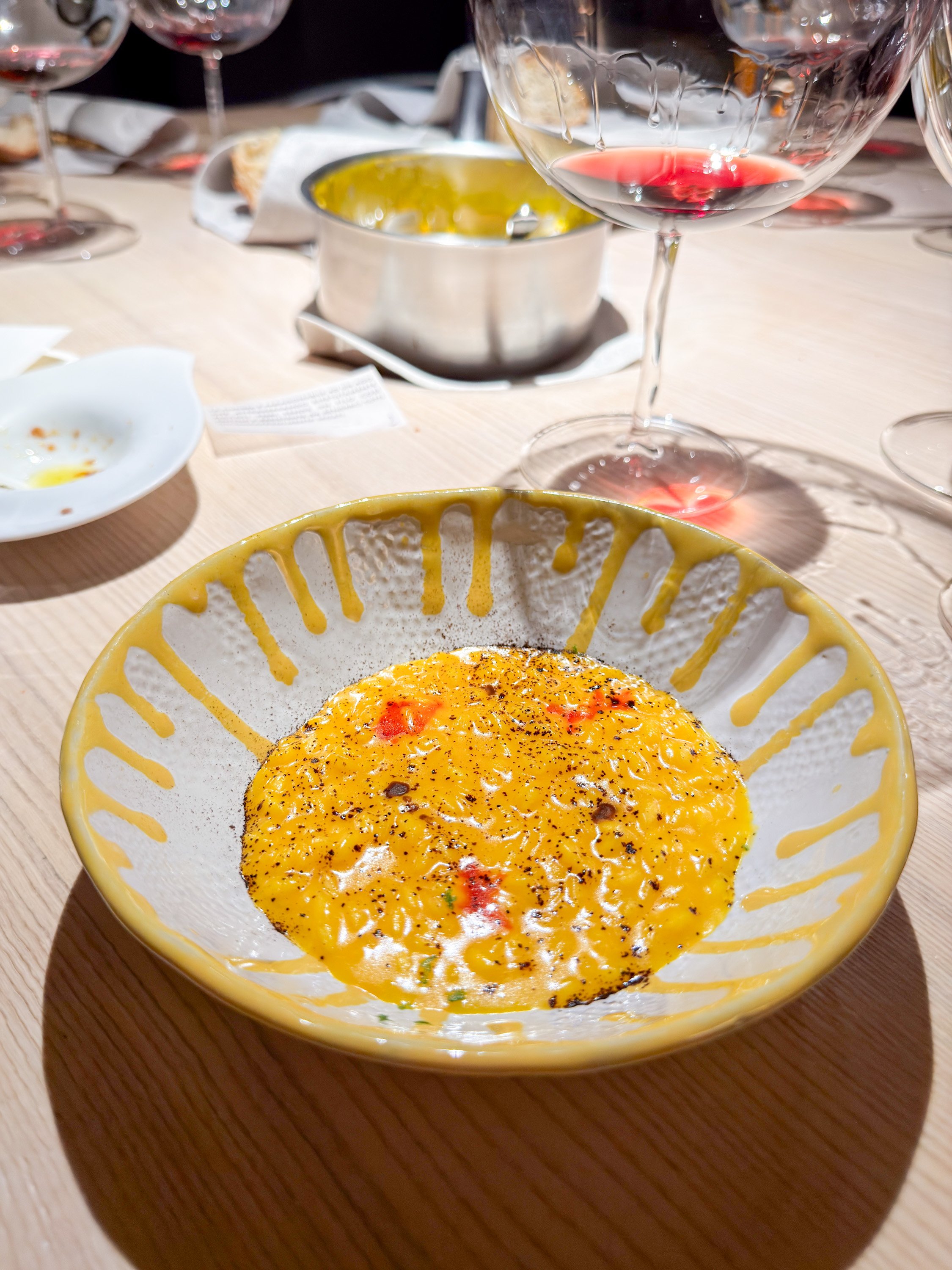
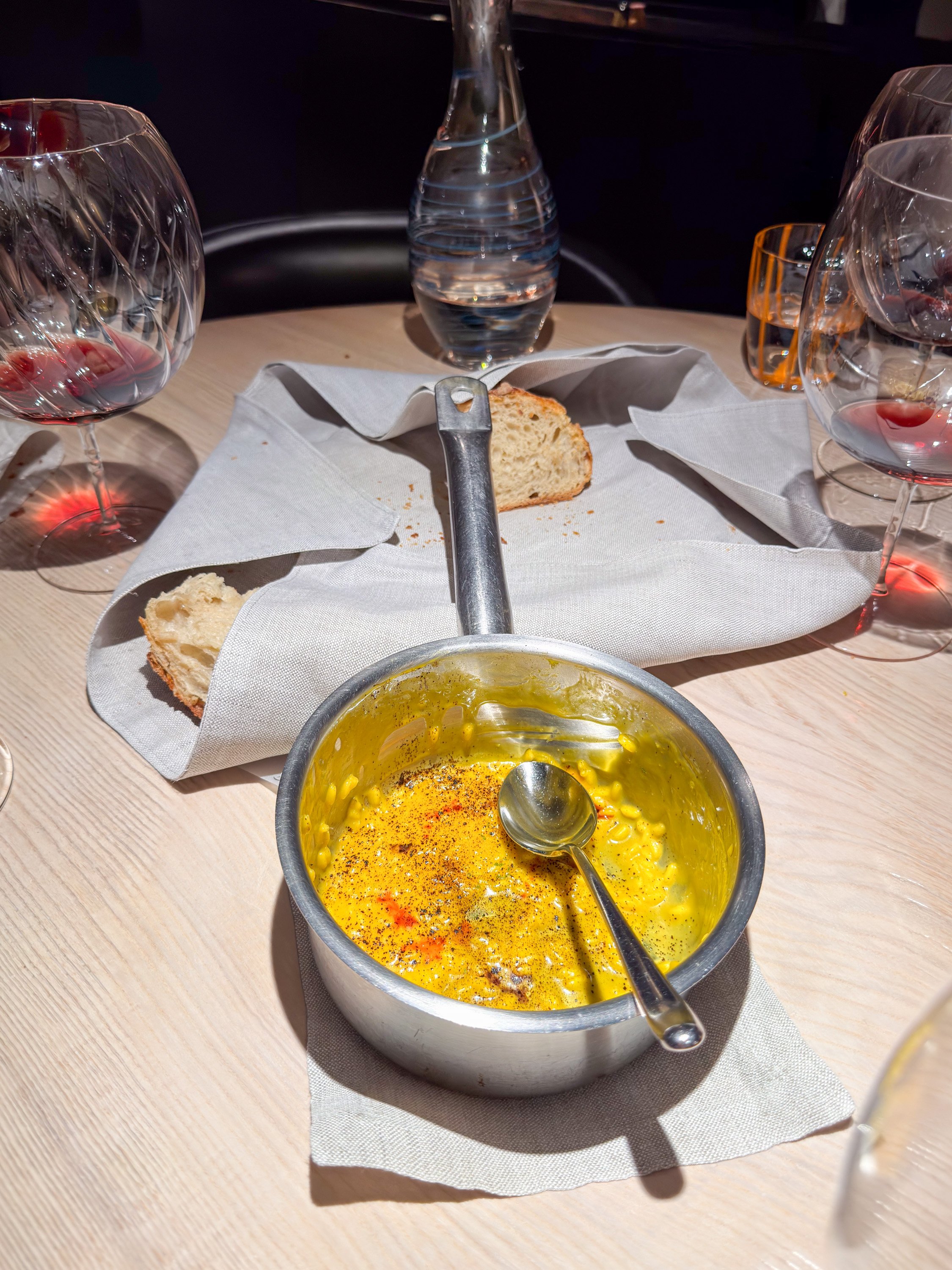
On the plate — and charmingly also in a small pot for second helpings at the table – the risotto is creamy, with perfect bite, showing flavors of Parmesan and saffron, whose warm, earthy, slightly bitter notes define the dish and give it depth. Carefully dosed licorice powder adds a dark, subtly bitter sweetness. In this version, fermented lemon, lime, and Fatalii chili provide freshness and a gentle spicy contrast. Not a single grain of rice is left behind. A reference dish. (10/10)
The next three courses were chosen for their ingredients, which stand out from the rest and sparked my curiosity.
First comes a lengthwise-split femur of Fassona beef, roasted in the oven with breadcrumbs and served with an estragon mustard cream and lightly charred herbs. Alongside it, a small, crispy bruschetta with parsley, sea urchin, and Osietra caviar.
The bone marrow is gelatinous, creamy, and above all hot. Roasted, smoky, and salty notes frame this almost primal experience perfectly. A highlight is the sea urchin and caviar toast, whose maritime salinity provides a precise counterpoint and adds another dimension to the richness of the marrow. This is outstanding, as the raw, unembellished product meets a clear maritime contrast. Unforgettable — and as memorable as the risotto. (10/10)
Frog legs follow, fried in a coating of breadcrumbs, parsley, and garlic. The result is tender, juicy finger food, slightly too rich for my taste, though a lemon-infused dip balances this to some extent. Enjoyable – nothing more, nothing less. (7/10)
Then: braised donkey. Ordering it required some overcoming of hesitation – I was not even aware that donkey is eaten. In braised form, however, it felt like a safe choice. It is served with various purées, including broccoli, charred leek, and chorizo. A cold mussel sits on an artichoke cream.
The overall low temperature proves to be an issue; especially the meat would have benefited from more heat. In terms of flavor, the donkey is hardly distinguishable from a braised beef dish – so any real sense of discovery is missing. A generous amount of oil adds further heaviness. (6.9/10)
As a transition into the sweet section, a few fruit snacks follow: apple with raspberry-lemon mostarda, pear with yuzu, and mandarin with reduction, spray, and popping candy. All very good. (7/10)
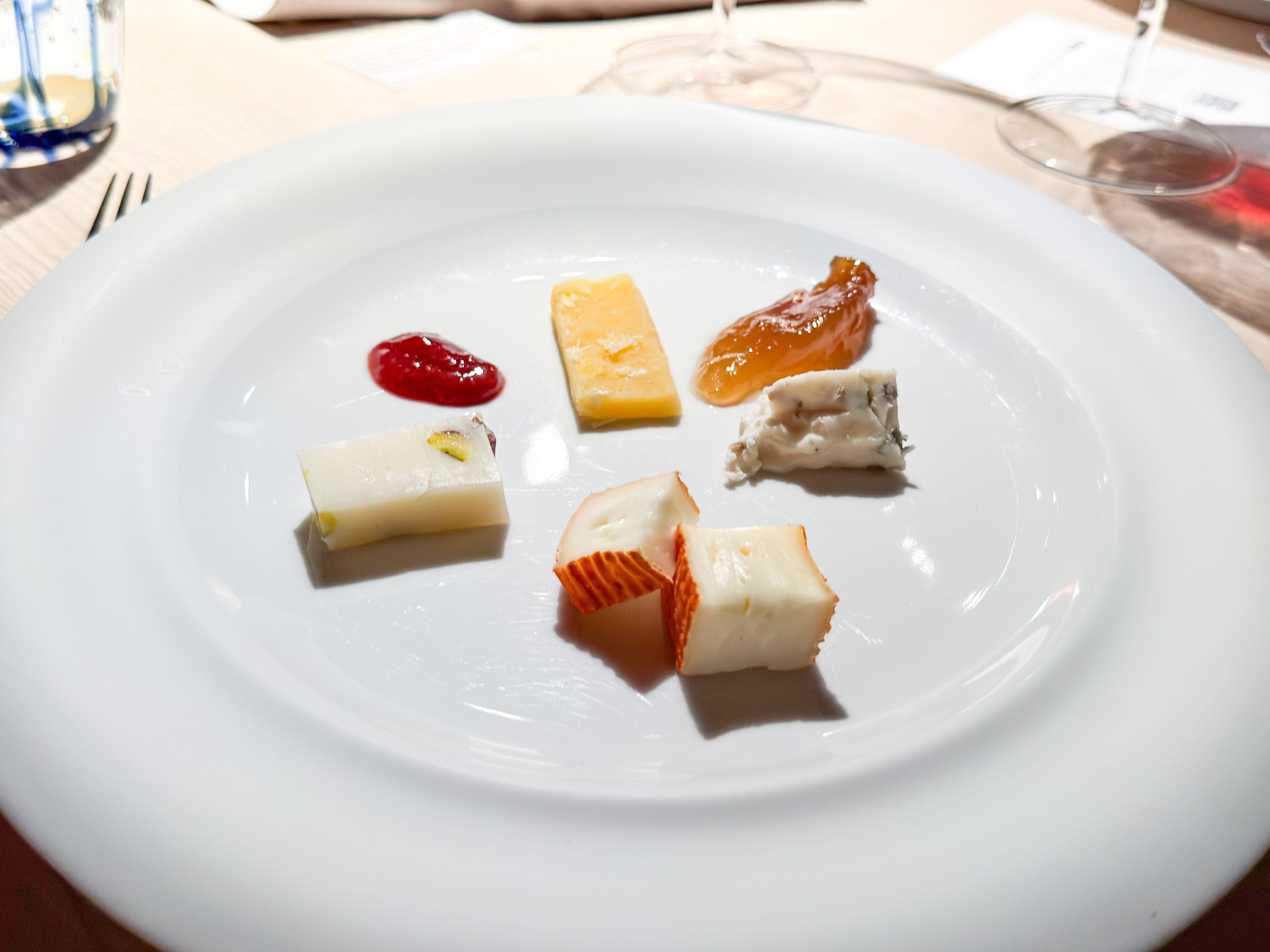
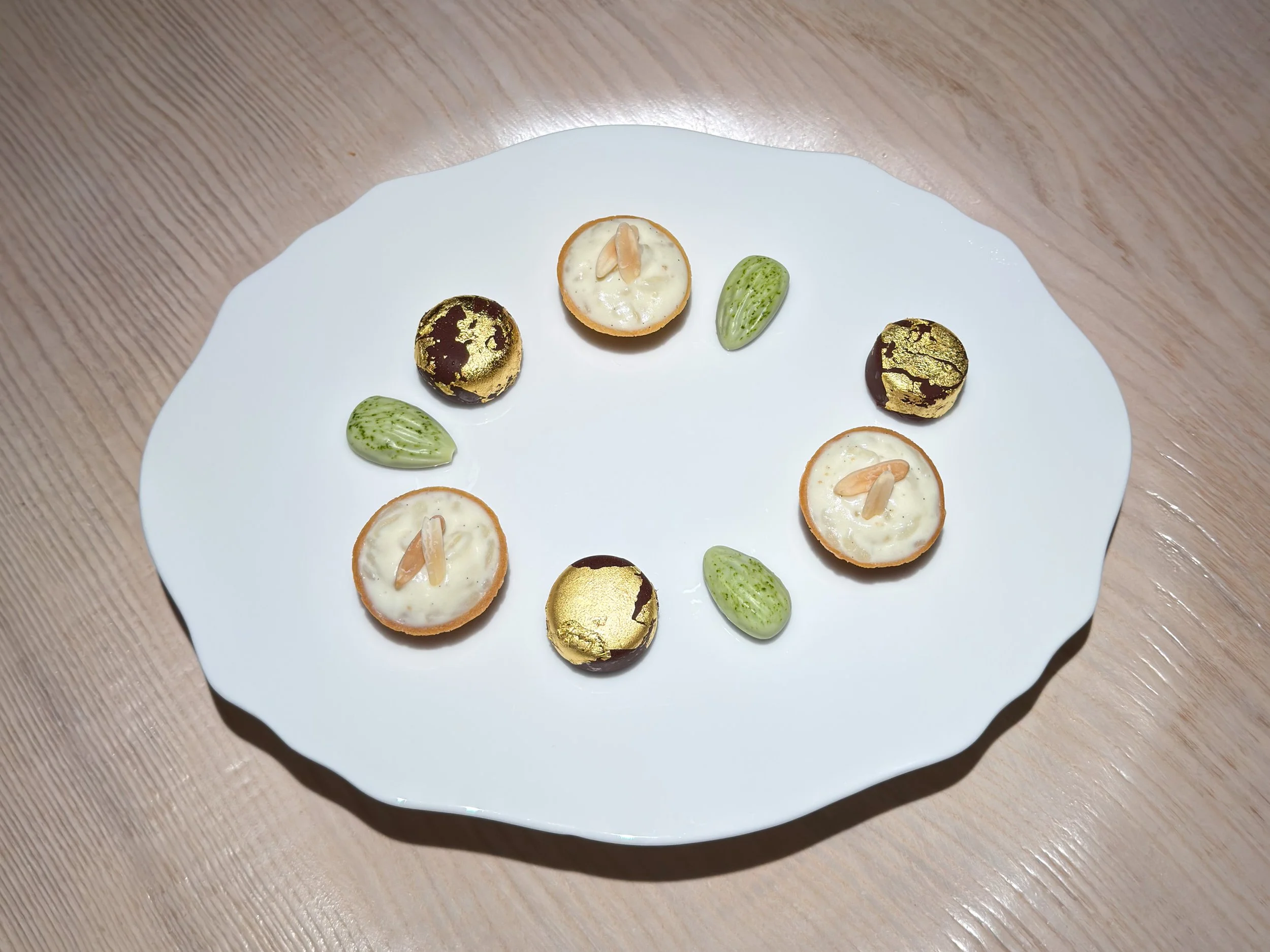
After a brief interlude with a flawless cheese selection (€20), a final trio of pralines is served: rice and milk tartlet, matcha praline, and a liquid gianduiotto with gold leaf — a heavenly conclusion that leaves a strong final impression. (9/10)
Apart from two outstanding highlights, the main issues this evening were the heaviness of the menu — with many rich, fatty components — and the lack of truly defining main products.
As great as the risotto remains: next time, I will probably revisit it at home instead.