Da Vittorio — Indulgence With a Bib
The name Da Vittorio is tied to two of the most memorable restaurant experiences I’ve had over the past ten years. Impressions like these rarely come from complex tasting menus — more often, they are simple moments of pleasure that stay with you: wide tubular pasta with tomato sauce here at Da Vittorio in Lombardy, or the “double duck” at Da Vittorio in Shanghai. Even there, the Cerea family has established an outpost — among others.
A short trip to northeastern Italy therefore also brings me back to the original restaurant in Brusaporto. The hotel is part of Relais & Châteaux and widely known across Italy.
Spending a few hours in the cozy lobby — browsing the wine list, opening a first bottle — quickly reveals how familial the atmosphere is. It also gives a sense of the clientele: in the afternoon, a large family strolls out of the restaurant — the two young daughters effortlessly take their seats in the back of their father’s dark blue Ferrari Purosangue waiting outside.
The dining room has not changed noticeably since my last visit. Double tablecloths, generous spacing, and comfortably upholstered chairs convey a kind of timeless elegance that needs no updating. It is simply a place you enjoy sitting in.
Alongside four menus (280–440 €), which are not described in detail, there is also an à la carte selection with around a dozen dishes. That is where I immediately turn — because few things in dining give me more pleasure than choosing for myself in a classically minded restaurant. In conversation with the friendly and attentive service team, my selection soon takes shape.
The wine list is extensive, with a focus on Italian and French producers. Alongside icons such as Romanée-Conti and d’Auvenay at five-digit prices, the range of vintages, producers, and price points is refreshingly broad.
Alongside a 2020 Trebbiano d’Abruzzo from Valentini (230 €), still open from the afternoon and continued at the table — we are five — I am already in the mood for something red. A 2021 Etna Rosso “Santo Spirito” from Tenuta delle Terre Nere (135 €) sets the tone with its smoky, stony minerality from Mount Etna.
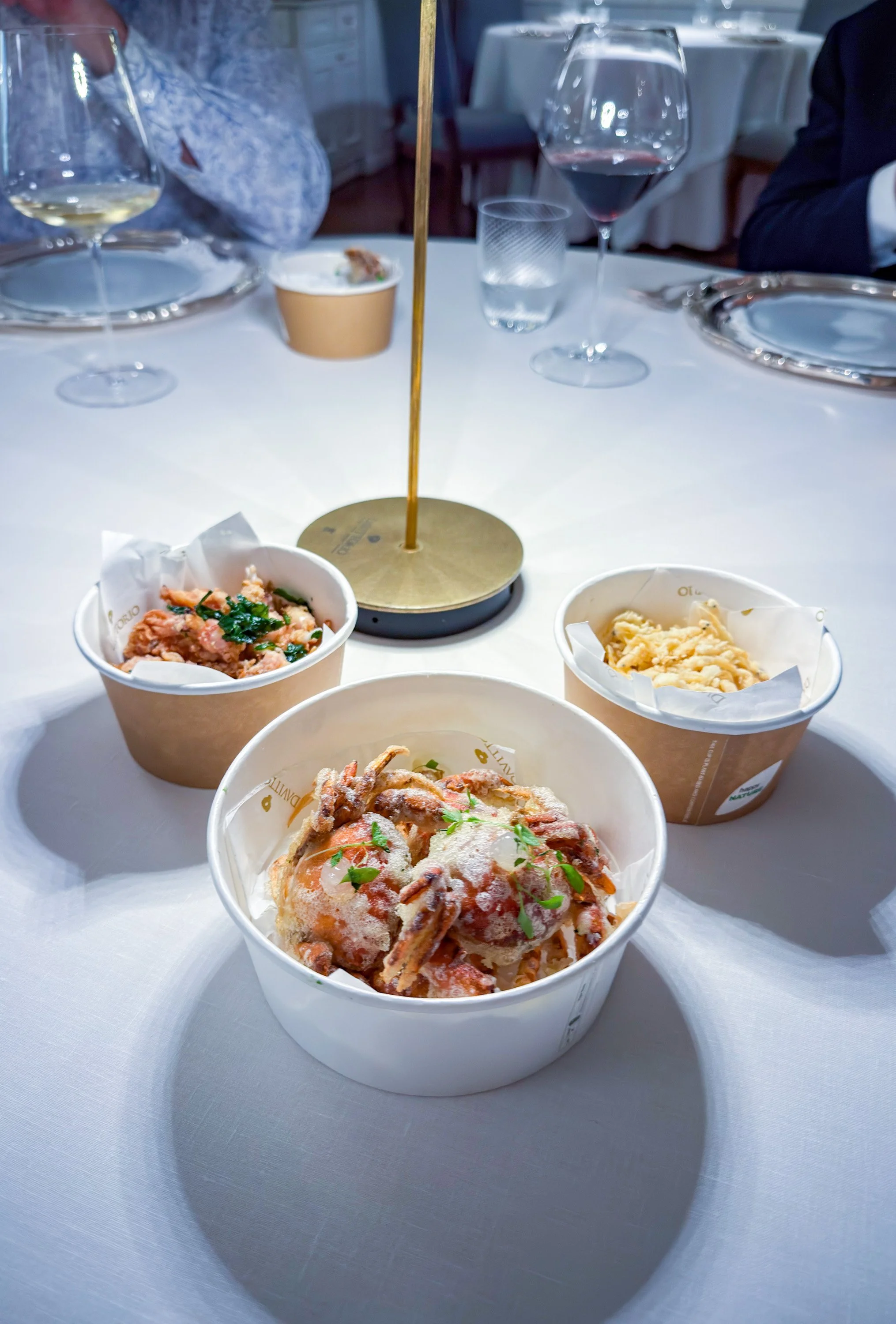
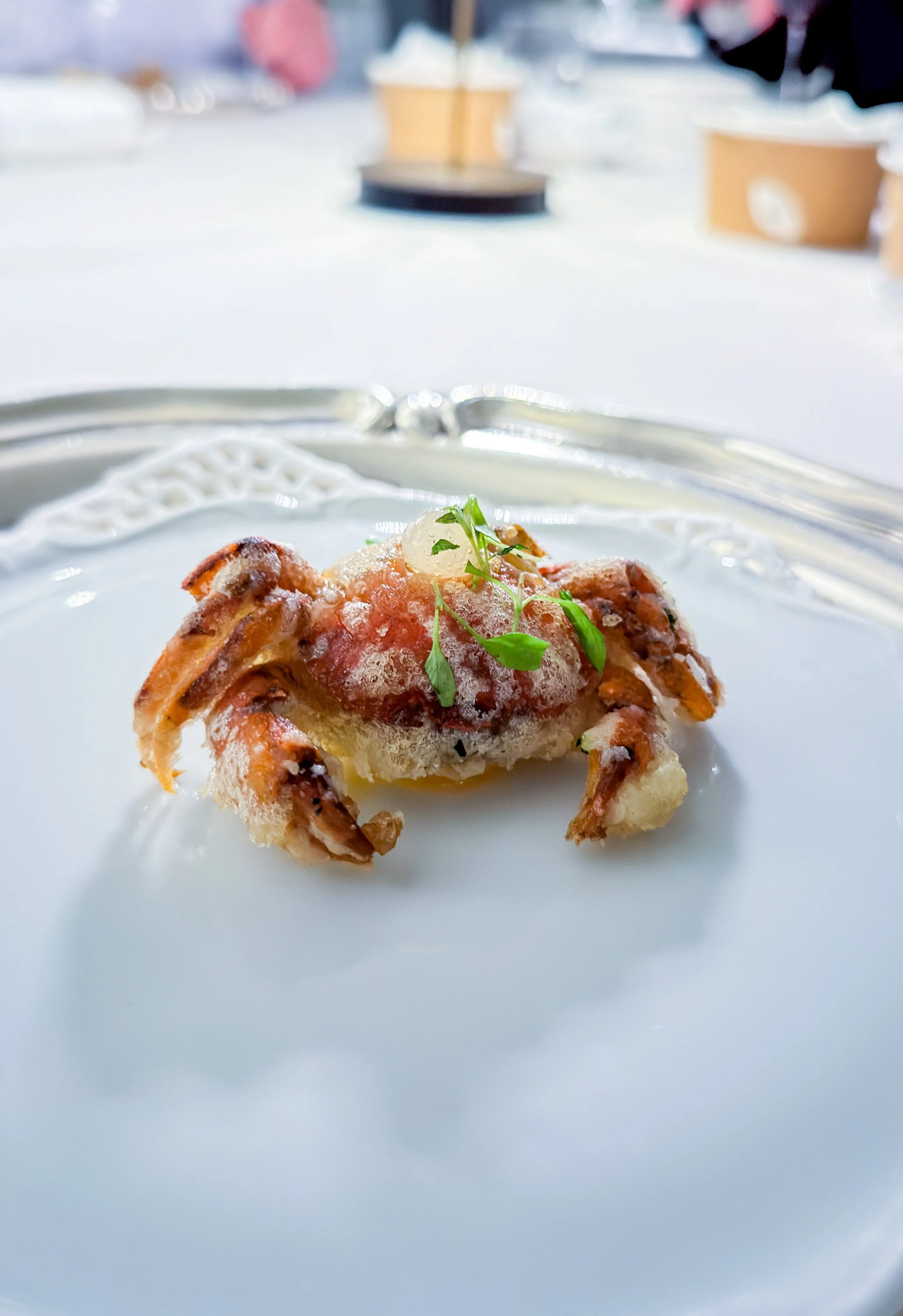
First snacks arrive at the table. They are playfully presented in cardboard boxes. Inside: fried seafood, designed as finger food to share. Baby calamari, moeche (soft-shell crabs — a Venetian specialty), and tiny whole-fried young anchovies — accompanied by a sweet-and-sour chili dip and an anchovy cream with basil. These dishes make no claim to greatness. Instead, they are a deliberately casual opening, showing how naturally a three-star restaurant can allow itself a sense of ease. (7/10)
After yesterday’s visit to Le Calandre, which left a few question marks, only one — admittedly somewhat simple — thought comes to mind at this point: finally, something proper to eat.
The first dish I choose is a leek tart with Parmesan foam and freshly shaved Périgord truffle of visibly excellent quality (70 €). The often underestimated element of heat is very much part of the composition. The creamy leek is highly present, balancing gentle sweetness and acidity, supported by the savory Parmesan and complemented by the earthy notes of the intense truffle. The combination is classic and deeply satisfying; overall, I would have traded a touch of acidity for more umami — still, excellent. (8,9/10)
For the next course, I go for pasta — as one does. Described simply on the menu as “maccheroni with vegetables and mussels” (80 €), the perfectly cooked pasta sits in a dense, hot sauce that — judging by its mild flavor — seems to be built directly from the ingredients themselves: mussels and chickpeas. The latter add an appealing variation in texture to the pasta, which comes from the producer Pastificio Vicidomini in Campania. (Contrary to popular belief, even top restaurants rarely make dried pasta themselves, instead selecting and sourcing it with the same care as any other high-quality product.)
From a technical standpoint, the dish is remarkable. The doneness of the pasta, the present heat, the silky texture of the sauce — it inevitably conveys a sense of precision. Curiously, the seasoning is quite restrained, which leaves something missing for me — especially to bring out the maritime character of the mussels. Still, more than excellent. (8,5/10)
Next comes braised beef cheek and artichoke. Both components are placed separately on the plate. The meat is coated with a light and a dark sauce; the artichoke is gratinated with pesto and marked with clear grill lines.
It is the artichoke that sets the tone here: intense notes of fire and smoke, combined with salt, creaminess, and the herbal pesto — compelling and memorable. The braised beef cheek, with its tender yet still slightly structured texture, feels heavier by comparison and lacks precision due to a merely lukewarm temperature. Flavor-wise, this is more than just good, but the weight and the absence of heat — of all things here — hold the dish back somewhat. (7.5/10)
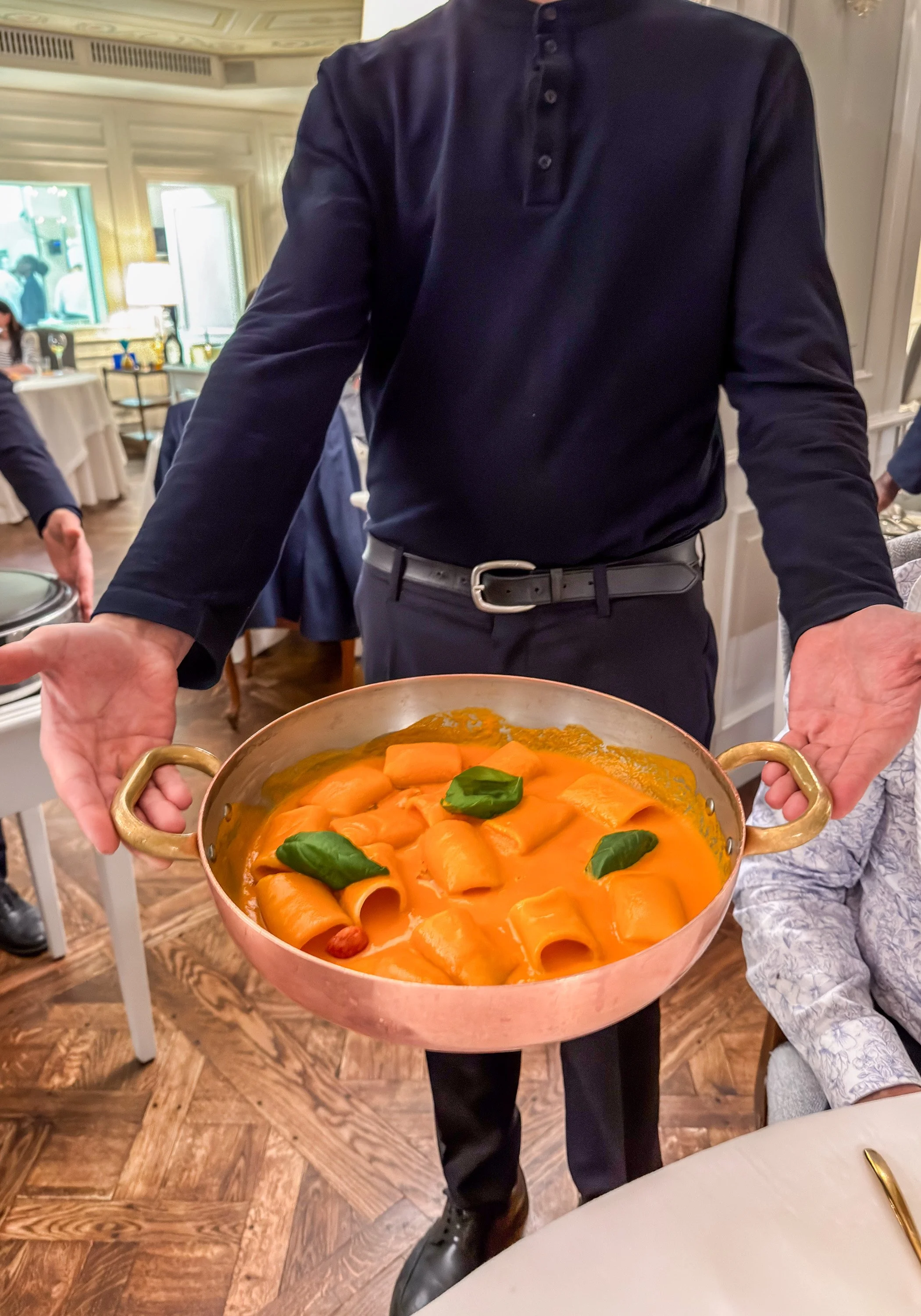
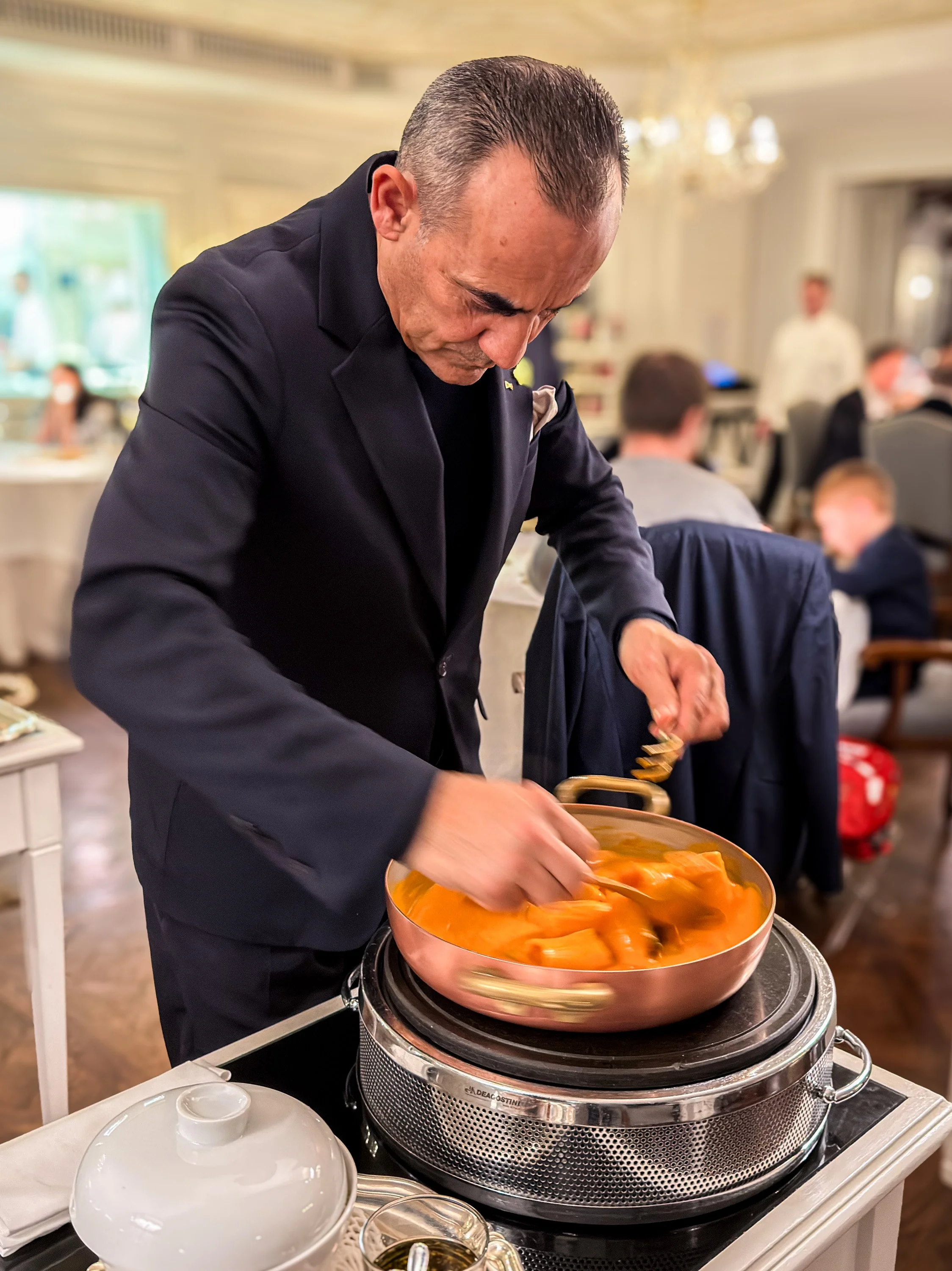
The paccheri (30 €), also part of every menu here, trigger a childlike sense of joy — this is how simple, how good, how straightforward great pleasure can be. An emulsion of fine olive oil and different tomato varieties coats the perfectly cooked, wide tubular pasta. Umami, tomato, creaminess, and bite come together in a dish that stays with you.
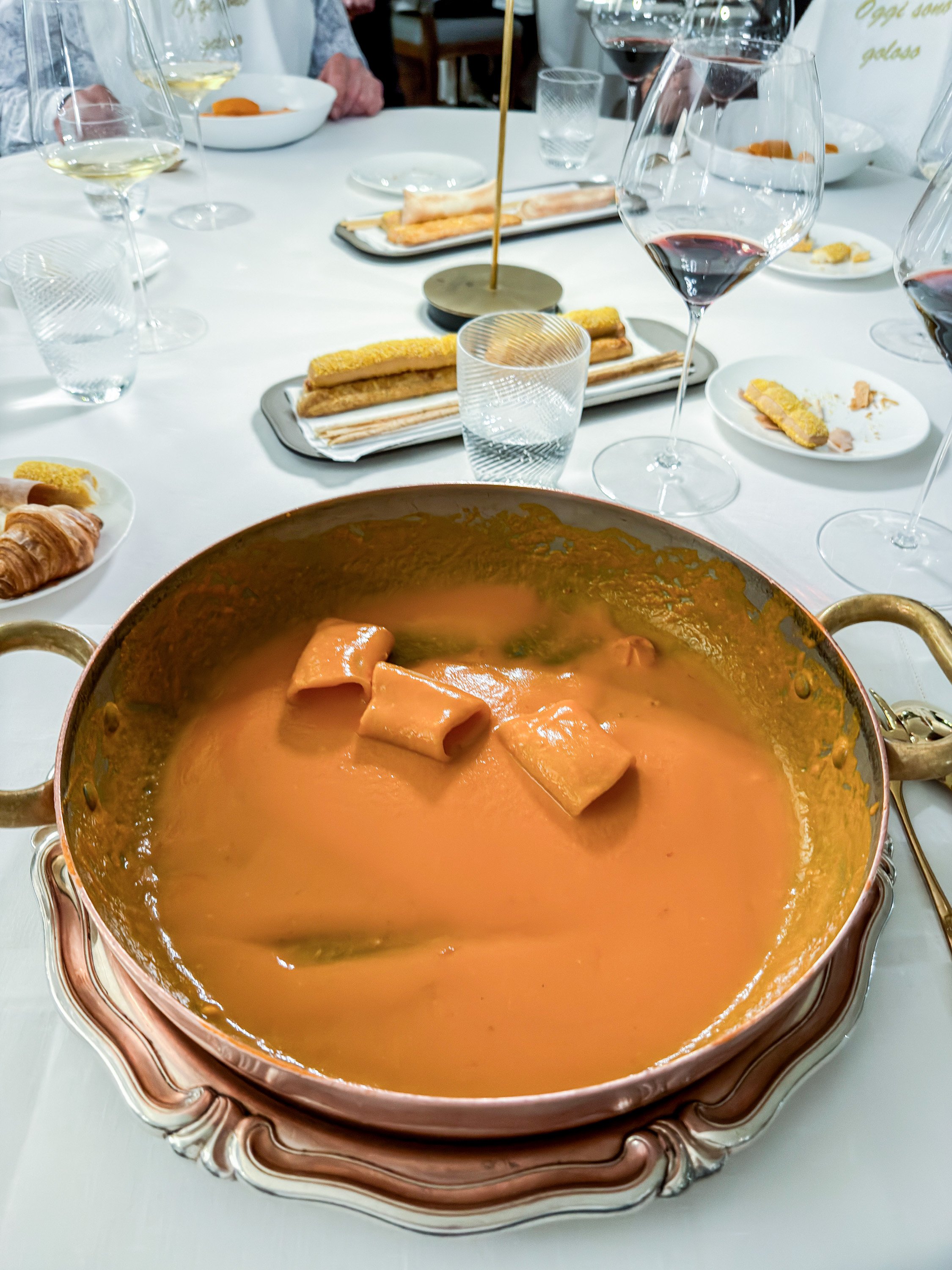
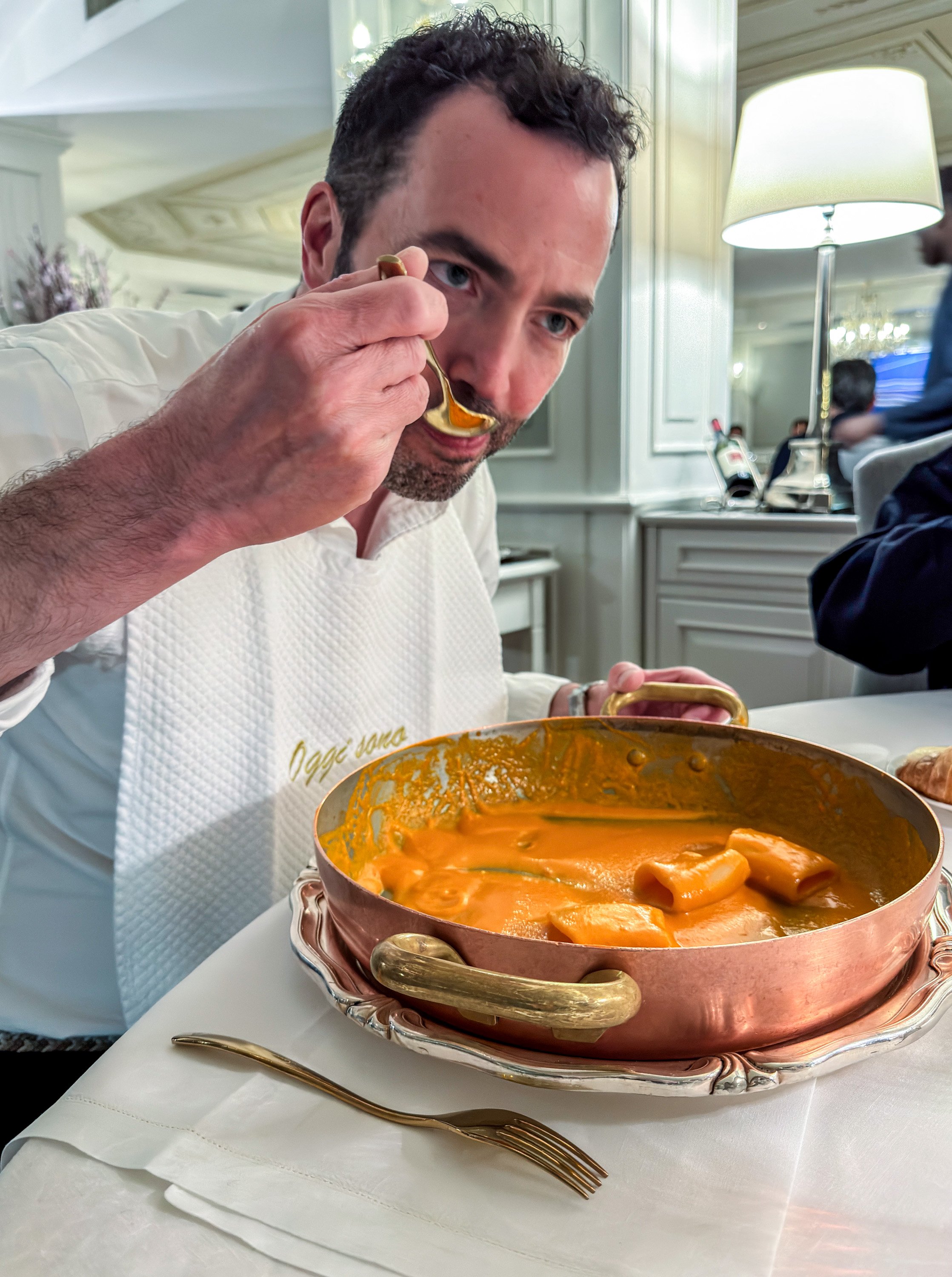
The serving bowl is placed directly on the table — do I really look that greedy? As a charming gesture, you are given a bib to wear. There you are, sitting in a three-star restaurant, a bib around your neck and the bowl in front of you. It doesn’t get better than this. (10/10)
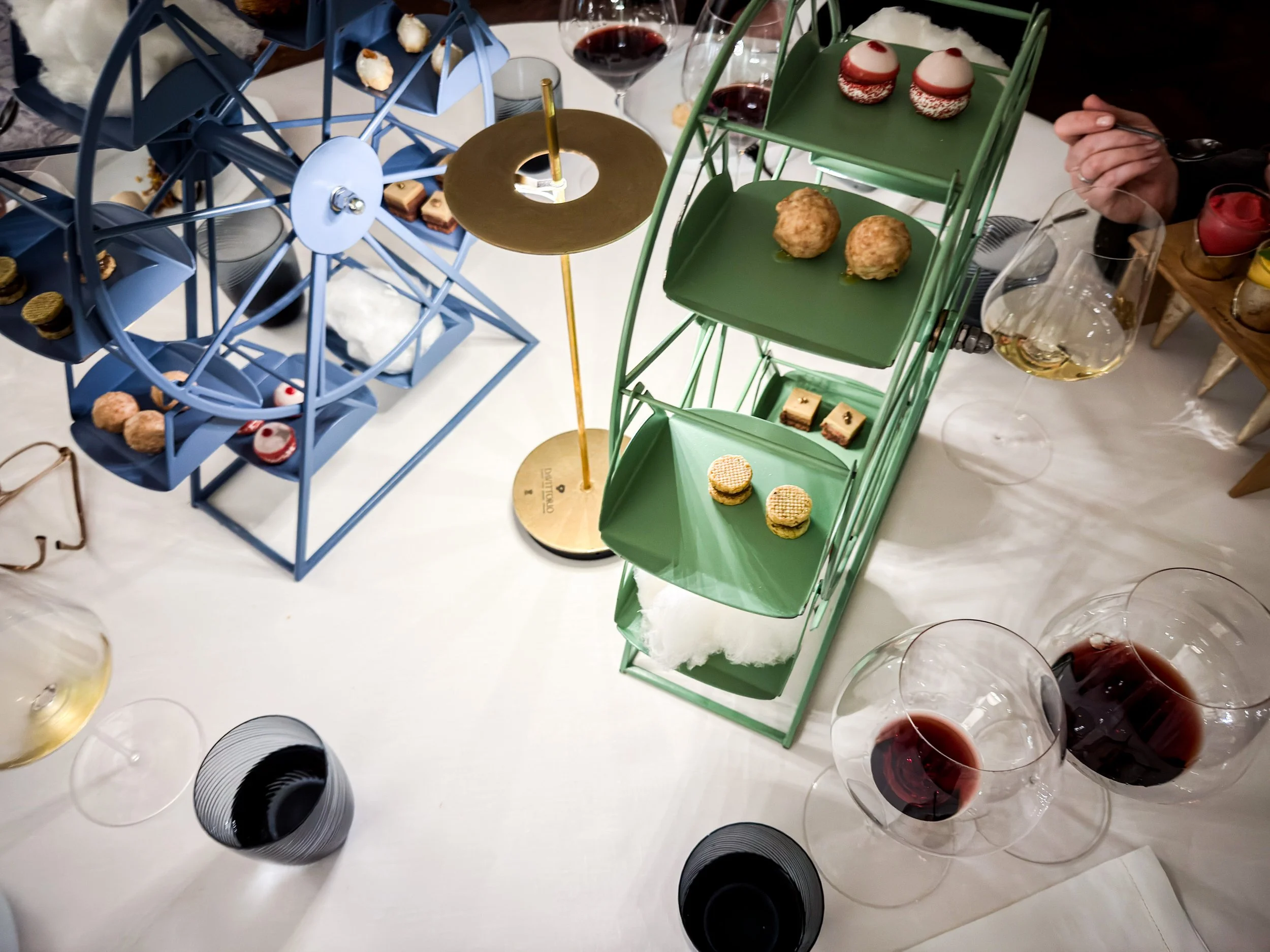
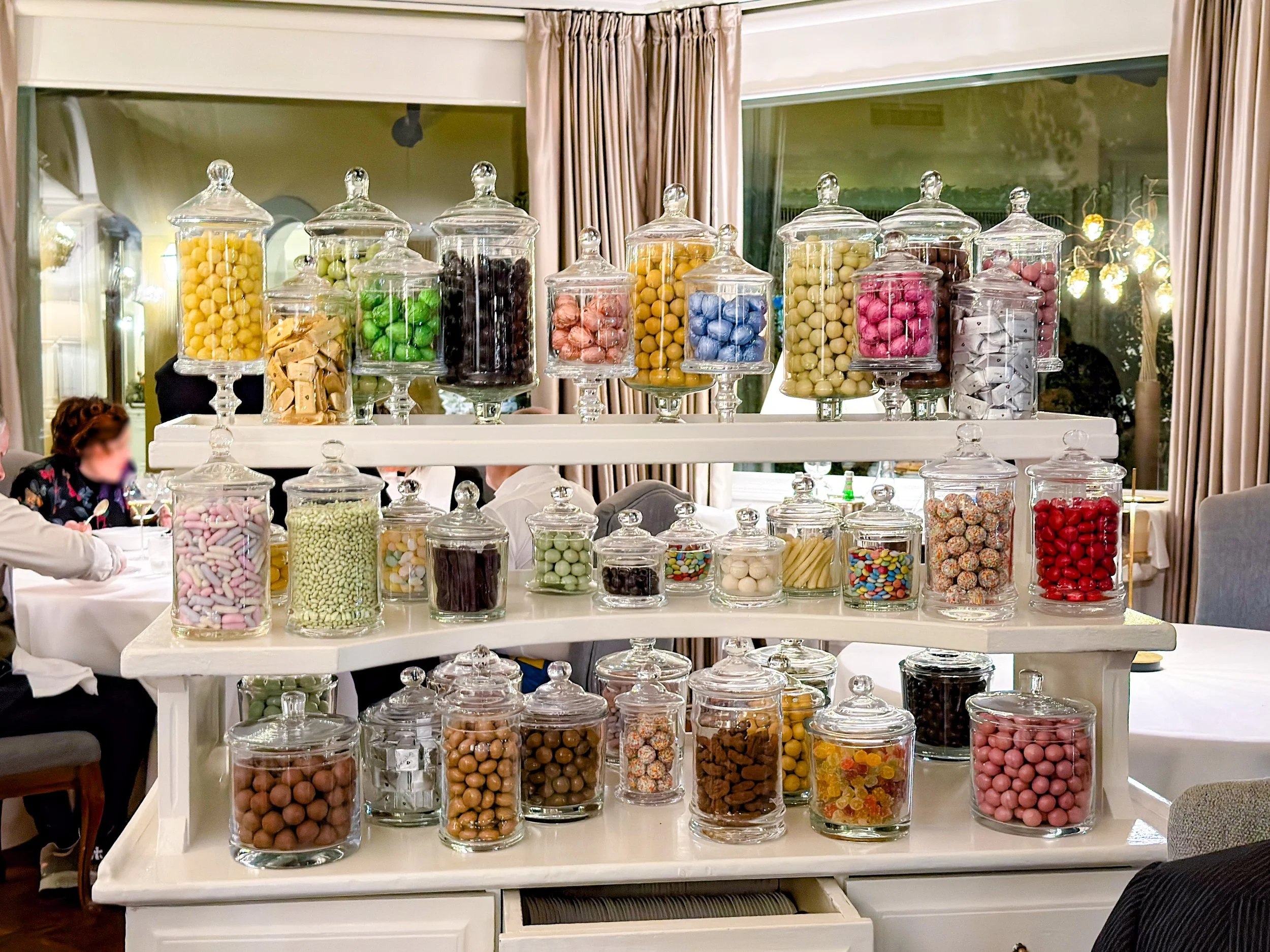
I have the petits fours and pralines packed to go — I always like having a small breakfast in my room.
It wasn’t quite as great as my previous visits, including the one in Shanghai. But the deeply comfortable atmosphere and the fundamentally honest, heartwarming cooking still leave this evening at Da Vittorio in the best possible light.