Les Morainières — Of Streams and Pastures
When the latest Michelin Guide for France was released, there was, as usual, endless speculation about possible newcomers to the highest culinary league. As also usual, things turned out quite differently. Les Morainières, in the Savoie region, was not on anyone’s radar — not even on that of the restaurant’s own staff, who, as I learn in conversations here on site, had been invited to the Michelin ceremony.
The village of Jongieux, which I reach today after two flights and a rental-car drive totaling six hours, is a typical destination for a French three-star restaurant: remote, accessible only via dizzying mountain switchbacks, with virtually no infrastructure to speak of. In the village, there is a pizza vending machine in a parking lot. One only travels here because someone recommends it.
Those who make the journey usually stay for more than dinner alone: the restaurant also operates a small guesthouse with six comfortably appointed rooms about ten minutes away by car. Transfers are organized by the staff. The entire operation is run by Michaël and Ingrid Arnoult.
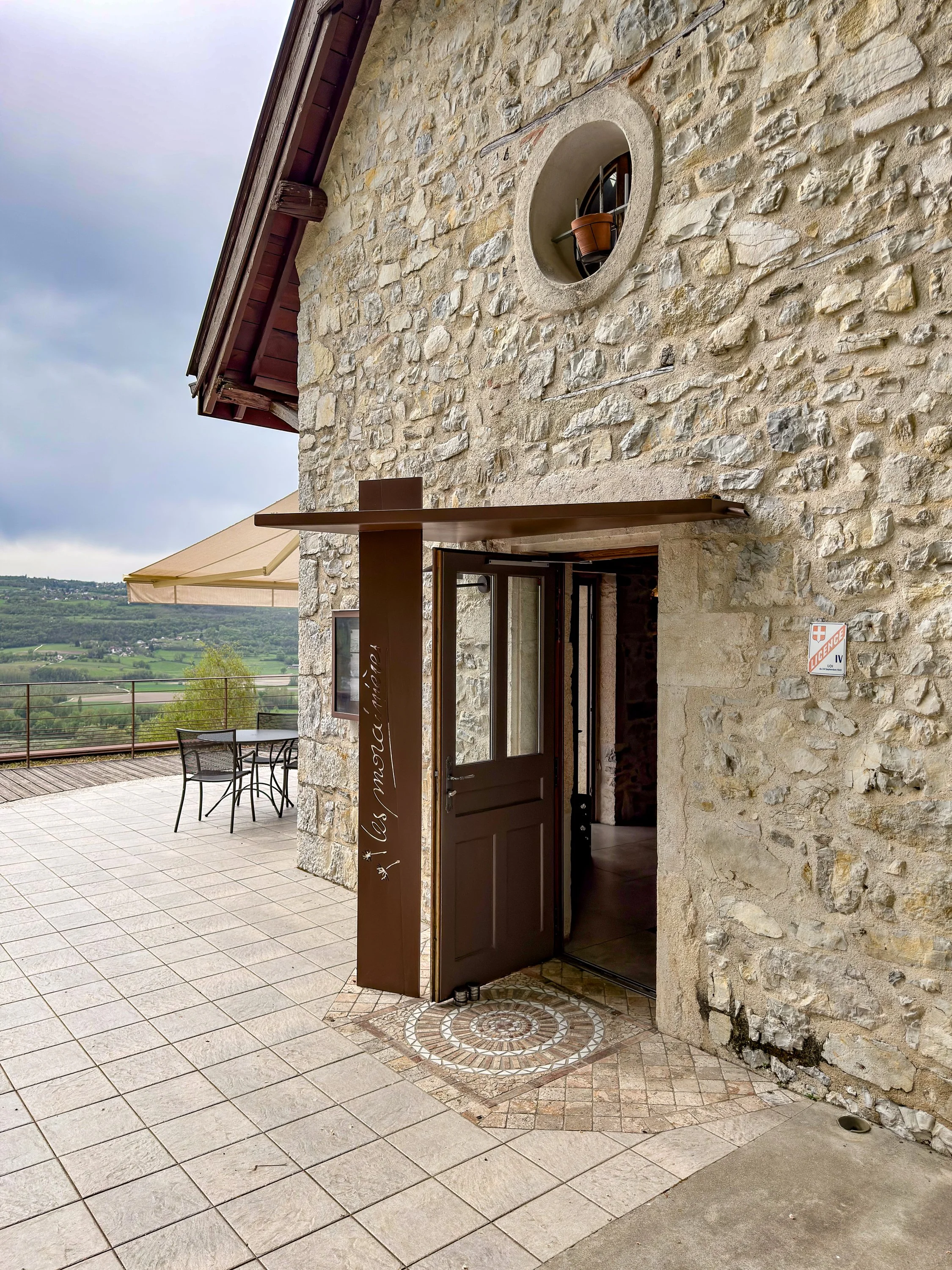
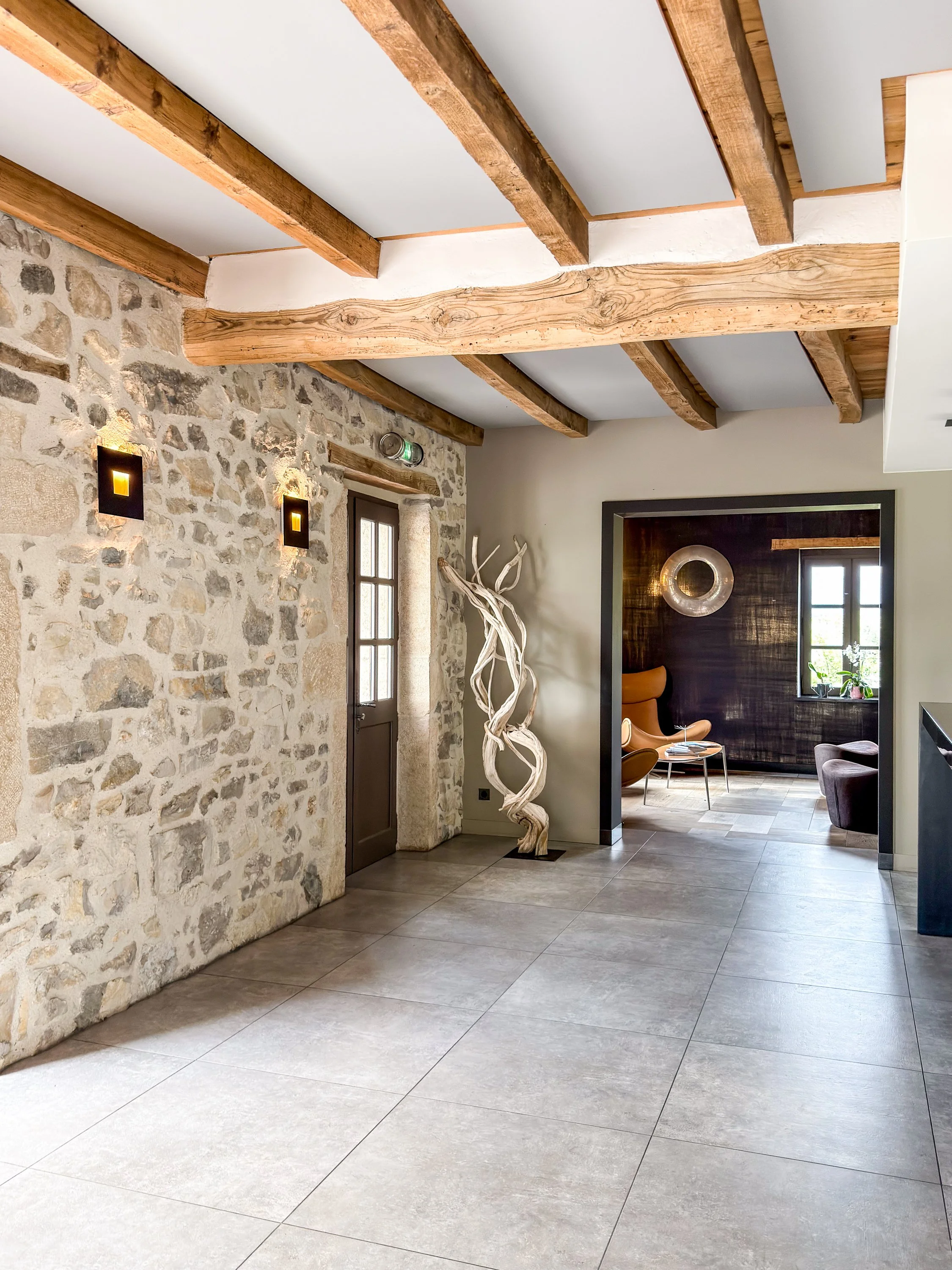
From the outside, the restaurant itself appears rather modest. Its true grandeur lies in its dialogue with the landscape. Nearly all tables are positioned in front of a continuous wall of windows, fully opened tonight in almost summery temperatures.
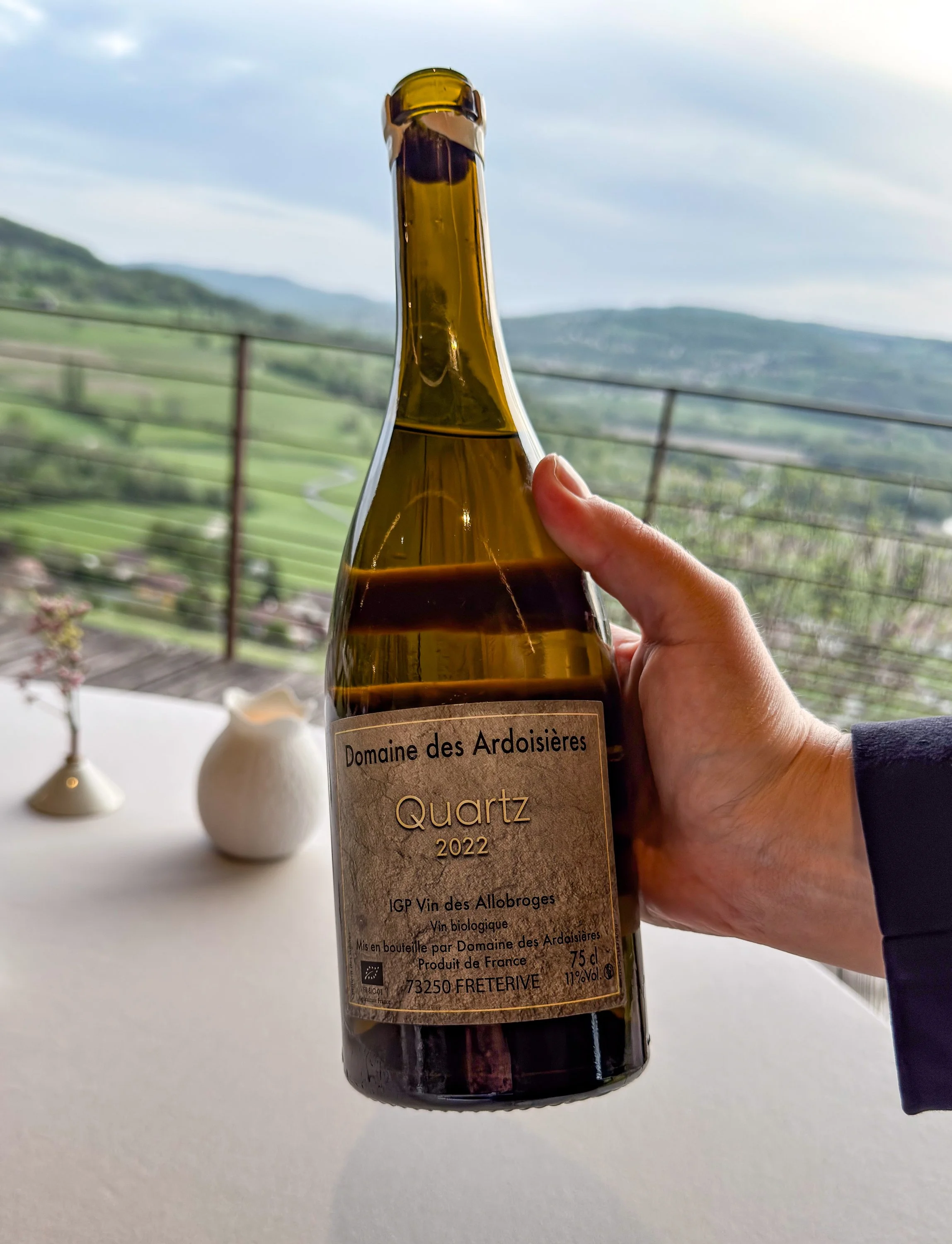
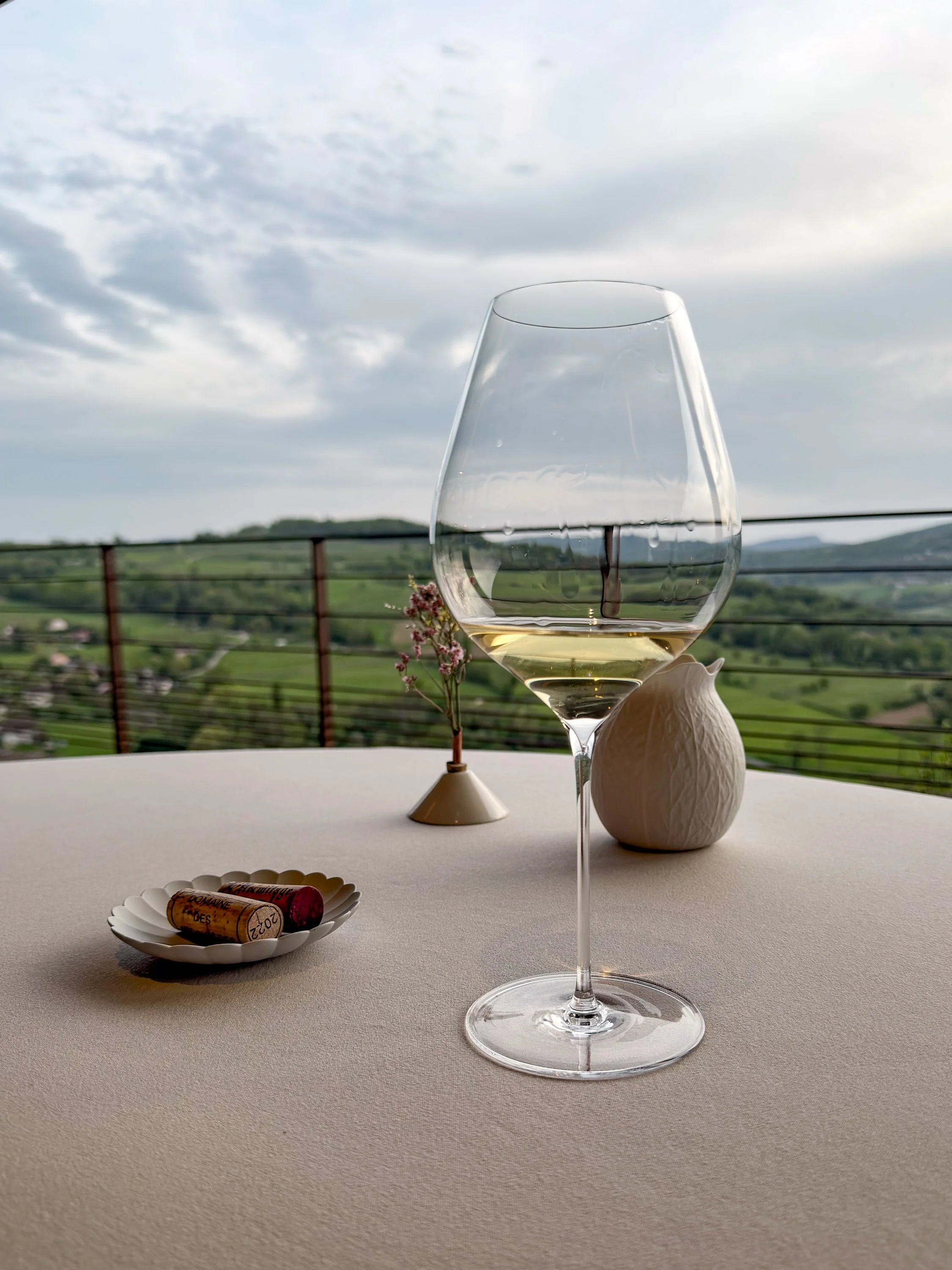
As my gaze drifts across the scenery, I enjoy the first sip of wine — a 2022 “Quartz” from Domaine des Ardoisières (€175), produced just nearby. Earlier in the afternoon, I had already arranged this bottle, along with a 2022 L’Hermitage from Jean-Louis Chave (€480), via email exchange with the sommelier. Initially, there was some hesitation about sending the wine list — strangely common in France.
From a culinary standpoint, the only real decision is between the Découverte menu (€240) and the Expérience menu (€280), which differ merely in scope. Naturally, I did not travel all this way only to restrain myself.
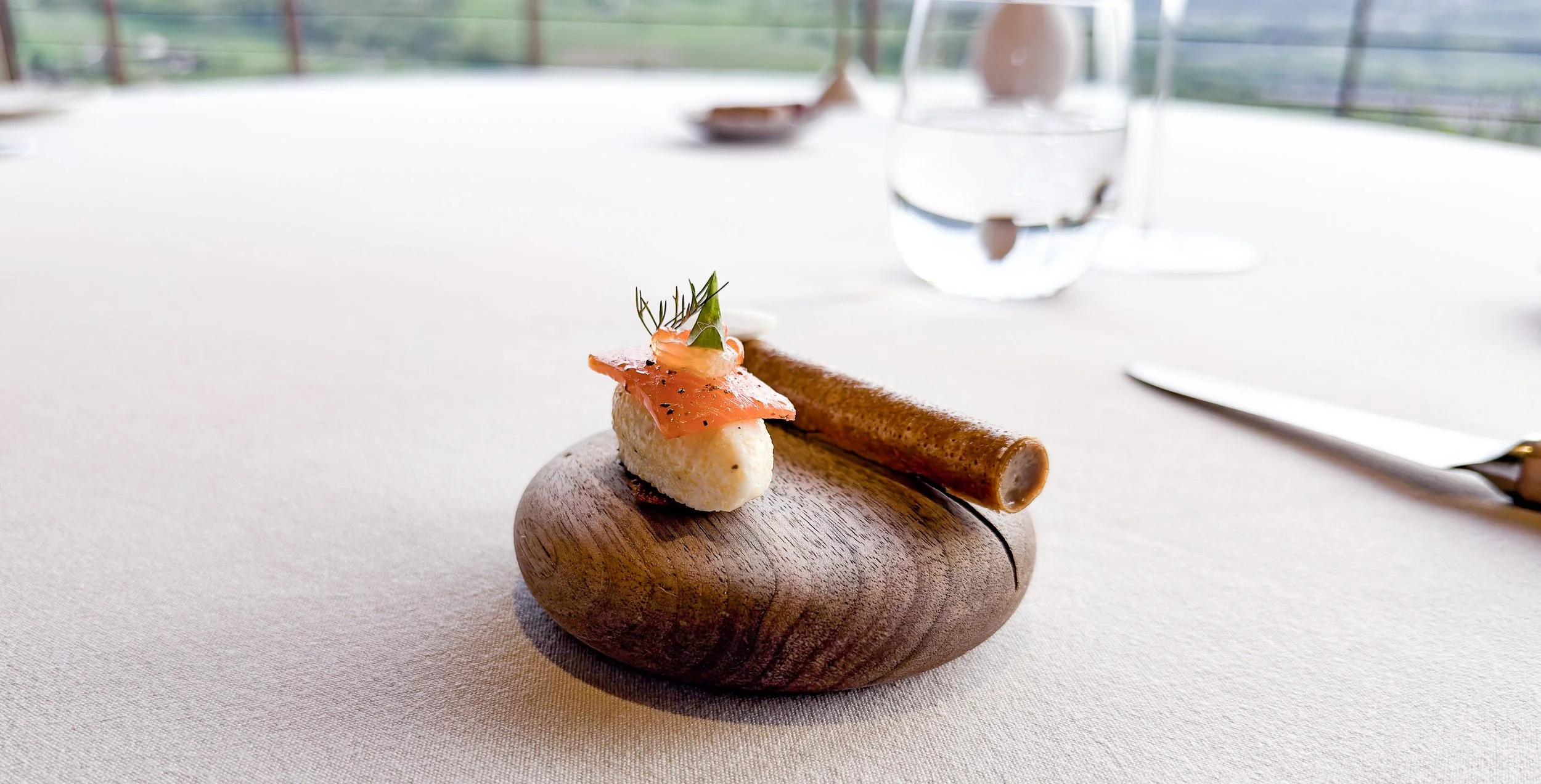
Against the backdrop of spectacular scenery, the first amuse-bouches arrive. A “Sushi Savoyard” featuring trout atop a kind of polenta dumpling with Timut pepper is somewhat restrained aromatically, though elegantly floral thanks to the pepper. (7.5/10)
A “cigarette” filled with local mushrooms follows, delivering deeply woodland umami flavors alongside fleeting crispness. (8.9/10)
Snack number three introduces Arctic char (omble chevalier), a regional specialty. The fish has been smoked and rolled into a cylinder, placed atop a cooked potato slice seasoned with olive oil and finished with a foam of Crème de Bresse. Fascinating contrasts of texture and temperature, a distinctly river-like fish character, and elegant smokiness make this another outstanding bite. (8.9/10)
The next small course presents marinated perch atop a dried, crispy sage leaf alongside various additional herbs. Unexpected juiciness works beautifully against the bitter, refreshing herbal backdrop. This tastes exactly like the surrounding landscape. (8.9/10)
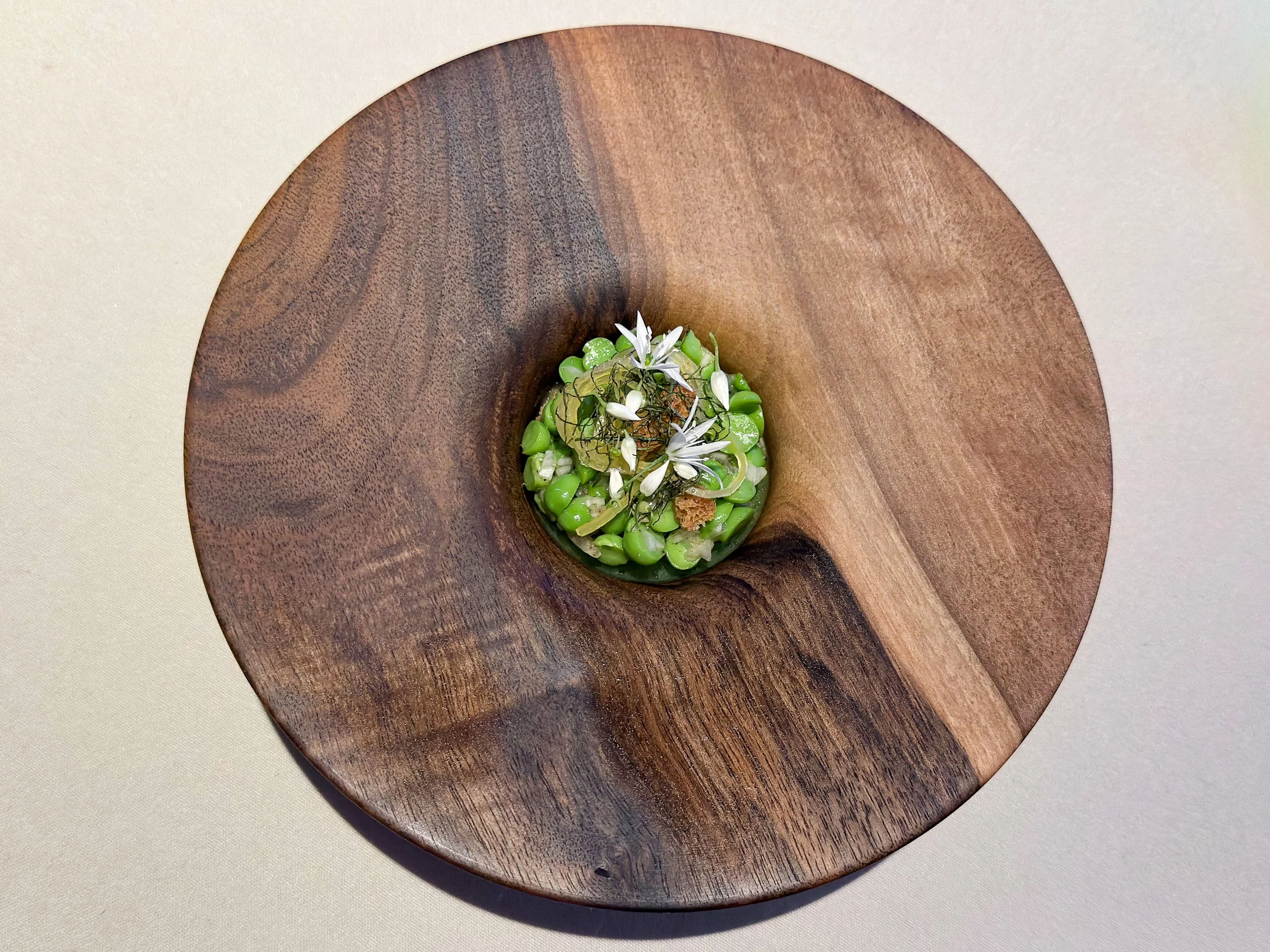
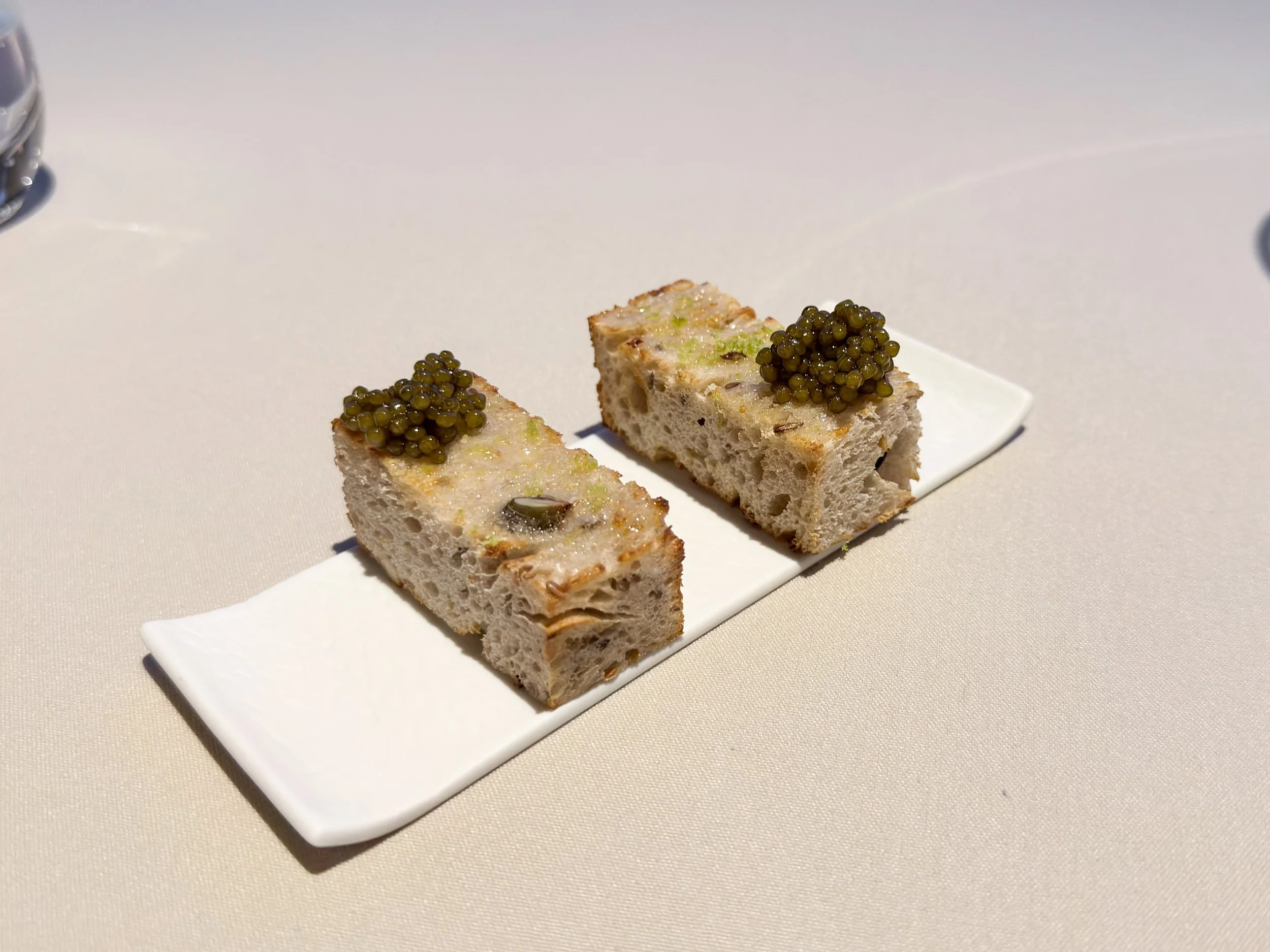
The actual menu begins with the next course. A plate of vividly green peas immediately raises expectations further. The peas have literally been halved (!) and combined with various herbs, especially lemon balm. Served cool, the dish combines the peas’ natural sweetness with clear, summery citrus freshness. At the center sits a small piece of toasted bread topped with Osietra caviar, contributing salinity while the bread adds crunch. This is magnificent (9/10) — and has no real need for the separately served toasted white bread with lard, herbs, and additional Petrossian Osietra caviar, which feels somewhat dry overall.
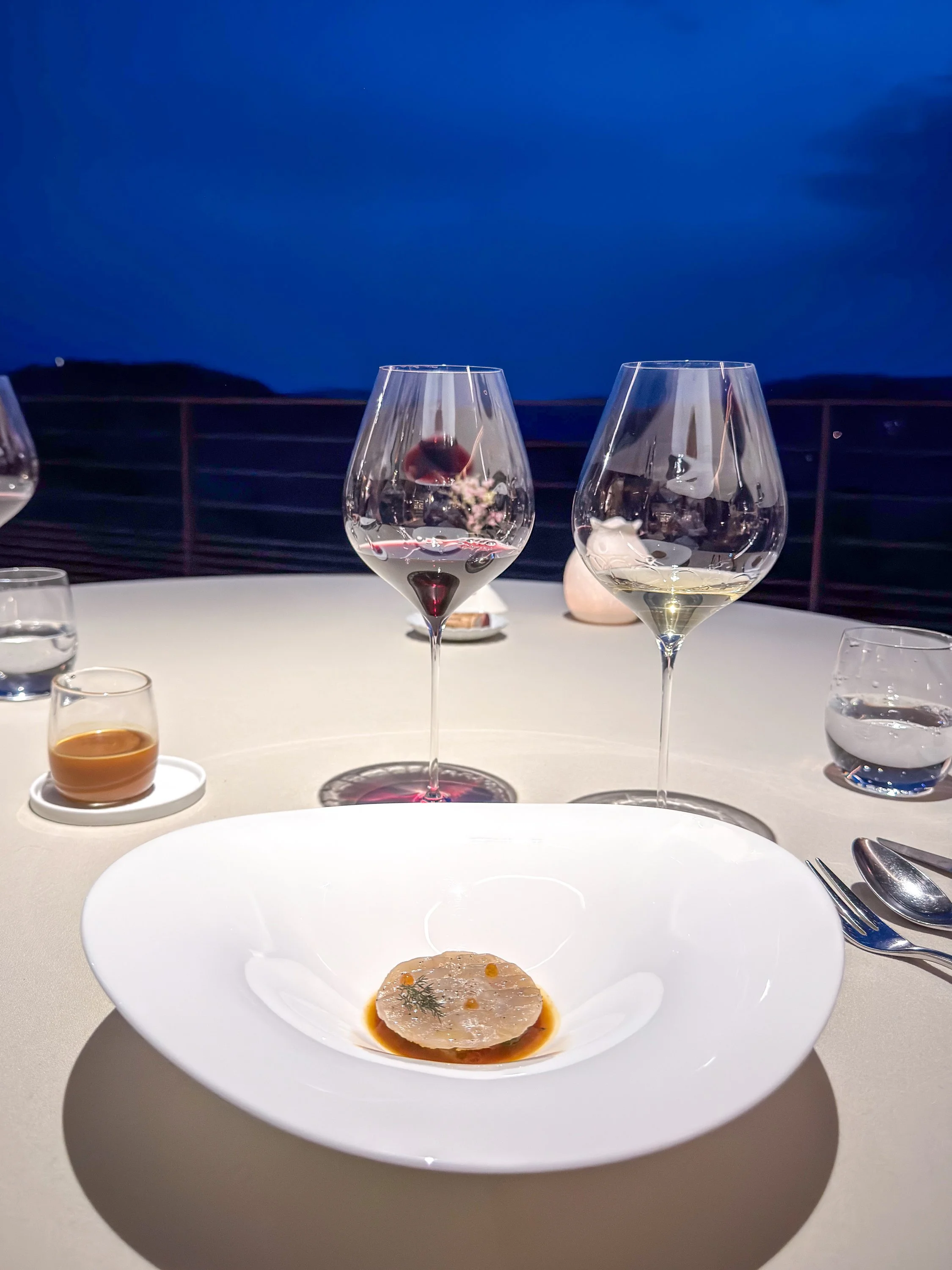

For the following course, trout has been gently cured in salt until it appears almost raw. Thin slices are layered like scales and cut into a circular shape, arranged atop an exotically scented sauce of carrot, lemon, and cumin.
On the palate, a compelling — if initially rather dramatic — contrast emerges between the cool fish and the hot broth in which the trout continues to cook gently. Most prominent is an intense carrot aroma with subtle Oriental accents, grounded once again in France through herbs and lemon. A warm cumin bread served alongside is perfect for soaking up the excellent sauce, which is also provided separately in a small pitcher for refills. Technically and flavor-wise, the dish is highly elaborate — though the small portion size makes it feel more like an especially luxurious amuse-bouche. Still, more than excellent. (8.5/10)
The landscape, resembling a cinematic backdrop, now fades into the night in one final shade of deep dark blue.
The next theme is catfish, presented in a brandade-like preparation with small pieces folded into a potato-leek foam. At the table, cool pike roe is added, once again creating a hot-cold contrast. The dish moves between airy lightness and chunky substance, with the fish itself receding somewhat into the background. What truly matters here is the composition: numerous delicate herbs intertwining in complex fashion, alongside the mild yet still clearly present catfish, create a dish of the highest level. The seasoning, too — as throughout the entire menu — is calibrated with remarkable precision. (9/10)
A trio of Rhône crayfish follows. The first preparation is a tartare, finished tableside with a frothy mandarin-scented sauce. Tagetes blossoms, croutons, and additional herbs provide further accents. The result tastes almost unexpectedly grand, with an exceptionally clear crayfish flavor whose delicate sweetness recalls top-tier Japanese king crab preparations.
At this point in the menu, that clarity is almost a relief, since the many freshwater fish from the region’s rivers and streams had thus far, despite all the culinary quality, revealed only limited glimpses of their individual character.
The second preparation, tasted in parallel, is an intensely aromatic crayfish bisque with various flowers. Dense, sweet crustacean flavors are elegantly lifted by floral citrus notes — it is difficult to imagine such a thing executed better. An airy, buttery, finely crisp brioche toast and crayfish butter — the third preparation — are then used to wipe up the remaining bisque. Everything here is outstanding. (9/10)
The next freshwater fish of the menu is lavaret, presented as one of three preparations alongside a beurre-blanc-like sauce. The fish possesses a firm yet delicately collapsing texture and feels remarkably buttery on the palate. The salt level pushes right to the limit without crossing it. Fruity and herbal accents enliven the dish.
A second plate features a scallop-like preparation with white asparagus set in an airy asparagus sabayon. The asparagus itself is crunchy, juicy, and remarkably aromatic. This preparation, balancing sweetness and acidity with great finesse, impresses even more than the fish.
Only a tartlet with strands of asparagus and lavaret falls somewhat outside the framework of the trio due to pronounced floral notes, though it still contributes freshness and juiciness. Overall, more than excellent. (8.5/10)
A sourdough bread also placed on the table raises some questions, however. It tastes floury, sticky, and sour, with an excessively hard crust — barely edible. Very strange.
The menu continues with a dish centered around seasonal mushrooms, above all button mushrooms sliced paper-thin and arranged into a rose. Everything rests in a frothy mushroom sauce, accompanied by further mushroom preparations, including morels, in textures ranging from creamy to crisp.
Served lukewarm, the dish inevitably recalls a similar creation from nearby Clos des Sens in Annecy. Similar associations arise on the palate: fragile crispness, elegant sweetness, and deep earthy umami. One should not be deceived by the dish’s delicate appearance — it possesses considerably more opulence than initially expected. In any case, this is great product-driven cuisine executed with flawless technique. (8.9/10)
A mushroom essence served alongside must cool slightly before I can taste it. It is woodland-like, with an almost maritime salinity. Excellent, though ultimately unnecessary as an accompaniment. (8/10)
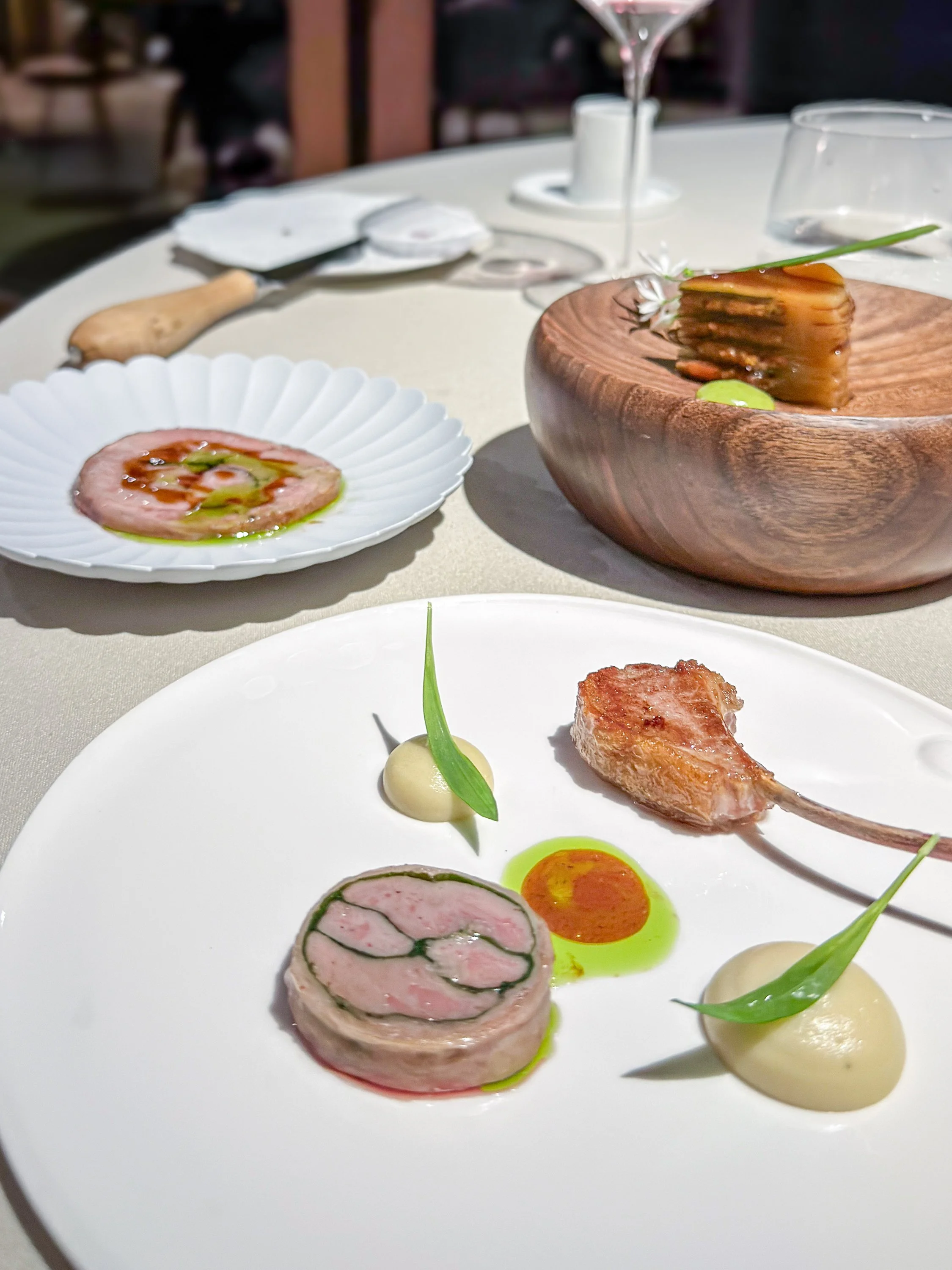
A first meat course follows in the form of variations on lamb. Served are a bone-in rack with a golden-brown fatty crust, entirely unadorned, as well as a loin preparation wrapped in something resembling lamb bacon. Accompanying these are a purée, herb oil, and a dark sauce.
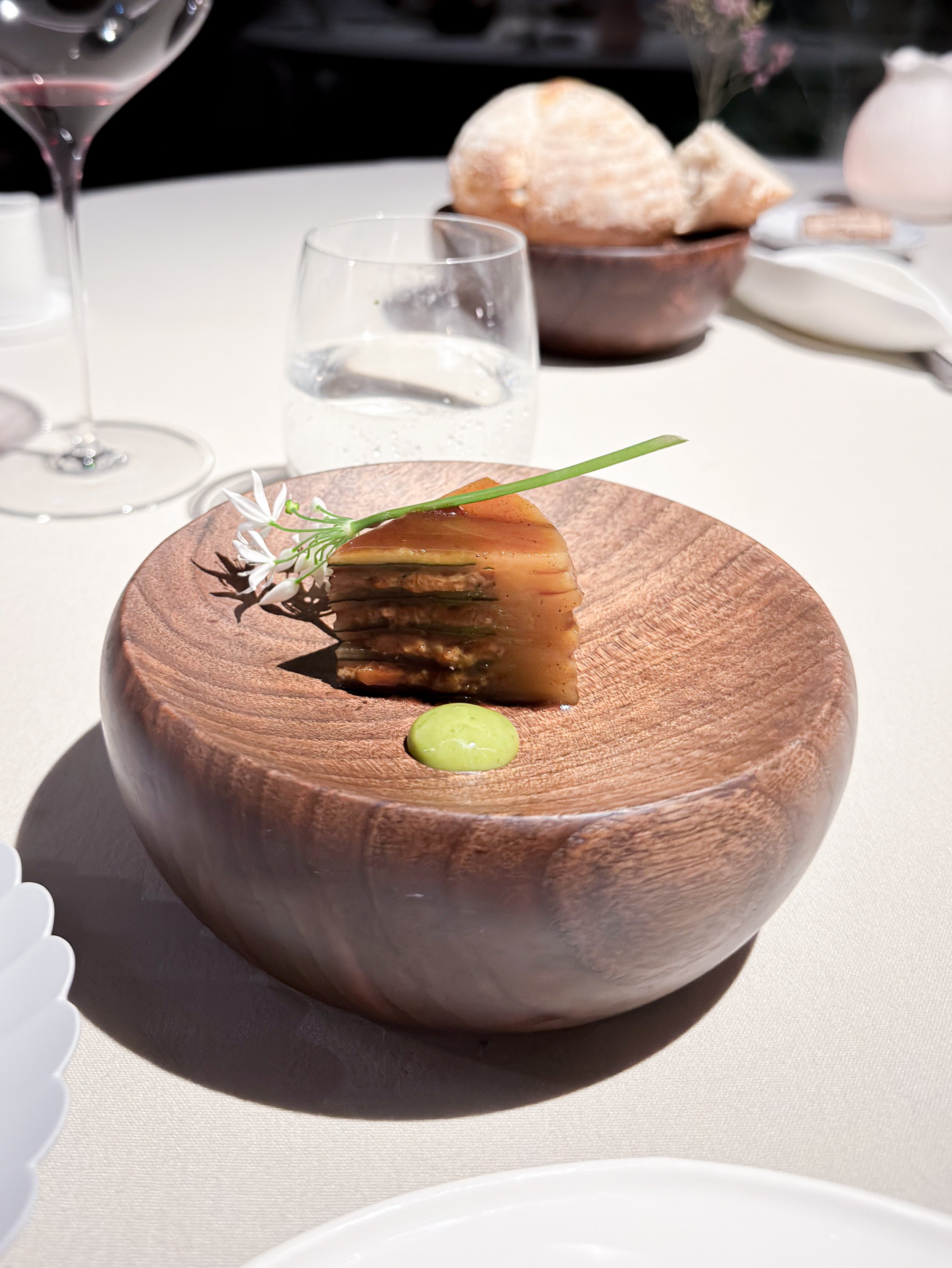
A separate plate offers a third preparation: a seven-hour-braised piece from the leg, again paired with sauce and oil. Completing the composition is a small “Dauphinois” tart made from braised lamb shoulder and potatoes.
As one works through the various preparations — perhaps already beginning to feel the weight of the meal — the dish steadily improves. Initially, the components seem almost somewhat disconnected, but over time they come together more coherently: from the purist rack, which I simply eat off the bone with my fingers, through the softer loin preparation, to the deep braised richness of the leg and the almost rustic Dauphinois tart. It is precisely this growing intensity that makes the course so compelling. (8.9/10)
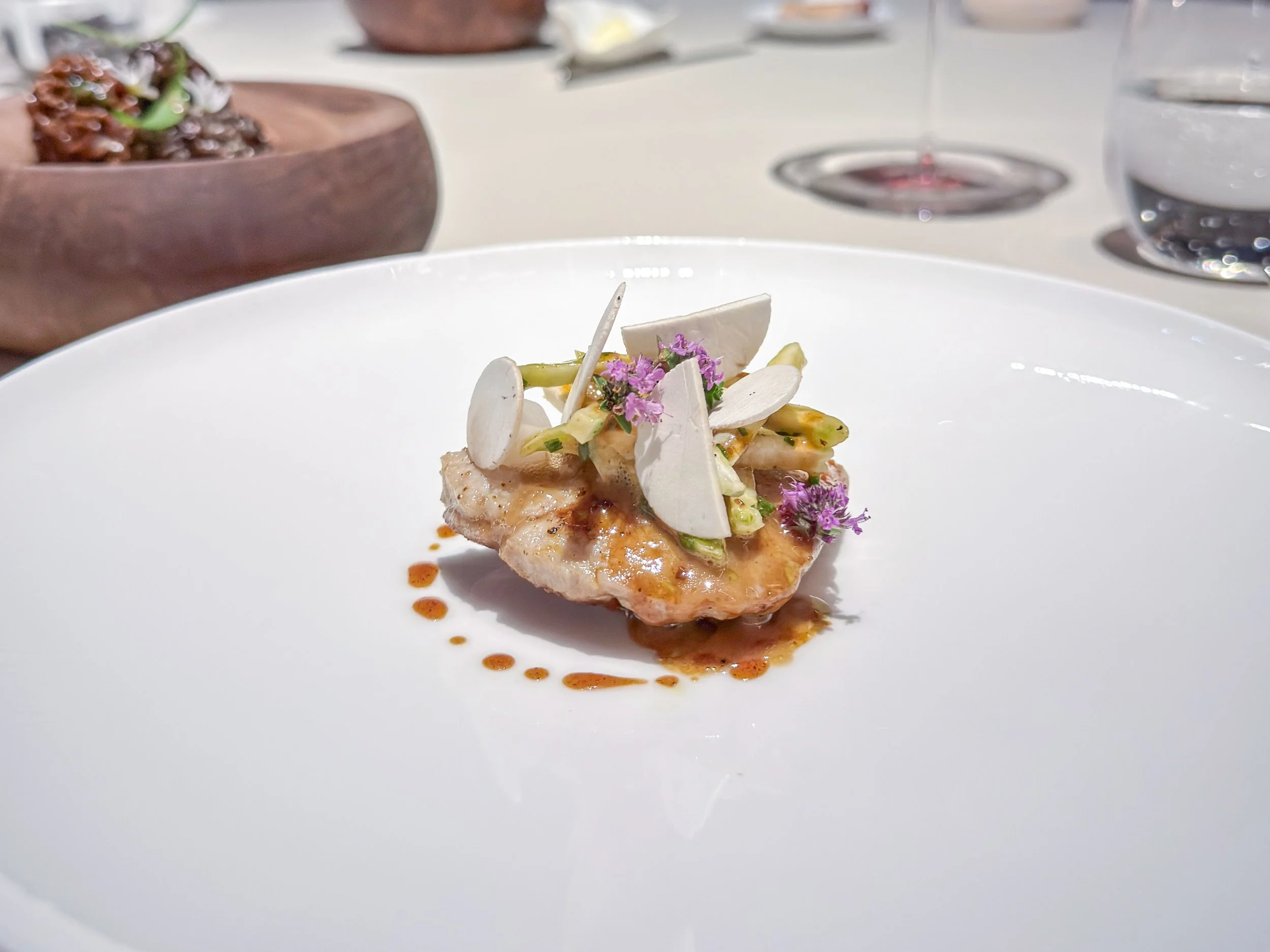
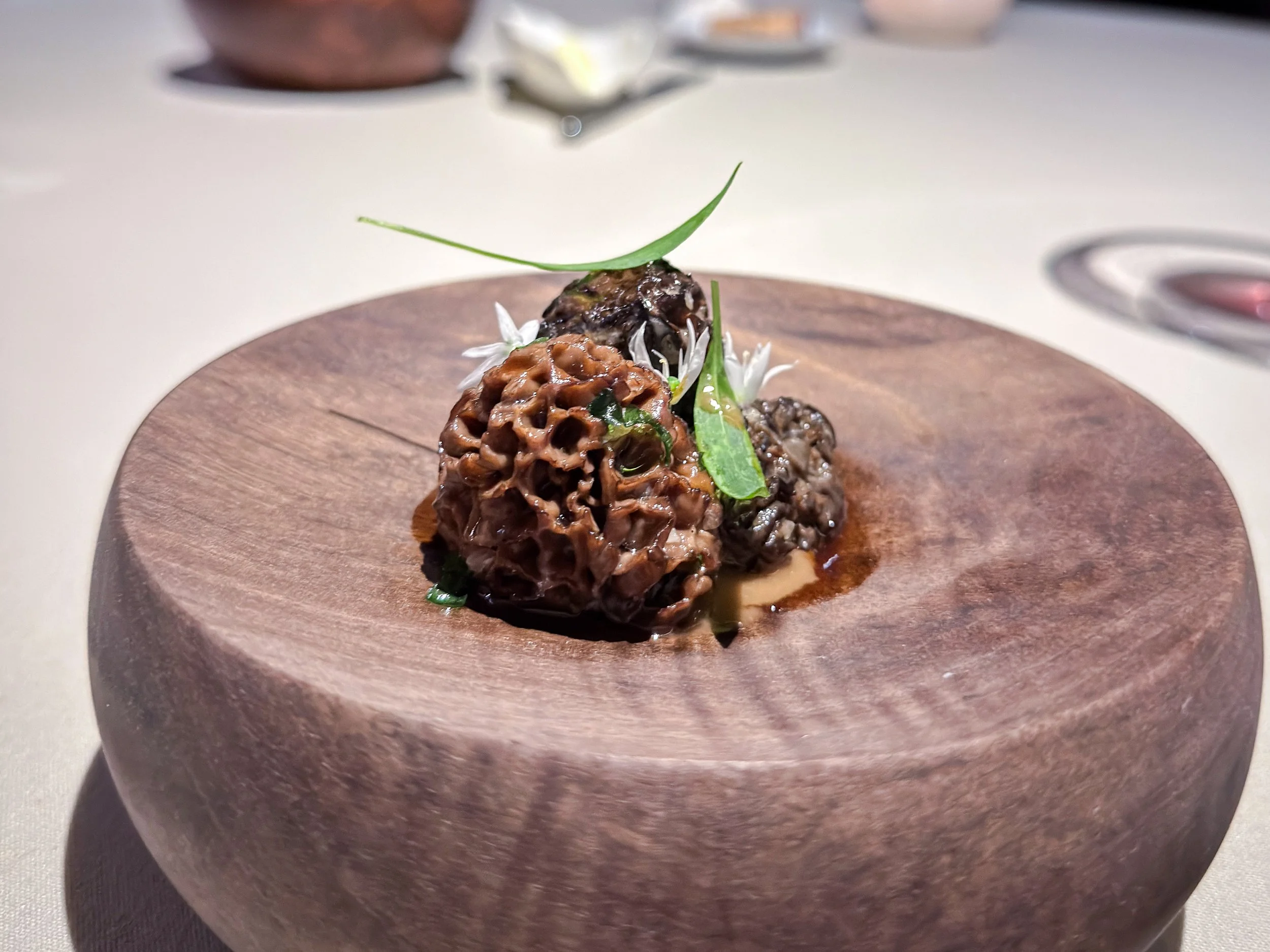
The next course was actually intended as an alternative main course — I ordered it additionally out of curiosity. A piece of sweetbread arrives covered with mushrooms, herbs, and flowers, though lacking the pronounced roasted notes that usually suit this ingredient so well. Yet from the very first bite it becomes clear: this is no flaw. The sweetbread is creamy and juicy, while the surrounding components add surprisingly fitting floral nuances.
Even slightly better are the three perfectly spherical morels served alongside: juicy, tender, and hot, accented by delicate flowers and a deeply savory sauce whose seasoning — as throughout the menu — is perfectly calibrated. This is superb. (9/10)
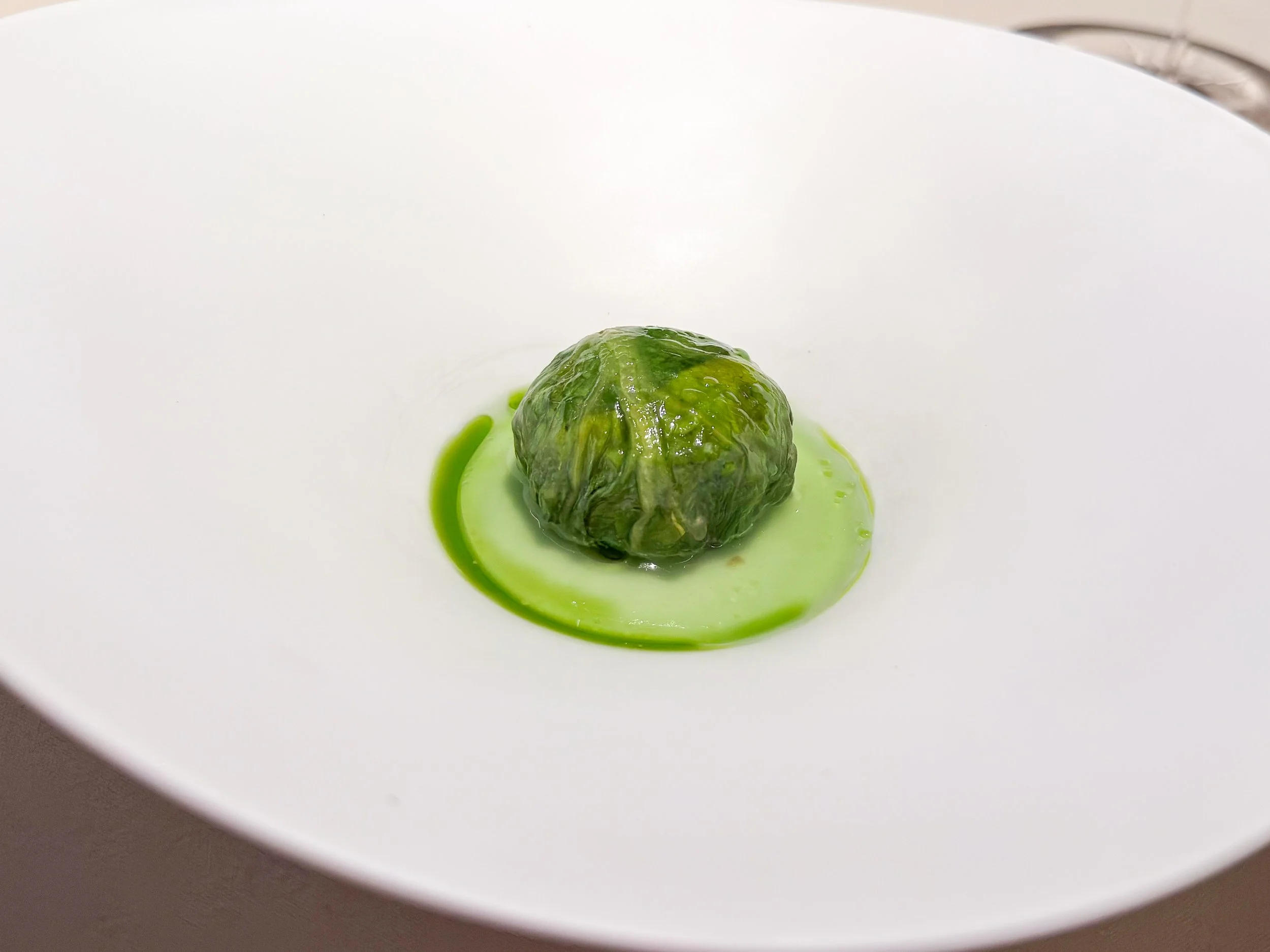
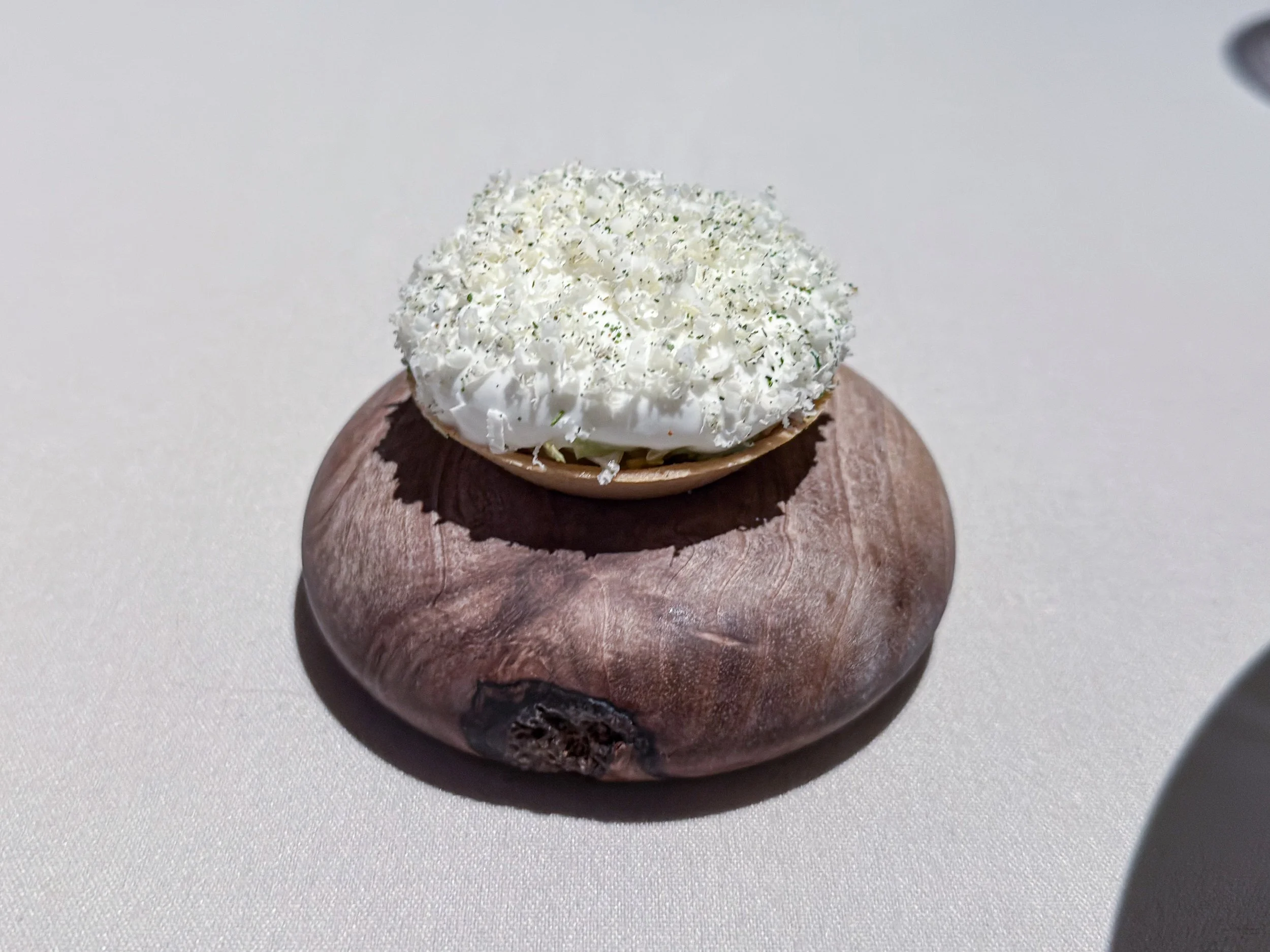
The creative cheese course that follows proves to be a revelation: goat cheese wrapped in a gently cooked lettuce leaf, with tiny croutons — and more lettuce — hidden inside. The preparation tastes juicy, fresh, green, and pleasantly acidic, with vinegar playing a central role. On the palate, it resembles a perfectly balanced salad with vinaigrette — only in far more concentrated and elegant form.
Alongside it appears a small tartlet revisiting the same ingredients: goat cheese, croutons, and lettuce in different proportions and preparations. It too is exquisite. Both dishes impress through remarkable clarity and precision. One of the highlights of the meal. (10/10)
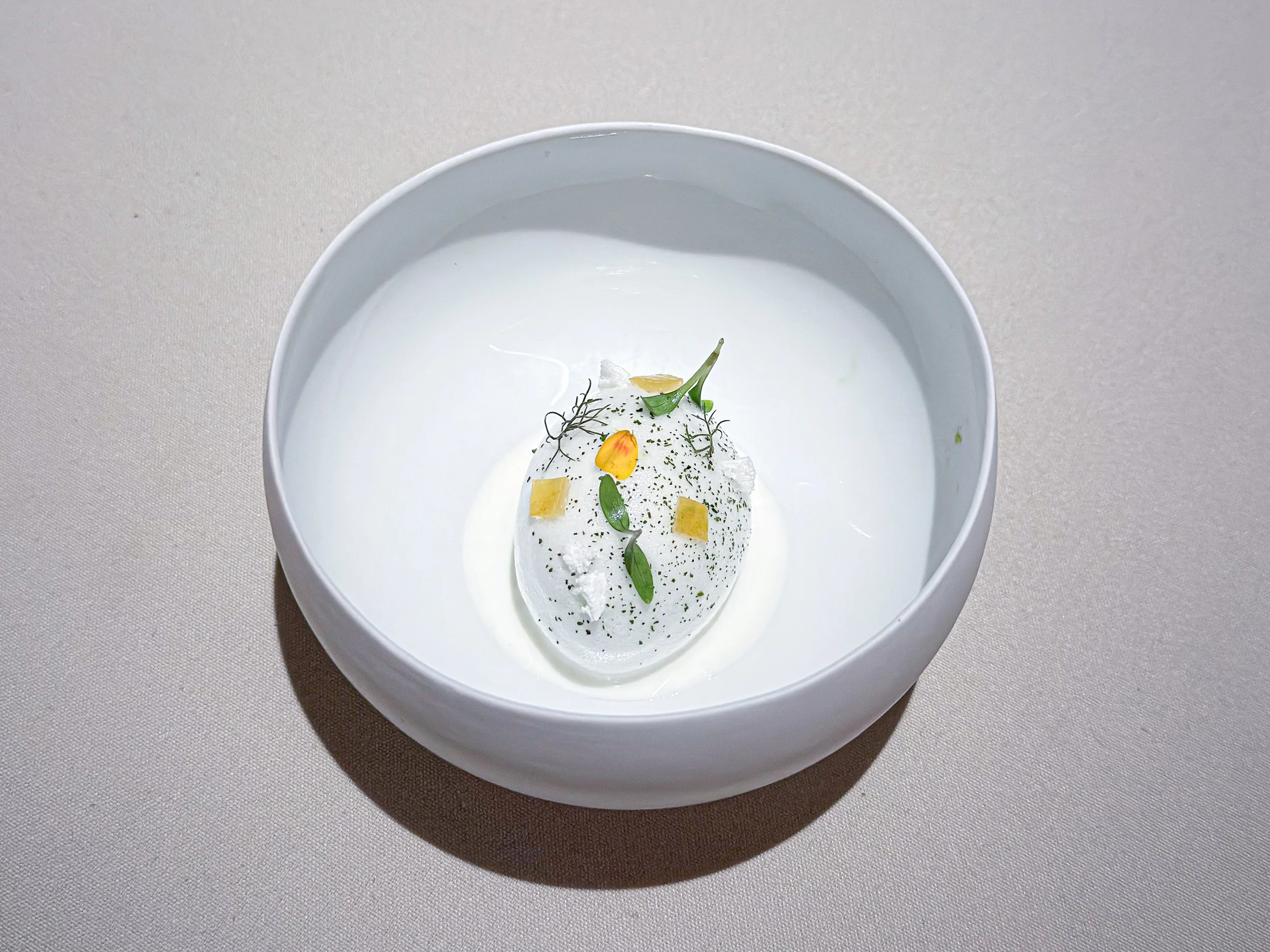

An herbal sorbet with meringue and fermented milk follows as a cooling intermezzo. The preparation tastes frothy, faintly licorice-like, and pleasantly herbal-bitter, accented by lemon balm and lemon verbena. Small pieces of candied citron provide an ethereal citrus freshness reminiscent of Sichuan pepper. Magnificent. (9/10)
Rhubarb refreshes further in multiple preparations: small poached pieces arranged like a cake, a flower-shaped ice cream on top, and concentrated jam. A viscous sauce of elderflower and verjus surrounds the composition.
Acidity, sweetness, coldness, and floral notes interact here with extraordinary harmony. Especially striking is the sauce’s almost faintly artificial aroma, recalling red gummy candy or chewing gum — though naturally in a far more elegant way — which suits the dish beautifully. Accordingly, the sauce is also served separately in a small pitcher for refills.
With every bite, the delicate creation impresses more deeply, all while keeping authentic rhubarb flavor firmly at its center. This is one of the finest rhubarb dishes I have ever tasted. (10/10)
There is still more to come. I often think I am not the biggest fan of soufflés, since they frequently feel one-dimensional and become filling faster than exciting. Yet I am just as often proven wrong — whether years ago by a magnificent chocolate soufflé at Le Clarence in Paris or by César Ramirez’s frozen creations in New York. Or tonight here.
A soufflé flavored with Chartreuse liqueur is cloud-like, creamy, and elegantly sweet; a chocolate sauce adds pleasantly dark, slightly bitter notes. Despite its airy texture, the dessert possesses remarkable depth of flavor while never feeling heavy or filling. It is a perfect soufflé, straight out of a land of plenty. (10/10)
Two tartlets — one crisp and salty with fleur de sel and chocolate (8.9/10), the other with vanilla, milk, and puffed grains evoking memories of Kellogg’s Smacks cereal (8.5/10) — ultimately conclude a menu that stages one final powerful flourish toward the end.
Interestingly, despite the high culinary level of nearly twenty creations, I leave the restaurant impressed rather than euphoric. Perhaps this is because the cuisine defines itself more through textures, temperatures, herbs, and sauces than through singular headline products or immediately unforgettable flavors. Everything is extremely refined, elegant, and technically precise, yet it does not always achieve that clarity which instantly burns itself into memory. Still, the journey here is unquestionably worthwhile.
Around midnight, after nearly four hours, the staff drives everyone back to the small guesthouse. A French couple sharing the ride seems delighted by my enthusiasm for restaurants and eventually remarks that I still have so much culinary discovery ahead of me. If only they knew.